Precise temperature control at 150°C is the catalyst for substrate state transitions within a closed system. At this specific thermal threshold, solid reactants—most notably urea—transition into a liquid or partially gaseous state. This phase change is mandatory to maximize molecular collision frequencies and proton activity, which are the primary drivers for the rapid synthesis of N-heterocyclic derivatives.
Core Takeaway: Maintaining 150°C within a hydrothermal reactor optimizes the Biginelli reaction by forcing solid substrates into reactive fluid phases. This environment accelerates essential chemical pathways, such as Knoevenagel condensation, while simultaneously suppressing the formation of unwanted byproducts.
The Mechanics of Phase Transition
Liquefying Solid Substrates
In a standard Biginelli reaction, urea exists as a crystalline solid that can limit the rate of interaction with other liquid components. At 150°C, urea fully liquefies or begins to partially gasify within the pressurized environment of a hydrothermal reactor.
Maximizing Molecular Collisions
Once the substrates transition into fluid phases, the molecular collision frequency increases exponentially. This high-energy environment ensures that the reactants possess sufficient kinetic energy to overcome the activation barriers of the multi-component reaction.
Increasing Proton Activity
The hydrothermal conditions at this temperature significantly enhance proton activity. This is critical for the acid-catalyzed steps of the Biginelli mechanism, ensuring that the reaction intermediates are formed quickly and efficiently.
Optimizing the Chemical Pathway
Accelerating Knoevenagel Condensation
The 150°C setpoint is specifically tuned to favor the Knoevenagel condensation pathway. This is often the rate-determining step where the aldehyde and the β-dicarbonyl compound interact before the final ring closure with urea.
Minimizing Byproduct Formation
Precise control prevents the system from reaching temperatures where secondary decomposition or side reactions occur. By staying at the 150°C equilibrium, the reactor ensures that the energy input is sufficient for the desired N-heterocyclic derivatives without degrading the final product.
Achieving Optimal Yields
In a sealed hydrothermal system, the combination of temperature and autogenous pressure creates a unique solvothermal effect. This synergy allows for reaction speeds and yields that are typically unattainable using traditional open-reflux methods at lower temperatures.
Understanding the Trade-offs
The Risk of Thermal Overrun
Exceeding the 150°C threshold can lead to the thermal degradation of the organic substrates, particularly the urea component. This results in the formation of complex tars and a significant drop in the purity of the target N-heterocyclic compound.
Pressure Management Challenges
Because the hydrothermal reactor is a sealed system, 150°C generates significant internal pressure. Inadequate control of the temperature can lead to pressure spikes that exceed the safety ratings of the reactor vessel.
Kinetic vs. Thermodynamic Stability
While higher temperatures increase the reaction rate, they can also shift the equilibrium toward undesired intermediates. Maintaining exactly 150°C ensures the reaction remains within the "kinetic window" where the target product is formed most selectively.
How to Apply This to Your Project
Recommendations for Implementation
- If your primary focus is maximizing product purity: Maintain the 150°C setpoint strictly to ensure the reaction proceeds via the Knoevenagel pathway without triggering side reactions.
- If your primary focus is reducing reaction time: Ensure your reactor is pre-heated or reaches the 150°C threshold quickly to initiate the liquefaction of solids as early as possible.
- If your primary focus is safety and vessel longevity: Monitor the autogenous pressure generated at 150°C to ensure it remains within 75% of your hydrothermal reactor’s maximum rated capacity.
By mastering the thermal transition of substrates at this precise temperature, you transform the hydrothermal reactor into a high-efficiency engine for complex heterocyclic synthesis.
Summary Table:
| Factor | Effect at 150°C | Impact on Synthesis |
|---|---|---|
| Substrate State | Urea liquefies/partially gasifies | Maximizes molecular collision frequency |
| Proton Activity | Significantly enhanced | Accelerates acid-catalyzed Biginelli steps |
| Reaction Path | Favors Knoevenagel condensation | Rapidly forms N-heterocyclic derivatives |
| Byproducts | Suppresses secondary decomposition | Ensures high selectivity and product purity |
Elevate Your Chemical Synthesis with KINTEK Precision
Precision is the difference between a failed experiment and a high-yield breakthrough. At KINTEK, we specialize in providing the high-performance fluoropolymer tools necessary for demanding hydrothermal synthesis and complex reactions like the Biginelli mechanism.
Whether you need hydrothermal synthesis liners capable of withstanding autogenous pressure, high-purity PFA/PTFE labware (beakers, reagent bottles, digestion tubes), or custom-machined reaction components, our end-to-end CNC fabrication ensures your equipment meets exact specifications. From standard consumables like stirring bars and gaskets to advanced electrochemical cells and bespoke laboratory setups, we focus exclusively on high-performance materials to safeguard your research integrity.
Ready to optimize your lab’s performance? Contact us today to discuss your custom fabrication needs and discover how KINTEK’s fluoropolymer expertise can transform your reaction yields.
References
- Zhiqiang Wu, Wanyi Liu. Mild and Efficient Preparation of Organic Molecules with Different Structural Characteristics: Catalyst-Free and Solvent-Free Methods in Hydrothermal Synthesis Reactors. DOI: 10.2139/ssrn.4283399
This article is also based on technical information from Kintek Knowledge Base .
Related Products
- High Temperature Corrosion Resistant Hydrothermal Synthesis Reactor with TFM Inner Liner and Straight Cylinder Design
- PTFE Lined High Pressure Digestion Vessel 50ml High Temperature Hydrothermal Synthesis Tank
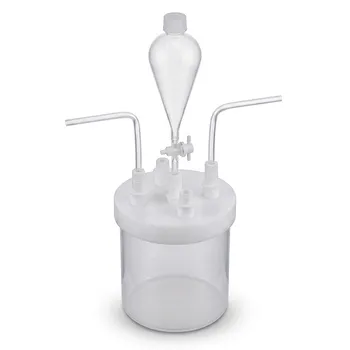
- Custom PTFE Reaction System with Hose Barb Fittings Corrosion Resistant High Sealing 2L 4L Lab Reactor with Separatory Funnel
- High Pressure Custom TFM Reactor Stainless Steel Outer Vessel PTFE Inner Cup for Corrosive Synthesis
- High Purity PFA Reaction Vessel for Biopharmaceutical Synthesis and Corrosive Chemical Fluid Handling with Customizable Tube Fittings
People Also Ask
- What is the role of a corrosion-resistant reactor in the synthesis of lignin-based carbon dots? Ensure Maximum Purity
- What are the technical advantages of using hydrothermal synthesis reactors for advanced electronic & optical nanomaterials?
- How does a hydrothermal synthesis reactor facilitate the production of crystalline materials with tailored morphologies? Precision Crystal Growth
- Why is the sealing reliability of a hydrothermal synthesis reactor critical for 24-hour cycles? Ensure Nano-Precision
- What role do hydrothermal synthesis reactors play in CQD preparation? Achieve High-Purity Nanomaterial Synthesis