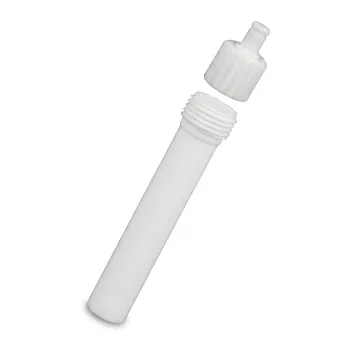
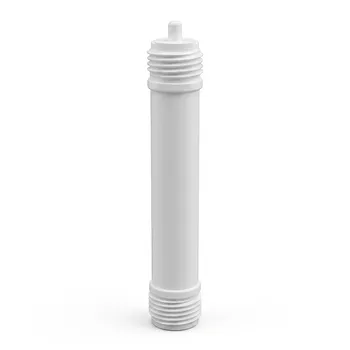
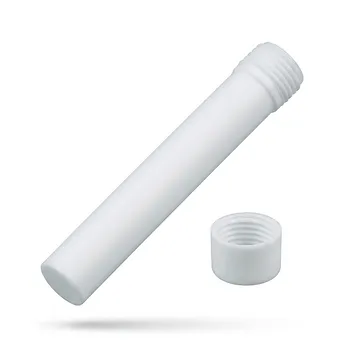
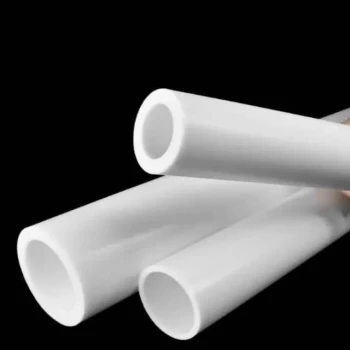
PTFE is the material of choice for solvothermal liners because it remains chemically inert and structurally stable in the presence of aggressive organic solvents like N,N-dimethylformamide (DMF) at elevated temperatures and pressures. This allows for a pristine reaction environment where the vessel itself does not participate in the chemistry or contaminate the resulting crystalline products.
Core Takeaway: Polytetrafluoroethylene (PTFE) acts as a high-purity barrier that protects the reaction from metal ion leaching while preventing the corrosive solvent environment from damaging the external pressure vessel.
The Role of Chemical Inertness in Solvothermal Environments
Resisting Aggressive Solvents like DMF
In solvothermal synthesis, solvents like DMF and water are often heated above their boiling points, creating a highly reactive and corrosive environment. PTFE is selected because its carbon-fluorine bonds are exceptionally strong, making it resistant to almost all acids, bases, and organic solvents.
Preventing Metal Ion Contamination
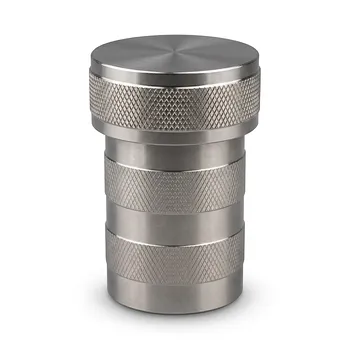
Solvothermal reactions typically take place inside stainless steel autoclaves to withstand high pressures. Without a PTFE liner, the reactive solution would leach metal ions from the steel, which would introduce impurities into the reaction and compromise the purity of materials like metal-organic frameworks (MOFs).
Ensuring Product Integrity
By acting as a "chemical ghost," PTFE ensures that the precursors react only with each other rather than the container walls. This is critical for maintaining the structural integrity and stoichiometry of the resulting crystalline structures, particularly in sensitive laboratory and pharmaceutical applications.
Physical Stability and Surface Properties
Minimizing Fouling through Low Surface Energy
PTFE possesses extremely low surface energy, which results in its famous non-stick properties. In a reactor, this prevents catalyst precursors and precipitates from adhering to the walls, ensuring that all materials remain in the bulk solution and making the reactor much easier to clean.
Managing High-Pressure Thermal Requirements
While the stainless steel outer shell provides the mechanical strength to hold pressure, the PTFE liner provides the thermal stability needed for continuous service. It can reliably operate at temperatures common in MOF synthesis (typically 100°C to 120°C) and can withstand peaks up to approximately 260°C without melting or eroding.
Promoting Uniform Crystal Growth
The hydrophobic and oleophobic nature of PTFE prevents the adsorption of molecules onto the vessel surface. This ensures that crystallization occurs uniformly within the solvent rather than being seeded prematurely by the reactor's interior surface, leading to more consistent crystal sizes.
Understanding the Trade-offs
Thermal Expansion and Pressure Seals
PTFE has a significantly higher coefficient of thermal expansion than the stainless steel that surrounds it. This means the liner expands more than the autoclave as it heats up; if not designed correctly, this can lead to the liner deforming or "pinching" the seal, potentially causing leaks during the cooling phase.
Temperature Limits and Mechanical Creep
While PTFE is thermally stable, it is a relatively soft plastic that is subject to mechanical creep under high pressure and temperature. If the reactor is pushed beyond 250°C for extended periods, the liner may permanently lose its shape, necessitating frequent replacements to ensure a proper fit within the autoclave.
How to Apply This to Your Project
Making the Right Choice for Your Goal
- If your primary focus is High-Purity Synthesis: Use a high-quality PTFE liner to eliminate metal-ion leaching and ensure that your crystalline structures remain uncontaminated.
- If your primary focus is Aggressive Chemical Processing: Rely on PTFE’s inertness to handle mixed solvent environments (like DMF/Water) that would otherwise corrode standard laboratory glassware or metal containers.
- If your primary focus is High-Temperature Reactions (>260°C): Consider alternative liners like PEEK or quartz, as PTFE may begin to deform or undergo mechanical failure at these extreme limits.
Selecting PTFE ensures your solvothermal process remains controlled, pure, and protected from the volatile nature of high-pressure chemical synthesis.
Summary Table:
| Feature | Advantage in Solvothermal Synthesis | Impact on Research Outcomes |
|---|---|---|
| Chemical Inertness | Resists aggressive solvents like DMF and water at high pressure. | Prevents liner degradation and solvent contamination. |
| Purity Barrier | Stops metal ion leaching from stainless steel autoclaves. | Ensures the structural integrity and stoichiometry of MOFs. |
| Low Surface Energy | Non-stick surface prevents catalyst and precipitate adhesion. | Promotes uniform crystal growth and simplifies cleaning. |
| Thermal Stability | Reliable operation up to 260°C with excellent insulation. | Maintains a stable environment for continuous crystalline synthesis. |
Elevate Your Synthesis with KINTEK’s High-Performance Fluoropolymers
Don’t let contamination or corrosion compromise your research. KINTEK specializes in precision-engineered laboratory supplies crafted exclusively from PTFE and PFA to handle the most demanding solvothermal environments.
Whether you need standard labware—from beakers, crucibles, and reagent bottles to centrifuge and digestion tubes—or specialized tools like high-purity trace analysis instruments, filtration tools, and fluid transfer components (tubing, fittings, valves), we provide the durability you need. For advanced research, we offer custom electrochemical cells, hydrothermal synthesis liners, microwave digestion vessels, and microchannel reactors backed by end-to-end custom CNC fabrication.
From high-volume orders of general consumables to bespoke, non-standard machined parts, KINTEK delivers the absolute focus on material performance your project requires.
Ready to optimize your reactor setup? Contact us today to discuss your custom laboratory needs!
References
- Changli Wang, Bo Wang. Asymmetric Cu−N<sub>1</sub>O<sub>3</sub> Sites Coupling Atop‐type and Bridge‐type Adsorbed *C<sub>1</sub> for Electrocatalytic CO<sub>2</sub>‐to‐C<sub>2</sub> Conversion. DOI: 10.1002/ange.202411216
This article is also based on technical information from Kintek Knowledge Base .
Related Products
- PTFE Lined High Pressure Digestion Vessel 50ml High Temperature Hydrothermal Synthesis Tank
- High Purity PTFE Microwave Digestion Vessel Replacement Liner for Acid Sample Preparation and Trace Analysis
- High Purity PTFE Microwave Digestion Vessel for Soil and Food Analysis Acid Resistant Fluoropolymer Sample Preparation Liners
- High Pressure Custom TFM Reactor Stainless Steel Outer Vessel PTFE Inner Cup for Corrosive Synthesis
- Custom TFM Reaction Vessel with Stainless Steel Jacket and PTFE Inner Cup for High Corrosion Resistance
People Also Ask
- What are the benefits of using a PTFE-lined vessel for carbon-sulfur cathode treatment? Maximize Purity & Performance
- Why are PTFE-lined pressure digestion vessels required for the preparation of Ag/CeO2 catalysts? Purity & Performance
- What safety features are typically incorporated into high-pressure PTFE digestion vessel designs? Ensure Lab Safety
- What is the function of high-pressure PTFE digestion vessels in mineral analysis? Optimize Sample Mineralization
- What is the function of PTFE lined high-pressure vessels in g-C3N4 synthesis? Achieve High-Purity Material Growth