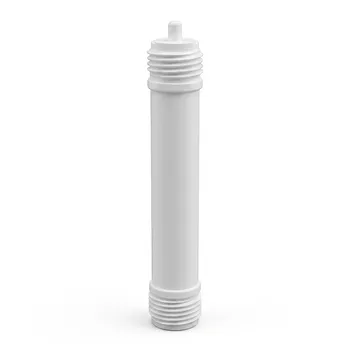
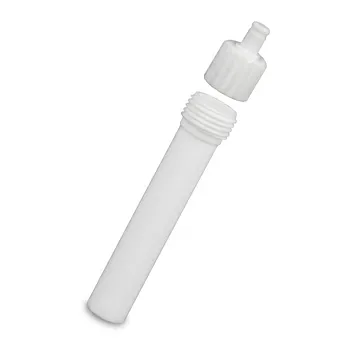
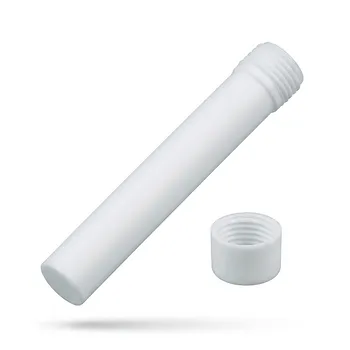
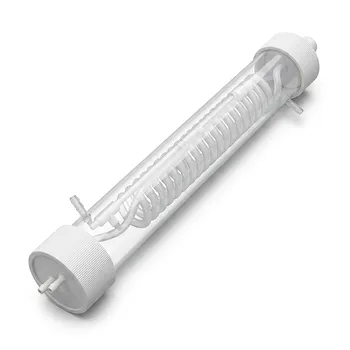
The necessity of PTFE and PFA liners stems from the extreme chemical environment required for crystal growth. Synthesis of $Cs_2NaScCl_6:Sb^{3+}$ involves high-concentration hydrochloric acid (HCl) at elevated temperatures and pressures. These liners provide an essential barrier that prevents the corrosive acid from attacking the reactor walls and leaching metal impurities into the sensitive perovskite structure.
Core Takeaway: High-purity PTFE or PFA liners are indispensable in hydrothermal synthesis because they offer near-total chemical inertness against concentrated acids. This prevents vessel corrosion and eliminates metal ion contamination, ensuring the high purity and structural integrity of the resulting perovskite crystals.
The Aggressive Nature of Hydrothermal Environments
High-Concentration HCl as a Reactive Medium
The synthesis of $Cs_2NaScCl_6:Sb^{3+}$ requires a reaction medium of concentrated hydrochloric acid (HCl). At room temperature, this acid is already highly reactive; however, the hydrothermal process significantly amplifies its corrosive potential.
Temperature and Pressure as Catalysts for Corrosion
Hydrothermal synthesis typically operates between 120°C and 240°C under significant pressure. These conditions accelerate chemical reactions, meaning the HCl would rapidly degrade standard metallic reactor vessels, such as those made of stainless steel, without a protective liner.
The Role of Fluoropolymer Liners
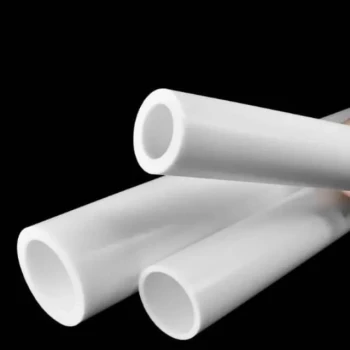
PTFE (Polytetrafluoroethylene) and PFA (Perfluoroalkoxy) are chosen for their exceptional thermal stability and resistance to chemical attack. They act as a physical and chemical shield, ensuring the aggressive solvents never make contact with the metal autoclave body.
Maintaining the Integrity of $Cs_2NaScCl_6:Sb^{3+}$
Preventing Metal Ion Interference
If the acidic medium were to corrode the reactor walls, metal ions like iron, nickel, or chromium would leach into the solution. These impurities can integrate into the crystal lattice, potentially quenching the desired luminescence of the $Sb^{3+}$ dopant or altering the semiconductor properties.
Ensuring Precise Stoichiometry
Perovskite crystals are highly sensitive to their chemical environment during the growth phase. By using high-purity inert liners, researchers ensure that the only elements present in the reaction are the intended precursors, maintaining the precise stoichiometry required for high-quality single crystals.
Non-Stick Properties and Yield
The non-stick nature of PTFE and PFA also plays a practical role in crystal collection. These materials reduce the likelihood of the synthesized crystals adhering to the vessel walls, which minimizes product loss and simplifies the post-synthesis recovery process.
Understanding the Trade-offs and Limitations
Thermal Constraints of PTFE/PFA
While these materials are chemically inert, they have strict thermal limits, usually around 250°C. Exceeding these temperatures can cause the liner to soften, deform, or release toxic fluorinated gases, compromising both the experiment and laboratory safety.
Structural "Creep" Under Pressure
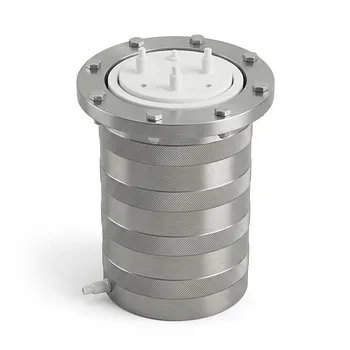
Under the high pressures of a hydrothermal autoclave, fluoropolymers can experience mechanical deformation or "creep." This requires the use of well-designed stainless steel outer shells to provide the necessary mechanical support for the flexible liner.
Porosity and Memory Effects
Though highly resistant, these polymers can be slightly porous at a microscopic level. If not cleaned rigorously between uses, "memory effects" can occur where trace contaminants from a previous synthesis affect the purity of a subsequent batch.
Making the Right Choice for Your Goal
When selecting liner materials for hydrothermal synthesis, consider the following recommendations:
- If your primary focus is maximum chemical purity: Always choose high-purity PFA liners, as they often exhibit lower trace metal content and smoother surfaces than standard PTFE.
- If your primary focus is high-temperature stability (up to 240°C): Utilize thick-walled PTFE liners within a precision-machined stainless steel autoclave to prevent liner deformation.
- If your primary focus is easy crystal recovery: Select liners with a high-quality surface finish to leverage the non-stick properties of fluoropolymers and ensure minimal loss of the $Cs_2NaScCl_6:Sb^{3+}$ product.
By prioritizing the chemical compatibility of the vessel liner, you ensure the successful synthesis of high-performance materials while protecting your laboratory equipment from catastrophic corrosion.
Summary Table:
| Feature | Advantage of PTFE/PFA Liners | Impact on Perovskite Quality |
|---|---|---|
| Chemical Resistance | Withstands concentrated HCl at high temp | Prevents metal leaching & impurity doping |
| Thermal Stability | Stable up to 250°C | Enables high-pressure hydrothermal growth |
| Surface Property | Non-stick and smooth surface | Minimizes product loss; easy crystal recovery |
| Material Purity | High-purity fluoropolymer grades | Maintains precise stoichiometry of $Sb^{3+}$ |
Elevate Your Research with Precision Fluoropolymer Engineering
Ensure the integrity of your sensitive synthesis with KINTEK’s high-performance labware. From everyday essentials like beakers, crucibles, and reagent bottles to advanced hydrothermal synthesis liners, microwave digestion vessels, and custom electrochemical cells, we specialize in high-purity PTFE and PFA solutions.
Whether you require high-volume standard consumables or bespoke non-standard machined parts via our end-to-end custom CNC fabrication, KINTEK is dedicated to providing the chemical inertness your materials demand.
Ready to protect your crystals from contamination? Contact our experts today to discuss your custom laboratory setup!
References
- Hao Suo, Feng Wang. Excitation-mode-selective emission through multiexcitonic states in a double perovskite single crystal. DOI: 10.1038/s41377-024-01689-7
This article is also based on technical information from Kintek Knowledge Base .
Related Products
- PTFE Lined High Pressure Digestion Vessel 50ml High Temperature Hydrothermal Synthesis Tank
- High Purity PTFE Microwave Digestion Vessel for Soil and Food Analysis Acid Resistant Fluoropolymer Sample Preparation Liners
- High Purity PTFE Microwave Digestion Vessel Replacement Liner for Acid Sample Preparation and Trace Analysis
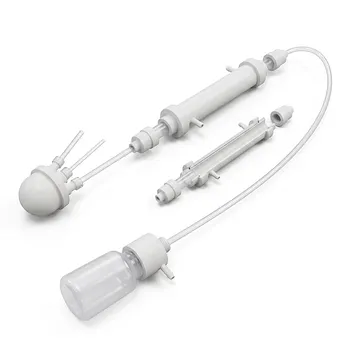
- High Temperature Corrosion Resistant PTFE Hydrogen Fluoride Condensation Reflux System with Separatory Funnel and PFA Collection Bottle
- High Purity TFM Microwave Digestion Vessels PTFE Acid Evaporation Liners Domestic GT-400 Equivalent Laboratory Reaction Containers
People Also Ask
- What are the benefits of using a PTFE-lined vessel for carbon-sulfur cathode treatment? Maximize Purity & Performance
- Why are PTFE-lined pressure digestion vessels required for the preparation of Ag/CeO2 catalysts? Purity & Performance
- What safety features are typically incorporated into high-pressure PTFE digestion vessel designs? Ensure Lab Safety
- What is the function of PTFE lined high-pressure vessels in g-C3N4 synthesis? Achieve High-Purity Material Growth
- Role of High-Pressure Digestion Tanks in Perovskite Synthesis: Achieve Superior Stability and Latent Heat