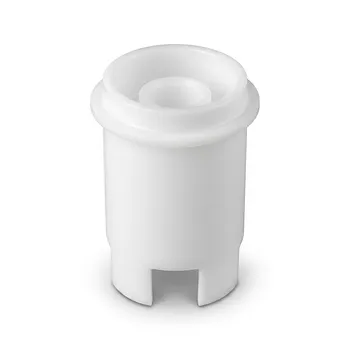
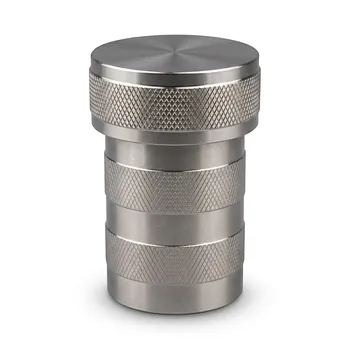
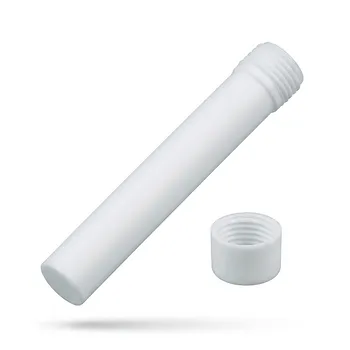
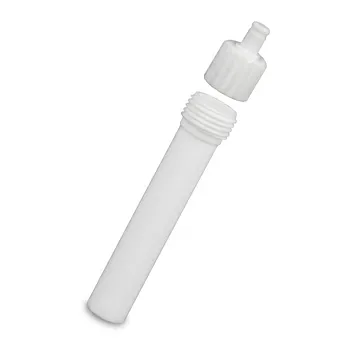
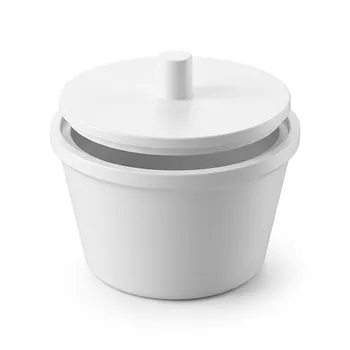
The use of high-pressure autoclaves with PTFE liners is essential because they create a controlled, subcritical environment where solvents can exceed their atmospheric boiling points while remaining liquid. This specific state increases the solubility of precursors like sodium molybdate and thiourea, facilitating the precise nucleation and growth required for $MoS_2$ and borophene nanosheets. The PTFE liner acts as a critical chemical barrier, protecting the reactor from corrosion and ensuring the high purity of the synthesized nanomaterials.
Core Takeaway: PTFE-lined autoclaves provide a unique combination of high-pressure containment and chemical inertness, enabling the high-temperature reactions necessary to control the phase, morphology, and purity of 2D nanosheets while protecting the hardware from aggressive precursors.
Creating the Ideal Environment for Nanosheet Growth
Reaching Subcritical Fluid States
High-pressure autoclaves allow solvents to reach temperatures between 200°C and 230°C without evaporating. In this subcritical state, the solvent's properties change, significantly enhancing the solubility of solid reactants and accelerating reaction kinetics.
Controlling Crystal Morphology and Phase
The sealed environment creates autogenous pressure, which is vital for controlling the direction of crystal growth. This pressure is a key factor in achieving the partial phase transition of $MoS_2$ from the semiconducting 2H phase to the metallic 1T phase, which is highly desired for electrochemical applications.
Facilitating Molecular Assembly
For materials like borophene or complex frameworks, the autoclave provides a stable "pressure cooker" effect. This ensures that coordination crystallization occurs uniformly, leading to high crystallinity and high specific surface areas.
The Critical Role of PTFE Liners
Preventing Chemical Corrosion
The precursors used in $MoS_2$ synthesis are often highly acidic or alkaline, which would quickly degrade a standard stainless steel autoclave. PTFE (Polytetrafluoroethylene) is exceptionally inert, forming a protective shield that prevents the reaction solution from attacking the metal walls.
Eliminating Metallic Contamination
If the precursor solution were to react with the autoclave’s metal body, it would introduce iron, nickel, or chrome impurities into the nanosheets. The PTFE liner ensures that the reaction system remains pure, which is essential for maintaining the electronic and catalytic properties of the final material.
Maximizing Material Recovery
PTFE is known for its extremely smooth, non-stick surface. This property prevents the newly formed $MoS_2$ or borophene nanosheets from adhering to the liner walls, allowing for maximum material recovery and easier cleaning between experiments.
Understanding the Trade-offs and Limitations
Temperature Constraints
While PTFE is thermally stable, it has a hard limit; it typically cannot be used for reactions exceeding 230°C to 250°C. Beyond these temperatures, the liner may soften or deform, compromising the seal and potentially releasing toxic fluorinated vapors.
Thermal Lag and Cooling
PTFE is an insulator, which means there is a significant delay between the temperature of the oven and the temperature of the reactants inside the liner. This thermal lag must be accounted for during the synthesis process to ensure reproducible results.
Pressure Safety Risks
High-pressure synthesis carries inherent risks of explosive decompression if the autoclave is overloaded or heated too rapidly. Users must strictly follow volume limits (typically filling the liner to 60-80% capacity) to leave space for the expansion of vapors.
Applying This Technology to Your Synthesis
Making the Right Choice for Your Goal
- If your primary focus is high electrochemical activity: Use a high-pressure autoclave to drive the 1T phase transition and ensure small, uniform nanosheet morphology.
- If your primary focus is material purity for electronics: Always utilize a high-purity PTFE liner to prevent the introduction of metallic ions from the reactor vessel.
- If your primary focus is synthesizing at temperatures above 250°C: Move away from PTFE and consider PPL (Polyphenylene polymers) or quartz liners, which offer higher thermal resistance.
By mastering the balance of pressure, temperature, and chemical containment, researchers can reliably produce 2D materials with the specific structural characteristics required for next-generation technology.
Summary Table:
| Feature | Role in Synthesis | Key Benefit |
|---|---|---|
| Subcritical Environment | Temperatures 200°C-230°C | Enhanced solubility of precursors like sodium molybdate. |
| Autogenous Pressure | Sealed reaction chamber | Facilitates 2H to 1T phase transition and crystal growth. |
| Chemical Inertness | PTFE Protective Barrier | Prevents corrosion from acidic/alkaline precursors. |
| Purity Control | Zero Metallic Contact | Eliminates Fe, Ni, or Cr contamination in nanosheets. |
| Surface Properties | Non-stick PTFE Lining | Maximizes material recovery and simplifies cleaning. |
Elevate Your Synthesis Precision with KINTEK Fluoropolymer Solutions
Achieving the perfect 2D nanosheet morphology requires equipment that stands up to aggressive chemistry without compromising purity. At KINTEK, we specialize exclusively in high-performance fluoropolymers like PTFE and PFA to support your most demanding research.
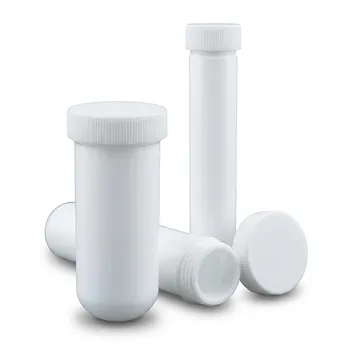
From everyday basic labware—including beakers, measuring cylinders, crucibles, and reagent bottles—to advanced reaction apparatus like the hydrothermal synthesis liners and microwave digestion vessels essential for $MoS_2$ production, we provide the full spectrum of laboratory supplies. Our expertise extends to:
- Fluid Transfer & Prep: High-purity tubing, fittings, valves, filters, and pipettes.
- Specialized Components: Battery testing fixtures, electrochemical cells, and microchannel reactors.
- Bespoke Fabrication: Backed by end-to-end custom CNC fabrication, we deliver everything from complex non-standard machined parts to high-volume orders tailored to your specific reactor dimensions.
Ensure your materials maintain their electronic and catalytic integrity. Contact KINTEK today to source high-performance PTFE liners and custom laboratory setups designed for excellence.
References
- Charu Sharma, Manoj Kumar Gupta. 2D borophene–MoS2 nanosheet heterostructure as a flexible piezoelectric nanogenerator for self-powered piezotronic sensing. DOI: 10.1038/s43246-025-00758-7
This article is also based on technical information from Kintek Knowledge Base .
Related Products
- PTFE Lined High Pressure Digestion Vessel 50ml High Temperature Hydrothermal Synthesis Tank
- Custom TFM Reaction Vessel with Stainless Steel Jacket and PTFE Inner Cup for High Corrosion Resistance
- High Pressure Custom TFM Reactor Stainless Steel Outer Vessel PTFE Inner Cup for Corrosive Synthesis
- High Pressure PTFE Digestion Vessel Inner Cup Holder Custom Corrosion Resistant Low Background Teflon
- High Temperature Corrosion Resistant Hydrothermal Synthesis Reactor with TFM Inner Liner and Straight Cylinder Design
People Also Ask
- What are the benefits of using a PTFE-lined vessel for carbon-sulfur cathode treatment? Maximize Purity & Performance
- Why are PTFE-lined pressure digestion vessels required for the preparation of Ag/CeO2 catalysts? Purity & Performance
- What safety features are typically incorporated into high-pressure PTFE digestion vessel designs? Ensure Lab Safety
- What is the function of PTFE lined high-pressure vessels in g-C3N4 synthesis? Achieve High-Purity Material Growth
- Role of High-Pressure Digestion Tanks in Perovskite Synthesis: Achieve Superior Stability and Latent Heat