High-purity water is critical because it controls both the thermal environment and the chemical cleanliness of PTFE suspension polymerization. Water with a minimum volume resistivity of approximately 16 to 18 MOhm-cm provides a low-ion reaction medium for TFE polymerization. It also absorbs and transfers away the substantial exothermic heat of polymerization, which is approximately -41 kcal/mol, while cooling jackets and agitation maintain temperature uniformity. Most importantly, limiting ionic contamination helps prevent foreign species from affecting the growing PTFE particles and preserves low-defect, low-extractable resin quality.
High-resistivity water is not merely a solvent in PTFE suspension polymerization. It is the controlled reaction medium, heat-transfer medium, and first line of defense against ionic contamination that can compromise particle structure and resin purity.
Why Water Quality Controls the Polymerization Environment
Water Provides the Reaction Medium
In suspension polymerization, TFE polymerizes within an aqueous medium. The water phase supports dispersion of the monomer and developing polymer particles while allowing agitation and external cooling to regulate the reaction.
Because the water is present throughout the process, any dissolved ionic contaminants have repeated opportunities to interact with the monomer, initiator system, reactor surfaces, or growing polymer particles.
Water Removes Polymerization Heat
TFE polymerization is strongly exothermic, releasing approximately 41 kcal per mole of TFE polymerized. The aqueous phase acts as a heat sink that absorbs this heat and transfers it toward the reactor’s external cooling jacket.
Vigorous agitation improves heat distribution and reduces local temperature differences. High-purity water therefore supports not only chemical cleanliness but also predictable thermal control.
Temperature Uniformity Protects Particle Formation
Localized overheating can change polymerization kinetics and affect the development of PTFE particles. Maintaining a uniform reaction temperature helps the process produce resin with more consistent structure and particle characteristics.
The water’s heat capacity is useful only when the aqueous phase is well mixed and the cooling system can remove the generated heat effectively.
How Ionic Contamination Affects PTFE Resin Quality
High Resistivity Indicates Low Ionic Content
Electrical resistivity is a practical indicator of the concentration of mobile ionic species in water. A resistivity of approximately 16 to 18 MOhm-cm corresponds to very low ionic contamination and is therefore used as a process-purity requirement.
Resistivity does not measure every possible contaminant, but it is especially relevant for controlling dissolved salts, metals, and other conductive ionic species.
Contaminants Can Interact with Growing Particles
During the emulsion-like incubation stage, PTFE particles are forming and developing within the aqueous phase. Foreign ionic species can interact with these particles or become associated with material present on or within the developing resin.
Such contamination can contribute to structural irregularities and increase the amount of extractable material associated with the finished resin.
Low-Extractable Resin Requires a Clean Reaction Medium
For applications such as cleanroom laboratory supplies, tubing, and fittings, the resin must contribute as little extractable contamination as possible. Starting with ultra-pure water reduces one important source of trace ionic impurities before the polymer is even formed.
This is analogous to maintaining a clean analytical background: preventing contamination during production is more reliable than attempting to remove it afterward.
Why the Requirement Extends Beyond the Reactor
Water Purity Supports Downstream Performance
The quality of the polymerization medium influences the purity profile of the resulting PTFE resin. That profile matters when the resin will be processed into components used with sensitive chemicals, electrolytes, or analytical systems.
High-purity PTFE and related fluoropolymers are valued in these environments because their chemical inertness and low leaching help preserve the purity of fluids in contact with the finished component.
Trace Metals Can Be Especially Problematic
In sensitive electrochemical or chemical applications, trace metal ions such as iron or nickel can alter reactions, poison catalysts, or create background contamination. A resin produced in a poorly controlled ionic environment may be less suitable for applications where extractables are tightly limited.
The polymerization water is therefore part of the overall contamination-control strategy, alongside reactor construction, additives, washing, drying, and fabrication practices.
Understanding the Trade-offs
Resistivity Alone Is Not a Complete Purity Specification
A high resistivity value primarily indicates low ionic conductivity. It does not by itself guarantee the absence of organic residues, particles, dissolved gases, microbial contamination, or process-derived species.
Water-quality control should therefore be aligned with the full polymerization specification rather than treating resistivity as the only relevant measurement.
Excessive Water Purity Does Not Replace Process Control
Ultra-pure water cannot compensate for inadequate agitation, poor cooling, contaminated equipment, or uncontrolled initiator and additive conditions. Thermal management and contamination control must operate together.
A clean reaction medium is necessary, but it is only one part of producing consistent PTFE resin.
Contamination Can Enter Through the Entire System
Even when the feed water meets the resistivity requirement, ions can be introduced by reactor surfaces, piping, seals, additives, cleaning residues, or storage systems. The complete process must be designed to prevent recontamination after purification.
This is why high-purity fluid-contact materials and disciplined handling practices are important in high-purity fluoropolymer production.
Making the Right Choice for Your Goal
The practical priorities depend on the intended resin quality and end use:
- If your primary focus is thermal control: Use the aqueous phase with effective agitation and external jacket cooling to distribute and remove the heat generated by TFE polymerization.
- If your primary focus is resin purity: Maintain process water at approximately 16 to 18 MOhm-cm or higher, while also controlling contamination from equipment, additives, and handling.
- If your primary focus is low extractables: Treat water resistivity as part of a broader purity program covering reactor materials, downstream purification, drying, and fabrication.
- If your primary focus is electrochemical or cleanroom applications: Minimize ionic and metallic contamination throughout the production chain because trace impurities can compromise fluid purity and application performance.
Controlling both heat removal and ionic contamination is what makes high-resistivity water essential to producing reliable, low-defect PTFE fluoropolymer resin.
Summary Table:
| Key Aspect | Role of High-Purity Water | Impact on PTFE Quality |
|---|---|---|
| Reaction Medium | Provides a low-ion environment for TFE polymerization | Prevents ionic contamination, preserving particle structure |
| Heat Transfer | Absorbs exothermic heat (-41 kcal/mol) and transfers it to cooling jacket | Maintains temperature uniformity, preventing hot spots |
| Contamination Control | High resistivity (16-18 MOhm-cm) indicates low ionic content | Reduces extractables and trace metals, improving resin purity |
| Downstream Performance | Ensures clean base for further processing | Enhances suitability for cleanroom and electrochemical applications |
Ensure your PTFE production achieves the highest purity and performance standards. At KINTEK, we specialize in high-performance fluoropolymers, offering PTFE and PFA labware, custom CNC machining, and contamination-controlled solutions tailored to your polymerization needs. Our products are designed to support low-extractable, defect-free resin production. Contact us today to discuss how our advanced PTFE/PFA components can enhance your process — Get in touch with our experts!
Related Products
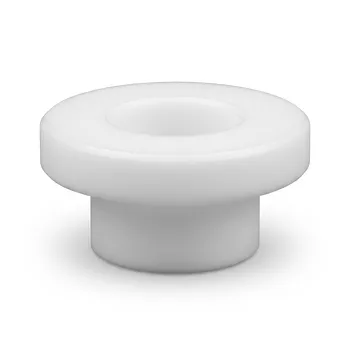
- Custom PTFE Insulating Gaskets and Corrosion Resistant Fluoropolymer Seals for Industrial Electrical Applications
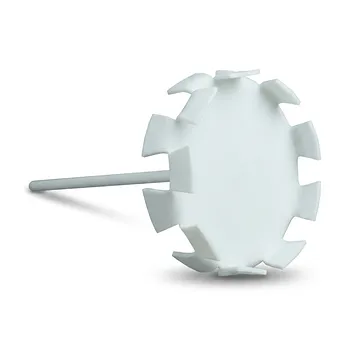
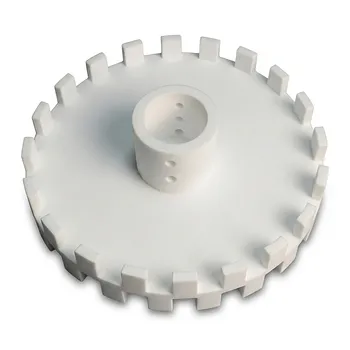
- High Purity PTFE Dispersion Disk for Food and Cosmetic Processing Non Stick Corrosion Resistant Large Stirring Paddle Customizable Fluoropolymer Impeller
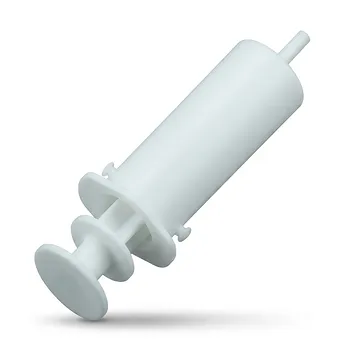
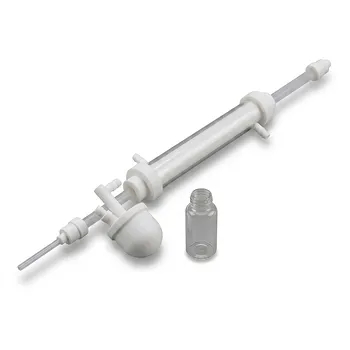
- High Purity Laboratory Grade PTFE Syringe Chemical Resistant Fluoropolymer Injector for Trace Analysis
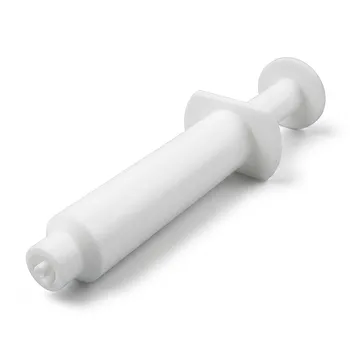
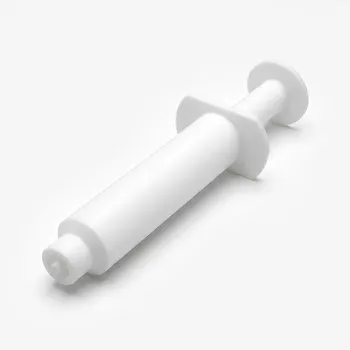
- Virgin PTFE Precision Syringe for Chemical Dispensing and Syringe Pump Integration with FEP Tubing Compatibility
- PTFE PFA Vacuum Filtration System Corrosion Resistant Customizable Shatterproof Laboratory Device
People Also Ask
- What are the three primary types of PTFE available for gaskets and seals? Choose the Right Material for Your Application
- Why is PTFE an ideal material choice for sealing gaskets, valves, and fluid transfer tubing exposed to extremely aggressive chemicals? Discover Its Superior Chemical Resistance and Reliability
- How is PTFE utilized in seals and gaskets? Leverage Its Chemical & Temperature Resistance
- What are the key properties of PTFE that make it suitable for seals and gaskets? Unlock Superior Sealing Performance
- How are custom PTFE parts used in the automotive sector? Enhance Vehicle Performance & Durability