High-purity platinum wire is the industry standard for analyzing vanadium pentoxide ($V_2O_5$) thin films because it provides a chemically inert, highly conductive surface that completes the electrical circuit without interfering with the measurement. It ensures that the recorded current and potential data reflect the intrinsic behavior of the $V_2O_5$ film rather than side reactions from the electrode itself.
Core Takeaway: Platinum serves as a "silent partner" in electrochemical cells, offering exceptional stability in common electrolytes and high electrical conductivity to ensure that measured signals originate solely from the material under study.
The Importance of Chemical Inertness and Stability
Resilience Against Electrolyte Reactions
$V_2O_5$ analysis typically involves electrolytes such as lithium perchlorate ($LiClO_4$) in propylene carbonate. Platinum is chosen because it does not react with these chemicals across a wide potential window, preventing the introduction of unwanted chemical noise.
Prevention of Metal Ion Contamination
Unlike lesser metals, platinum does not undergo anodic dissolution. This prevents metal ions from leaching into the electrolyte, which would otherwise migrate to the $V_2O_5$ working electrode and compromise the purity of the thin film’s electrochromic or energy-storage data.
Stability in Harsh Environments
Platinum maintains high corrosion resistance even in the strong alkaline or acidic environments sometimes used for oxide testing. This stability ensures that the counter electrode's surface area remains constant, which is vital for maintaining a stable current loop during long-term cycling.
Optimizing Signal Accuracy and Current Flow
Facilitating Rapid Charge Transfer
Platinum possesses high electrocatalytic activity for auxiliary reactions like hydrogen and oxygen evolution. This allows the counter electrode to easily support the current required by the working electrode without becoming a "bottleneck" in the detection circuit.
Ensuring Uniform Current Distribution
The high electrical conductivity of high-purity platinum allows for a uniform distribution of current density. This is critical when analyzing $V_2O_5$ thin films to ensure that the entire surface of the film is being probed equally, leading to more accurate cyclic voltammetry and polarization curves.
Minimizing Overpotential Interference
Because platinum has a low overpotential for common gas evolution reactions, the electrochemical workstation can more accurately control the potential at the $V_2O_5$ working electrode. This ensures that the measured faradaic processes are strictly related to the active material being evaluated.
Understanding the Trade-offs and Limitations
The Factor of High Material Cost
The primary drawback of platinum is its significant cost compared to alternatives like carbon or stainless steel. While it provides superior data, it may be cost-prohibitive for large-scale industrial applications or routine educational labs where extreme precision is less critical.
Surface Area Mismatch
If a thin platinum wire is used against a very large working electrode, the current density on the wire may become too high. In these specific cases, a platinum mesh or plate is preferred over a simple wire to provide a larger reaction interface and prevent the counter electrode from limiting the system.
Potential for Catalytic Side Effects
While its catalytic nature is usually a benefit, platinum can occasionally catalyze the decomposition of certain organic solvents at high potentials. Researchers must verify that the solvent chosen for $V_2O_5$ testing is stable in the presence of platinum within the specific voltage range being explored.
How to Apply This to Your Project
Selecting the right electrode configuration depends on your specific research goals and the nature of your electrolyte.
- If your primary focus is high-precision kinetic studies: Use a high-purity platinum wire or mesh to ensure that no electrode dissolution or unintended redox peaks interfere with your $V_2O_5$ data.
- If your primary focus is large-scale electrode testing: Consider a platinum plate or mesh rather than a wire to ensure the counter electrode surface area is significantly larger than your working electrode, preventing current limitation.
- If your primary focus is cost-effective routine screening: Evaluate whether high-surface-area carbon electrodes can suffice, though you must first validate them against a platinum standard to ensure no loss in signal clarity.
By prioritizing platinum for foundational research, you ensure that your findings on vanadium pentoxide are based on the material's intrinsic properties rather than experimental artifacts.
Summary Table:
| Feature | Benefit for V2O5 Analysis | Impact on Results |
|---|---|---|
| Chemical Inertness | Resilience against $LiClO_4$ electrolytes | Prevents unwanted side reactions |
| High Conductivity | Facilitates uniform current distribution | Accurate cyclic voltammetry data |
| High Stability | Resists corrosion in acidic/alkaline media | Ensures constant surface area |
| Catalytic Activity | Low overpotential for gas evolution | Prevents current bottlenecks |
| High Purity | Zero metal ion leaching | Protects $V_2O_5$ film integrity |
Elevate Your Electrochemical Research with KINTEK's Premium Solutions
Precision in vanadium pentoxide analysis demands more than just high-quality electrodes; it requires a complete ecosystem of high-performance materials. KINTEK manufactures virtually all imaginable laboratory supplies crafted from PTFE and PFA, ensuring your sensitive electrochemical experiments remain free from contamination.
From everyday basic labware (beakers, crucibles, reagent bottles) and fluid transfer components (tubing, fittings, valves) to advanced electrode accessories, electrochemical cells, and battery testing fixtures, we provide the tools you need for high-accuracy results. Backed by end-to-end custom CNC fabrication, we deliver everything from complex non-standard machined parts to high-volume orders with an exclusive focus on high-performance fluoropolymers.
Ready to optimize your lab setup? Contact us today to discuss your custom fabrication needs and discover how KINTEK can bring absolute precision to your research!
References
- Bhalchandra K. Mandlekar, Anamika V. Kadam. Vacancy-defect assisted electrochromic applications in V2O5 nanomaterials. DOI: 10.1007/s44373-025-00050-w
This article is also based on technical information from Kintek Knowledge Base .
Related Products
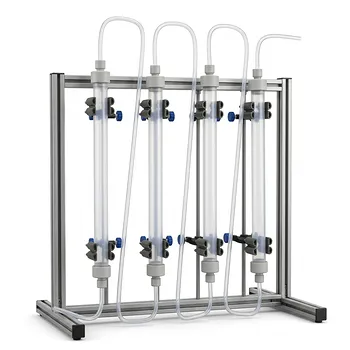
- High Purity PFA Valves and Weldable Corrosion Resistant Transparent Tubing for Semiconductor Sensor Manufacturing Fluid Transfer
- Corrosion Resistant High Purity PFA Valve and Weldable Transparent Tubing for Semiconductor Fluid Transfer
- High Purity PFA Coiled Tubing Custom PTFE Machining PFA Welding and Precision Bending Solutions
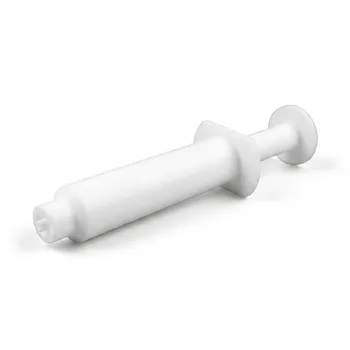
- High Purity PFA Syringe 10ml Corrosion Resistant Translucent Fluoropolymer Sampling Unit for Trace Analysis
- High Purity PTFE Centrifuge Tubes for Trace Analysis Custom Laboratory Centrifugation Containers with Racks
People Also Ask
- Why are high-purity PFA fluid transfer components preferred for battery electrolytes? Ensure Purity & Data Accuracy
- What role do PFA tubing and valves play in high-precision laboratory fluid transfer systems? Ensure Ultra-Pure Results
- How do PFA fluid transfer components contribute to chemical research precision? Achieve high-purity results today.
- How do high-precision PFA fluid transfer components, such as tubing and fittings, affect the results of continuous-flow synthesis?
- Why is PFA often selected over traditional PTFE for manufacturing complex fluoropolymer fluid components, custom fittings, and sealed laboratory digestion vessels? Discover the key advantages for your lab.