Controlling the cooling rate is critical because it determines the fluoropolymer’s final microstructure, strength, density, permeability, and dimensional stability. Slow, controlled cooling generally increases crystallinity and produces a denser, stronger material suited to high-pressure and chemically aggressive laboratory applications. Rapid cooling increases the amorphous phase, which can improve toughness, flexibility, and transparency but may reduce rigidity and create internal stresses in thick-walled parts.
The cooling cycle is a design parameter, not merely a production step. Manufacturers must balance crystallinity, mechanical strength, chemical resistance, transparency, stress-crack resistance, and dimensional accuracy according to the apparatus’s intended use.
How Cooling Changes Fluoropolymer Structure
Cooling Determines Crystallinity
As molten fluoropolymer cools, polymer chains fold and organize into crystalline regions. The rate of heat removal determines how much time those chains have to form ordered structures before molecular movement stops.
Slower cooling allows greater crystal development, including larger crystal bands and higher overall crystallinity. Rapid cooling limits this organization and leaves a greater proportion of the polymer in an amorphous state.
Crystallinity Affects Density and Strength
Higher crystallinity generally produces a denser, mechanically stronger fluoropolymer. This improves resistance to physical deformation and reduces chemical permeability.
These properties are important in microwave digestion vessels, reaction apparatus, cleaning tanks, fittings, and high-pressure fluid transfer components, where the material must retain its shape under heat, pressure, and chemical exposure.
Microstructure Controls Optical Clarity
Rapid, controlled cooling can inhibit large crystallite growth and produce a fine crystalline structure with a higher amorphous content. This can significantly improve optical clarity.
Clear PFA or related fluoropolymer components are useful when operators need to inspect fluid levels, observe reactions, or monitor process conditions through a vessel or connector.
Why Thick-Walled Apparatus Requires Special Control
Low Thermal Conductivity Creates Temperature Gradients
Fluoropolymers such as PTFE, PFA, FEP, and ETFE have very low thermal conductivity. During rapid cooling, the surface can solidify much earlier than the interior.
This difference creates steep temperature gradients between the core and surface of thick-walled parts. The resulting uneven contraction can generate internal thermal stresses.
Uneven Cooling Can Distort the Part
Nonuniform solidification can cause cracking, warping, voids, sink marks, and dimensional instability. These defects are especially serious in laboratory apparatus because sealing surfaces, vessel walls, ports, and mating components often require tight dimensional control.
A part may appear sound externally while retaining internal stresses that later cause cracking or deformation during service.
Directional Cooling Supports Better Filling
For molded components, cooling should be managed so that solidification progresses toward the feed point. This allows molten resin to continue compensating for volumetric shrinkage until the cavity has fully solidified.
A controlled solidification front reduces the likelihood of internal voids and shrinkage-related defects.
How Cooling Rate Changes Service Performance
Slow Cooling Favors Rigidity
Higher crystallinity increases mechanical strength and elastic modulus. This makes slow, controlled cooling appropriate for components that must resist pressure, deformation, or dimensional change.
Examples include rigid reaction vessels, structural fittings, and high-pressure fluid transfer components.
Rapid Cooling Favors Toughness and Flexibility
Quenching reduces crystallinity and increases the amorphous phase. The resulting material can be tougher, more elastic, and less brittle.
These characteristics may benefit flexible tubing connectors, clear laboratory containers, and components exposed to impact or repeated flexing.
PFA Requires a Deliberate Balance
PFA contains comonomer side chains that disrupt crystal packing and contribute to toughness. Cooling-rate control allows manufacturers to balance crystallinity with impact strength, stress-crack resistance, and seal integrity.
Rapid cooling can produce a tougher, less brittle part, while slower cooling can increase density and rigidity. The correct choice depends on whether the apparatus prioritizes structural strength or resistance to cracking under sustained chemical and mechanical load.
PTFE Can Retain Thermal Stress
After high-temperature sintering, PTFE parts continue to develop their final crystallinity during cooling. Fast quenching can lower crystallinity, but it can also produce severe internal stress in thick sections because the surface and core cool at different rates.
Controlled cooling, and sometimes secondary annealing, is therefore needed to improve structural integrity and dimensional stability.
Understanding the Trade-offs
Higher Crystallinity Is Not Always Better
Greater crystallinity improves strength, rigidity, density, and resistance to physical deformation. However, it can reduce elongation and may lower resistance to environmental stress cracking during prolonged exposure to aggressive chemicals under mechanical load.
The strongest material in a short-term mechanical test is not automatically the best choice for long-term chemical service.
Transparency Can Conflict With Rigidity
Rapid cooling and fine crystallite formation can improve optical transparency and flex fatigue performance. The same lower-crystallinity structure may provide less stiffness and dimensional stability than a more slowly cooled component.
Clear inspection may be essential for one vessel, while pressure resistance may be the dominant requirement for another.
Fast Cooling Can Increase Manufacturing Defects
Quenching can be useful when toughness or clarity is the priority, but uncontrolled rapid cooling is risky for thick-walled equipment. The low thermal conductivity of fluoropolymers makes uneven solidification and residual stress more likely.
Cooling must therefore be controlled throughout the part, rather than judged only by the temperature at the mold surface.
Geometry May Determine the Best Manufacturing Method
Some fluoropolymers have very high melt viscosity or may degrade before reaching a suitable processing condition. In those cases, machining from solid PTFE or PFA stock can produce complex laboratory geometries without exposing the material to additional thermal processing.
Machining does not eliminate the importance of the stock material’s prior thermal history, but it can reduce molding-related defects and preserve chemical purity for specialized components.
Making the Right Choice for Your Goal
The cooling profile should be selected from the apparatus’s actual service requirements, wall thickness, geometry, and fluoropolymer grade.
- If your primary focus is maximum rigidity and pressure resistance: Use slower, carefully controlled cooling to promote higher crystallinity while managing shrinkage and residual stress.
- If your primary focus is optical clarity and flexibility: Use rapid but uniform cooling to limit large crystallite growth and preserve a higher amorphous content.
- If your primary focus is chemical stress-crack resistance: Avoid assuming that maximum crystallinity is ideal; evaluate whether greater elongation and toughness from a lower-crystallinity structure are more important.
- If your primary focus is dimensional accuracy in thick-walled parts: Control the temperature gradient through the entire section and consider annealing where residual stresses remain significant.
- If your primary focus is complex, high-precision geometry: Consider machining from qualified solid fluoropolymer stock when melt processing could compromise geometry, purity, or thermal stability.
The correct cooling rate is the one that produces the microstructure and stress state required by the apparatus’s real operating conditions.
Summary Table:
| Cooling Rate | Crystallinity | Density & Strength | Optical Clarity | Flexibility & Toughness | Best For |
|---|---|---|---|---|---|
| Slow/Controlled | High | High | Lower | Lower | Rigid vessels, high-pressure fittings, structural components |
| Rapid/Quench | Low | Lower | Higher | Higher | Clear containers, flexible tubing, impact-resistant parts |
Optimize Your Fluoropolymer Labware Performance
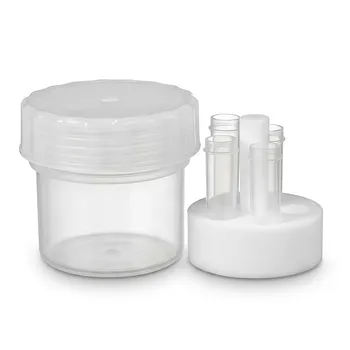
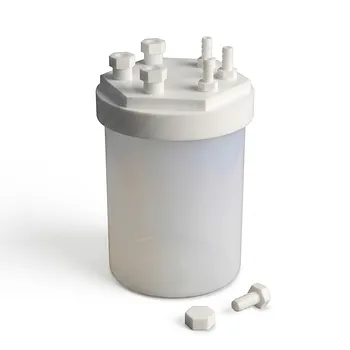
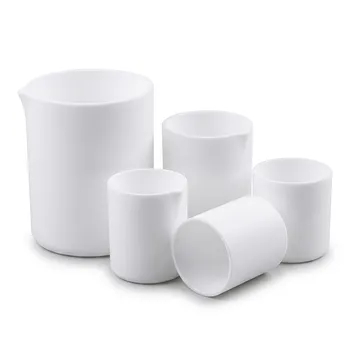
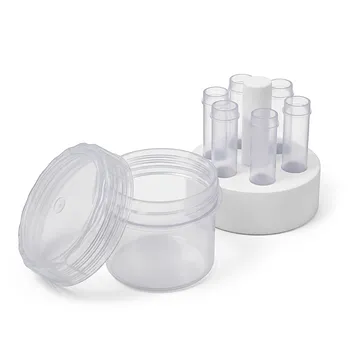
At KINTEK, we specialize in manufacturing high-performance PTFE and PFA labware with precise thermal processing control. From beakers and digestion vessels to custom CNC-machined parts, our products are engineered for maximum strength, clarity, and chemical resistance.
Contact us today to discuss your specific requirements and discover how our expertise can enhance your laboratory's efficiency and reliability.
Related Products
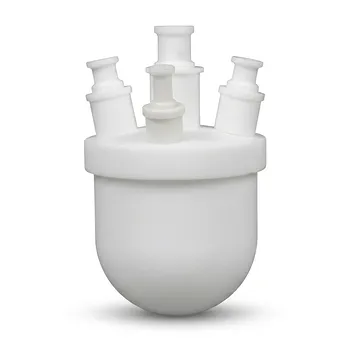
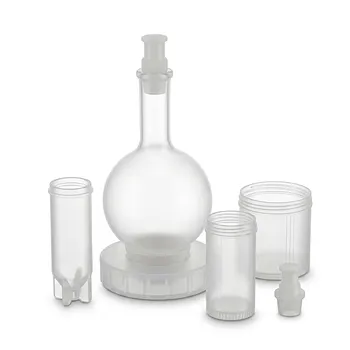
- Custom PTFE Flask 250ml High Purity Fluoropolymer Laboratory Vessel for Chemical Research
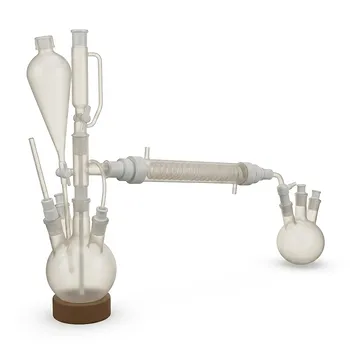
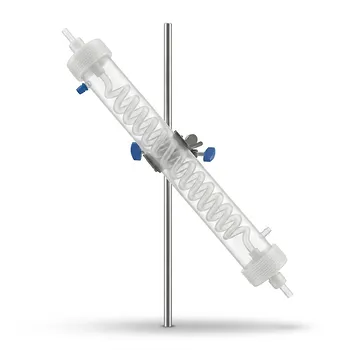
- PTFE Distillation Condensation Apparatus High Temperature Hydrofluoric Acid Resistant Fluorination Reaction Flask
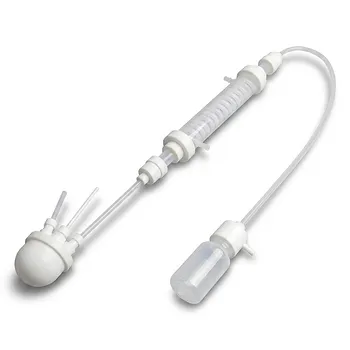
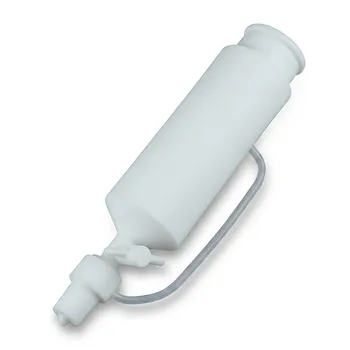
- Corrosion Resistant Hydrogen Fluoride Reflux Apparatus PTFE Flask Condenser Separatory Funnel Collection Bottle High Temperature Laboratory System
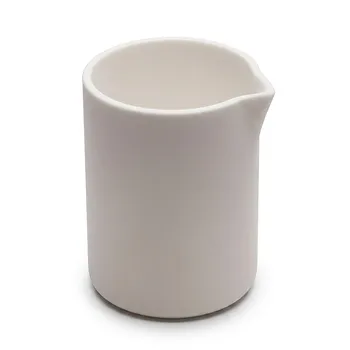
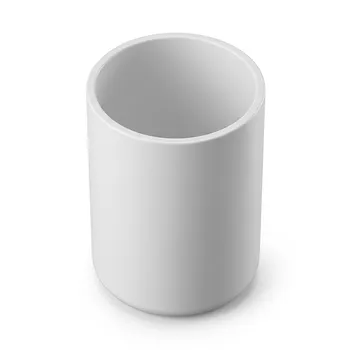
- Custom PTFE Beaker 350ml High Purity Laboratory Vessel with Optional Lid for Hot Plate Heating Applications
- Corrosion Resistant PTFE Support with PFA Transparent Reaction Tank and High Purity PFA Sampling Tube for Trace Analysis
People Also Ask
- What are the key steps for structural integrity in molded PTFE lab reaction vessels? Master fine powder processing.
- Why Are High-Purity Fluoropolymer Vessels and Tubing Critical for Trace Analysis? Prevent Contamination Reliably
- Why do PTFE fluoropolymer laboratory vessels and containers exhibit superior chemical resistance against harsh solvents and corrosive acids compared to standard plastic labware? Discover the molecular secrets
- How do choice of solvent and chain transfer activity affect molecular weight during vinylidene fluoride (VDF) radical polymerization? Learn Key Factors for High-MW PVDF
- Why are fluoropolymer reaction vessels essential for SnO2/rGO synthesis? The Key to High-Performance Composites