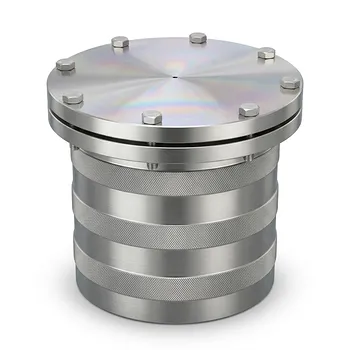
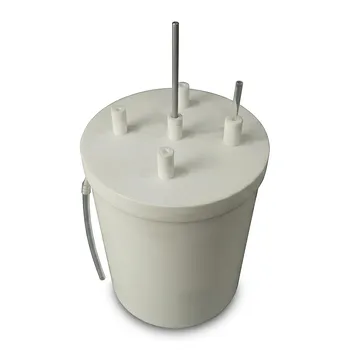
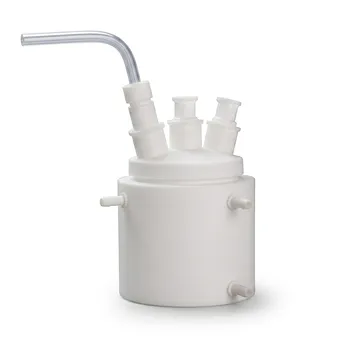
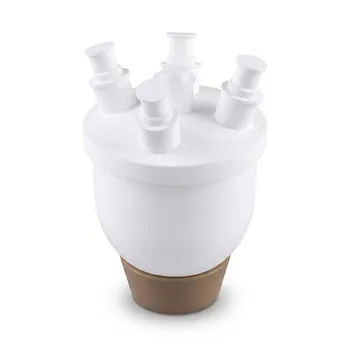
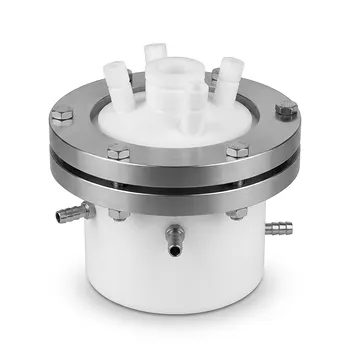
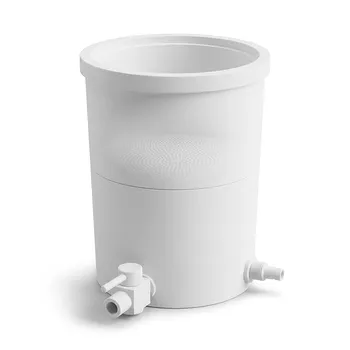
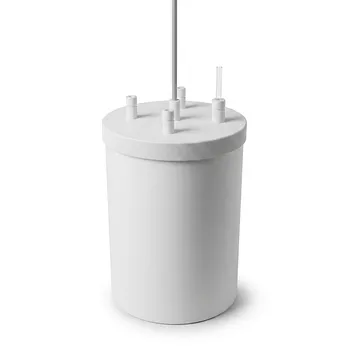
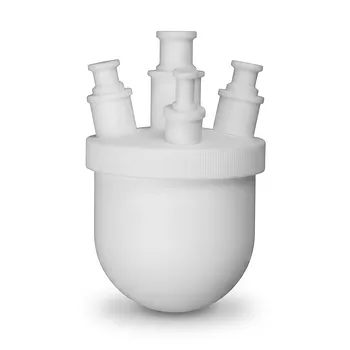
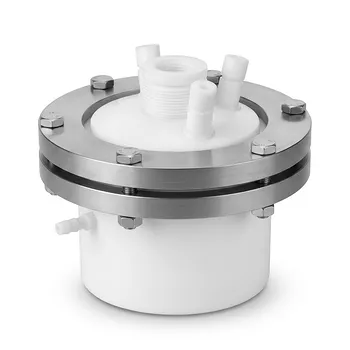
The synthesis of GO-SnO2-TiO2 composites requires a PTFE-lined stainless steel reactor because it resolves the conflict between high-pressure safety and chemical purity. For long-duration reactions (such as 18 hours at 180°C), the stainless steel provides the mechanical strength to contain internal steam pressure, while the PTFE liner protects the vessel from corrosive precursors like stannous chloride. This dual-material approach ensures the reaction reaches completion without introducing metallic impurities or damaging the equipment.
Core Takeaway: A PTFE-lined reactor is a modular solution that delegates pressure containment to a metal shell and chemical isolation to an inert polymer. This separation is critical for maintaining a stable, contaminant-free environment during the high-temperature, high-pressure cycles required for nanomaterial crystallization.
Balancing Mechanical Strength and Chemical Inertness
The Structural Role of Stainless Steel
Hydrothermal synthesis often occurs at temperatures exceeding the boiling point of the solvent, creating significant autogenous pressure. Stainless steel acts as the primary pressure vessel, providing the high tensile strength necessary to prevent mechanical failure or explosions under these conditions.
The Protective Role of the PTFE Liner
Polytetrafluoroethylene (PTFE) is used because it is almost entirely chemically inert and resistant to strong acids and bases. In the synthesis of GO-SnO2-TiO2, it prevents corrosive precursors from eroding the stainless steel walls, which would otherwise compromise the structural integrity of the reactor over time.
Facilitating Long-Duration Reactions
Complex composites require extended reaction times (e.g., 18 hours) to ensure precursors fully react and form tightly coated structures. The PTFE liner maintains a stable internal environment throughout these long durations, ensuring that the chemical conditions remain constant from the first hour to the last.
Ensuring Material Purity and Microstructure Control
Preventing Metal Ion Contamination
Stainless steel surfaces can leach trace metal ions into the reaction solution when exposed to heat and corrosive media. The PTFE liner acts as a critical chemical barrier, ensuring that the final composite—such as GO-SnO2-TiO2—remains free from unwanted metallic impurities that could alter its electronic or photocatalytic properties.
Facilitating Product Recovery and Cleaning
The non-stick properties of PTFE are essential for recovering synthesized nanomaterials after the reaction is complete. This characteristic also makes the reactor easier to clean, which prevents cross-contamination between different experimental batches and ensures reproducible results.
Promoting Uniform Growth and Crystallization
The high-pressure environment created by the sealed reactor promotes the synergistic interaction between graphene oxide and metal oxides. This pressure facilitates the uniform anchoring and in-situ growth of nanoparticles on the GO surface, resulting in higher crystallinity and more stable material properties.
Understanding the Trade-offs
Temperature Limitations of PTFE
While PTFE is exceptionally inert, it has a clear thermal ceiling, typically around 250°C. Exceeding this temperature can cause the liner to soften or undergo thermal decomposition, potentially releasing toxic vapors and compromising the seal.
Thermal Expansion Mismatch
PTFE and stainless steel have significantly different coefficients of thermal expansion. During heating and cooling, the liner expands and contracts at a different rate than the shell, which can lead to "creep" or deformation of the liner if the temperature is cycled too aggressively.
Pressure Gradients and Seal Integrity
The liner is not a pressure vessel itself; it relies on the stainless steel shell for support. If a leak occurs between the liner and the steel wall, the resulting pressure can collapse the liner or cause the outer shell to corrode invisibly from the inside out.
Making the Right Choice for Your Goal
How to Apply This to Your Project
To ensure the success of your hydrothermal synthesis, consider the specific requirements of your precursor chemistry and thermal profile:
- If your primary focus is high product purity: Use a high-quality PTFE liner to eliminate the risk of metal ion leaching from the stainless steel reactor walls.
- If your primary focus is synthesis above 250°C: You must transition from PTFE to a PPL (polyphenylene polymer) liner or a gold/platinum-lined reactor to handle the increased thermal stress.
- If your primary focus is equipment longevity: Ensure the reactor is cooled slowly to room temperature to prevent the PTFE liner from deforming due to rapid thermal contraction.
By isolating the corrosive reaction environment from the high-strength pressure vessel, you ensure both the safety of the laboratory and the technical integrity of the synthesized nanomaterials.
Summary Table:
| Component | Primary Function | Key Benefit for Synthesis |
|---|---|---|
| Stainless Steel Shell | Mechanical Strength | Containment of high autogenous steam pressure |
| PTFE Liner | Chemical Inertness | Prevents corrosion and metal ion contamination |
| Non-stick Surface | Material Recovery | Facilitates easy cleaning and high product yield |
| Modular Design | Environmental Stability | Maintains constant conditions for 18h+ reactions |
Elevate Your Research with KINTEK’s Fluoropolymer Excellence
Precision in hydrothermal synthesis demands equipment that never compromises on purity or safety. KINTEK specializes in high-performance PTFE and PFA laboratory supplies, providing the critical barrier your samples need against contamination and corrosion.
From everyday basic labware like beakers, crucibles, and reagent bottles to specialized PTFE liners, high-purity trace analysis instruments, and custom-engineered reaction vessels, we offer everything required for complex material science. Our capabilities extend to advanced electrochemical cells, microwave digestion vessels, and bespoke fluid transfer components, all backed by expert end-to-end custom CNC fabrication.
Whether you need a single non-standard machined part or high-volume orders for a large-scale facility, KINTEK delivers absolute focus on fluoropolymer performance.
Ready to optimize your lab's workflow? Contact our technical team today to discuss your custom specifications!
References
- Zhenjie Tang. Research on a Review of Derivative Methods of Classical Hydrothermal/Solvothermal Synthesis Methods, Taking SnO₂/r-GO Gas-sensitive Composite Materials as Examples. DOI: 10.62051/ijepes.v4n2.06
This article is also based on technical information from Kintek Knowledge Base .
Related Products
- High Pressure Custom TFM Reactor Stainless Steel Outer Vessel PTFE Inner Cup for Corrosive Synthesis
- Custom TFM Reaction Vessel with Stainless Steel Jacket and PTFE Inner Cup for High Corrosion Resistance
- PTFE Lined High Pressure Digestion Vessel 50ml High Temperature Hydrothermal Synthesis Tank
- PTFE 10L Reaction Vessel with Stirring Paddle Customizable Corrosion Resistant High Temperature Reactor for Biopharmaceutical and Chemical Processing
- Custom PTFE Multilayer Reaction Apparatus High Temperature Corrosion Resistant Threaded Modular Sieve System
People Also Ask
- Why is a PTFE-lined reactor required for Mn2O3 synthesis? Achieve High Purity & Corrosion Resistance
- What is the technical value of 180 bar pressure for MgO nanostructures? Unlock Superior Crystallinity and Morphology
- What are the technical advantages of using high-pressure PTFE reaction vessels during metal digestion? Expert Insights.
- How does the regulation of initial pressure within a high-pressure reaction system affect the production of MIL-100(Fe)?
- Why is a high-pressure reactor necessary for the esterification reaction between oleic acid and methanol at 150°C? Guide