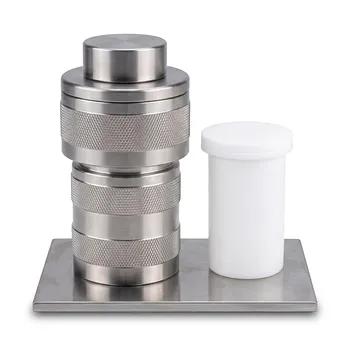
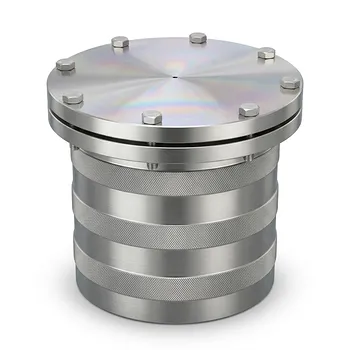
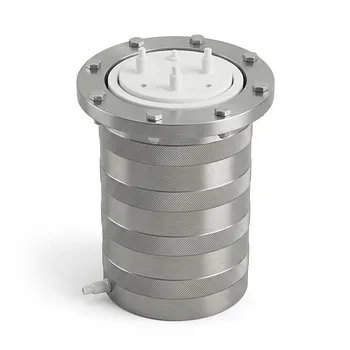
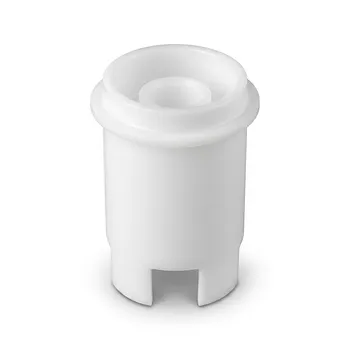
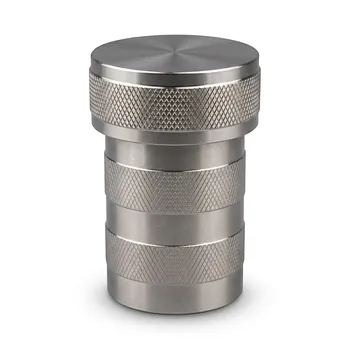
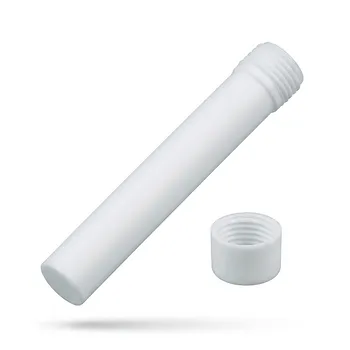
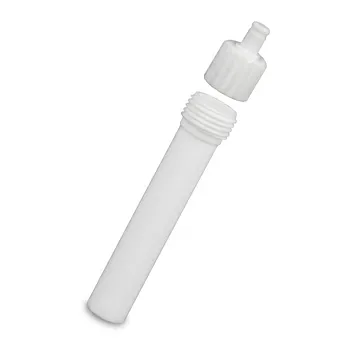
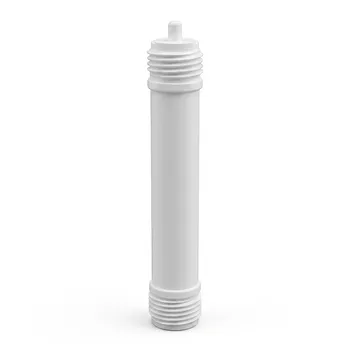
The synthesis of GO@BiBTC Metal-Organic Frameworks (MOFs) requires this specific configuration to achieve a "solvothermal" environment where temperature and pressure can exceed the boiling point of the solvents. This dual-layered system allows for the orderly growth of crystals from a mixture of N,N-dimethylformamide (DMF) and methanol at 120 °C. Without the stainless steel's strength and the PTFE's chemical resistance, the reaction would either fail to reach the necessary pressure or become contaminated by the metallic vessel.
Core Takeaway: The PTFE-lined stainless steel autoclave provides a critical synergy: the outer steel shell manages extreme autogenous pressure, while the inner PTFE liner ensures a chemically inert environment, together enabling the subcritical conditions necessary for high-purity MOF crystallization.
The Role of the PTFE Liner: Chemical Purity
Exceptional Resistance to Organic Solvents
The synthesis of GO@BiBTC involves aggressive organic solvents like N,N-dimethylformamide (DMF) and methanol. Polytetrafluoroethylene (PTFE) is used because it is almost entirely chemically inert, meaning it will not react with these solvents even at elevated temperatures.
Preventing Metal Leaching and Contamination
If the reaction mixture contacted the stainless steel directly, the ligands or metal salts could corrode the vessel. This would leach iron or chromium ions into the solution, ruining the BiBTC framework's purity and altering its catalytic or structural properties.
Non-Adhesive Surface for Crystal Growth
PTFE's non-stick properties prevent the forming MOF crystals and Graphene Oxide (GO) from adhering to the container walls. This ensures that the microporous structure remains regular and the specific surface area is reproducible across different batches.
The Role of Stainless Steel: Structural Integrity
Containing Autogenous Pressure
At 120 °C, the DMF/methanol solvent mixture generates significant autogenous pressure as it attempts to evaporate in a sealed space. The stainless steel body provides the mechanical strength required to contain this pressure safely without deforming or exploding.
Facilitating the Subcritical State
By sealing the environment, the autoclave keeps the solvents in a subcritical state, which is a condition between a liquid and a gas. This state is essential because it increases the solubility of precursors, allowing the bismuth ions and BTC ligands to find each other and assemble into an orderly lattice.
Enhancing Reaction Kinetics
The high-pressure environment created by the steel shell accelerates reaction kinetics. This allows for the complete and orderly growth of BiBTC MOF crystals on the surface of the Graphene Oxide that would be impossible at standard atmospheric pressure.
Understanding the Trade-offs and Limits
Thermal Lag and Precise Cooling
Stainless steel is a dense material that takes time to heat up and cool down, creating a thermal lag. This means the internal temperature of the PTFE liner may lag behind the oven temperature, requiring precise timing to ensure the MOFs are not "over-cooked," which can lead to crystal degradation.
The Temperature Ceiling of PTFE
While PTFE is highly resistant to chemicals, it has a physical limit; it begins to soften and lose structural integrity near 250 °C. For GO@BiBTC synthesis at 120 °C, this is not an issue, but researchers must ensure they never exceed these limits to prevent the liner from deforming or "creeping" into the steel threads.
Pressure Relief Safety
Operating high-pressure vessels always carries a risk of over-pressurization if the solvent volume is too high (typically more than 80% of the liner capacity). Users must balance the fill degree of the PTFE liner to ensure there is enough headspace for gas expansion while maintaining the required pressure.
How to Apply This to Your Synthesis Goals
Building high-quality MOFs requires a strict adherence to the solvothermal method to ensure the Graphene Oxide effectively integrates with the BiBTC structure.
- If your primary focus is crystal crystallinity: Ensure the autoclave is sealed perfectly to maintain the subcritical state at 120 °C, as even a minor leak will prevent the pressure-driven assembly of the framework.
- If your primary focus is material purity: Always inspect the PTFE liner for scratches or discoloration before use, as trapped contaminants from previous reactions can act as nucleation sites and create "ghost" phases in your GO@BiBTC.
- If your primary focus is experimental safety: Never fill the PTFE liner beyond 70-80% of its total volume to allow for the safe expansion of DMF and methanol during the heating phase.
The synergy of containment and inertness is the fundamental requirement for transforming simple chemical precursors into complex, functionalized GO@BiBTC frameworks.
Summary Table:
| Component | Material | Primary Role in MOF Synthesis |
|---|---|---|
| Outer Shell | Stainless Steel | Contains high autogenous pressure; maintains structural integrity at 120°C+ |
| Inner Liner | PTFE (Teflon) | Provides a chemically inert environment; prevents metal ion leaching and contamination |
| Reaction Environment | Solvothermal | Enables subcritical solvent states for orderly crystal growth on Graphene Oxide |
| Safety Limit | < 250°C | Protects liner from thermal deformation; recommended 70-80% fill volume |
Elevate Your Solvothermal Synthesis with KINTEK
Achieving the perfect crystal structure in GO@BiBTC MOFs requires equipment that never compromises on purity or safety. KINTEK specializes in high-performance fluoropolymer solutions designed for the most demanding laboratory environments.
From hydrothermal synthesis liners and microwave digestion vessels to a full range of PTFE and PFA labware (including beakers, reagent bottles, and digestion tubes), we provide the chemically inert tools you need for trace analysis and complex reactions. Whether you require standard consumables like stirring bars and O-rings or bespoke laboratory setups crafted via end-to-end custom CNC fabrication, KINTEK is your partner for precision.
Ready to optimize your MOF production?
Contact us today to discuss your custom project or bulk order!
References
- Van Cuong Nguyen, Hoang Ai Le Pham. Hierarchical structures of GO-supported BiBTC MOFs for efficient RhB photodegradation. DOI: 10.1039/d4ra08337g
This article is also based on technical information from Kintek Knowledge Base .
Related Products
- PTFE Lined High Pressure Digestion Vessel 50ml High Temperature Hydrothermal Synthesis Tank
- Custom TFM Reaction Vessel with Stainless Steel Jacket and PTFE Inner Cup for High Corrosion Resistance
- High Pressure Custom TFM Reactor Stainless Steel Outer Vessel PTFE Inner Cup for Corrosive Synthesis
- High Pressure PTFE Digestion Vessel Inner Cup Holder Custom Corrosion Resistant Low Background Teflon
- High Temperature Corrosion Resistant Hydrothermal Synthesis Reactor with TFM Inner Liner and Straight Cylinder Design
People Also Ask
- What are the benefits of using a PTFE-lined vessel for carbon-sulfur cathode treatment? Maximize Purity & Performance
- Why are PTFE-lined pressure digestion vessels required for the preparation of Ag/CeO2 catalysts? Purity & Performance
- What is the function of high-pressure PTFE digestion vessels in mineral analysis? Optimize Sample Mineralization
- What safety features are typically incorporated into high-pressure PTFE digestion vessel designs? Ensure Lab Safety
- What is the function of PTFE lined high-pressure vessels in g-C3N4 synthesis? Achieve High-Purity Material Growth