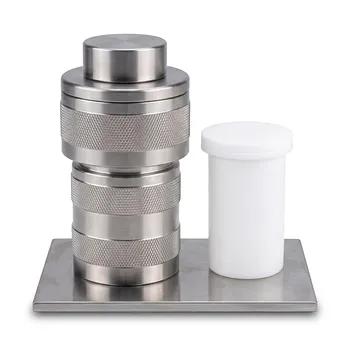
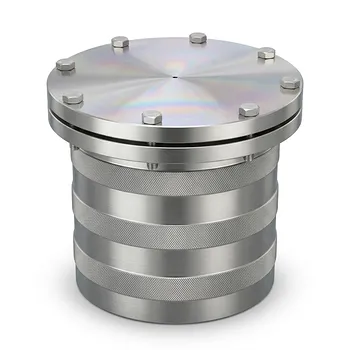
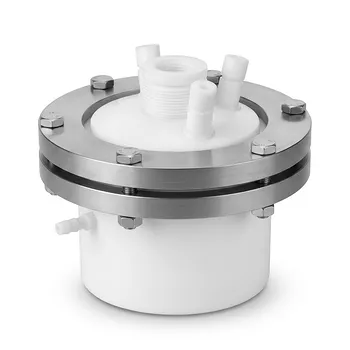
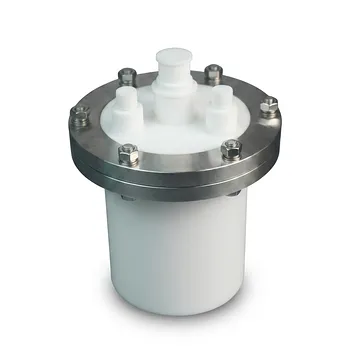
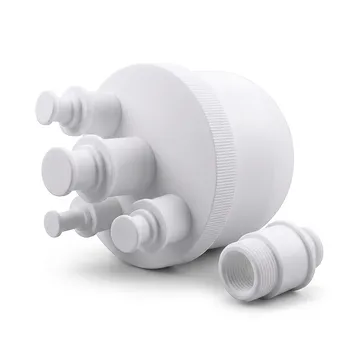
The synthesis of NiSe nanospheres at temperatures between 140°C and 180°C requires a specialized hydrothermal reaction vessel to maintain a uniform thermal field and stable high-pressure environment. This controlled atmosphere is essential for driving the selenization reaction, ensuring that selenium atoms are effectively incorporated into the NiO precursor lattice to produce nanospheres with high crystallinity and complete morphology.
Core Takeaway: A specialized hydrothermal vessel acts as a pressurized micro-reactor that forces chemical interactions between precursors that would otherwise remain incomplete at standard atmospheric pressure, directly dictating the structural integrity of the resulting NiSe nanospheres.
The Role of High Pressure in Selenization
Driving Chemical Incorporation
The hydrothermal vessel creates a sealed environment where pressure increases as temperature rises, facilitating the thorough reaction between selenium powder and the NiO precursor.
This high-pressure state overcomes kinetic barriers, allowing selenium atoms to penetrate and integrate into the crystal lattice.
Without this pressure, the reaction would lack the necessary energy to achieve the high crystallinity required for high-performance nanomaterials.
Eliminating the Need for Post-Processing
Because the reaction occurs under high pressure, the crystallization of the NiSe nanospheres happens directly within the aqueous solution.
This internal environment produces well-defined morphologies without the need for calcination or high-temperature annealing after the reaction.
This "one-step" crystallization saves time and prevents the structural degradation that often occurs during secondary heating processes.
Thermal Uniformity and Morphological Control
Creating a Consistent Thermal Field
Specialized vessels are designed to provide a uniform thermal field, ensuring that every part of the precursor solution experiences the same temperature simultaneously.
Consistency in temperature is critical for the growth of nanospheres, as localized "hot spots" would cause irregular crystal growth and non-uniform particle sizes.
By stabilizing the temperature between 140°C and 180°C, the vessel ensures that the directional crystal growth is balanced across the entire sample.
Supporting Multi-Component Synthesis
These vessels provide a stable enough environment to support the co-precipitation or doping of multi-component metal ions.
This stability allows for the creation of composite nanomaterials with enhanced functionalities that would be impossible to achieve in an open or unstable system.
The reactor's ability to maintain a steady state allows for the precise "tuning" of the material's chemical and physical properties.
Material Compatibility and Contamination Control
The Necessity of PTFE Liners
Specialized hydrothermal reactors typically feature high-purity PTFE (Polytetrafluoroethylene) liners to handle harsh chemical environments.
PTFE offers exceptional corrosion resistance, preventing the acidic or basic nature of the reaction precursors from damaging the stainless steel outer shell of the vessel.
The non-stick properties of the liner ensure that the reaction liquid does not adhere to the walls, which preserves the structural regularity of the nanospheres.
Preventing Environmental Interference
The sealed nature of the specialized vessel prevents the loss of volatile components and protects the reaction from atmospheric contaminants like oxygen.
Maintaining a pure internal environment is vital for ensuring that the selenium powder reacts specifically with the nickel precursor rather than oxidizing.
This isolation is what allows for the production of high-purity NiSe without unwanted secondary phases or impurities.
Understanding the Trade-offs and Limitations
Pressure and Safety Risks
While high pressure is necessary for synthesis, it introduces significant safety risks if the vessel is not properly maintained or if temperature limits are exceeded.
Over-pressurization can lead to vessel failure, making it crucial to use reactors with the correct pressure ratings for the intended 140°C–180°C range.
Scalability Challenges
Hydrothermal synthesis is often limited by the volume of the reaction vessel, making it difficult to scale from laboratory to industrial production.
Larger vessels require more time to reach thermal equilibrium, which can lead to inconsistencies in the nanosphere morphology compared to smaller batches.
How to Apply This to Your Synthesis Project
Choosing the Right Approach
- If your primary focus is high crystallinity: Ensure the vessel is rated for at least 200°C to provide a safety margin for the 180°C selenization process.
- If your primary focus is morphological regularity: Use a vessel with a high-purity PTFE liner and ensure the heating ramp rate is slow enough to maintain a uniform thermal field.
- If your primary focus is material purity: Verify that the vessel seal is intact to prevent the evaporation of precursors or the intake of atmospheric oxygen.
By precisely controlling the high-pressure and thermal environment, you can successfully transform simple precursors into sophisticated NiSe nanostructures with predictable performance.
Summary Table:
| Feature | Role in NiSe Synthesis | Benefit |
|---|---|---|
| High Pressure | Overcomes kinetic barriers for selenization | Ensures high crystallinity and lattice integration |
| Thermal Uniformity | Provides a consistent thermal field | Promotes uniform nanosphere size and growth |
| PTFE Liner | Resists corrosion from precursors | Prevents contamination and vessel damage |
| Sealed Environment | Prevents volatile loss and oxidation | Maintains high purity without post-calcination |
Elevate your material synthesis with KINTEK’s precision-engineered fluoropolymer solutions. From everyday basic labware like beakers, measuring cylinders, and centrifuge tubes to advanced hydrothermal synthesis liners and custom reaction apparatus, KINTEK manufactures virtually all imaginable laboratory supplies crafted from PTFE and PFA. Whether you need high-purity trace analysis instruments, complex fluid transfer components (tubing, fittings, valves), or bespoke non-standard machined parts, our end-to-end custom CNC fabrication ensures absolute performance. Trust our exclusive focus on high-performance fluoropolymers for your high-volume orders or custom lab setups—contact us today to optimize your research!
References
- Shanshan Li, Zhiqiang Zhang. A Core–Shell Pt–NiSe@NiFe-LDH Heterostructure for Bifunctional Alkaline Water Splitting. DOI: 10.3390/molecules30234654
This article is also based on technical information from Kintek Knowledge Base .
Related Products
- PTFE Lined High Pressure Digestion Vessel 50ml High Temperature Hydrothermal Synthesis Tank
- Custom TFM Reaction Vessel with Stainless Steel Jacket and PTFE Inner Cup for High Corrosion Resistance
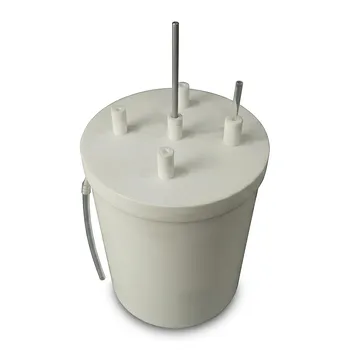
- PTFE 10L Reaction Vessel with Stirring Paddle Customizable Corrosion Resistant High Temperature Reactor for Biopharmaceutical and Chemical Processing
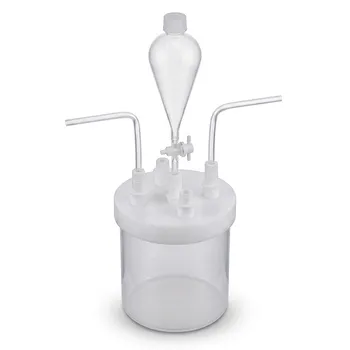
- Customizable PTFE Reaction Vessel with Electric Stirring Paddle and Buchner Funnel Vacuum Filtration System
- High Purity PTFE Reaction Vessel with Electric Stirring System and Customizable 5L Tank including Buchner Funnel Filtration Assembly
People Also Ask
- What are the benefits of using a PTFE-lined vessel for carbon-sulfur cathode treatment? Maximize Purity & Performance
- Why are PTFE-lined pressure digestion vessels required for the preparation of Ag/CeO2 catalysts? Purity & Performance
- What is the function of high-pressure PTFE digestion vessels in mineral analysis? Optimize Sample Mineralization
- What safety features are typically incorporated into high-pressure PTFE digestion vessel designs? Ensure Lab Safety
- What is the function of PTFE lined high-pressure vessels in g-C3N4 synthesis? Achieve High-Purity Material Growth