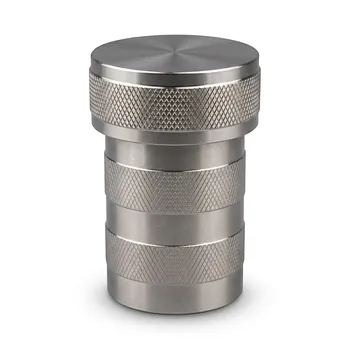
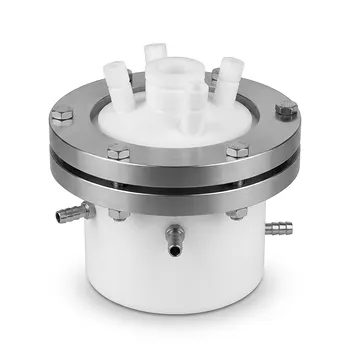
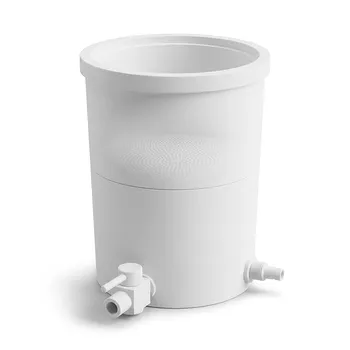
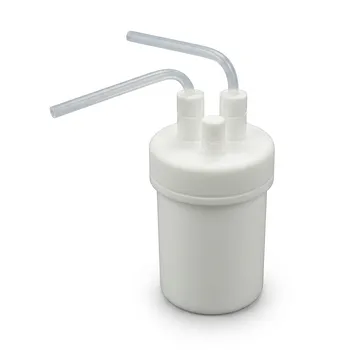
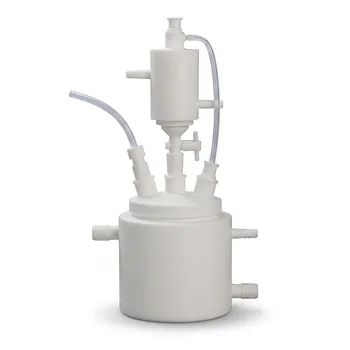
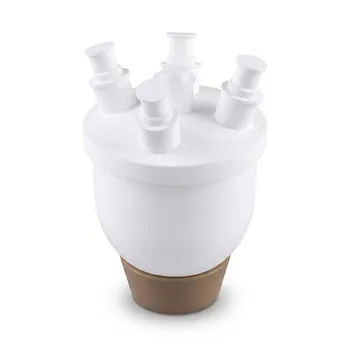
The preparation of NiFeP anodes demands a PTFE-lined hydrothermal synthesis reactor primarily to manage the extreme chemical aggression and high-pressure conditions of the reaction. This specific liner provides a chemically inert barrier that withstands strong alkaline environments and corrosive agents like ammonium fluoride and urea. Without it, the reaction would corrode the stainless steel vessel, leading to metal ion contamination that compromises the purity and electrochemical performance of the resulting anode material.
Core Takeaway: A PTFE liner is essential for NiFeP synthesis because it ensures a high-purity environment by preventing the corrosion of the reactor shell and facilitating controlled, uncontaminated crystal growth under high temperature and pressure.
Managing Harsh Chemical Environments
Resistance to Alkaline Corrosion
The synthesis of NiFeP precursors frequently involves highly alkaline solutions. Under hydrothermal conditions, these solutions become significantly more aggressive, posing a threat to standard metallic containers.
Polytetrafluoroethylene (PTFE) is chosen for its exceptional chemical inertness. It remains stable when exposed to the strong bases and salts required to precipitate the nickel and iron components.
Handling Corrosive Precursors
Specific additives used in NiFeP preparation, such as ammonium fluoride and urea, release corrosive byproducts during the heating process. At elevated temperatures, these chemicals can rapidly attack stainless steel.
The PTFE liner acts as a physical shield for the outer stainless steel autoclave. This protection prevents the structural degradation of the high-pressure vessel over time.
Ensuring Material Purity and Morphology
Preventing Metal Ion Cross-Contamination
If the reaction solution directly contacts the stainless steel walls of a reactor, chromium or nickel ions from the steel can leach into the mixture. This cross-contamination alters the stoichiometric ratio of the NiFeP anode.
By using a PTFE liner, researchers ensure that the only metal sources in the reaction are the intended precursors. This level of control is vital for achieving the high purity required for efficient electrochemical water splitting.
Supporting Controlled Crystal Growth
The hydrothermal method relies on a sealed, high-pressure environment to drive the directional crystal growth of nanostructures. PTFE provides a consistent, non-reactive surface that does not interfere with the nucleation process.
This stability allows for the formation of complex morphologies, such as hierarchical microspheres or nanospheres, on substrates like nickel foam. The result is an anode with a high surface area and improved catalytic activity.
Understanding the Trade-offs
Temperature Limitations
While PTFE is highly resistant to chemicals, it has a lower thermal threshold than the metal it protects. Most PTFE liners are limited to a continuous operating temperature of 200°C to 250°C.
Exceeding these temperatures can cause the liner to soften or undergo thermal decomposition, potentially releasing toxic fumes. For synthesis requiring higher temperatures, more expensive PPL (Polyphenylene polymers) liners must be used.
Thermal Expansion and Sealing
PTFE has a different coefficient of thermal expansion compared to the stainless steel outer shell. If the reactor is cooled too rapidly, the liner may deform, leading to potential leaks in future uses.
The non-stick nature of PTFE is a benefit for sample recovery, but it also means the liner does not "bond" to the shell. Users must ensure the sealing gaskets are properly aligned to maintain the high-pressure environment required for synthesis.
How to Apply This to Your Project
Guidelines for Successful Synthesis
When selecting or using a reactor for NiFeP anode preparation, consider your specific experimental parameters to ensure safety and material quality.
- If your primary focus is maximum purity: Always inspect the PTFE liner for scratches or discoloration before use, as these can harbor contaminants from previous experiments.
- If your primary focus is morphology control: Maintain a slow cooling rate after the hydrothermal reaction to prevent sudden pressure drops that could disrupt the delicate nanostructure of the NiFeP.
- If your primary focus is reactor longevity: Avoid using the PTFE liner at its absolute maximum temperature rating for extended periods to prevent "creep" or permanent deformation of the material.
The use of a PTFE-lined reactor is a fundamental requirement that transforms a potentially destructive chemical reaction into a precise, controlled environment for advanced material engineering.
Summary Table:
| Feature of PTFE Liner | Benefit for NiFeP Synthesis | Critical Consideration |
|---|---|---|
| Chemical Inertness | Resists harsh alkaline solutions and corrosive precursors (NH4F/Urea). | Protects stainless steel vessel integrity. |
| Purity Control | Prevents leaching of metal ions (Cr, Ni) from reactor walls. | Ensures accurate stoichiometric ratios. |
| Surface Stability | Provides non-reactive site for hierarchical crystal growth. | Facilitates high-surface-area nanostructures. |
| Thermal Limits | Safe operating range typically between 200°C and 250°C. | Requires slow cooling to prevent deformation. |
Elevate Your Material Synthesis with KINTEK’s High-Performance Fluoropolymers
Success in synthesizing advanced materials like NiFeP anodes depends on the absolute purity of your environment. KINTEK manufactures virtually all imaginable laboratory supplies crafted from high-performance PTFE and PFA, ensuring your research is never compromised by contamination or corrosion.
Whether you need everyday basic labware (beakers, crucibles, reagent bottles, digestion tubes), comprehensive fluid transfer components (tubing, fittings, valves), or advanced reaction apparatus like hydrothermal synthesis liners and electrochemical cells, we have you covered. Backed by end-to-end custom CNC fabrication, we deliver everything from high-volume consumables (O-rings, gaskets, seal tapes) to bespoke, non-standard machined parts tailored to your specific setup.
Ready to optimize your lab’s performance with precision-engineered fluoropolymers? Contact KINTEK today to discuss your project requirements!
References
- Hengzhou Liu, Edward H. Sargent. Interconnected nanoconfining pore networks enhance catalyst CO2 interaction in electrified reactive capture. DOI: 10.1038/s41467-025-61407-8
This article is also based on technical information from Kintek Knowledge Base .
Related Products
- PTFE Lined High Pressure Digestion Vessel 50ml High Temperature Hydrothermal Synthesis Tank
- High Pressure Custom TFM Reactor Stainless Steel Outer Vessel PTFE Inner Cup for Corrosive Synthesis
- High Temperature Corrosion Resistant Hydrothermal Synthesis Reactor with TFM Inner Liner and Straight Cylinder Design
- Custom TFM Reaction Vessel with Stainless Steel Jacket and PTFE Inner Cup for High Corrosion Resistance
- Custom PTFE Reaction System with Hose Barb Fittings Corrosion Resistant High Sealing 2L 4L Lab Reactor with Separatory Funnel
People Also Ask
- What are the benefits of using a PTFE-lined vessel for carbon-sulfur cathode treatment? Maximize Purity & Performance
- Why are PTFE-lined pressure digestion vessels required for the preparation of Ag/CeO2 catalysts? Purity & Performance
- What safety features are typically incorporated into high-pressure PTFE digestion vessel designs? Ensure Lab Safety
- What is the function of high-pressure PTFE digestion vessels in mineral analysis? Optimize Sample Mineralization
- What is the function of PTFE lined high-pressure vessels in g-C3N4 synthesis? Achieve High-Purity Material Growth