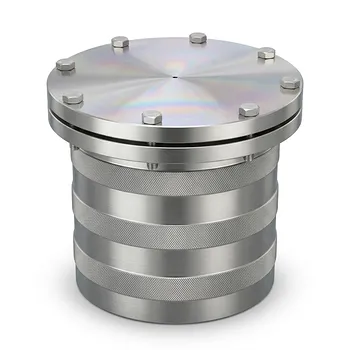
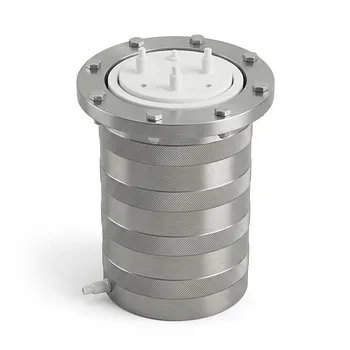
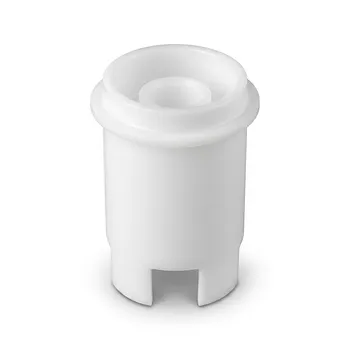
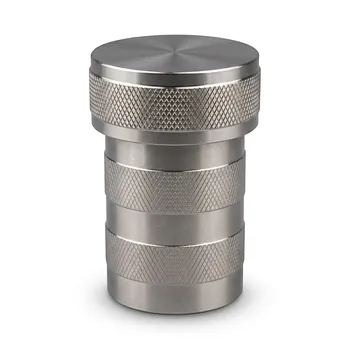
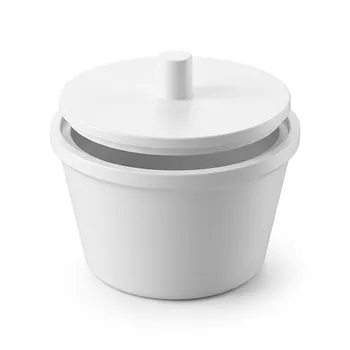
The synthesis of Copper-Barium heterometallic MOFs relies on PTFE-lined autoclaves to create a controlled, high-pressure environment for hydrothermal reactions. At the target temperature of 175°C, these vessels allow solvents to remain in a liquid state well above their atmospheric boiling points, facilitating the dissolution and assembly of metal ions and organic ligands into a three-dimensional framework. The PTFE liner acts as a critical barrier, preventing corrosive precursors from damaging the reactor while ensuring the high chemical purity required for crystal growth.
A PTFE-lined autoclave is essential because it bridges the gap between the mechanical strength required to contain high autogenous pressure and the chemical inertness needed to survive corrosive reaction environments. This combination allows for the precise control of solubility and nucleation necessary to synthesize high-quality, heterometallic crystalline structures.
Facilitating Subcritical Reaction Conditions
Enhanced Solubility of Precursors
At 175°C, the environment inside the autoclave becomes subcritical, significantly increasing the solubility of Copper and Barium salts. This state allows the reactants to reach a supersaturated concentration that would be impossible at standard atmospheric pressure.
Kinetic Energy and Nucleation
The high-pressure environment provides the necessary activation energy for the organic ligands to coordinate effectively with the heterometallic ions. This energy facilitates the slow, controlled nucleation and growth of high-quality single crystals, which is a hallmark of successful MOF synthesis.
Maintaining Liquid Phase
The sealed nature of the autoclave prevents the solvent from evaporating, maintaining it as a liquid medium at temperatures far exceeding its boiling point. This liquid environment is mandatory for the recrystallization processes that form the dense, 3D framework of the MOF.
The Necessity of PTFE Chemical Inertness
Preventing Metal Contamination
PTFE is utilized because it is almost entirely chemically inert, ensuring that the strong ligands and metal salts do not react with the vessel. Without this liner, the synthesis process could leach iron or chromium from the stainless steel walls, poisoning the reaction and ruining the MOF’s purity.
Corrosion Resistance Against Ligands
Copper-Barium MOF synthesis often involves acidic or aggressive precursors that would cause pitting or structural failure in unprotected metal reactors. The PTFE liner provides a durable shield that can withstand temperatures between 200°C and 230°C and the corresponding internal pressures.
Maximizing Material Recovery
The extremely smooth surface of PTFE reduces the adhesion of the synthesized crystals to the container walls. This property is vital for maximizing material recovery and ensuring that the final product remains free of mechanical impurities or structural defects.
Understanding the Trade-offs
Temperature and Pressure Limitations
While PTFE is highly inert, it has a thermal ceiling; exceeding 250°C can lead to the deformation or "creeping" of the liner, potentially causing a seal failure. Users must balance the need for high reaction kinetics with the mechanical limits of the fluoropolymer material.
Heat Transfer Inefficiency
PTFE is an insulator, meaning it does not conduct heat as efficiently as the external stainless steel shell. This results in a thermal lag, requiring researchers to account for the time it takes for the internal reaction mixture to actually reach the set temperature of the oven.
Making the Right Choice for Your Synthesis
Successful MOF synthesis requires a balance between the chemical requirements of the ligands and the physical requirements of the crystallization process.
- If your primary focus is crystal purity: Always utilize a high-quality PTFE liner to eliminate the risk of leaching transition metals from the autoclave body.
- If your primary focus is large single-crystal growth: Ensure the autoclave is rated for high autogenous pressure to allow for the slowest possible cooling rates and stable subcritical conditions.
- If your primary focus is high-throughput material recovery: Leverage the non-stick properties of PTFE to prevent the loss of nanosheets or crystals to the vessel walls.
By utilizing the mechanical protection of steel and the chemical protection of PTFE, you create the ideal "micro-laboratory" for complex heterometallic assembly.
Summary Table:
| Key Feature | Benefit for MOF Synthesis | Research Impact |
|---|---|---|
| Subcritical Environment | High solubility of Cu-Ba salts at 175°C | Facilitates 3D framework assembly |
| Chemical Inertness | Prevents iron/chromium leaching | Ensures high crystal purity and nucleation |
| Non-stick Surface | Reduced adhesion of synthesized crystals | Maximizes material recovery and yield |
| Mechanical Strength | Contains high autogenous pressure | Allows for slow, stable crystal growth |
Optimize Your Laboratory Research with KINTEK’s High-Performance Fluoropolymers
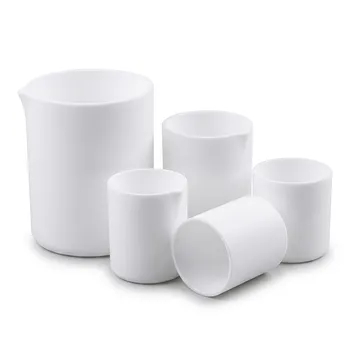
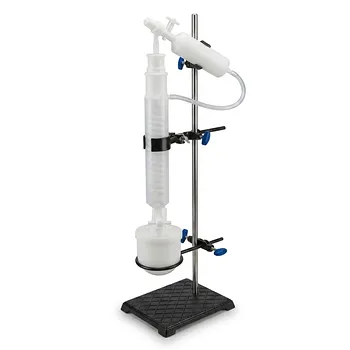
Precision in Copper-Barium MOF synthesis demands materials that never compromise on purity. KINTEK specializes in manufacturing virtually all imaginable laboratory supplies crafted from premium PTFE and PFA. From everyday basic labware (beakers, measuring cylinders, crucibles, and digestion tubes) to advanced fluid transfer components and custom reaction apparatus, we ensure your research remains uncontaminated and efficient.
Why choose KINTEK?
- Comprehensive Range: We provide everything from stirring bars and O-rings to complex hydrothermal synthesis liners, microwave digestion vessels, and microchannel reactors.
- Custom Fabrication: Backed by end-to-end custom CNC fabrication, we deliver absolutely everything from complex non-standard machined parts to bespoke laboratory setups.
- Material Expertise: Our exclusive focus on high-performance fluoropolymers ensures maximum chemical inertness and thermal stability for your most aggressive precursors.
Don't let vessel contamination ruin your crystal growth. Contact KINTEK today to explore our high-volume orders or bespoke laboratory setups tailored to your high-performance needs!
References
- Debraj Saha. Aromatic N-arylations catalyzed by heterometallic (CuII-BaII) metal−organic framework under heterogeneous base-free conditions in ethanol. DOI: 10.24820/ark.5550190.p012.334
This article is also based on technical information from Kintek Knowledge Base .
Related Products
- PTFE Lined High Pressure Digestion Vessel 50ml High Temperature Hydrothermal Synthesis Tank
- Custom TFM Reaction Vessel with Stainless Steel Jacket and PTFE Inner Cup for High Corrosion Resistance
- High Pressure Custom TFM Reactor Stainless Steel Outer Vessel PTFE Inner Cup for Corrosive Synthesis
- High Pressure PTFE Digestion Vessel Inner Cup Holder Custom Corrosion Resistant Low Background Teflon
- High Temperature Corrosion Resistant Hydrothermal Synthesis Reactor with TFM Inner Liner and Straight Cylinder Design
People Also Ask
- What are the benefits of using a PTFE-lined vessel for carbon-sulfur cathode treatment? Maximize Purity & Performance
- Why are PTFE-lined pressure digestion vessels required for the preparation of Ag/CeO2 catalysts? Purity & Performance
- What safety features are typically incorporated into high-pressure PTFE digestion vessel designs? Ensure Lab Safety
- What is the function of PTFE lined high-pressure vessels in g-C3N4 synthesis? Achieve High-Purity Material Growth
- Role of High-Pressure Digestion Tanks in Perovskite Synthesis: Achieve Superior Stability and Latent Heat