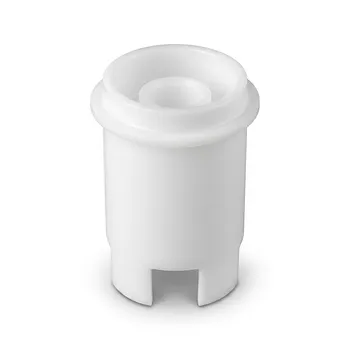
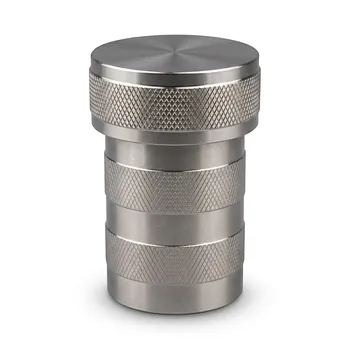
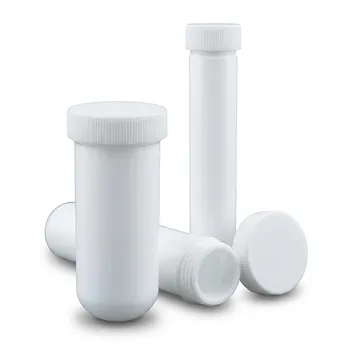
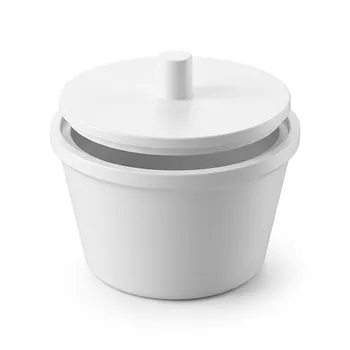
A PTFE-lined high-pressure autoclave is utilized because it provides a chemically inert, sealed environment necessary for the hydrothermal transformation of titanium dioxide. This setup allows the reaction to reach the high temperatures and pressures required to convert amorphous clusters into crystalline nanorods while preventing the introduction of metal impurities from the autoclave's outer shell.
Core Takeaway: The PTFE liner acts as a critical protective barrier and a clean reaction interface, ensuring that the corrosive hydrothermal environment facilitates high-purity crystal growth rather than reacting with the containment vessel.
The Role of Chemical Inertness in Nanorod Synthesis
Preventing Metal Ion Contamination
During the synthesis of $TiO_2$ nanorods, maintaining high purity is essential for the material's final performance. A PTFE (polytetrafluoroethylene) liner is used because it is chemically inert, meaning it does not react with the precursor solutions even at elevated temperatures like 150°C to 220°C.
Without this liner, the reaction liquid would come into direct contact with the stainless steel autoclave shell. This contact would trigger side reactions, leaching metal ions (such as iron or chromium) into the solution and contaminating the titanium dioxide nanostructures.
Resisting Corrosive Precursors and Solvents
The conversion of titanium clusters often requires aggressive chemical environments, including concentrated hydrochloric acid (HCl) or strong alkaline solutions like 1 M sodium hydroxide (NaOH). PTFE is uniquely capable of withstanding these strong acids and bases at high temperatures without degrading.
By shielding the metal walls from corrosive solvents, the liner prevents structural damage to the pressure vessel. This resistance is particularly vital when using precursors like hypophosphorous acid, which generates highly corrosive environments upon decomposition.
Facilitating the Hydrothermal Transformation
Managing High-Pressure Autogenous Environments
The "hydrothermal" process relies on autogenous pressure—the pressure generated naturally within a sealed container when heated above the boiling point of the solvent. While the PTFE liner provides chemical protection, the stainless steel outer shell provides the mechanical strength to safely contain this pressure.
This pressurized environment is what drives the oriented growth of crystals in a confined space. It allows the reaction to exceed standard boiling points, providing the kinetic energy necessary for atoms to arrange themselves into the desired nanorod morphology.
Creating a Clean Interface for Crystal Growth
The PTFE liner provides a clean reaction interface that is specifically conducive to the transformation of unstable amorphous clusters into highly crystalline anatase-type nanorods. Because the surface is non-stick, it also prevents the titanium dioxide from adhering to the walls.
This interface ensures that the nucleation process is controlled and that the resulting nanorods are vertically aligned or single-crystalline, depending on the specific substrate used. The lack of surface interference from the vessel walls allows for a more predictable and controllable aspect ratio in the final product.
Understanding the Trade-offs
Temperature Limitations
The most significant limitation of a PTFE liner is its thermal threshold. While it is excellent for hydrothermal work up to approximately 220°C–250°C, it begins to soften and undergo deformative creep at higher temperatures. For synthesis requiring temperatures beyond this range, more expensive PPL (polyphenylene polymers) or gold-lined vessels are typically required.
Thermal Conductivity Lag
PTFE is a poor thermal conductor compared to the stainless steel shell surrounding it. This creates a thermal lag, meaning the internal reaction temperature may take longer to reach the set point of the oven or heating mantle. Researchers must account for this "ramp-up" time to ensure consistent crystallization results across different batches.
Potential for Leaching and Wear
Although highly inert, PTFE liners are not immortal; they can absorb small amounts of precursors over multiple cycles, leading to cross-contamination if not cleaned rigorously. Additionally, physical scratches or "pitting" in the liner can trap materials, eventually providing a site for unwanted heterogeneous nucleation that can disrupt the uniformity of the nanorods.
How to Apply This to Your Project
When selecting or using a PTFE-lined autoclave for titanium dioxide synthesis, consider the following technical recommendations:
- If your primary focus is Maximum Purity: Always use a fresh or "dedicated" PTFE liner for your $TiO_2$ runs to eliminate the risk of cross-contamination from other metal precursors.
- If your primary focus is High-Temperature Stability: Ensure your reaction temperature does not exceed 220°C; if your synthesis requires higher heat, you must switch to a PPL liner to avoid vessel failure.
- If your primary focus is Uniform Nanorod Growth: Factor in a longer pre-heating phase to account for the thermal insulation of the PTFE, ensuring the solution maintains the necessary pressure for the entire reaction duration.
- If your primary focus is Product Recovery: Take advantage of the non-stick properties of the PTFE surface by using a thorough solvent wash to collect all precipitated nanorods without mechanical scraping.
By correctly utilizing the chemical and physical properties of the PTFE liner, you ensure the reliable production of high-quality, crystalline titanium dioxide nanostructures.
Summary Table:
| Feature | Benefit for TiO2 Synthesis | Technical Consideration |
|---|---|---|
| Chemical Inertness | Prevents metal ion leaching and contamination | Essential for high-purity nanostructures |
| Corrosion Resistance | Withstands strong acids/bases (HCl, NaOH) | Protects the stainless steel outer shell |
| Non-Stick Surface | Facilitates easy product recovery | Minimizes heterogeneous nucleation on walls |
| Thermal Threshold | Reliable performance up to 220°C–250°C | Requires PPL liners for higher temperatures |
Elevate Your Synthesis with KINTEK’s High-Performance Fluoropolymer Solutions
Ensure absolute purity and precision in your hydrothermal processes with KINTEK’s specialized laboratory supplies. From our durable hydrothermal synthesis liners and microwave digestion vessels to high-purity trace analysis instruments, we manufacture virtually every laboratory essential from premium PTFE and PFA.
Our expertise extends from everyday basic labware (beakers, crucibles, reagent bottles) and sample prep tools (separatory funnels, filters, tweezers) to comprehensive fluid transfer components (tubing, fittings, valves). Backed by end-to-end custom CNC fabrication, KINTEK is equipped to deliver everything from complex non-standard machined parts to high-volume orders tailored to your specific research needs.
Ready to optimize your material synthesis? Contact us today to discuss your custom requirements!
References
- Lan Chen, Nigel K.H. Slater. Non-solvolytic synthesis of aqueous soluble TiO2 nanoparticles and real-time dynamic measurements of the nanoparticle formation. DOI: 10.1186/1556-276x-7-297
This article is also based on technical information from Kintek Knowledge Base .
Related Products
- PTFE Lined High Pressure Digestion Vessel 50ml High Temperature Hydrothermal Synthesis Tank
- Custom TFM Reaction Vessel with Stainless Steel Jacket and PTFE Inner Cup for High Corrosion Resistance
- High Pressure Custom TFM Reactor Stainless Steel Outer Vessel PTFE Inner Cup for Corrosive Synthesis
- High Pressure PTFE Digestion Vessel Inner Cup Holder Custom Corrosion Resistant Low Background Teflon
- High Temperature Corrosion Resistant Hydrothermal Synthesis Reactor with TFM Inner Liner and Straight Cylinder Design
People Also Ask
- What are the benefits of using a PTFE-lined vessel for carbon-sulfur cathode treatment? Maximize Purity & Performance
- Why are PTFE-lined pressure digestion vessels required for the preparation of Ag/CeO2 catalysts? Purity & Performance
- What safety features are typically incorporated into high-pressure PTFE digestion vessel designs? Ensure Lab Safety
- What is the function of PTFE lined high-pressure vessels in g-C3N4 synthesis? Achieve High-Purity Material Growth
- Role of High-Pressure Digestion Tanks in Perovskite Synthesis: Achieve Superior Stability and Latent Heat