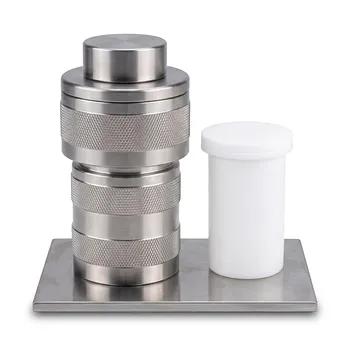
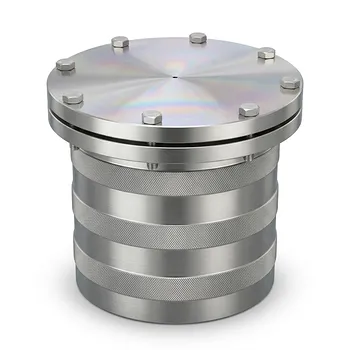
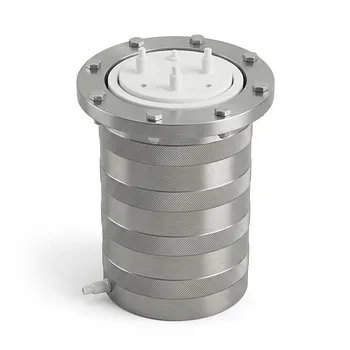
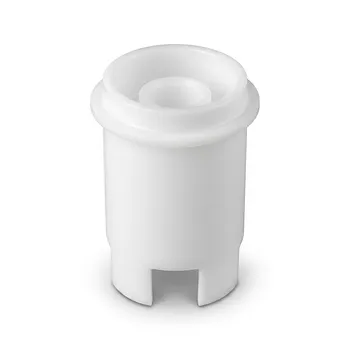
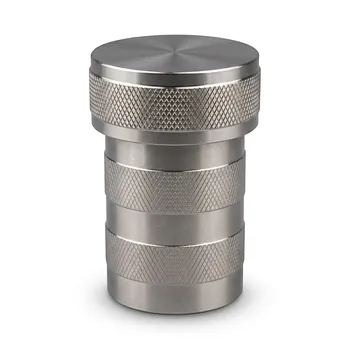
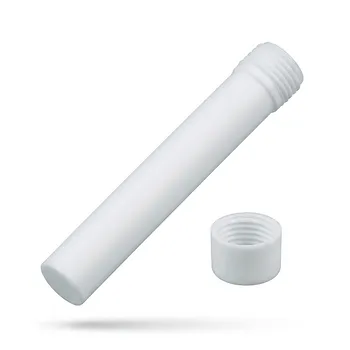
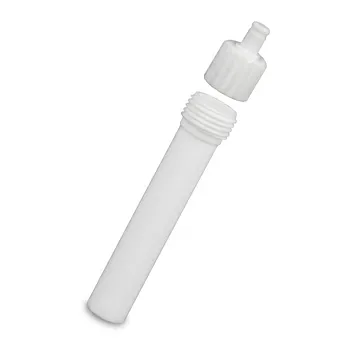
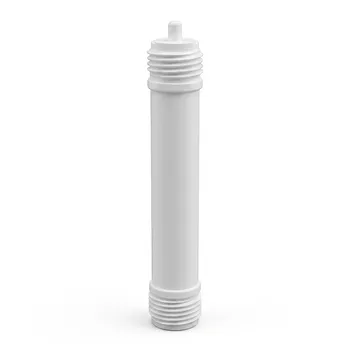
The solvothermal synthesis of MIL-125(Ti) requires a PTFE-lined autoclave primarily to provide a chemically inert environment that resists corrosion from aggressive solvents like DMF at high temperatures. This specific setup ensures that the reaction occurs under high pressure (reaching 150°C) without contaminating the Metal-Organic Framework (MOF) with metal ions from the autoclave’s steel body, while also facilitating the complete recovery of the synthesized white precipitate.
A PTFE-lined autoclave acts as a dual-function reactor: the external stainless steel provides the mechanical strength to handle high internal pressures, while the internal PTFE liner ensures chemical purity and prevents the reaction media from destroying the vessel.
Chemical Protection and Corrosion Resistance
Shielding the Steel Body from Strong Solvents
The synthesis of MIL-125(Ti) utilizes dimethylformamide (DMF) and metal precursors that become highly aggressive at 150°C. Without a liner, these chemicals would directly corrode the stainless steel autoclave, leading to structural failure of the vessel over time.
Preventing Metal Ion Contamination
A critical requirement for high-purity MOFs is the exclusion of foreign elements. The PTFE liner acts as a total barrier, preventing iron, chromium, or nickel ions from the steel walls from leaching into the reaction mixture and altering the crystallinity or properties of the MIL-125(Ti).
Maintaining Structural and Product Integrity
Managing High-Pressure Environments
Solvothermal synthesis involves heating solvents above their boiling points in a sealed space, generating significant autogenous pressure. While the PTFE liner contains the chemicals, the external steel jacket provides the necessary physical reinforcement to prevent the system from bursting.
Facilitating Product Recovery via Non-Stick Properties
PTFE (commonly known as Teflon) has an extremely low surface energy, making it naturally non-stick. This characteristic is vital for MIL-125(Ti) synthesis because it prevents the generated microcrystals from adhering to the walls, ensuring a high yield and easy collection of the white precipitate.
Ensuring Homogeneous Nucleation
By providing a smooth, inert surface, the PTFE liner minimizes "wall effects" where crystals might grow unevenly on the container surface. This environment promotes heterogeneous nucleation and the growth of uniform crystals with high structural integrity.
Understanding the Trade-offs and Limitations
Temperature Constraints of Fluoropolymers
While PTFE is exceptionally inert, it has a physical limit; it begins to soften and can eventually undergo thermal decomposition if pushed significantly beyond 250°C. For MIL-125(Ti) at 150°C, it is safe, but researchers must ensure they do not exceed the liner's rated temperature.
Thermal Lag and Heating Rates
PTFE is a thermal insulator, meaning it does not conduct heat as quickly as the surrounding steel. This creates a slight "thermal lag," where the internal reaction temperature may take longer to reach the setpoint of the oven compared to the external shell.
The Risk of Deformation (Creep)
Under sustained high pressure and temperature, PTFE can experience "cold flow" or deformation. If the liner is not properly fitted or if the autoclave is cooled too rapidly, the liner may warp, making it difficult to remove or potentially compromising the seal in future reactions.
How to Optimize Your Synthesis Results
To achieve the highest quality MIL-125(Ti) crystals, consider these strategic recommendations based on your specific synthesis goals:
- If your primary focus is Maximum Purity: Ensure the PTFE liner is cleaned with an acid wash between uses to remove any trace titanium or organic residues from previous batches.
- If your primary focus is High Yield: Utilize the non-stick nature of the liner by using a soft plastic spatula or targeted solvent rinsing to recover the "white precipitate" without scratching the PTFE surface.
- If your primary focus is Safety and Longevity: Never fill the PTFE liner more than 60-80% of its total volume to allow sufficient headspace for solvent expansion and pressure regulation.
The synergy between the mechanical strength of steel and the chemical resilience of PTFE is what makes the reliable production of advanced materials like MIL-125(Ti) possible.
Summary Table:
| Feature | Benefit for MIL-125(Ti) Synthesis | Key Property |
|---|---|---|
| Corrosion Resistance | Protects vessel from aggressive DMF solvents at 150°C | Chemical Inertness |
| Barrier Layer | Prevents metal ion contamination (Fe, Ni) from steel | High Purity |
| Non-Stick Surface | Ensures high yield and easy recovery of white precipitate | Low Surface Energy |
| Mechanical Support | Safely manages high autogenous pressure during reaction | Steel-Jacketed Design |
Elevate Your Synthesis Precision with KINTEK
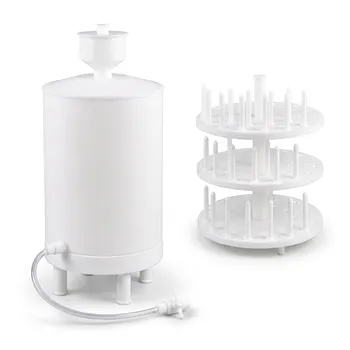
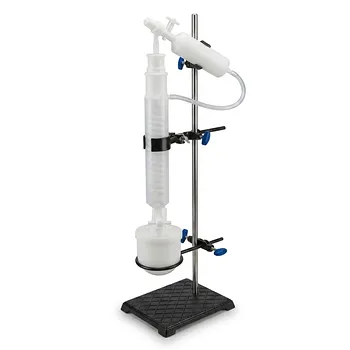
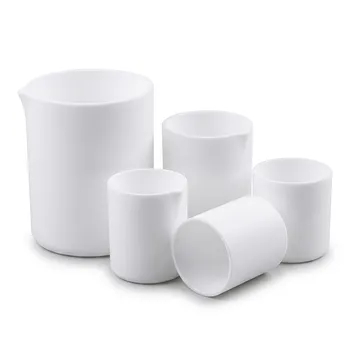
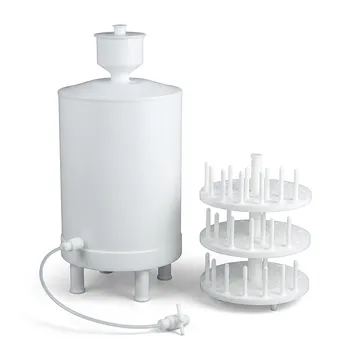
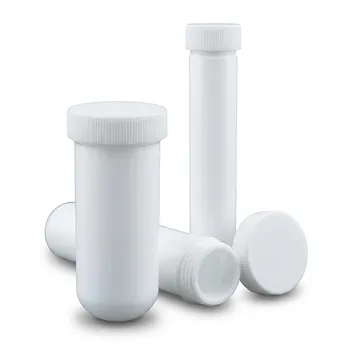
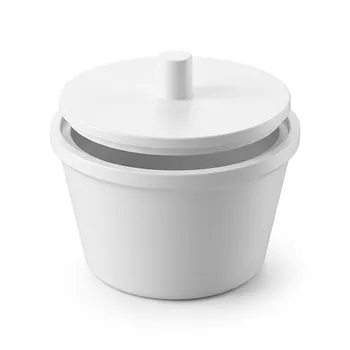
Ensure the integrity of your Metal-Organic Frameworks with KINTEK’s premium fluoropolymer solutions. From everyday basic labware like PTFE beakers, crucibles, and reagent bottles to advanced high-pressure autoclave liners and custom reaction apparatus, we provide the chemical inertness your research demands.
Whether you need standard consumables (stirring bars, gaskets, and tubing) or complex non-standard machined parts via our end-to-end custom CNC fabrication, KINTEK delivers high-performance PFA and PTFE components tailored to your exact specifications.
Ready to optimize your lab's efficiency and purity? Contact us today to discuss your custom requirements and discover how our absolute focus on high-performance materials can benefit your next breakthrough.
References
- Anjaly Babu, Dae Sung Lee. Functionalized MIL-125(Ti)-based high-performance triboelectric nanogenerators for hygiene monitoring. DOI: 10.1039/d5ma00283d
This article is also based on technical information from Kintek Knowledge Base .
Related Products
- PTFE Lined High Pressure Digestion Vessel 50ml High Temperature Hydrothermal Synthesis Tank
- Custom TFM Reaction Vessel with Stainless Steel Jacket and PTFE Inner Cup for High Corrosion Resistance
- High Pressure Custom TFM Reactor Stainless Steel Outer Vessel PTFE Inner Cup for Corrosive Synthesis
- High Pressure PTFE Digestion Vessel Inner Cup Holder Custom Corrosion Resistant Low Background Teflon
- High Temperature Corrosion Resistant Hydrothermal Synthesis Reactor with TFM Inner Liner and Straight Cylinder Design
People Also Ask
- What are the benefits of using a PTFE-lined vessel for carbon-sulfur cathode treatment? Maximize Purity & Performance
- Why are PTFE-lined pressure digestion vessels required for the preparation of Ag/CeO2 catalysts? Purity & Performance
- What is the function of high-pressure PTFE digestion vessels in mineral analysis? Optimize Sample Mineralization
- What safety features are typically incorporated into high-pressure PTFE digestion vessel designs? Ensure Lab Safety
- What is the function of PTFE lined high-pressure vessels in g-C3N4 synthesis? Achieve High-Purity Material Growth