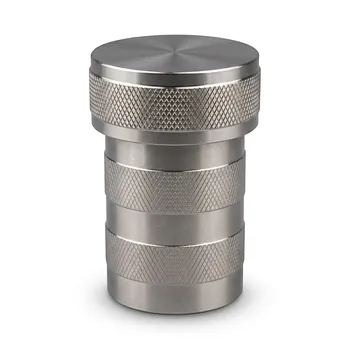
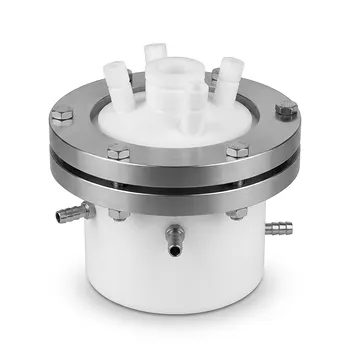
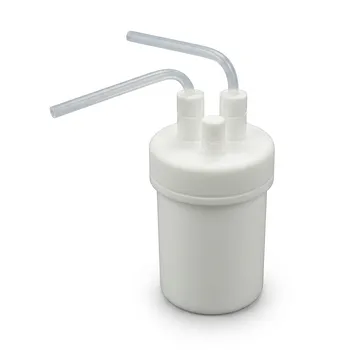
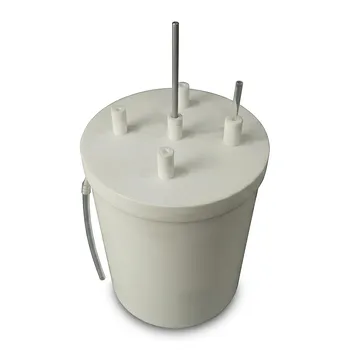
A PPL-lined hydrothermal synthesis reactor is essential because it facilitates the extreme thermal and pressure conditions required to reorganize the physical structure of alumina. This specific environment allows an initially loose alumina layer to transform into high-aspect-ratio nanowires. This structural evolution is the fundamental process that enables the film to transition from a hydrophilic state to a highly hydrophobic one.
The core utility of the PPL-lined reactor lies in its ability to maintain a stable 200°C environment under pressure, which is the catalyst for growing the micro-nanoscale roughness necessary for hydrophobicity.
The Role of PPL in High-Temperature Synthesis
Withstanding Extreme Thermal Stress
Polyphenyl (PPL) is utilized as a liner because standard materials, such as PTFE (Teflon), often reach their safe operational limits near 180°C. Since the post-treatment of alumina films requires a consistent 200°C environment, the PPL liner ensures the vessel remains chemically inert and structurally sound.
Maintaining Pressure Integrity
The hydrothermal process relies on a closed pressure vessel to create a saturated steam environment. The PPL liner allows the reactor to safely sustain the high internal pressures generated at 200°C, providing the energy needed for molecular reorganization.
The Structural Transformation of Alumina
Inducing Nanowire Formation
Within the reactor, the initially flat or loose alumina layer undergoes a phase of structural reorganization. The high-energy environment forces the alumina to grow into nanowire structures characterized by high aspect ratios.
Creating Micro-Nanoscale Roughness
This nanowire growth is not merely aesthetic; it creates a micro-nanoscale rough structure on the surface of the film. This roughness is the "core process step" that prevents water droplets from fully wetting the surface.
Driving the Hydrophobic Transition
By engineering this specific surface topography, the reactor facilitates the transition from a hydrophilic (water-attracting) surface to a highly hydrophobic (water-repelling) one. Without the high-temperature environment provided by the PPL liner, this physical transformation would not occur.
Understanding the Trade-offs
Temperature Limits and Material Selection
While PPL is superior to PTFE for 200°C applications, it is important to note that PPL liners are generally more rigid and can be more susceptible to cracking if cooled too rapidly. Users must balance the higher temperature threshold of PPL against the need for careful thermal cycling to protect the liner's longevity.
Cost vs. Performance
PPL-lined reactors are typically more expensive than standard hydrothermal vessels. However, for alumina film treatment, this cost is a necessary investment, as lower-temperature reactors cannot provide the activation energy required for nanowire formation.
How to Apply This to Your Project
When selecting or operating a reactor for alumina film post-treatment, consider your specific structural goals:
- If your primary focus is achieving maximum hydrophobicity: Ensure your reactor is rated for at least 200°C and utilizes a PPL liner to guarantee the formation of high-aspect-ratio nanowires.
- If your primary focus is long-term equipment durability: Implement a slow cooling protocol after the hydrothermal process to prevent the PPL liner from becoming brittle or cracking due to thermal shock.
- If your primary focus is process consistency: Monitor the pressure seals closely, as the transition from hydrophilic to hydrophobic depends entirely on maintaining a stable, closed-system environment.
The PPL-lined reactor is the definitive tool for bridging the gap between standard alumina layers and high-performance hydrophobic films.
Summary Table:
| Feature | PPL (Polyphenyl) Liner | PTFE (Teflon) Liner |
|---|---|---|
| Safe Operating Temp | Up to 280°C (Optimized for 200°C+) | Typically limited to 180°C - 220°C |
| Thermal Stability | High (Maintains integrity under pressure) | Lower (Approaches safety limits at 180°C) |
| Structural Impact | Facilitates alumina nanowire growth | Limited thermal energy for reorganization |
| Surface Outcome | Creates micro-nanoscale roughness | Fails to trigger hydrophobic transition |
| Maintenance | Requires slow cooling to prevent cracks | Standard cooling procedures |
Elevate Your Material Science with KINTEK’s High-Performance Fluoropolymers
Precision in hydrothermal synthesis demands equipment that can withstand the most rigorous thermal and pressure conditions. KINTEK specializes in high-performance laboratory supplies crafted from PTFE and PFA, ensuring your research never hits a temperature ceiling.
From essential labware—including beakers, crucibles, and reagent bottles—to specialized PPL-lined reactors and high-purity trace analysis instruments, we provide the tools necessary for advanced structural reorganization. Whether you need standard consumables like stirring bars and O-rings or complex, custom-engineered components like electrochemical cells and microwave digestion vessels, our end-to-end custom CNC fabrication is ready to deliver.
Ready to optimize your alumina film post-treatment? Contact KINTEK today for bespoke laboratory setups and high-volume fluoropolymer orders.
References
- Changqing Fang, Chenxi Wang. Facile Preparation of Hydrophobic Aluminum Oxide Film via Sol-Gel Method. DOI: 10.3389/fchem.2018.00308
This article is also based on technical information from Kintek Knowledge Base .
Related Products
- High Temperature Corrosion Resistant Hydrothermal Synthesis Reactor with TFM Inner Liner and Straight Cylinder Design
- Custom PTFE Reaction System with Hose Barb Fittings Corrosion Resistant High Sealing 2L 4L Lab Reactor with Separatory Funnel
- PTFE Lined High Pressure Digestion Vessel 50ml High Temperature Hydrothermal Synthesis Tank
- High Pressure Custom TFM Reactor Stainless Steel Outer Vessel PTFE Inner Cup for Corrosive Synthesis
- Custom PTFE Continuous Reaction Bottles Virgin Fluoropolymer High Purity Low Background Synthesis Vessels
People Also Ask
- What is the role of a corrosion-resistant reactor in the synthesis of lignin-based carbon dots? Ensure Maximum Purity
- What are the technical advantages of using hydrothermal synthesis reactors for advanced electronic & optical nanomaterials?
- How does a hydrothermal synthesis reactor facilitate the production of crystalline materials with tailored morphologies? Precision Crystal Growth
- Why is the sealing reliability of a hydrothermal synthesis reactor critical for 24-hour cycles? Ensure Nano-Precision
- What role do hydrothermal synthesis reactors play in CQD preparation? Achieve High-Purity Nanomaterial Synthesis