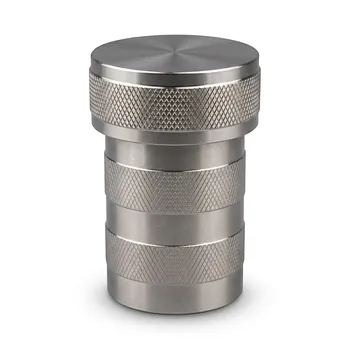
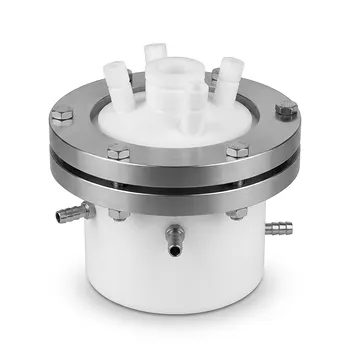
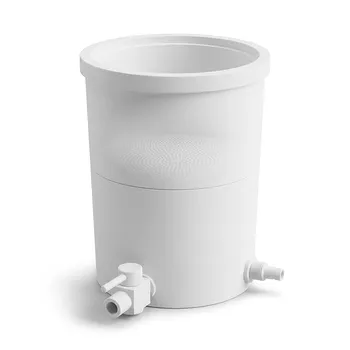
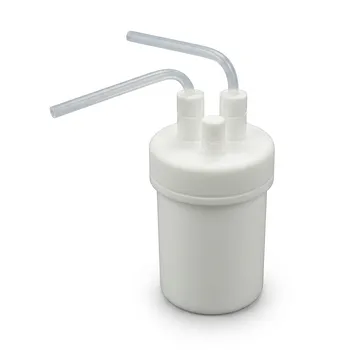
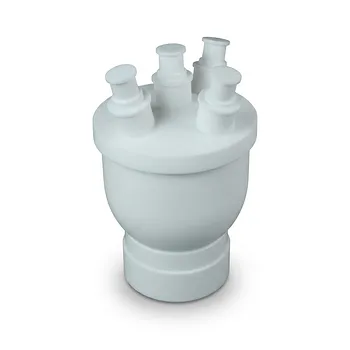
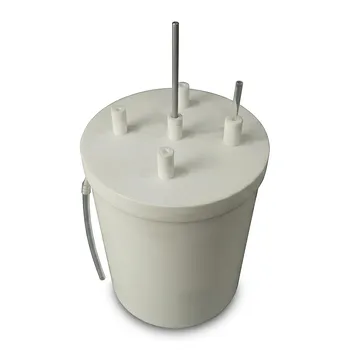
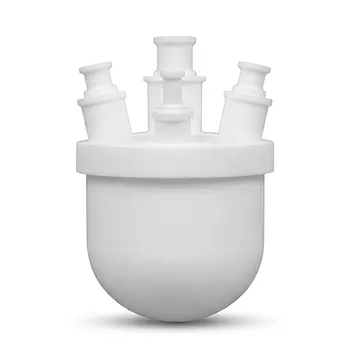
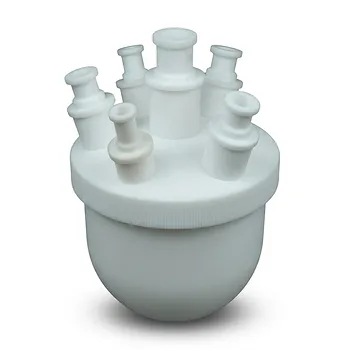
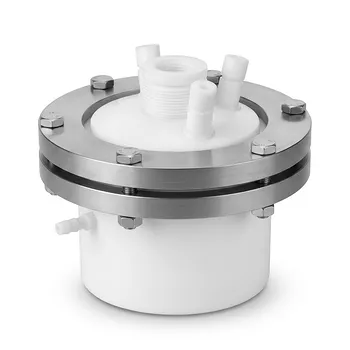
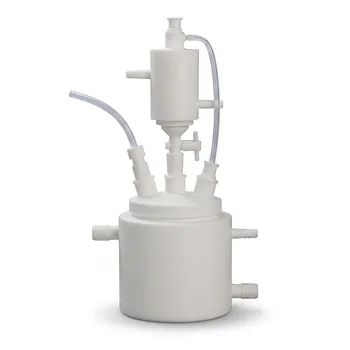
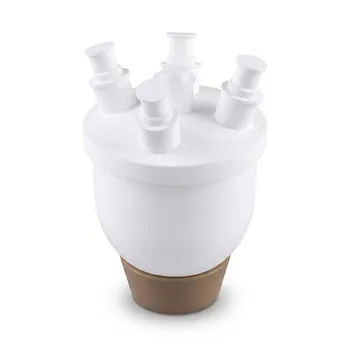
The use of a PTFE-lined hydrothermal reactor is essential because it creates a chemically inert environment that can withstand the high-temperature (up to 180°C) and high-pressure conditions required to carbonize precursors. This liner prevents the leaching of metal ions from the reactor walls into the solution, ensuring that the L-cysteine modified carbon quantum dots (cCDs) maintain the high purity and specific surface functional groups necessary for sensitive optical applications.
A PTFE liner acts as a critical barrier that protects the reaction from metal contamination while shielding the steel autoclave from corrosive precursors. This dual protection is vital for ensuring the optical stability and chemical consistency of the synthesized carbon quantum dots.
Protecting Chemical Purity and Optical Integrity
Prevention of Metal Ion Leaching
Metal ions leaching from a stainless steel reactor can infiltrate the carbon skeleton during synthesis. These trace metals often quench the fluorescence of carbon quantum dots, rendering them useless for high-sensitivity sensing. By using a fluoropolymer liner, you ensure the cCDs remain free of impurities that would otherwise degrade their optical performance.
Maintaining Specific Surface Functionalization
The modification of carbon dots with L-cysteine relies on precise surface chemistry to achieve its intended sensing goals. The chemical inertness of PTFE ensures that reagents react only with each other rather than the vessel walls. This consistency allows for the repeatable formation of functional groups, which is critical for experimental reliability.
Eliminating Catalytic Interference
In many hydrothermal processes, metal surfaces can act as unintended catalysts that alter the reaction pathway. A PTFE liner provides a neutral reaction space, ensuring that the dehydration and polymerization of precursors proceed exactly as intended. This isolation is necessary to achieve the specific quantum size effects characteristic of high-quality cCDs.
Managing Extreme Reaction Conditions
Resistance to Corrosive Precursors
The synthesis of modified carbon materials often requires extreme pH environments, including the use of strong acids or bases. PTFE and similar fluoropolymers (like PFA or TFM) offer exceptional resistance to these corrosive agents. This protects the structural integrity of the outer metal autoclave from pitting and long-term degradation.
High-Temperature and Pressure Stability
Hydrothermal synthesis requires a closed environment to generate the spontaneous pressure needed for carbonization and passivation. PTFE liners are rated to withstand temperatures up to 180°C (and sometimes higher) without losing their shape or chemical stability. This allows for the safe conversion of biomass or chemical precursors into nanoscale dots under sustained pressure.
Facilitating Carbon Core Formation
The sealed environment created within the liner accelerates the dehydration and polymerization of L-cysteine and other precursors. This high-pressure "pressure cooker" effect is what enables the simultaneous formation of the carbon core and the doping of surface elements. Without the containment provided by the liner, the precursors would not reach the energy state required for carbonization.
Understanding the Trade-offs
Temperature Limitations
While PTFE is highly stable, it has a definitive thermal ceiling, typically around 220°C to 250°C. Exceeding these limits can cause the liner to soften, deform, or release hazardous fluorinated vapors. Researchers must carefully calibrate their heating cycles to stay within the safe operating envelope of the specific fluoropolymer used.
Thermal Lag Concerns
PTFE is an insulator, which can cause a delay in heat transfer from the oven to the internal reaction solution. This thermal lag must be accounted for when timing the synthesis duration to ensure the precursors reach the required temperature for the full duration of the reaction.
How to Apply This to Your Synthesis
Making the Right Choice for Your Goal
- If your primary focus is optical sensitivity: Utilize high-purity PTFE liners to eliminate metal-induced fluorescence quenching.
- If your primary focus is chemical consistency: Ensure the liner is thoroughly cleaned with dilute acid between runs to prevent "memory effects" from previous reactions.
- If your primary focus is reactor longevity: Always inspect the liner for deformation or "creeping" after high-temperature cycles to prevent the metal autoclave from being exposed to corrosive vapors.
By prioritizing the integrity of the reaction environment through proper liner usage, you ensure the production of high-quality carbon quantum dots with predictable sensing capabilities.
Summary Table:
| Feature | Benefit for cCD Synthesis | Key Outcome |
|---|---|---|
| Chemical Inertness | Prevents metal ion leaching from reactor walls | Maintains high fluorescence & optical sensitivity |
| Corrosion Resistance | Withstands strong acids/bases and corrosive precursors | Protects the steel autoclave from degradation |
| High-Temp Stability | Supports carbonization processes up to 180°C-220°C | Ensures successful formation of the carbon core |
| Non-stick Surface | Facilitates easy cleaning and reduces cross-contamination | Improves experimental repeatability and reliability |
Elevate Your Synthesis Precision with KINTEK
Don't let metal contamination compromise your quantum dot research. KINTEK specializes in high-performance fluoropolymer solutions designed for the most demanding laboratory environments. From PTFE and PFA hydrothermal synthesis liners and microwave digestion vessels to advanced reaction apparatus like electrochemical cells and battery testing fixtures, we provide the inert environment your sensitive chemistry requires.
Our expertise spans virtually all laboratory supplies, including:
- Basic Labware: Beakers, crucibles, reagent bottles, and centrifuge tubes.
- Fluid Transfer: Precision tubing, fittings, valves, and pipettes.
- Custom Engineering: End-to-end custom CNC fabrication for non-standard machined parts and bespoke laboratory setups.
Whether you need high-volume consumables or complex, one-off reaction vessels, KINTEK delivers absolute focus on high-performance materials. Ensure the optical integrity and chemical purity of your L-cysteine modified carbon quantum dots today.
Contact KINTEK for a Custom Quote
References
- Koffi Koffi Kra Sylvestre, Irié Bi Irié Williams. Fast detection of melamine using silver nanoparticles capped with <scp>l</scp> -cysteine functionalized carbon dots. DOI: 10.1039/d5ra03280f
This article is also based on technical information from Kintek Knowledge Base .
Related Products
- PTFE Lined High Pressure Digestion Vessel 50ml High Temperature Hydrothermal Synthesis Tank
- High Pressure Custom TFM Reactor Stainless Steel Outer Vessel PTFE Inner Cup for Corrosive Synthesis
- High Temperature Corrosion Resistant Hydrothermal Synthesis Reactor with TFM Inner Liner and Straight Cylinder Design
- Custom TFM Reaction Vessel with Stainless Steel Jacket and PTFE Inner Cup for High Corrosion Resistance
- Custom PTFE Reaction System with Hose Barb Fittings Corrosion Resistant High Sealing 2L 4L Lab Reactor with Separatory Funnel
People Also Ask
- What are the benefits of using a PTFE-lined vessel for carbon-sulfur cathode treatment? Maximize Purity & Performance
- Why are PTFE-lined pressure digestion vessels required for the preparation of Ag/CeO2 catalysts? Purity & Performance
- What is the function of high-pressure PTFE digestion vessels in mineral analysis? Optimize Sample Mineralization
- What safety features are typically incorporated into high-pressure PTFE digestion vessel designs? Ensure Lab Safety
- What is the function of PTFE lined high-pressure vessels in g-C3N4 synthesis? Achieve High-Purity Material Growth