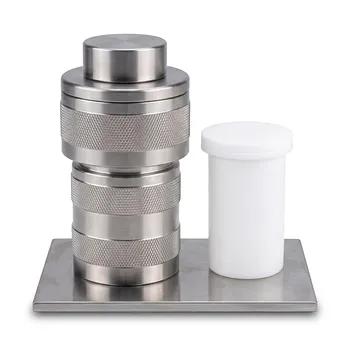
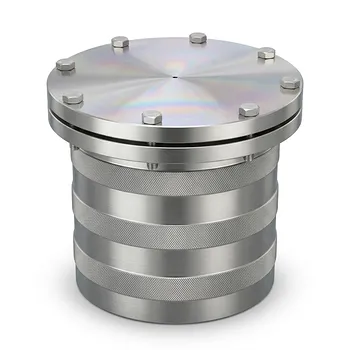
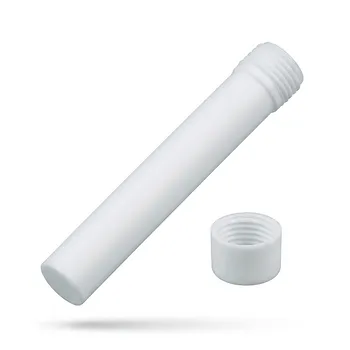
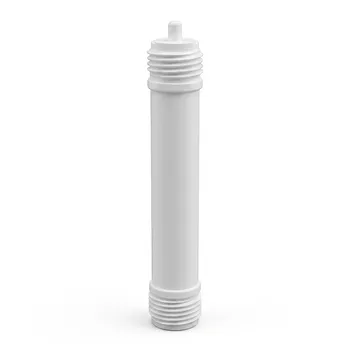
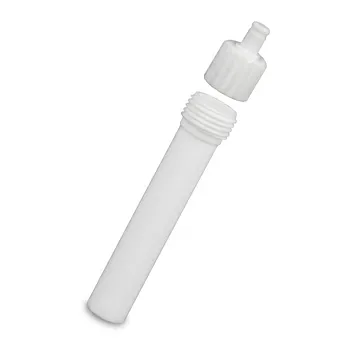
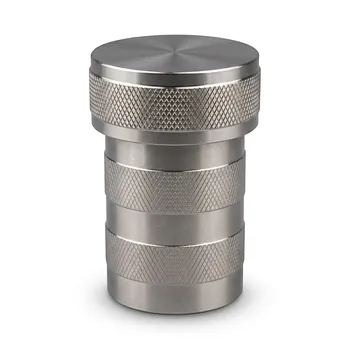
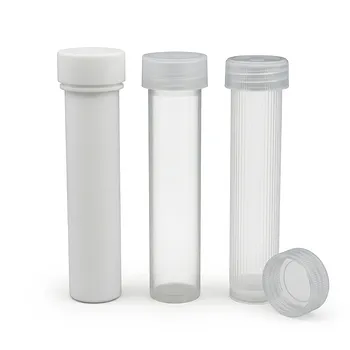
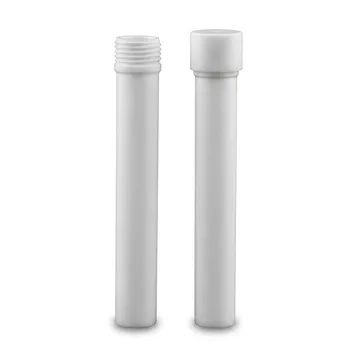
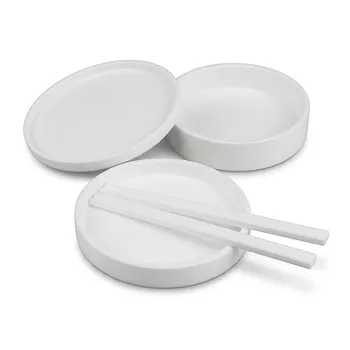
The success of hydrothermal synthesis hinges on absolute chemical isolation. A high-purity PTFE liner is critical because it protects the autoclave’s stainless steel body from the highly corrosive environment created by bismuth nitrate and sodium chlorate. Simultaneously, its chemical inertness prevents metal ions from leaching into the solution, ensuring that BiOCl microspheres achieve their intended honeycomb morphology and high surface area without contamination.
Core Takeaway: High-purity PTFE liners serve a dual purpose: they act as a sacrificial barrier against chemical corrosion to preserve the autoclave's structural integrity and provide a sterile, non-reactive environment essential for the precise crystalline growth of BiOCl microspheres.
Protecting Reactor Integrity from Corrosive Precursors
Resisting Acidic Attack
The reaction system for BiOCl synthesis involves bismuth nitrate and sodium chlorate, which create a chemically aggressive and acidic environment. At the required temperature of 150°C, these chemicals would rapidly corrode the stainless steel walls of a standard autoclave.
Extending Equipment Lifespan
By acting as a physical barrier, the PTFE liner prevents the corrosive media from coming into direct contact with the pressure vessel. This isolation is vital for preventing structural degradation and extending the service life of expensive hydrothermal equipment.
Maintaining Pressure Safety
Corrosion can lead to micro-cracks or thinning of the autoclave walls, which compromises safety under high-pressure conditions. The liner ensures that the load-bearing steel shell remains uncompromised by the chemical evolution occurring inside the chamber.
Ensuring High-Purity Crystalline Growth
Preventing Metal Ion Leaching
Without a liner, the acidic reaction would cause metal ions (such as iron, chromium, and nickel) to leach from the stainless steel into the precursor solution. These foreign ions would integrate into the crystal lattice of the BiOCl, fundamentally altering its chemical properties.
Controlled Morphological Development
The synthesis of honeycomb BiOCl microspheres requires a precise environment to facilitate specific surface area and structural growth. High-purity PTFE ensures that no impurities disrupt the nucleation and growth process, resulting in a uniform microstructure.
Non-Stick Product Recovery
PTFE’s excellent mold-release properties and non-stick surface allow researchers to collect the synthesized nanopowders easily. This prevents loss of material and ensures that the final sample is not contaminated by residue from previous experiments.
Understanding the Trade-offs and Limitations
Thermal Boundaries
While PTFE is ideal for the 150°C requirement of BiOCl synthesis, it has a definitive thermal ceiling, typically around 200°C–250°C. Exceeding these temperatures can cause the liner to soften or deform, potentially leading to a breach of the seal.
Pressure Deformation
Under extreme hydrothermal pressure, PTFE can undergo "cold flow" or slight deformation. It is essential to ensure the liner is properly fitted within the stainless steel shell to prevent the material from migrating into the sealing surfaces of the autoclave.
Permeability Concerns
At very high temperatures and pressures, PTFE can become slightly permeable to certain gases. While usually negligible for 3-hour BiOCl reactions, this factor must be monitored in long-duration experiments to prevent trace corrosion behind the liner.
How to Optimize Your Hydrothermal Synthesis
The choice of liner and maintenance protocol directly impacts the quality of your synthesized bismuth-based nanomaterials.
- If your primary focus is maximum purity: Always use "virgin" high-purity PTFE liners and implement a rigorous cleaning cycle (acid washing) between runs to remove trace bismuth deposits.
- If your primary focus is morphology control: Ensure the liner is free of surface scratches or abrasions, as surface defects can act as unintended nucleation sites, disrupting the honeycomb structure.
- If your primary focus is equipment safety: Inspect the liner for signs of thinning or "crowning" at the base after every high-temperature run to ensure the chemical barrier remains intact.
Selecting the right liner material is not merely a preference, but a technical necessity for achieving the precise chemical environment required for high-performance BiOCl microspheres.
Summary Table:
| Feature | Benefit | Impact on BiOCl Synthesis |
|---|---|---|
| Corrosion Resistance | Protects reactor from acidic precursors | Prevents vessel damage at 150°C |
| Chemical Inertness | Eliminates metal ion leaching | Ensures uniform honeycomb morphology |
| Non-Stick Surface | High product recovery rate | Prevents sample loss & cross-contamination |
| Thermal Stability | Reliable performance up to 250°C | Maintains seal integrity during reaction |
Elevate Your Lab’s Precision with KINTEK Fluoropolymer Expertise
Achieve absolute chemical isolation and superior material purity in your research. KINTEK manufactures virtually all imaginable laboratory supplies crafted from high-purity PTFE and PFA. Whether you need standard labware (beakers, reagent bottles, and tubes), high-purity trace analysis instruments, or advanced reaction apparatus like hydrothermal synthesis liners and microwave digestion vessels, we deliver unmatched performance.
From everyday consumables to complex, non-standard bespoke laboratory setups, our end-to-end custom CNC fabrication ensures your equipment meets exact technical specifications. Contact KINTEK today to learn how our absolute focus on high-performance fluoropolymers can safeguard your reactor and guarantee the purity of your synthesized nanomaterials.
References
- Xiyang Zhou, Xiaoteng Liu. In situ synthesis of three-dimensional core–shell structure Bi2WO6/BiOCl and photocatalytic degradation of trinitrotoluene wastewater. DOI: 10.1007/s42114-024-01134-8
This article is also based on technical information from Kintek Knowledge Base .
Related Products
- PTFE Lined High Pressure Digestion Vessel 50ml High Temperature Hydrothermal Synthesis Tank
- Custom TFM Reaction Vessel with Stainless Steel Jacket and PTFE Inner Cup for High Corrosion Resistance
- High Purity TFM Microwave Digestion Vessels PTFE Acid Evaporation Liners Domestic GT-400 Equivalent Laboratory Reaction Containers
- High Purity PTFE Microwave Digestion Vessel for Soil and Food Analysis Acid Resistant Fluoropolymer Sample Preparation Liners
- High Purity PTFE Microwave Digestion Vessel Replacement Liner for Acid Sample Preparation and Trace Analysis
People Also Ask
- What are the benefits of using a PTFE-lined vessel for carbon-sulfur cathode treatment? Maximize Purity & Performance
- Why are PTFE-lined pressure digestion vessels required for the preparation of Ag/CeO2 catalysts? Purity & Performance
- What safety features are typically incorporated into high-pressure PTFE digestion vessel designs? Ensure Lab Safety
- What is the function of PTFE lined high-pressure vessels in g-C3N4 synthesis? Achieve High-Purity Material Growth
- Role of High-Pressure Digestion Tanks in Perovskite Synthesis: Achieve Superior Stability and Latent Heat