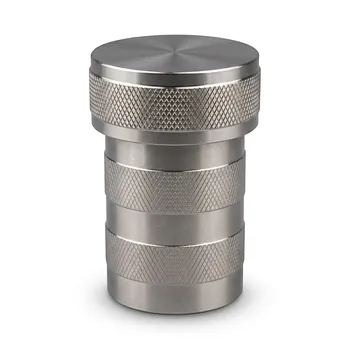
The high-pressure hydrothermal synthesis reactor is the indispensable "pressure cooker" of green chemistry. It is necessary for coffee-based hydrochar production because it creates a sealed, subcritical environment where water acts as both a solvent and a catalyst. This allows for the dehydration and carbonization of biomass at significantly lower temperatures than traditional thermal methods.
To produce high-quality hydrochar, a reactor must maintain water in a high-temperature, liquid-phase state under pressure. This environment is the only way to effectively break down the tough organic polymers in coffee grounds into a stable, carbon-rich material.
The Power of the Subcritical Environment
Transforming Water into a Reactive Medium
Under normal atmospheric conditions, water evaporates at 100°C, limiting its ability to facilitate high-heat chemistry. The reactor’s sealed environment allows water to reach a subcritical state, remaining liquid at temperatures far exceeding its boiling point.
Enhancing Chemical Degradation
In this subcritical state, water penetrates the physical structure of coffee grounds more effectively. This facilitates the degradation and recombination of complex organic components, which is the foundational step of hydrochar formation.
Breaking Down Coffee Biomass
Targeting Cellulose, Hemicellulose, and Lignin
Coffee grounds are composed of durable polymers: cellulose, hemicellulose, and lignin. The high-pressure environment provides the thermal energy necessary to rupture these molecular bonds.
Dehydration and Decarboxylation
Once the polymers are weakened, the reactor enables biomass dehydration and decarboxylation. These processes strip oxygen and hydrogen from the organic matter, leaving behind a concentrated, carbon-dense hydrochar.
Lowering Energy Thresholds
By using high pressure to stabilize the liquid phase, carbonization can occur at relatively lower temperatures. This makes the process more energy-efficient compared to dry pyrolysis, which requires extreme heat in the absence of oxygen.
Structural Integrity and Material Purity
The Role of Controlled Nucleation
Similar to the synthesis of nanomaterials like WO3, the reactor allows for controlled nucleation and growth. This ensures the resulting hydrochar has a specific morphology and crystallinity, which are vital for its final application.
Preventing Metallic Contamination
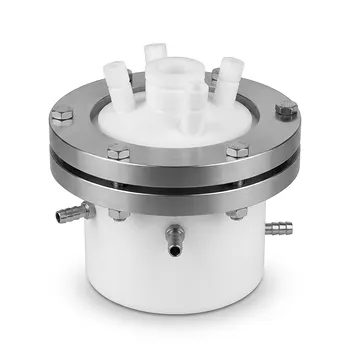
High-pressure reactors are typically equipped with a Polytetrafluoroethylene (PTFE) liner. This liner is chemically inert and thermally stable, ensuring the acidic precursors from the coffee do not corrode the stainless steel reactor body.
Ensuring Product Consistency
The PTFE liner acts as a barrier that prevents the introduction of metal ion impurities. This is critical for maintaining the purity of the synthesized hydrochar, especially if it is intended for environmental or electronic applications.
Understanding the Trade-offs
Pressure Management and Safety
The primary challenge of this method is the extreme internal pressure generated within the vessel. Operators must strictly adhere to temperature limits to prevent mechanical failure of the reactor.
Batch Processing Constraints
Most hydrothermal synthesis is performed in batch cycles, which can be slower than continuous flow thermal processes. The time required for the reactor to heat up and cool down safely adds to the overall production timeline.
Maintenance of the PTFE Liner
While the PTFE liner protects the product, it is a consumable component that can degrade over time. Exposure to temperatures exceeding its rated limit can lead to deformation, potentially compromising the seal of the reactor.
How to Apply This to Your Project
Making the Right Choice for Your Goal
To achieve the best results with your hydrothermal synthesis, align your reactor settings with your specific objectives.
- If your primary focus is high carbon yield: Prioritize a longer residence time at moderate subcritical temperatures to allow for complete decarboxylation.
- If your primary focus is surface area and porosity: Carefully control the cooling rate after the reaction to influence the physical morphology of the hydrochar.
- If your primary focus is material purity: Always inspect the PTFE liner for cracks or discoloration before each run to avoid metallic contamination from the autoclave walls.
By mastering the high-pressure environment of the reactor, you can transform simple coffee waste into a sophisticated, high-performance carbon material.
Summary Table:
| Feature | Role in Hydrochar Production |
|---|---|
| Subcritical Environment | Maintains liquid water at high temps to act as a reactive solvent and catalyst. |
| PTFE/PFA Liners | Provides chemical inertness and prevents metallic contamination from reactor walls. |
| Pressure Control | Facilitates biomass dehydration and decarboxylation at lower energy thresholds. |
| Material Integrity | Enables controlled nucleation for precise morphology and high carbon density. |
Optimize Your Synthesis with KINTEK’s High-Performance Labware
At KINTEK, we understand that material purity and equipment durability are paramount in hydrothermal carbonization. Our specialized PTFE and PFA laboratory supplies are designed to withstand the rigors of subcritical environments.
From high-purity hydrothermal synthesis liners and microwave digestion vessels to custom-machined non-standard parts and basic labware (beakers, tubes, and fittings), we provide the comprehensive tools you need. Backed by expert end-to-end CNC fabrication, KINTEK ensures your research is protected from contamination and mechanical failure.
Contact us today to secure your custom laboratory setups and high-volume orders!
References
- Xinbo Zhang, Qi Li. Characterization and sulfonamide antibiotics adsorption capacity of spent coffee grounds based biochar and hydrochar. DOI: 10.1016/j.scitotenv.2020.137015
This article is also based on technical information from Kintek Knowledge Base .
Related Products
- High Temperature Corrosion Resistant Hydrothermal Synthesis Reactor with TFM Inner Liner and Straight Cylinder Design
- PTFE Lined High Pressure Digestion Vessel 50ml High Temperature Hydrothermal Synthesis Tank
- High Pressure Custom TFM Reactor Stainless Steel Outer Vessel PTFE Inner Cup for Corrosive Synthesis
- Custom TFM Reaction Vessel with Stainless Steel Jacket and PTFE Inner Cup for High Corrosion Resistance
- High Purity PFA Reaction Vessel for Biopharmaceutical Synthesis and Corrosive Chemical Fluid Handling with Customizable Tube Fittings
People Also Ask
- What is the role of a corrosion-resistant reactor in the synthesis of lignin-based carbon dots? Ensure Maximum Purity
- What are the technical advantages of using hydrothermal synthesis reactors for advanced electronic & optical nanomaterials?
- How does a hydrothermal synthesis reactor facilitate the production of crystalline materials with tailored morphologies? Precision Crystal Growth
- Why is the sealing reliability of a hydrothermal synthesis reactor critical for 24-hour cycles? Ensure Nano-Precision
- What role do hydrothermal synthesis reactors play in CQD preparation? Achieve High-Purity Nanomaterial Synthesis