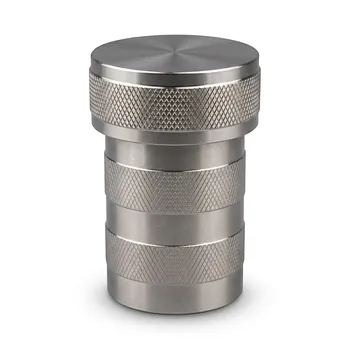
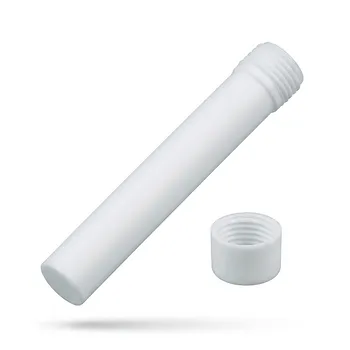
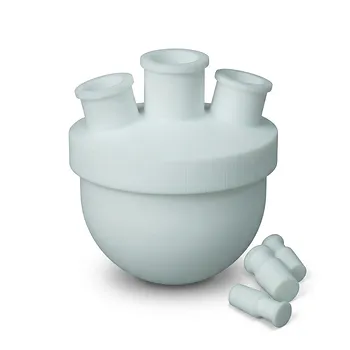
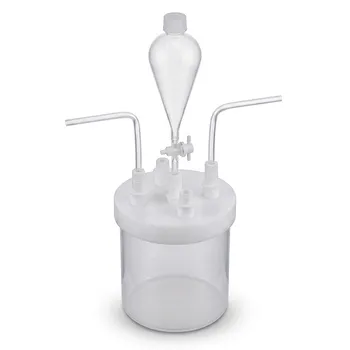
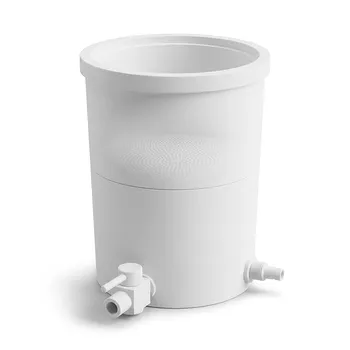
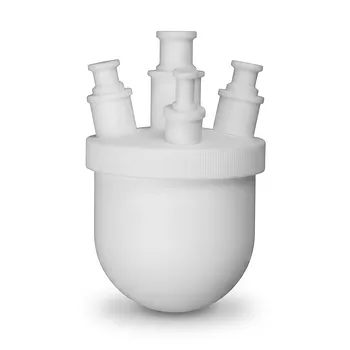
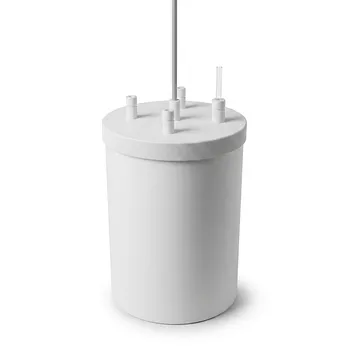
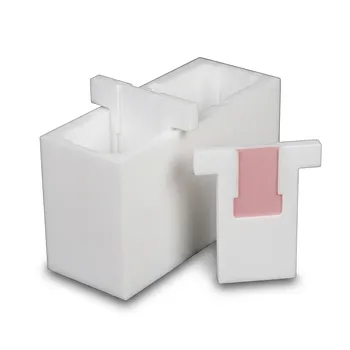
The hydrothermal synthesis reactor liner is the critical component that enables the precise, high-pressure environment required for precursors to chemically transform into crystalline cobalt sulfide. Specifically, for reactions occurring at 180°C, these liners provide a sealed, corrosion-resistant chamber that facilitates the full mineralization and crystal growth of cobalt sources and thiourea. Without this specialized environment, the reactants would fail to achieve the specific hexagonal spherical morphologies required for advanced technical applications.
Core Takeaway: The liner acts as a dual-purpose barrier and catalyst environment, protecting the reactor vessel from corrosive sulfur sources while maintaining the autogenous pressure necessary to dictate the final crystal structure and purity of the cobalt sulfide.
Facilitating Deep Mineralization and Crystal Growth
Achieving Thermodynamic Thresholds
The synthesis of cobalt sulfide (CoS) requires specific thermodynamic conditions that standard atmospheric reactions cannot provide. A high-pressure liner allows the aqueous solution to reach temperatures like 180°C, creating high internal pressure that forces the complete dissolution of precursors.
Guiding Crystalline Morphology
The sealed environment is essential for the directional growth of specific crystalline phases. Under these high-pressure conditions, the cobalt and thiourea precursors undergo a "self-assembly" process that results in hexagonal spherical structures.
Ensuring Kinetic Efficiency
By maintaining a constant high temperature and pressure over extended periods (such as 12 hours), the liner ensures full mineralization. This leads to a higher concentration of active sites and optimized pore structures in the final CoS material.
Protection Through Chemical Inertness
Preventing Metallic Contamination
Reactants used in sulfide synthesis are often highly reactive; a liner made of PTFE (Polytetrafluoroethylene) or PFA (Perfluoroalkoxy) provides a chemically inert interface. This prevents external impurities from leaching into the reaction, ensuring the high purity of the cobalt sulfide product.
Safeguarding the Structural Vessel
The liner serves as a critical physical barrier between the corrosive hydrothermal medium and the stainless-steel reactor shell. It prevents oxidation, dissolution, or stress-corrosion cracking of the outer metal vessel caused by the sulfur-containing precursors.
Managing Acidic and Corrosive Byproducts
Hydrothermal reactions often involve acidic catalysts or generate corrosive byproducts during the breakdown of thiourea. Materials like PTFE or PPL (Para-polyphenylene) are specifically chosen for their ability to withstand these aggressive chemical environments without degrading.
Understanding the Trade-offs and Limitations
Temperature Constraints of Materials
While PTFE is the standard for most reactions, it has a functional limit, often around 220°C. Exceeding these temperatures can lead to liner deformation (creeping), which may compromise the seal and lead to reactor failure.
Pressure Risks and Safety
The "autogenous pressure" generated inside the liner increases exponentially with temperature. If the liner is filled beyond its recommended capacity (usually 60-80%), the resulting pressure can exceed the structural limits of both the liner and the stainless-steel jacket.
Heat Transfer Delays
Because materials like PTFE are excellent insulators, there is a thermal lag between the oven temperature and the internal reaction temperature. Users must account for this ramp-up time to ensure the cobalt sulfide spends the necessary duration at the target synthesis temperature.
Making the Right Choice for Your Synthesis Goal
To achieve the best results in cobalt sulfide synthesis, select your liner and parameters based on your specific material requirements.
- If your primary focus is high-purity crystalline structures: Utilize a high-purity PFA liner, as it offers superior chemical resistance and lower trace-element leaching compared to standard PTFE.
- If your primary focus is synthesizing CoS at temperatures above 230°C: Opt for a PPL (Para-polyphenylene) liner, which maintains structural integrity at higher thermal thresholds than PTFE.
- If your primary focus is morphology control (e.g., nanosheets or spheres): Ensure the filling degree of the liner is precisely calculated to maintain consistent autogenous pressure throughout the 12-hour reaction.
By strictly controlling the high-pressure environment within the liner, you ensure the reliable and repeatable production of high-performance cobalt sulfide.
Summary Table:
| Feature | Parameter/Material | Impact on CoS Synthesis |
|---|---|---|
| Purity Control | High-purity PFA/PTFE | Prevents metallic leaching and contamination. |
| Morphology | Autogenous Pressure | Facilitates hexagonal spherical crystal structures. |
| Thermal Limit | PPL (up to 280°C) | Allows for deep mineralization at higher temperatures. |
| Safety | 60-80% Filling Degree | Manages pressure to prevent vessel failure/leaks. |
| Protection | Chemical Barrier | Shields stainless steel from corrosive sulfur sources. |
Elevate Your Synthesis Precision with KINTEK
Achieving perfect crystalline morphology in cobalt sulfide requires uncompromised chemical inertness and pressure stability. KINTEK specializes in high-performance fluoropolymer solutions, offering an exhaustive range of laboratory supplies crafted from PTFE and PFA to meet the most rigorous hydrothermal demands.
From essential labware like beakers, crucibles, and reagent bottles to specialized hydrothermal synthesis liners, microwave digestion vessels, and custom electrochemical cells, we provide the tools necessary for advanced material research. Whether you require standard components or bespoke laboratory setups through our end-to-end custom CNC fabrication, KINTEK delivers precision-engineered parts for both low-volume research and high-volume industrial needs.
Ensure the success of your next synthesis—Contact KINTEK today for high-performance fluoropolymer solutions!
References
- Juntao Zhang, Guangfu Liao. Dual Co Sites in n─n Type Heterojunction Enable Selective Electrochemical Co‐Valorization of HMF and CO <sub>2</sub>. DOI: 10.1002/anie.202511448
This article is also based on technical information from Kintek Knowledge Base .
Related Products
- High Temperature Corrosion Resistant Hydrothermal Synthesis Reactor with TFM Inner Liner and Straight Cylinder Design
- PTFE Lined High Pressure Digestion Vessel 50ml High Temperature Hydrothermal Synthesis Tank
- High Pressure Custom TFM Reactor Stainless Steel Outer Vessel PTFE Inner Cup for Corrosive Synthesis
- Custom TFM Reaction Vessel with Stainless Steel Jacket and PTFE Inner Cup for High Corrosion Resistance
- High Purity TFM Microwave Digestion Vessels PTFE Acid Evaporation Liners Domestic GT-400 Equivalent Laboratory Reaction Containers
People Also Ask
- What is the role of a corrosion-resistant reactor in the synthesis of lignin-based carbon dots? Ensure Maximum Purity
- What are the technical advantages of using hydrothermal synthesis reactors for advanced electronic & optical nanomaterials?
- How does a hydrothermal synthesis reactor facilitate the production of crystalline materials with tailored morphologies? Precision Crystal Growth
- Why is the sealing reliability of a hydrothermal synthesis reactor critical for 24-hour cycles? Ensure Nano-Precision
- What role do hydrothermal synthesis reactors play in CQD preparation? Achieve High-Purity Nanomaterial Synthesis