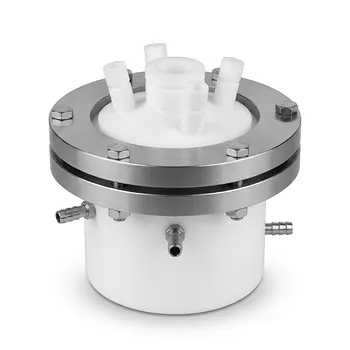
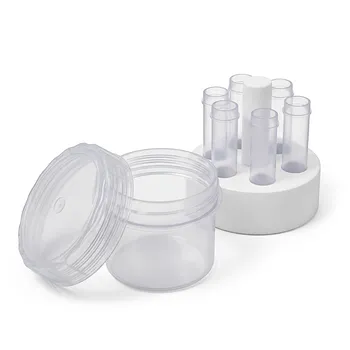
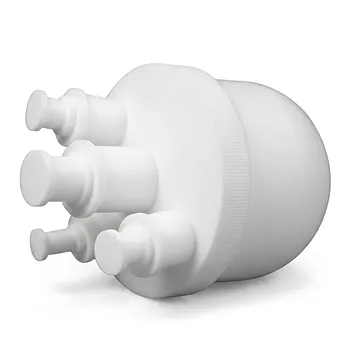
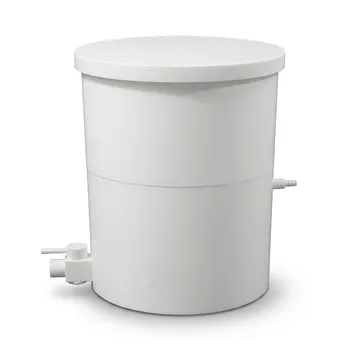
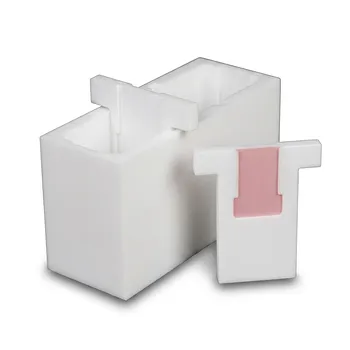
High-pressure hydrothermal reactors are indispensable for MOF synthesis because they create a supercritical or near-critical environment that forces chemical reactions beyond standard atmospheric limits. This environment increases solvent pressure and temperature simultaneously, which dramatically enhances the solubility and diffusion rates of organic ligands and metal clusters. For complex structures like amino-functionalized zirconium frameworks, these conditions provide the necessary energy to overcome activation barriers and allow for precise, ordered self-assembly.
Core Takeaway: The high-pressure hydrothermal reactor functions as a chemical accelerator, using autogenous pressure to keep solvents liquid above their boiling points. This high-energy state is the only way to achieve the specific solubility and kinetic conditions required for the nucleation and growth of high-crystallinity metal-organic structures.
Overcoming Thermodynamic and Kinetic Barriers
Surpassing Activation Energy
Synthesis of zirconium-based frameworks requires the formation of strong coordination bonds between metal clusters and organic ligands. Under normal conditions, the energy available is often insufficient to trigger these specific reactions. The high-pressure environment provides the thermal energy needed to overcome these activation barriers, allowing the reactants to transition into a stable crystal lattice.
Facilitating Ordered Self-Assembly
In a closed system, as temperatures rise above 100°C, the internal pressure increases significantly. This "autogenous pressure" enhances the chemical activity of the reactants. This heightened activity is what enables the organic ligands to find their precise orientation around the metal clusters, resulting in a complete, ordered crystal structure rather than an amorphous mass.
The Role of Solvent Dynamics in Synthesis
Maintaining the Liquid Phase
Industrial high-pressure reactors allow aqueous and organic solutions to remain in a liquid state even when temperatures far exceed their normal boiling points. This is critical for zirconium precursors, such as zirconium oxychloride, which require a liquid environment for complete hydrolysis. Without high pressure, the solvent would evaporate, halting the reaction before the framework could form.
Increasing Solubility and Diffusion
High pressure significantly increases the solubility of precursors, which are often difficult to dissolve at room temperature. Enhanced solubility ensures a homogenous mixture, while increased diffusion rates allow ions to move rapidly through the solution. This rapid movement is essential for the "in-situ" reactions required to attach functional groups or hybridize the MOF with other materials, such as carbon nanotubes.
Precise Control of Crystal Morphology
Regulating Nucleation and Growth
The sealed environment of a hydrothermal reactor allows for the precise manipulation of nucleation sites. By controlling the temperature (typically between 100°C and 200°C) and the reaction time, researchers can dictate how crystals begin to form. This control ensures that the resulting nanopowders have high crystallinity and are free from the impurities common in low-energy synthesis.
Inducing Specific Geometric Shapes
The high-pressure environment is what allows for the growth of specific crystal facets and morphologies. Whether producing nanocubes, flakes, or spheres, the reactor’s internal conditions influence the geometric development of the framework. This is particularly important for amino-functionalized frameworks, where the surface area and pore structure are the primary drivers of their utility.
Understanding the Trade-offs
Safety and Operational Complexity
Operating at high pressures and temperatures introduces significant safety risks and requires specialized, heavy-duty equipment. These reactors must be meticulously maintained to prevent leaks or catastrophic failures. Furthermore, the "black box" nature of a sealed vessel makes it difficult to monitor the reaction in real-time, often requiring a "trial and error" approach to timing.
Scalability and Cost
While hydrothermal synthesis produces superior crystals, it is often more expensive and slower than open-air methods. The batch-processing nature of these reactors can limit production volume. Additionally, the energy required to maintain high temperatures for extended periods (often 24 to 72 hours) adds to the total cost of the final material.
How to Apply This to Your Project
Making the Right Choice for Your Goal
- If your primary focus is High Crystallinity: You must use a high-pressure reactor to ensure the kinetic conditions are sufficient for ordered growth.
- If your primary focus is Morphological Control: Precisely calibrate the temperature and autogenous pressure to favor specific crystal facets.
- If your primary focus is Rapid Prototyping: Consider solvothermal alternatives or lower-temperature methods if the framework does not require the high activation energy of zirconium-based structures.
- If your primary focus is Scalability: Evaluate the trade-offs between batch hydrothermal synthesis and continuous-flow systems that can handle high-pressure environments.
The high-pressure hydrothermal reactor remains the gold standard for MOF synthesis because it provides the extreme physical prerequisites necessary to transform raw chemical precursors into sophisticated, functionalized crystal architectures.
Summary Table:
| Feature | Impact on MOF Synthesis |
|---|---|
| Autogenous Pressure | Keeps solvents liquid above boiling points for complete precursor hydrolysis. |
| Thermal Energy | Overcomes high activation barriers for strong metal-ligand coordination bonds. |
| Enhanced Solubility | Dissolves difficult zirconium clusters to ensure a homogenous reaction mixture. |
| Kinetic Control | Regulates nucleation sites for high-crystallinity nanopowders and specific shapes. |
| Increased Diffusion | Accelerates ion movement for in-situ functionalization and hybrid material growth. |
Optimize Your Hydrothermal Synthesis with KINTEK Precision
To achieve the high-energy states required for advanced MOF synthesis, your lab needs equipment that stands up to extreme conditions. KINTEK specializes in high-performance fluoropolymer solutions designed specifically for demanding chemical environments.
From our ultra-pure hydrothermal synthesis liners and microwave digestion vessels to custom-machined PTFE/PFA reaction apparatus, we provide the reliability and chemical inertness essential for precise crystal growth. Whether you need standard labware like beakers and reagent bottles or complex, bespoke CNC-fabricated components, KINTEK delivers end-to-end excellence.
Ready to elevate your material science research? Contact our experts today to discuss how our fluoropolymer expertise can support your next breakthrough.
References
- Yujie Zhao, Andreas Kaiser. A Zero‐Gap Gas Phase Photoelectrolyzer for CO<sub>2</sub> Reduction with Porous Carbon Supported Photocathodes. DOI: 10.1002/cssc.202400518
This article is also based on technical information from Kintek Knowledge Base .
Related Products
- High Temperature Corrosion Resistant Hydrothermal Synthesis Reactor with TFM Inner Liner and Straight Cylinder Design
- High Pressure Custom TFM Reactor Stainless Steel Outer Vessel PTFE Inner Cup for Corrosive Synthesis
- PTFE Lined High Pressure Digestion Vessel 50ml High Temperature Hydrothermal Synthesis Tank
- Custom TFM Reaction Vessel with Stainless Steel Jacket and PTFE Inner Cup for High Corrosion Resistance
- PTFE Distillation Condensation Apparatus High Temperature Hydrofluoric Acid Resistant Fluorination Reaction Flask
People Also Ask
- What is the role of a corrosion-resistant reactor in the synthesis of lignin-based carbon dots? Ensure Maximum Purity
- What are the technical advantages of using hydrothermal synthesis reactors for advanced electronic & optical nanomaterials?
- How does a hydrothermal synthesis reactor facilitate the production of crystalline materials with tailored morphologies? Precision Crystal Growth
- Why is the sealing reliability of a hydrothermal synthesis reactor critical for 24-hour cycles? Ensure Nano-Precision
- What role do hydrothermal synthesis reactors play in CQD preparation? Achieve High-Purity Nanomaterial Synthesis