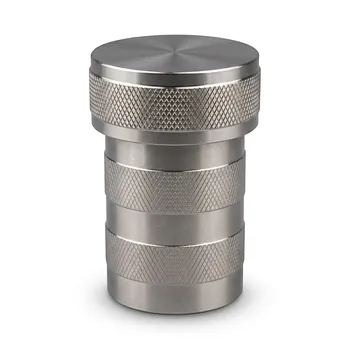
The high-pressure hydrothermal autoclave is the indispensable engine of nickel nanoferrite synthesis because it creates a sealed, high-energy environment that allows solvents to reach subcritical or supercritical states. These conditions dramatically increase the solubility of metal precursors and provide the specific kinetic energy required for rapid nucleation and controlled crystal growth. By surpassing the atmospheric boiling point of solvents, the autoclave enables the formation of highly crystalline nanoparticles that would be impossible to produce under standard laboratory conditions.
The core value of a high-pressure autoclave lies in its ability to facilitate "one-pot" synthesis of nickel nanoferrites with superior crystallinity and purity. By manipulating pressure and temperature, it eliminates the need for energy-intensive post-processing steps like high-temperature calcination.
Overcoming Physical and Chemical Barriers
Achieving Subcritical and Supercritical Solvent States
A sealed autoclave allows water or other solvents to remain in a liquid state at temperatures far exceeding their normal boiling points, often between 130°C and 200°C. This creates a high-pressure environment where the solvent's physical properties change, significantly lowering the barrier for chemical reactions.
Enhancing Precursor Solubility
Under these elevated conditions, the solubility of solid reactant salts increases substantially. This ensures that the metal ions are fully dissolved and available in the solution, which is a prerequisite for forming a homogenous reaction mixture.
Promoting Rapid Nucleation
The high-energy environment provides the necessary kinetic conditions for uniform nucleation. This means that millions of tiny "seeds" of nickel ferrite form simultaneously, which is critical for achieving a narrow particle size distribution.
Ensuring Material Quality and Purity
High Crystallinity Without Post-Processing
Traditional synthesis methods often require calcination (heating in a furnace) to achieve a crystalline structure, which can cause particles to clump together. The hydrothermal method produces high crystallinity directly within the solution, preserving the nano-scale dimensions of the ferrite.
Maintaining Chemical Purity with PTFE Liners
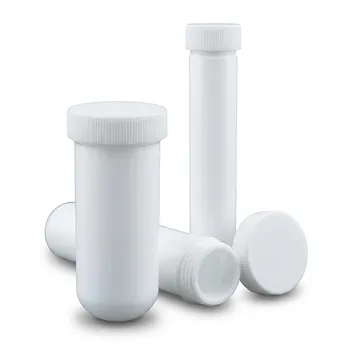
High-pressure autoclaves typically use a Polytetrafluoroethylene (PTFE) or PFA liner to protect the stainless steel outer shell. This liner is chemically inert, preventing the strongly alkaline solutions used in ferrite synthesis from corroding the vessel and introducing metallic impurities into the final product.
Enabling Multi-Component Doping
The closed system is ideal for co-precipitation or the introduction of doping ions. This allows researchers to create complex composite nanomaterials or hybrid structures, such as NiFe-LDH arrays, with enhanced functional properties and high active surface areas.
Understanding the Trade-offs
Pressure Safety and Vessel Integrity
The primary risk associated with this method is the autogenous pressure generated inside the vessel. If the filling degree is too high or the temperature exceeds the limits of the liner, the vessel can fail, making strict adherence to safety protocols and temperature limits (often capped at 200°C-250°C for PTFE) mandatory.
Scalability and Monitoring Constraints
Hydrothermal synthesis is typically a batch process, which can limit high-volume production compared to continuous flow methods. Furthermore, because the reaction happens inside a sealed metal "black box," real-time monitoring of the crystal growth is technically challenging and requires specialized equipment.
How to Apply This to Your Synthesis Goal
The success of your nickel nanoferrite synthesis depends on how you calibrate the autoclave environment to your specific requirements.
- If your primary focus is Maximum Purity: Ensure the use of a high-quality PTFE liner and maintain temperatures below 200°C to prevent any leaching of the steel vessel's components.
- If your primary focus is Morphological Control: Precisely regulate the reaction time and temperature to dictate whether the ferrite forms as spheres, nanosheets, or wires.
- If your primary focus is Processing Efficiency: Leverage the hydrothermal environment to produce fully crystalline particles in a single step, effectively skipping the traditional calcination stage.
By mastering the high-pressure environment of the autoclave, you gain total control over the nanostructure and performance of your nickel ferrite materials.
Summary Table:
| Feature | Benefit for Nickel Nanoferrite Synthesis | Key Outcome |
|---|---|---|
| Subcritical States | Surpasses atmospheric boiling points for increased energy | Enhanced solubility & rapid nucleation |
| PTFE/PFA Liners | Chemically inert protection against alkaline corrosion | Ultra-high purity & zero metallic contamination |
| Single-Step Process | High crystallinity achieved directly within the solution | Eliminates energy-intensive calcination |
| Sealed System | Enables precise control of autogenous pressure | Uniform particle size & morphological control |
Elevate Your Nanomaterial Synthesis with KINTEK Precision
To achieve world-class results in nickel nanoferrite synthesis, the quality of your reaction environment is non-negotiable. KINTEK specializes in high-performance fluoropolymer solutions, offering an exhaustive range of laboratory supplies crafted from PTFE and PFA—materials essential for maintaining the purity and integrity of your hydrothermal processes.
From hydrothermal synthesis liners and microwave digestion vessels to a complete selection of basic labware (beakers, crucibles, reagent bottles) and fluid transfer components (tubing, valves, fittings), we provide the tools necessary for precision research. Our expertise extends to advanced reaction apparatus, including custom electrochemical cells and battery testing fixtures, all backed by end-to-end custom CNC fabrication for your non-standard machined parts.
Whether you need bespoke laboratory setups or high-volume consumables like O-rings, stir bars, and filters, KINTEK delivers the durability and chemical resistance your lab demands. Contact KINTEK today to discuss your custom fabrication needs and secure the high-performance materials your research deserves.
References
- Amrutesh Kannolli, Suvidha P Hegde. Unveiling Hydrothermal Synthesis and Captivating Characteristics of Nickel Nanoferrites. DOI: 10.12723/mjs.74.8
This article is also based on technical information from Kintek Knowledge Base .
Related Products
- PTFE Lined High Pressure Digestion Vessel 50ml High Temperature Hydrothermal Synthesis Tank
- Custom TFM Reaction Vessel with Stainless Steel Jacket and PTFE Inner Cup for High Corrosion Resistance
- High Temperature Corrosion Resistant Hydrothermal Synthesis Reactor with TFM Inner Liner and Straight Cylinder Design
- High Pressure Custom TFM Reactor Stainless Steel Outer Vessel PTFE Inner Cup for Corrosive Synthesis
- High Temperature Corrosion Resistant PTFE Hydrogen Fluoride Condensation Reflux System with Separatory Funnel and PFA Collection Bottle
People Also Ask
- What are the benefits of using a PTFE-lined vessel for carbon-sulfur cathode treatment? Maximize Purity & Performance
- Why are PTFE-lined pressure digestion vessels required for the preparation of Ag/CeO2 catalysts? Purity & Performance
- What safety features are typically incorporated into high-pressure PTFE digestion vessel designs? Ensure Lab Safety
- What is the function of PTFE lined high-pressure vessels in g-C3N4 synthesis? Achieve High-Purity Material Growth
- Role of High-Pressure Digestion Tanks in Perovskite Synthesis: Achieve Superior Stability and Latent Heat