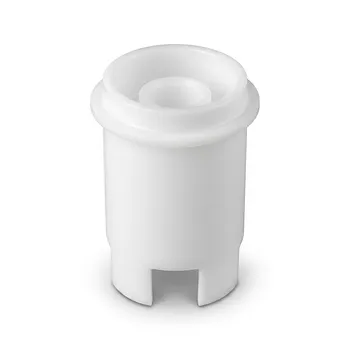
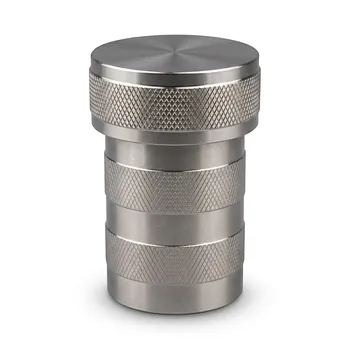
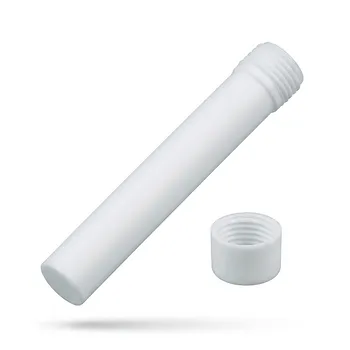
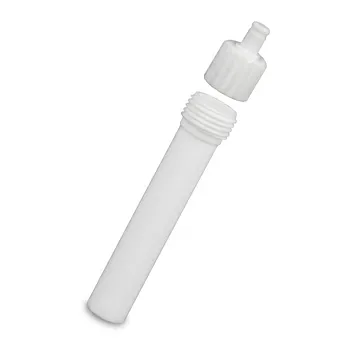
The use of a Polytetrafluoroethylene (PTFE) liner in a high-pressure autoclave is non-negotiable for Ni-LDH synthesis because it simultaneously prevents metallic contamination and enables controlled crystal growth. At the required synthesis temperature of 120 °C, the reaction environment is often highly corrosive and under significant autogenous pressure. The PTFE liner provides the necessary chemical "shield" while the autoclave provides the physical "containment," ensuring the Ni-LDH precursors develop the precise morphology and purity required for high-performance applications.
A PTFE-lined autoclave solves the dual challenge of chemical corrosion and high-pressure containment. It ensures that Ni-LDH crystals nucleate uniformly on the intended substrate rather than reacting with the vessel walls, maintaining the structural integrity of both the sample and the equipment.
Ensuring Chemical Purity and Corrosion Resistance
Protection Against Aggressive Reagents
The synthesis of Nickel-layered double hydroxide (Ni-LDH) often involves strong alkaline environments or precursor salts that are highly corrosive to metals. PTFE is exceptionally chemically inert, meaning it does not react with the hydroxides or solvents used during the hydrothermal process. Without this liner, the reaction solution would directly attack the stainless steel autoclave walls, damaging the equipment.
Prevention of Metallic Contamination
If the reaction solution were to come into contact with the stainless steel shell, iron, chromium, or nickel from the steel could leach into the precursor. This introduction of metallic impurities would alter the electrochemical properties and purity of the Ni-LDH. The PTFE liner acts as a physical barrier that guarantees the resulting material maintains its intended stoichiometric composition.
Maintaining Structural Integrity
By isolating the corrosive chemicals, the liner protects the mechanical strength of the external stainless steel shell. This is critical for safety, as any corrosion to the outer vessel could lead to a catastrophic structural failure under high pressure. The combination allows for a safe reaction environment even during long-term heating cycles.
Facilitating Controlled Crystal Growth
Leveraging Autogenous Pressure
As the autoclave is heated to 120 °C, the sealed environment generates autogenous pressure, which is vital for the hydrothermal process. This pressure significantly increases the solubility of the precursor salts, allowing for a more controlled and thorough reaction. This environment is what enables the metal ions to transition from the liquid phase into solid crystalline structures.
Promoting Oriented Morphology
The high-pressure environment is essential for the uniform nucleation and oriented growth of Ni-LDH crystals. Specifically, when growing these precursors on substrates like Nickel Foam, the pressure ensures the formation of 2D nanosheet arrays with high active surface areas. This results in the specific "sacrificial template" morphologies required for advanced material applications.
Enhancing Crystallinity
Hydrothermal conditions allow for a slower, more organized growth process compared to standard atmospheric precipitation. This leads to higher crystallinity and better-defined structures, such as flower-like nanostructures or nanoclusters. The PTFE liner ensures this growth occurs in a pristine environment, free from the interference of secondary ions leached from the reactor walls.
Understanding the Trade-offs and Limitations
Temperature Constraints
While PTFE is excellent for 120 °C, it has a functional ceiling, typically around 200 °C to 250 °C. Above these temperatures, the polymer can begin to soften or release toxic fumes, potentially compromising the seal or contaminating the sample. For reactions requiring higher temperatures, researchers must often switch to more expensive PPL (Polyphenylene polymers) liners.
Seal Reliability and Maintenance
The effectiveness of the PTFE liner depends entirely on the integrity of the seal between the liner and its lid. PTFE has a high coefficient of thermal expansion, meaning it expands and contracts significantly during heating and cooling cycles. Over time, this can lead to deformations that prevent a perfect seal, necessitating regular inspection and replacement of the liners to avoid pressure leaks.
How to Apply This to Your Synthesis Goals
When selecting or operating an autoclave for Ni-LDH synthesis, consider your primary objective to ensure the best material outcomes:
- If your primary focus is High Electrochemical Purity: Always use a fresh or thoroughly acid-washed PTFE liner to ensure zero ion migration from the autoclave walls into your Ni-LDH nanosheets.
- If your primary focus is Specific Morphological Control: Ensure the autoclave is filled to the recommended volume (usually 60-80%) to generate the optimal autogenous pressure required for uniform oriented growth.
- If your primary focus is Equipment Longevity and Safety: Regularly inspect the PTFE liner for "creeping" or deformation and never exceed the maximum rated temperature of the polymer.
By strictly adhering to the use of a PTFE liner, you ensure that the hydrothermal process remains a precise tool for material engineering rather than a source of contamination.
Summary Table:
| Feature | Benefit for Ni-LDH Synthesis | Impact on Research Outcomes |
|---|---|---|
| Chemical Inertness | Prevents corrosion from alkaline reagents | Eliminates metallic impurities and leaching |
| Physical Barrier | Protects stainless steel vessel wall | Ensures equipment safety and longevity |
| Pressure Containment | Facilitates autogenous pressure at 120°C | Enables uniform nucleation and oriented growth |
| Temperature Limit | Stable performance up to 200°C-250°C | Ideal for most hydrothermal precursor methods |
| Low Surface Energy | Minimal adhesion of synthesized nanostructures | Easier sample recovery and cleaner morphology |
Elevate your hydrothermal research with KINTEK’s high-performance fluoropolymer solutions. Whether you require standard PTFE liners, PFA reaction apparatus, or precision-machined fluid transfer components, KINTEK manufactures virtually every laboratory supply imaginable from high-purity materials. From everyday labware like beakers and digestion tubes to advanced electrochemical cells and custom CNC-fabricated parts, our exclusive focus on PTFE and PFA ensures zero contamination and maximum durability for your most sensitive experiments. Need a bespoke setup or high-volume order? Contact KINTEK today to partner with the experts in high-performance fluoropolymer fabrication.
References
- Shulin Li, Guangshan Zhu. Reversible surface reconstruction of metal–organic frameworks for durable oxygen evolution reaction. DOI: 10.1039/d5sc02536b
This article is also based on technical information from Kintek Knowledge Base .
Related Products
- PTFE Lined High Pressure Digestion Vessel 50ml High Temperature Hydrothermal Synthesis Tank
- Custom TFM Reaction Vessel with Stainless Steel Jacket and PTFE Inner Cup for High Corrosion Resistance
- High Pressure Custom TFM Reactor Stainless Steel Outer Vessel PTFE Inner Cup for Corrosive Synthesis
- High Pressure PTFE Digestion Vessel Inner Cup Holder Custom Corrosion Resistant Low Background Teflon
- High Temperature Corrosion Resistant Hydrothermal Synthesis Reactor with TFM Inner Liner and Straight Cylinder Design
People Also Ask
- What are the benefits of using a PTFE-lined vessel for carbon-sulfur cathode treatment? Maximize Purity & Performance
- Why are PTFE-lined pressure digestion vessels required for the preparation of Ag/CeO2 catalysts? Purity & Performance
- What safety features are typically incorporated into high-pressure PTFE digestion vessel designs? Ensure Lab Safety
- What is the function of PTFE lined high-pressure vessels in g-C3N4 synthesis? Achieve High-Purity Material Growth
- Role of High-Pressure Digestion Tanks in Perovskite Synthesis: Achieve Superior Stability and Latent Heat