Fluoropolymers outperform standard hydrocarbon plastics because their molecular structure protects the polymer backbone from both chemical attack and heat. In PTFE and PFA, fluorine atoms surround a carbon backbone and create exceptionally strong carbon–fluorine bonds. This combination makes the materials unusually inert, thermally stable, low-wetting, and resistant to contamination in high-purity fluid handling and chemical vessel applications.
The central advantage is molecular protection: strong C–F bonds resist bond breaking, while the surrounding fluorine atoms shield the carbon chain from aggressive chemicals. PTFE and PFA therefore retain their integrity and purity across conditions that can degrade materials such as polypropylene, polyethylene, or PVC.
Why the Molecular Structure Matters
Strong carbon–fluorine bonds resist degradation
The carbon–fluorine bond has a bond dissociation energy of approximately 485 kJ/mol, or about 116 kcal/mol. This is substantially stronger than the carbon–hydrogen bonds common in hydrocarbon polymers.
Breaking or chemically transforming these bonds requires considerable energy. As a result, aggressive acids, bases, solvents, and oxidizing environments have much more difficulty attacking the polymer chain.
Fluorine forms a protective molecular sheath
Fluorine atoms are larger than hydrogen atoms and densely surround the carbon backbone in highly fluorinated polymers. This creates a steric and chemical barrier that makes it difficult for reactive species to reach the underlying carbon chain.
The fluorinated surface also has low surface energy, which contributes to non-wetting and non-sticking behavior. Fluids are less likely to adhere to the surface, remain trapped, or transfer residues between process steps.
Full fluorination increases resistance
PTFE and PFA are perfluoropolymers, meaning that their carbon framework is extensively fluorinated. Replacing hydrogen with fluorine generally improves chemical resistance and thermal stability compared with conventional hydrocarbon plastics and many partially fluorinated polymers.
This is why PTFE and PFA typically provide a higher level of inertness than materials such as polypropylene, PVC, ETFE, or PVDF in especially demanding chemical service.
How Fluoropolymers Resist High Temperatures
Thermal energy is less likely to break the polymer chain
At elevated temperatures, plastics can undergo chain scission, oxidation, softening, or the release of degradation products. The strong C–F bonds in PTFE and PFA make these degradation mechanisms more difficult to initiate.
Their fluorinated structure therefore helps them maintain chemical integrity and dimensional stability over a broad operating range.
PTFE and PFA support high-temperature processing
PTFE and PFA are commonly selected for high-temperature laboratory and process applications, including:
- Digestion vessels
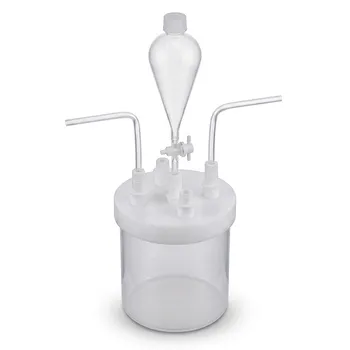
- Chemical reaction equipment
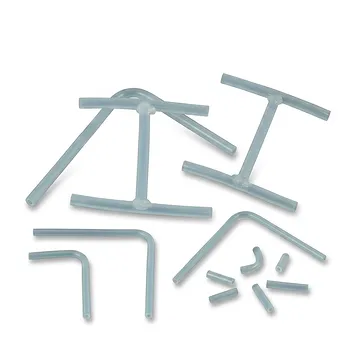
- High-purity tubing
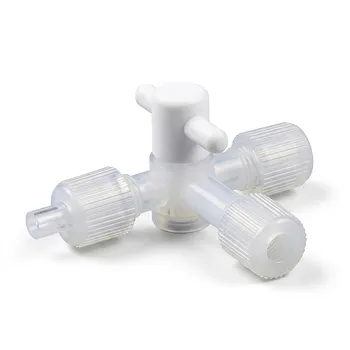
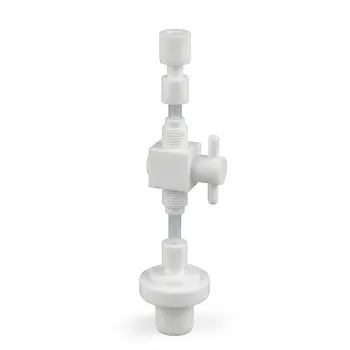
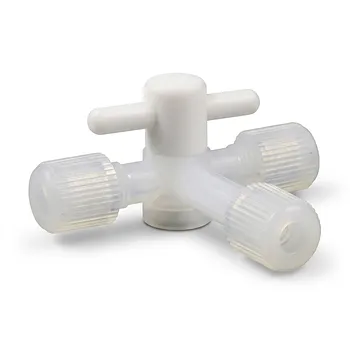
- Valves and fittings
- Tank and vessel linings
- Hot reagent transfer systems
Depending on the grade, design, pressure, and service conditions, their maximum continuous-use temperatures are commonly in the approximate range of 260°C to 288°C. Actual allowable temperatures must be confirmed from the manufacturer's data because mechanical strength and pressure capability can decline before chemical resistance does.
PTFE and PFA have different processing advantages
PTFE has a highly linear, unbranched structure and is known for exceptional chemical and thermal resistance. However, it is not conventionally melt-processable and is often formed through specialized processing methods.
PFA provides comparable high-end chemical resistance while being melt-processable. This makes it particularly useful for producing complex tubing, containers, fittings, and components where seamless fabrication and high purity are important.
Why This Matters in High-Purity Fluid Handling
Reduced contamination and extractables
When a material reacts with a process fluid, it can release degradation products, additives, fillers, or other extractable compounds. Those contaminants can compromise trace analysis, pharmaceutical processing, semiconductor chemicals, or laboratory results.
PTFE and PFA are highly inert and generally contain fewer chemically active components than many compounded or stabilized hydrocarbon plastics. This helps reduce the risk of leaching and sample contamination.
Resistance to aggressive reagents
Standard hydrocarbon plastics contain carbon–hydrogen bonds and often have less effective protection around their molecular chains. Depending on the chemical, temperature, concentration, and exposure time, they may swell, embrittle, oxidize, soften, or crack.
PTFE and PFA are better suited to severe exposure involving aggressive acids, bases, solvents, and concentrated reagents. They are therefore used where a small amount of material degradation could create unacceptable process or analytical risk.
Low retention supports cleaner transfer
The low surface energy of fluoropolymers reduces wetting and adhesion. This can minimize fluid holdup and make systems easier to drain, rinse, and clean.
For high-purity systems, that behavior helps reduce cross-contamination between batches or samples, although system design, surface finish, dead volume, and cleaning procedure remain equally important.
Stability protects dimensional performance
Chemical attack can change a component's dimensions, flexibility, sealing behavior, or pressure capability. Because PTFE and PFA resist many of the reactions that cause such changes, they can maintain more predictable performance over extended service.
This is particularly valuable in valves, tubing, gaskets, vessel liners, and fittings where dimensional changes can lead to leakage or particle generation.
Why Standard Hydrocarbon Plastics Often Perform Differently
Their backbones are more chemically accessible
In conventional hydrocarbon plastics, hydrogen atoms do not provide the same dense protective coverage as fluorine. Reactive chemicals can therefore reach and attack the carbon backbone more readily under demanding conditions.
The exact performance depends on the specific plastic. Polypropylene, polyethylene, PVC, and other materials can be excellent choices for moderate service, but their chemical and thermal limits are generally narrower than those of PTFE and PFA.
Heat can accelerate chemical attack
Temperature does not act independently from chemistry. A fluid that is compatible with a plastic at room temperature may cause rapid swelling, oxidation, or degradation at elevated temperature.
Fluoropolymers provide a larger safety margin because their molecular structure resists both the chemical reagent and the increased thermal energy that accelerates reaction rates.
Degradation can affect purity before failure is visible
A component does not need to crack or visibly deform to become unsuitable for high-purity service. Small amounts of extractables, surface changes, or trace degradation can affect sensitive processes and analytical measurements.
PTFE and PFA are valuable because they help preserve fluid purity, not merely because they extend component life.
Understanding the Trade-offs
Chemical resistance is not absolute
PTFE and PFA resist an exceptionally broad range of chemicals, but no polymer is compatible with every possible combination of reagent, temperature, pressure, and exposure time. Certain extreme environments, including some molten alkali metals and highly reactive fluorinating conditions, require specific compatibility verification.
A chemical-resistance chart is a starting point, not a substitute for application testing.
Mechanical strength can limit use
Fluoropolymers can have lower stiffness and strength than some engineering plastics, particularly at elevated temperatures. PTFE can also exhibit creep or cold flow under sustained compressive loads.
Designers may need reinforced constructions, appropriate wall thickness, support structures, or specialized sealing designs when pressure and mechanical loading are significant.
Thermal resistance does not mean unlimited temperature capability
A fluoropolymer may remain chemically inert at a temperature where its mechanical performance is no longer adequate. Pressure rating, dimensional stability, sealing force, and thermal expansion must all be evaluated alongside chemical compatibility.
The correct selection therefore depends on the complete operating envelope rather than temperature alone.
Cost and fabrication can be higher
PTFE and PFA components often cost more than standard hydrocarbon-plastic components. PTFE fabrication can also be more specialized, while PFA may require controlled melt-processing equipment.
That premium is usually justified when contamination control, chemical reliability, or service life is more important than initial material cost.
Making the Right Choice for Your Goal
Material selection should consider chemical composition, concentration, temperature, pressure, exposure time, purity requirements, and mechanical loading together.
- If your primary focus is maximum chemical resistance: Choose PTFE or PFA after verifying compatibility with the specific chemicals and operating conditions.
- If your primary focus is high-purity fluid handling: Prefer clean, low-extractable PTFE or PFA components and control manufacturing, cleaning, and installation practices.
- If your primary focus is complex component fabrication: Consider PFA when melt-processability and seamless, intricate geometries are important.
- If your primary focus is mechanical strength or cost: Evaluate standard engineering plastics first, but confirm that their thermal, chemical, and extractables performance remains acceptable.
The right fluoropolymer is not simply the one that survives the chemical—it is the one that preserves purity, performance, and reliability across the entire operating envelope.
Summary Table:
| Feature | PTFE/PFA (Fluoropolymers) | Standard Hydrocarbon Plastics (e.g., PP, PE, PVC) |
|---|---|---|
| Molecular Structure | Strong C-F bonds (485 kJ/mol), fluorine sheath protects carbon backbone | Weaker C-H bonds, less protective structure |
| Chemical Resistance | Exceptional against acids, bases, solvents; low extractables | Limited; prone to swelling, oxidation, cracking |
| Thermal Stability | Continuous use up to 260-288°C | Lower temperature limits; accelerated degradation |
| Purity Preservation | Minimal contamination, low surface energy, non-stick | Higher risk of leaching and contamination |
| Mechanical Strength | Lower strength; creep under load | Generally stronger but performance degrades |
| Fabrication | PTFE specialized; PFA melt-processable | Easy processing, lower cost |
Key Takeaways:
- Fluoropolymers excel in demanding chemical and high-temperature environments.
- Their molecular protection ensures long-term reliability and purity.
- Trade-offs include cost and mechanical limitations, but for critical processes, the benefits are unmatched.
Ensure the highest purity and reliability in your fluid handling and chemical vessels with KINTEK's precision-crafted PTFE and PFA components. Designed for rigorous laboratory and industrial applications, our products resist even the harshest chemicals and temperatures. From beakers and tubing to custom CNC-machined parts, we deliver end-to-end solutions that meet your exact specifications. Contact our experts today to discuss your application and see how KINTEK can enhance your process performance. Get in touch with us to request a quote or consultation.
Related Products
- Corrosion Resistant High Purity PFA Valve and Weldable Transparent Tubing for Semiconductor Fluid Transfer
- High Purity PFA PTFE Flare Stop Valves Customizable 2-Way 3-Way Reducing Fluoropolymer Fluid Control Solutions
- High Performance PFA Coiled Spring Tubing and Custom PTFE Fabrication Services with Welded Fittings and Precision Bent Components
- High Purity PFA Reaction Vessel for Biopharmaceutical Synthesis and Corrosive Chemical Fluid Handling with Customizable Tube Fittings
- High Purity PFA Valves and Weldable Corrosion Resistant Transparent Tubing for Semiconductor Sensor Manufacturing Fluid Transfer
People Also Ask
- Why are high-purity PFA fluid transfer components preferred for battery electrolytes? Ensure Purity & Data Accuracy
- How do high-precision PFA fluid transfer components, such as tubing and fittings, affect the results of continuous-flow synthesis?
- How do PFA fluid transfer components contribute to chemical research precision? Achieve high-purity results today.
- What role do PFA tubing and valves play in high-precision laboratory fluid transfer systems? Ensure Ultra-Pure Results
- Which material characteristics of fluoropolymers are most critical for high-purity fluid transfer and labware? Key factors: chemical inertness, low extractables, thermal stability.