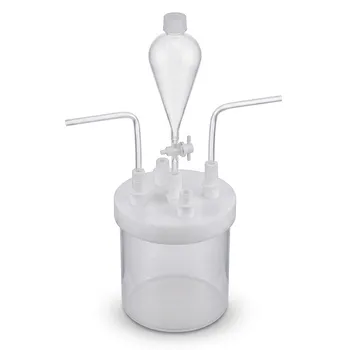
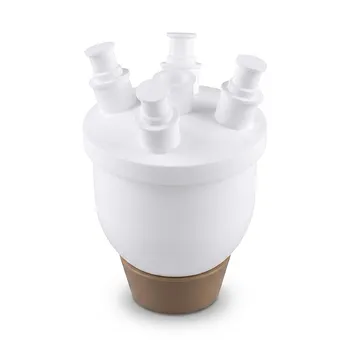
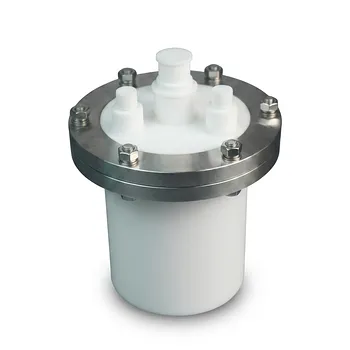
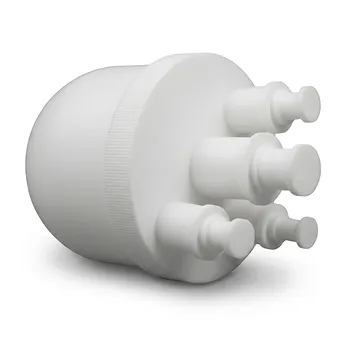
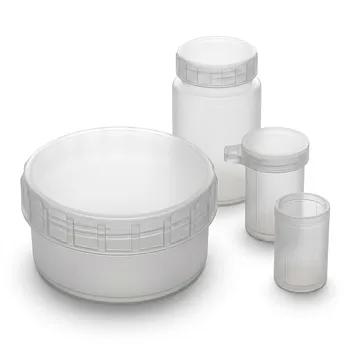
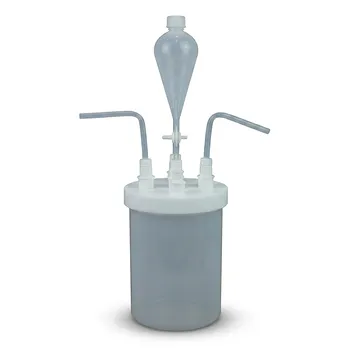
Sealed reaction vessels are the primary mechanism for generating the autogenous pressure required to manipulate Zinc Oxide (ZnO) at the molecular level. These vessels create a closed system where internal pressure often exceeds 5 bar, allowing solvents to remain in a liquid state at temperatures far above their atmospheric boiling points. This specific environment is necessary to drive the morphological transition from simple spherical particles to complex hexagonal wurtzite structures.
The Core Takeaway: Sealed vessels enable "superheated" liquid-phase chemistry, which accelerates reaction kinetics from hours to minutes while providing the physical constraints necessary to control ZnO crystal phase and morphology. Without this pressurized environment, the solvent would evaporate, and the energy required for anisotropic growth would be unattainable.
Harnessing Autogenous Pressure and Phase Control
Achieving the Wurtzite Crystal Structure
The sealed environment provides the necessary physical constraints to ensure the formation of the wurtzite crystal structure, the most thermodynamically stable phase for ZnO. By containing the reaction, the vessel allows for the precise regulation of the crystal phase without the need for high-temperature post-processing.
Inducing Morphological Transitions
High internal pressure allows specialized solvents, such as ethylene glycol, to more effectively influence the growth of the nanomaterial. This pressure is the catalyst that shifts the growth pattern of Zinc Oxide from basic spherical shapes to sophisticated hexagonal structures.
Prevention of Volatile Loss
In a microwave solvothermal process, maintaining the exact chemical stoichiometry is vital. A sealed vessel prevents the escape of volatile components, ensuring that the concentration of precursors remains constant throughout the rapid heating cycle.
Accelerating Kinetics via Superheating
Breaking the Boiling Point Barrier
Sealed vessels allow the reaction to proceed at temperatures significantly higher than the solvent's standard boiling point. This superheated state facilitates the rapid dissolution of precursor salts, such as zinc nitrate, which would be impossible in an open-reflux system.
Transitioning from Hours to Minutes
By combining microwave energy with high pressure, the time required for ZnO nanorod growth is reduced from several hours to just a few minutes. The high-pressure environment accelerates nucleation kinetics, allowing for a high degree of supersaturation and rapid crystal precipitation.
Regulation of Aspect Ratios
The pressurized environment within the vessel allows for the precise regulation of the aspect ratio of ZnO nanorods. This level of control is achieved because the closed system enables researchers to manipulate the growth rate along specific crystallographic axes.
Achieving High Crystallinity and Functionalization
Eliminating the Need for Calcination
One of the major advantages of the sealed solvothermal method is the production of nanoparticles with high crystallinity directly from the solution. This removes the requirement for traditional high-temperature annealing or calcination, which can often cause unwanted particle aggregation.
Support for Co-precipitation and Doping
The high-pressure environment is ideal for the co-precipitation or doping of multi-component metal ions. This allows for the creation of composite nanomaterials with enhanced functionalities, such as stable MWCNTs/ZnO nanocomposites with regular morphology.
Understanding the Trade-offs and Risks
Equipment Integrity and Safety Limits
While high pressure is beneficial, it requires high-strength vessels—often made of PTFE or stainless steel—to withstand the internal stress. Exceeding the pressure or temperature limits of these materials can lead to vessel failure or explosive decompression during microwave irradiation.
Microwave Penetration Depth
As the reaction vessel must be thick enough to contain high pressure, the penetration depth of the 2.45 GHz microwave radiation can be affected. This can lead to thermal gradients within the vessel, potentially resulting in non-uniform nanoparticle sizes if the system is not properly calibrated.
Applying This to Your Synthesis Goals
How to Apply This to Your Project
- If your primary focus is rapid production: Utilize sealed PTFE vessels to maximize microwave absorption and reduce synthesis time to the sub-ten-minute range.
- If your primary focus is morphological precision: Carefully monitor the autogenous pressure to ensure the transition to hexagonal structures is fully realized.
- If your primary focus is material purity: Leverage the sealed environment to avoid post-synthesis calcination, which preserves the original nanostructure morphology and surface area.
By mastering the pressurized environment of a sealed vessel, you transform a standard chemical reaction into a highly controlled, high-energy synthesis process capable of producing superior ZnO nanomaterials.
Summary Table:
| Key Feature | Functional Mechanism | Impact on ZnO Synthesis |
|---|---|---|
| Autogenous Pressure | Enables superheated liquid-phase chemistry | Drives transition to hexagonal wurtzite structures |
| Closed System | Prevents escape of volatile precursors | Maintains exact stoichiometry and chemical concentration |
| Accelerated Kinetics | Increases nucleation and growth rates | Reduces synthesis time from hours to minutes |
| Direct Crystallization | High-pressure solution-phase reaction | High crystallinity without needing post-calcination |
| Morphology Control | Regulates growth along specific axes | Precise manipulation of nanorod aspect ratios |
Elevate Your Nanomaterial Research with KINTEK
Precision in Zinc Oxide synthesis requires equipment that can withstand the rigors of high-pressure solvothermal environments. KINTEK specializes in high-performance fluoropolymer labware designed for the most demanding microwave and chemical processes.
From everyday basic labware like PTFE beakers, crucibles, and reagent bottles to advanced microwave digestion vessels and hydrothermal synthesis liners, we provide the durability and chemical inertness your research demands. Our comprehensive range includes:
- High-Purity Trace Analysis: PFA bottles, digestion tubes, and cleaning tanks.
- Fluid Transfer & Sample Prep: Fluoropolymer tubing, valves, filters, and pipettes.
- Advanced Reaction Apparatus: Custom electrochemical cells, battery testing fixtures, and microchannel reactors.
Whether you need high-volume standard consumables (O-rings, stirring bars, gaskets) or bespoke CNC-fabricated non-standard parts, KINTEK delivers end-to-end solutions with an exclusive focus on high-performance PTFE and PFA materials.
Ready to optimize your synthesis workflow? Contact our technical experts today!
References
- Victor J. Law, Denis P. Dowling. A study of the underlying dynamics of phase-space projection of microwave-assisted synthesis of transition metal nanostructures. DOI: 10.59400/mtr2325
This article is also based on technical information from Kintek Knowledge Base .
Related Products
- Custom PTFE Reaction Apparatus Flange Sealed Corrosion Resistant Jacketed Vessel with Stirring Bar and Thermometer Ports
- Corrosion Resistant PTFE Evaporation Cell Electrophoresis Tank 400ml Flame Retardant Insulated Reaction Vessel Customizable
- Custom TFM Reaction Vessel with Stainless Steel Jacket and PTFE Inner Cup for High Corrosion Resistance
- High Purity PTFE Corrosion Resistant Reaction Vessel with Luer Fittings and Caps for Trace Analysis
- PTFE 10L Reaction Vessel with Stirring Paddle Customizable Corrosion Resistant High Temperature Reactor for Biopharmaceutical and Chemical Processing
People Also Ask
- How do perfluorinated solvent environments influence the selection of reaction vessels and fluid handling components in nonaqueous emulsion polymerizations? Choose fluoropolymer materials.
- Why are high-purity PTFE or PFA reaction vessels recommended for the synthesis of PANI-TiC hybrid materials? - Guide
- Why are fluoroplastic (PTFE) reaction vessels recommended for Methylene Blue (MB) adsorption kinetic experiments?
- Why is a PTFE reaction vessel required for Ti3C2Tx MXene synthesis? Ensure Safe HF Etching & High Purity
- Why is a high-quality PTFE reaction vessel required for the etching preparation of Ti3C2Tx MXene? Ensure Pure Synthesis.