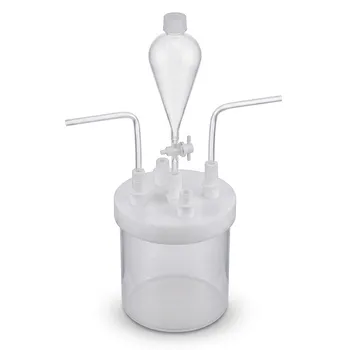
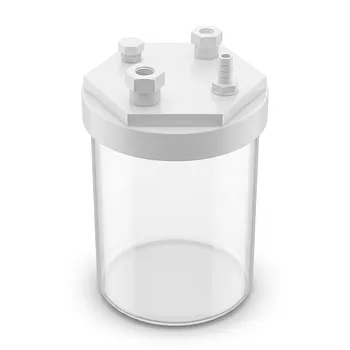
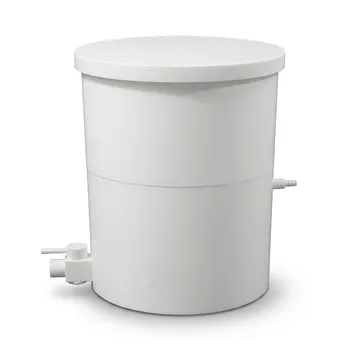
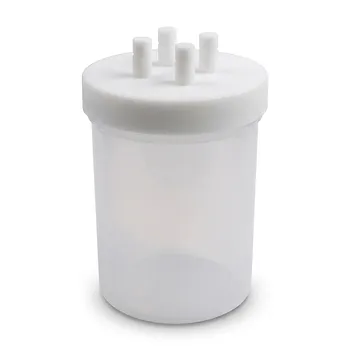
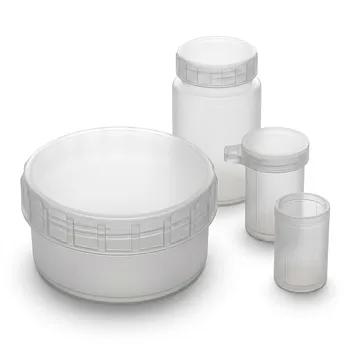
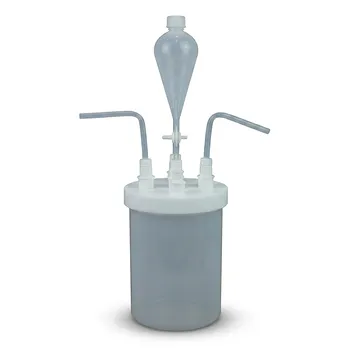
Sealed reaction vessels are mandatory in the ammonia-driven deposition-precipitation (ADP) process because they prevent the escape of ammonia gas. This containment ensures the solution maintains a stable pH and a consistent concentration of copper-ammine complexes, which are both critical for uniform metal distribution on and within the pores of mesoporous silica.
The sealed environment acts as a chemical stabilizer, preserving the precise alkaline conditions and complexation chemistry required to drive copper ions deep into silica pores via electrostatic adsorption. Without this seal, the loss of volatile ammonia leads to uncontrolled precipitation and poor catalyst quality.
The Chemistry of Ammonia in Metal Loading
Stabilizing Copper-Ammine Complexes
The ADP process relies on ammonia to transform copper ions into specific [Cu(NH3)4(H2O)2]2+ complexes. A sealed vessel prevents these ammonia molecules from volatilizing into the atmosphere, ensuring the complex remains stable in the liquid phase.
Governing Surface Charge
Ammonia regulates the solution pH, which directly dictates the surface charge of the mesoporous silica carrier. A stable, sealed environment ensures the silica surface remains optimally charged to attract the positively charged copper complexes through electrostatic adsorption.
Facilitating Deep Pore Penetration
Because the ammonia concentration remains constant in a sealed system, the copper components have sufficient time to migrate. This allows for uniform deposition both on the external surface and deep within the internal channels of the mesoporous structure.
Consequences of an Unsealed Environment
pH Instability and Premature Precipitation
If ammonia escapes, the pH of the solution drops rapidly. This shift can trigger premature precipitation, where copper settles as large, irregular particles rather than a finely dispersed layer.
Loss of Spatial Control
In an open system, the chemical environment fluctuates, leading to "surface-heavy" loading. This means the copper settles primarily on the outside of the silica particles, leaving the internal mesopores underutilized and reducing the catalyst's overall surface area.
Solvent Evaporation and Concentration Shifts
Beyond the loss of ammonia, unsealed vessels allow for general solvent evaporation. This alters the molarity of the precursors, making it nearly impossible to achieve a precise or reproducible metal loading percentage.
Understanding the Trade-offs
Pressure Management vs. Chemical Stability
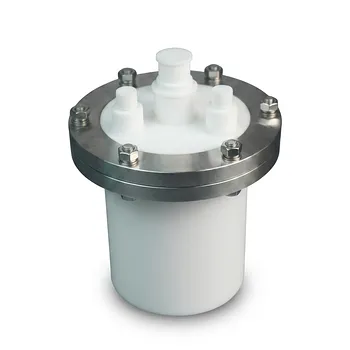
While sealing the vessel is necessary for chemical stability, it introduces the factor of internal pressure. At higher temperatures, the expansion of gases requires the use of specialized equipment, such as fluoropolymer-lined reactors, to prevent vessel failure.
Complexity of Monitoring
Operating in a sealed environment makes it more difficult to monitor the reaction in real-time. Researchers must rely on pre-calculated concentrations and fixed reaction times rather than manual pH adjustments during the process.
How to Apply This to Your Project
Maximizing Catalyst Efficiency
To ensure the highest quality of copper loading on mesoporous silica, the reaction environment must be strictly controlled.
- If your primary focus is high metal dispersion: Use a reinforced, sealed reactor to maintain a constant ammonia concentration, which prevents the formation of large, inactive copper clusters.
- If your primary focus is reproducible loading percentages: Ensure the vessel is completely airtight to prevent any change in solvent volume or pH during the stirring and heating phases.
- If your primary focus is deep pore architecture: Maintain a sealed environment at a constant temperature (typically 40°C to 90°C) to allow the precursors to assemble correctly around the silica templates.
A sealed reaction vessel is the fundamental tool for transforming a chaotic precipitation into a controlled, high-precision deposition.
Summary Table:
| Key Factor | Role in ADP Process | Consequence of Unsealed Vessel |
|---|---|---|
| Ammonia Containment | Stabilizes [Cu(NH3)4(H2O)2]2+ complexes | Rapid pH drop and premature precipitation |
| pH Stability | Regulates silica surface charge for adsorption | Weak electrostatic attraction; low metal loading |
| Pore Penetration | Facilitates migration into internal channels | "Surface-heavy" loading; underutilized pores |
| Solvent Molarity | Maintains precise precursor concentrations | Solvent evaporation leading to inconsistent results |
| Pressure Control | Manages gas expansion at high temperatures | Risk of vessel failure without specialized lining |
Optimize Your Catalyst Synthesis with KINTEK Fluoropolymer Solutions
Precise control over ammonia concentration and pH is non-negotiable for high-quality metal loading. KINTEK specializes in high-performance PTFE and PFA laboratory supplies designed to withstand the chemical rigors of the ADP process.
From hydrothermal synthesis liners and microwave digestion vessels to high-purity PFA reagent bottles and PTFE-lined reactors, we provide the airtight, chemically inert environments your research demands. Our expertise extends from everyday labware—like beakers, centrifuge tubes, and filtration tools—to custom CNC-fabricated components and complex fluid transfer systems (tubing, valves, and fittings).
Ensure your lab achieves maximum dispersion and reproducible results with our bespoke laboratory setups. Contact KINTEK today to discover how our exclusive focus on high-performance fluoropolymers can enhance your catalyst development and material science projects.
References
- Aleksandra Gomułka, Lucjan Chmielarz. Mesoporous MCM-48 and MCM-41 Silicas Modified with Copper by ADP Method as Effective Catalysts for Low-Temperature NH3-SCR—The Role of Synthesis Conditions and Associated Reactions. DOI: 10.3390/catal15060578
This article is also based on technical information from Kintek Knowledge Base .
Related Products
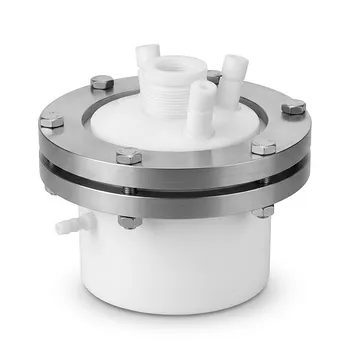
- Custom PTFE Reaction Apparatus Flange Sealed Corrosion Resistant Jacketed Vessel with Stirring Bar and Thermometer Ports
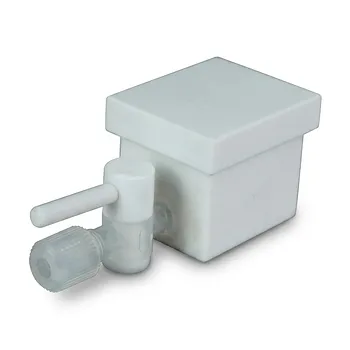
- Corrosion Resistant PTFE Evaporation Cell Electrophoresis Tank 400ml Flame Retardant Insulated Reaction Vessel Customizable
- Custom TFM Reaction Vessel with Stainless Steel Jacket and PTFE Inner Cup for High Corrosion Resistance
- High Purity PTFE Corrosion Resistant Reaction Vessel with Luer Fittings and Caps for Trace Analysis
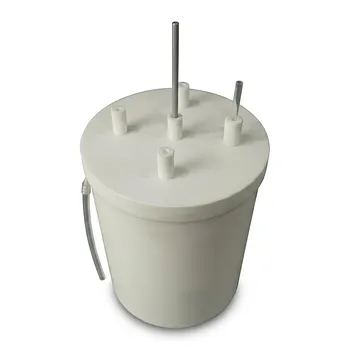
- PTFE 10L Reaction Vessel with Stirring Paddle Customizable Corrosion Resistant High Temperature Reactor for Biopharmaceutical and Chemical Processing
People Also Ask
- How do perfluorinated solvent environments influence the selection of reaction vessels and fluid handling components in nonaqueous emulsion polymerizations? Choose fluoropolymer materials.
- Why are high-purity PTFE or PFA reaction vessels recommended for the synthesis of PANI-TiC hybrid materials? - Guide
- Why are fluoroplastic (PTFE) reaction vessels recommended for Methylene Blue (MB) adsorption kinetic experiments?
- Why is a PTFE reaction vessel required for Ti3C2Tx MXene synthesis? Ensure Safe HF Etching & High Purity
- Why is a high-quality PTFE reaction vessel required for the etching preparation of Ti3C2Tx MXene? Ensure Pure Synthesis.