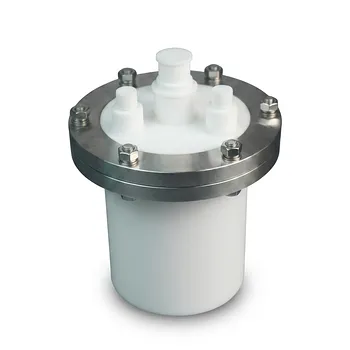
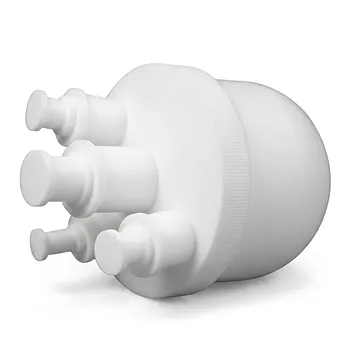
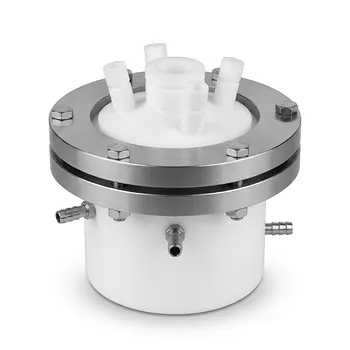
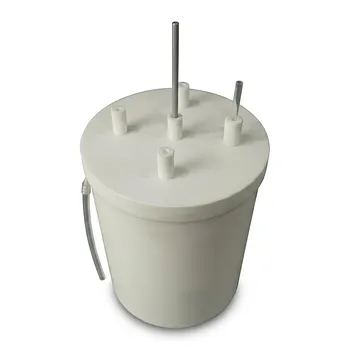
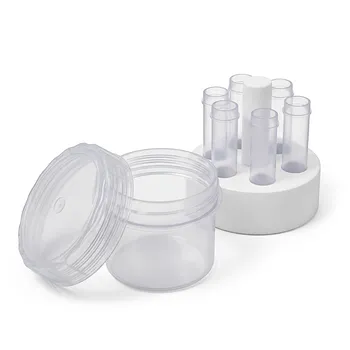
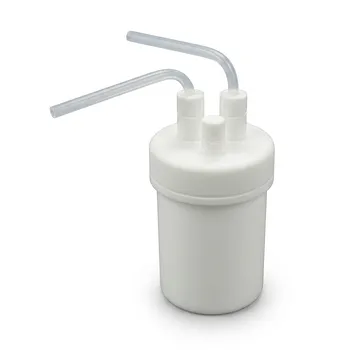
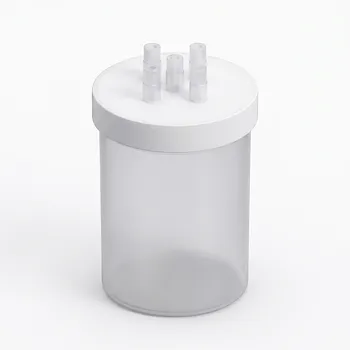
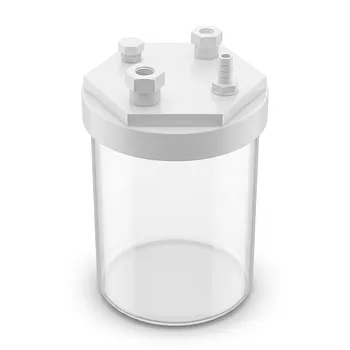
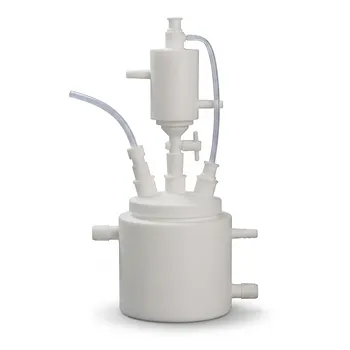
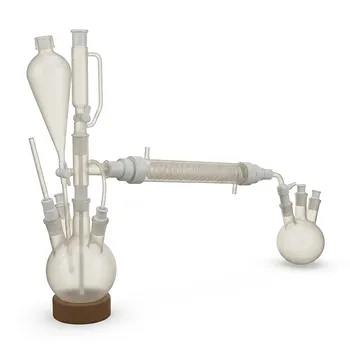
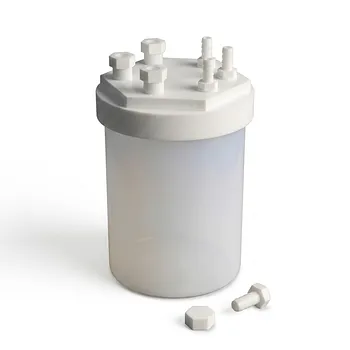
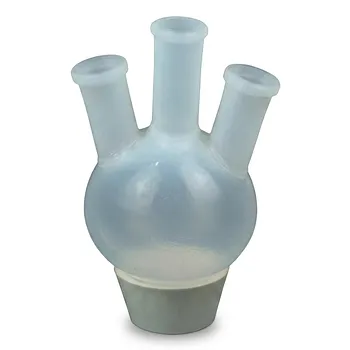
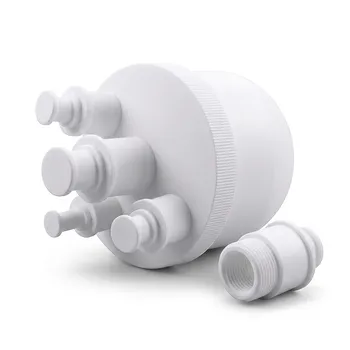
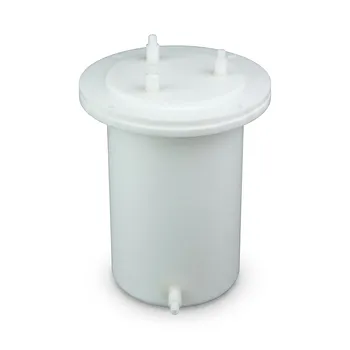
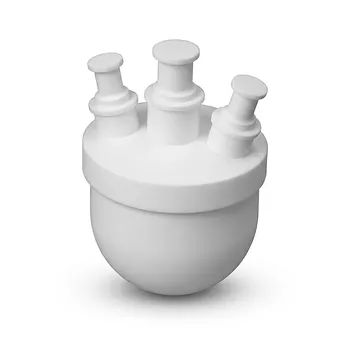
The use of sealed or fluoropolymer-lined reactors is mandatory due to the extreme volatility of ammonia-methanol solutions. These specialized vessels prevent the escape of ammonia gas, which is essential to maintaining the stable alkaline environment required for the rapid conversion of acetylthio groups into free thiol groups. Without this containment, the reaction kinetics fail, and the chemical environment becomes too unstable to achieve the necessary three-minute completion window.
To achieve efficient deprotection of FeOTSac porphyrins, researchers must utilize sealed systems that preserve reagent concentration and resist chemical degradation. Maintaining a pressurized, alkaline environment is the only way to ensure rapid thiol conversion while preventing vessel-induced contamination.
The Challenge of Volatility in Ammonia-Methanol Systems
Maintaining Constant Alkaline Stability
Ammonia is a highly volatile gas that readily escapes from methanol solutions under standard atmospheric conditions. Sealed reaction vessels are required to trap this gas, ensuring the solution maintains a consistent and high pH level throughout the process.
Ensuring Rapid Reaction Kinetics
The deprotection of FeOTSac porphyrins requires a specific alkaline strength to convert acetylthio groups into free thiols within a three-minute timeframe. If ammonia gas escapes, the alkalinity drops, significantly slowing the reaction and preventing the porphyrins from bonding effectively with metal surfaces.
Preventing Reagent Concentration Shifts
In an open or poorly sealed system, the ratio of ammonia to methanol shifts rapidly as the gas evaporates. This inconsistency makes the deprotection process unpredictable and non-reproducible, which is unacceptable for high-precision chemical synthesis.
Material Integrity and Contamination Control
The Chemical Resistance of Fluoropolymers
Fluoropolymers, such as PTFE (Teflon), are used as liners because they are nearly inert to the aggressive basic conditions of ammonia-methanol solutions. Unlike standard materials that might leach ions or degrade, these liners ensure the chemical environment remains pure.
Withstanding Harsh Reaction Environments
Deprotection often involves localized pressure increases or temperature fluctuations that can stress standard containers. Fluoropolymer-lined reactors provide the mechanical and chemical durability needed to withstand these "harsh conditions" without undergoing structural failure.
Eliminating External Contaminants
Using specialized liners prevents the reaction vessel itself from introducing external contaminants into the porphyrin solution. This is critical for the accurate characterization of the resulting thiols, as even minor impurities can interfere with the bonding of the porphyrin to a metal surface.
Understanding the Trade-offs and Risks
Pressure Accumulation Risks
While sealing the vessel is necessary to keep ammonia in the solution, it also leads to internal pressure buildup. Researchers must use reactors specifically rated for pressure to avoid the risk of vessel rupture or "bumping" during the deprotection process.
Equipment Cost and Complexity
Fluoropolymer-lined and custom-designed sealed reactors are significantly more expensive and difficult to maintain than standard glassware. The need for specialized seals and gaskets adds a layer of operational complexity to what might otherwise be a simple benchtop reaction.
Thermal Transfer Limitations
Fluoropolymers are excellent insulators, which can make precise temperature control more difficult compared to glass or metal reactors. This lag in thermal conductivity must be accounted for when heating or cooling the reaction to ensure the three-minute window is maintained accurately.
Applying These Principles to Your Synthesis
Effective deprotection requires a balance between chemical containment and material stability.
- If your primary focus is rapid reaction speed: You must use a high-pressure sealed vessel to maximize the concentration of dissolved ammonia, ensuring the reaction completes within the three-minute limit.
- If your primary focus is sample purity and characterization: Prioritize fluoropolymer-lined (PTFE) reactors to eliminate the risk of the vessel material leaching contaminants into your porphyrin solution.
- If your primary focus is safety and scalability: Ensure your reaction vessel is equipped with a pressure-relief valve and is rated for the specific volatility of ammonia at your working temperature.
By strictly controlling volatility and material interaction, you guarantee the reliable conversion of FeOTSac porphyrins into surface-ready thiols.
Summary Table:
| Key Requirement | Role in FeOTSac Deprotection | Primary Benefit |
|---|---|---|
| Sealed Containment | Prevents ammonia gas escape | Maintains stable pH and rapid 3-minute reaction kinetics |
| Fluoropolymer Lining | Chemically inert (PTFE/PFA) | Eliminates reagent contamination and vessel degradation |
| Pressure Rating | Manages ammonia volatility | Ensures safety during internal pressure buildup |
| Material Purity | Resists aggressive alkaline media | Guarantees accurate characterization of resulting thiols |
Precision Labware for Demanding Synthesis
Ensure the integrity of your chemical processes with KINTEK’s high-performance fluoropolymer solutions. From everyday basic labware like beakers, reagent bottles, and centrifuge tubes to advanced fluoropolymer-lined reactors, microwave digestion vessels, and custom electrochemical cells, we provide the inert environment your research requires.
Our expertise extends to comprehensive fluid transfer components (tubing, valves) and sample prep tools (filters, pipettes, tweezers), all crafted from premium PTFE and PFA. Backed by end-to-end custom CNC fabrication, KINTEK can deliver everything from complex bespoke laboratory setups to high-volume standard orders with absolute material focus.
Ready to upgrade your lab’s performance? Contact us today to discuss your custom requirements!
References
- Zhi‐Mei Luo, Antoni Llobet. Molecular Hybrid Materials for Selective CO<sub>2</sub> Electroreduction to Multicarbon Products. DOI: 10.1002/aenm.202402070
This article is also based on technical information from Kintek Knowledge Base .
Related Products
- Custom PTFE Reaction Kettle 2L Flanged Fluoropolymer Reactor Tank Acid and Alkali Resistant Polytetrafluoroethylene Vessel
- High Purity PTFE Single Neck Reaction Flask Acid Resistant Customizable Fluoropolymer Laboratory Reactor
- Custom PTFE Reaction System with Hose Barb Fittings Corrosion Resistant High Sealing 2L 4L Lab Reactor with Separatory Funnel
- PTFE 10L Reaction Vessel with Stirring Paddle Customizable Corrosion Resistant High Temperature Reactor for Biopharmaceutical and Chemical Processing
- High Purity Corrosion Resistant PFA Reaction Vessel with PTFE Holder and Integrated Sampling Tube for Trace Analysis
People Also Ask
- What toxicological hazards and safe handling protocols must be established when PTFE fluoropolymer reaction vessels are subjected to pyrolysis temperatures? Learn essential safety measures now.
- What reaction vessel and fluid handling considerations are necessary for living cationic polymerization of fluorinated monomers involving Lewis acid catalysts? Key design and safety tips
- Why are high-purity PTFE or PFA reaction vessels recommended for the synthesis of PANI-TiC hybrid materials? - Guide
- Ion Activation Reaction Vessel Requirements: Why PTFE is Critical for Membrane Performance
- Why are fluoroplastic (PTFE) reaction vessels recommended for Methylene Blue (MB) adsorption kinetic experiments?