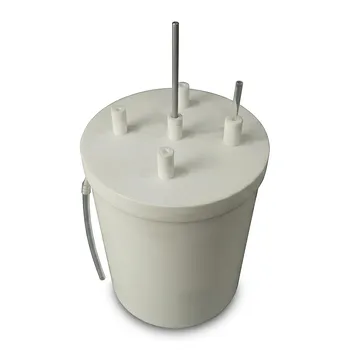
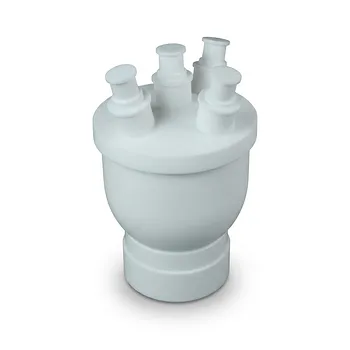
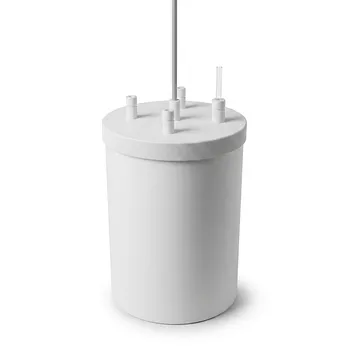
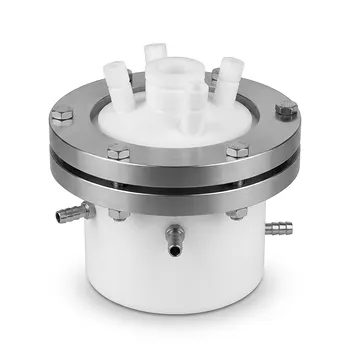
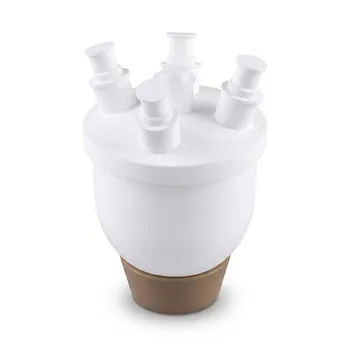
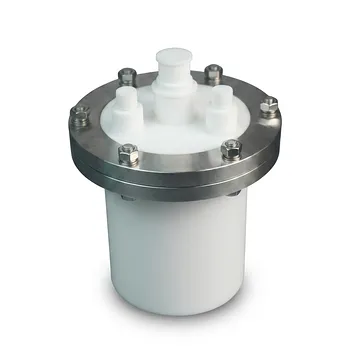
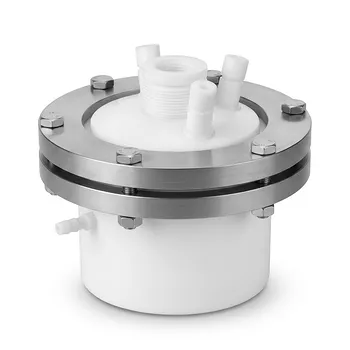
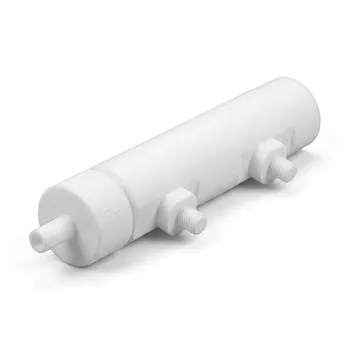
PTFE-lined reactors are the industry standard for Magnesium Fluoride ($MgF_2$) synthesis because they provide absolute resistance to the highly corrosive hydrofluoric acid (HF) used in the process. This material ensures that the reactor remains structurally sound while preventing metallic impurities from leaching into the reaction, which is critical for maintaining the high purity and catalytic activity of the $MgF_2$ nanoparticles.
Core Takeaway: The use of PTFE (Polytetrafluoroethylene) serves a dual purpose: it protects the vessel from the aggressive acidity of the reactants and safeguards the catalyst's chemical integrity by eliminating metal ion contamination.
The Challenge of Hydrofluoric Acid (HF)
Extreme Corrosive Resistance
The synthesis of Magnesium Fluoride catalysts involves high concentrations of hydrofluoric acid (HF). Unlike most mineral acids, HF is aggressively corrosive to traditional materials like glass and many high-grade stainless steels.
Chemical Inertness of PTFE
PTFE possesses exceptional chemical inertness, making it one of the few materials capable of withstanding prolonged exposure to HF. Its carbon-fluorine bonds are remarkably strong, ensuring the liner does not react with or degrade in the presence of strong acidic precursors.
Protecting the Vessel Life
Without a PTFE liner, the acidic reaction environment would rapidly compromise the structural integrity of the metal reactor. The liner acts as a definitive barrier, isolating the corrosive liquid from the pressure-bearing metal walls.
Ensuring Catalyst Purity and Performance
Preventing Metallic Ion Leaching
One of the most critical requirements for high-performance catalysts is the absence of "poisoning" elements. PTFE prevents metallic ions, such as iron, nickel, or chromium, from leaching out of the reactor walls.
Maintaining Surface Chemistry
$MgF_2$ nanoparticles rely on specific surface structures to function as effective catalysts. Even trace amounts of metal contamination can alter the surface energy and lead to unintended side reactions or reduced stability.
Enhancing Nanoparticle Uniformity
By providing a consistent and non-reactive environment, PTFE liners allow for better control over the precipitation process. This results in a more uniform particle size distribution and a higher-quality porous framework.
Performance Under Hydrothermal Conditions
Thermal Stability and Pressure
$MgF_2$ synthesis often occurs under hydrothermal conditions, requiring elevated temperatures and pressures to achieve a subcritical state. High-purity PTFE can withstand temperatures up to 250°C, which is well within the typical range for these synthesis protocols.
Non-Stick Properties
The naturally low surface energy of PTFE prevents the precipitated $MgF_2$ nanoparticles from adhering to the vessel walls. This simplifies the recovery of the product and ensures that the reactor can be cleaned thoroughly between batches.
Structural Integrity in Sealed Environments
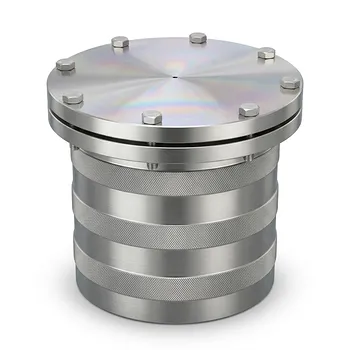
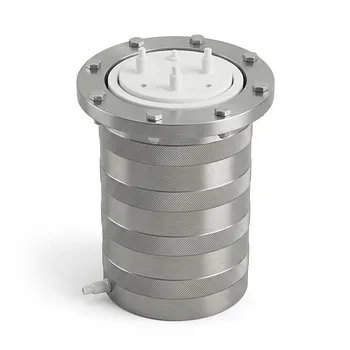
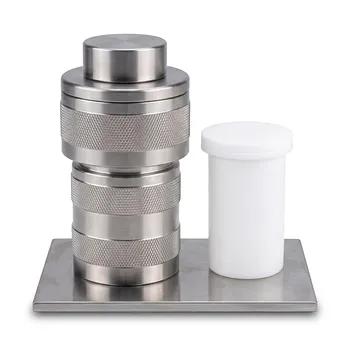
In hydrothermal reactors, the PTFE liner is often housed within a stainless steel shell. This combination allows the reactor to benefit from the chemical resistance of the polymer and the mechanical strength of the metal.
Understanding the Trade-offs
Thermal Conductivity Limitations
PTFE is an insulator with low thermal conductivity, which can lead to slower heating and cooling cycles compared to direct metal contact. This must be accounted for in the reaction timing to ensure the internal temperature has reached the desired setpoint.
Temperature and Pressure Boundaries
While PTFE is robust, it is a thermoplastic that can soften or deform under extreme heat and pressure. Users must strictly adhere to the temperature limits (usually 200°C–250°C) to prevent "creeping" or failure of the seal.
Mechanical Sensitivity
PTFE is a relatively soft material compared to the catalysts it helps create. Over time, it can be susceptible to mechanical wear or scratching if abrasive cleaning methods are used, potentially creating sites for future contamination.
Applying This to Your Synthesis Project
Making the Right Choice for Your Goal
- If your primary focus is maximum catalyst purity: Use high-purity PTFE or PFA liners to ensure zero metallic leaching from the vessel walls.
- If your primary focus is hydrothermal synthesis above 250°C: You must consider alternative liners or specialized metal alloys, as standard PTFE will begin to deform and lose its structural integrity.
- If your primary focus is high-throughput production: Account for the slower heat transfer of PTFE liners by optimizing your ramp-up times and ensuring accurate internal temperature monitoring.
Choosing a PTFE-lined reactor is a non-negotiable step for any researcher or engineer looking to synthesize high-quality Magnesium Fluoride catalysts in a corrosive environment.
Summary Table:
| Key Feature | Benefit for $MgF_2$ Synthesis | Specification/Limit |
|---|---|---|
| HF Resistance | Prevents corrosion from hydrofluoric acid | Exceptional chemical inertness |
| Zero Leaching | Eliminates metal ion contamination (Fe, Ni, Cr) | High-purity PTFE/PFA |
| Non-Stick | Facilitates nanoparticle recovery and cleaning | Low surface energy |
| Thermal Range | Suitable for standard hydrothermal precipitation | Up to 250°C |
| Mechanical | Protects pressure-bearing metal vessel walls | Integrated liner design |
Elevate Your Catalyst Synthesis with KINTEK
Don't let corrosion or contamination compromise your research. From everyday basic labware like beakers, crucibles, and reagent bottles to advanced hydrothermal synthesis liners and microwave digestion vessels, KINTEK provides the high-performance fluoropolymer solutions you need.
Our expertise covers everything from high-purity trace analysis instruments and comprehensive fluid transfer components (tubing, valves, fittings) to bespoke laboratory setups and complex non-standard machined parts via end-to-end custom CNC fabrication. Whether you need standard consumables like stirring bars and gaskets or custom electrochemical cells, we deliver precision-crafted PTFE and PFA supplies.
Ready to optimize your lab's performance? Contact us today to discuss your high-volume orders or custom fabrication requirements and experience the KINTEK difference in high-performance materials.
References
- Julien Dieu, Sylvette Brunet. Insight Into the Role of Polymers in the Bulk Synthesis of MgF <sub>2</sub> for the Fluorination of 2‐Chloropyridine. DOI: 10.1002/cctc.202501064
This article is also based on technical information from Kintek Knowledge Base .
Related Products
- Custom TFM Reaction Vessel with Stainless Steel Jacket and PTFE Inner Cup for High Corrosion Resistance
- Large Scale PTFE Double Layer Reaction Tank with Integrated Filter Plate for Chemical Processing
- High Pressure Custom TFM Reactor Stainless Steel Outer Vessel PTFE Inner Cup for Corrosive Synthesis
- High Purity TFM Microwave Digestion Vessels PTFE Acid Evaporation Liners Domestic GT-400 Equivalent Laboratory Reaction Containers
- PTFE Lined High Pressure Digestion Vessel 50ml High Temperature Hydrothermal Synthesis Tank
People Also Ask
- Why are high-performance pressure-resistant reaction vessels required for oxygen-assisted hydrothermal conversion at 150 °C?
- Why are PTFE-lined reaction vessels necessary for forced degradation studies? Ensure high-purity results and accuracy.
- How do magnetic stirring and reaction vessels impact MOF-derived carbon quality? Optimize Your Composite Performance
- Why are high-quality fluoropolymer-lined reaction vessels required for alk-Ti3C2Tx MXene? Ensure Purity & HF Resistance
- Why is a high-purity PTFE lined reaction vessel required for the acidic etching of MXenes? Ensure Material Purity.