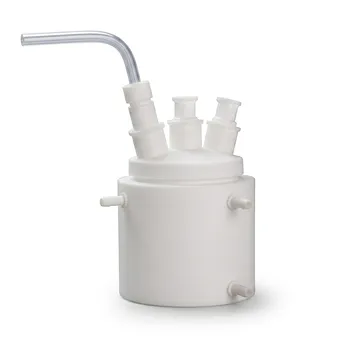
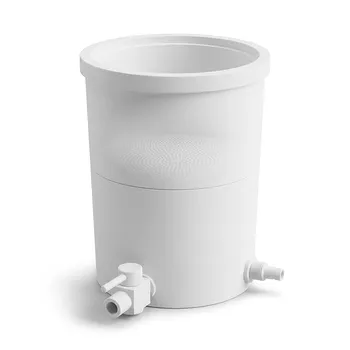
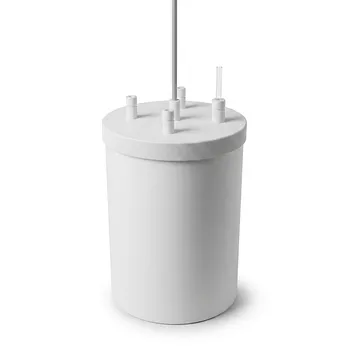
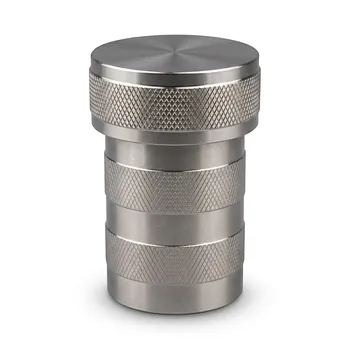
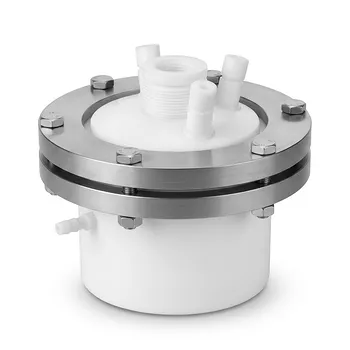
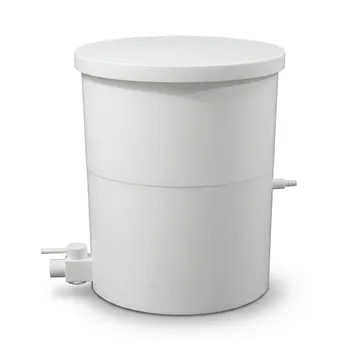
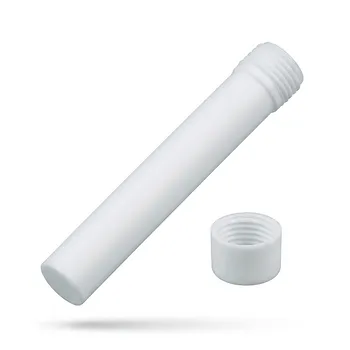
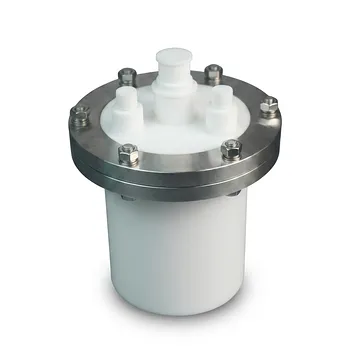
PTFE-lined pressure reactors are the industry standard for microalgae hydrothermal carbonization (HTC) because they provide critical chemical isolation. These liners protect the stainless steel reactor body from the highly corrosive organic acids and nitrogenous compounds released during biomass decomposition at temperatures reaching up to 260°C. By acting as an inert barrier, PTFE ensures that the resulting hydrochar is free from metal contamination while simplifying the recovery of solid residues.
The use of PTFE liners in HTC is driven by the need to maintain a high-purity environment where the reaction kinetics are governed solely by the biomass properties, rather than being influenced by catalytic interference or contamination from the reactor’s metal walls.
Protecting Vessel Integrity and Product Purity
Chemical Resistance to Organic Acids
During the hydrothermal carbonization of microalgae, the decomposition process generates a complex mixture of organic acids and nitrogenous compounds. PTFE (Polytetrafluoroethylene) is utilized because it is almost entirely chemically inert, resisting corrosion that would otherwise degrade the metal walls of the pressure vessel.
Preventing Metal Ion Contamination
In high-temperature environments (typically 150°C to 260°C), metal ions from stainless steel can leach into the reaction slurry. PTFE liners prevent this metal leaching, which is vital because stray metal ions can act as unintended catalysts, skewing experimental data regarding dissolution kinetics and the production of volatile fatty acids (VFAs).
Ensuring High-Purity Hydrochar
For applications where the hydrochar must have a specific crystal structure or high enzymatic activity, purity is paramount. The liner ensures that the hydrochar products maintain their chemical integrity, free from chromium, nickel, or iron impurities that are common in unlined steel reactors.
Operational Efficiency and Experimental Accuracy
Non-Stick Surface for Residue Recovery
Microalgae HTC often results in sticky, carbonaceous residues that adhere to metal surfaces. The non-stick properties of PTFE facilitate the complete recovery of solid hydrochar and simplify the cleaning process, which is essential for maintaining experimental mass balance accuracy.
Maintaining a Reliable High-Pressure Seal
At high temperatures, microalgae HTC operates under autogenous pressure, meaning the pressure is generated by the heating of the liquid within a confined space. High-quality PTFE liners are designed to work in tandem with the reactor's sealing mechanism to maintain a long-term seal, preventing the escape of volatile gases and ensuring safety.
Controlling Dissolution Kinetics
By isolating the biomass slurry from the reactor's metal shell, researchers can more accurately optimize the production of soluble chemical oxygen demand (sCOD) and total reducing sugars (TRS). This isolation allows for a "clean" reaction environment where the thermal energy is the primary driver of the chemical transformation.
Understanding the Trade-offs
Thermal Limits and Deformation
While PTFE is highly resistant to chemicals, it has a clear thermal ceiling, typically around 250°C to 260°C. Exceeding these temperatures can cause the liner to soften or "creep," leading to permanent deformation or the release of toxic fumes.
Thermal Conductivity Gaps
PTFE is an insulator, meaning it does not conduct heat as efficiently as the outer metal shell. This creates a temperature lag between the furnace and the internal reaction medium, which must be accounted for in experimental timelines to ensure the biomass reaches the required target temperature.
How to Apply This to Your Project
Choosing the Right Configuration
Depending on your specific research or production goals, the implementation of PTFE liners should be handled with attention to your temperature and purity requirements.
- If your primary focus is high-purity hydrochar for energy storage: Use a high-purity PTFE liner to ensure zero metal ion interference with the carbon structure.
- If your primary focus is maximizing yields of organic acids (VFAs): Ensure the liner is perfectly sealed to prevent the loss of volatile intermediates during the pressurized heating phase.
- If your primary focus is processing at temperatures exceeding 250°C: Consider alternative liners, such as PPL (Polyphenylene polymers), which offer higher thermal stability than standard PTFE.
Selecting the appropriate liner material is the most effective way to safeguard your equipment while ensuring the reproducibility and purity of your hydrothermal carbonization results.
Summary Table:
| Key Feature | Benefit for Microalgae HTC |
|---|---|
| Chemical Inertness | Resists corrosive organic acids and nitrogenous compounds released during decomposition. |
| Zero Metal Leaching | Prevents contamination from iron, nickel, or chromium, ensuring high-purity hydrochar. |
| Non-Stick Surface | Enables complete recovery of sticky carbonaceous residues and simplifies cleaning. |
| Pressure Integrity | Maintains a reliable seal under autogenous pressure to prevent gas escape. |
| Reaction Isolation | Ensures kinetics are driven by biomass properties rather than vessel wall catalysis. |
Elevate Your Research with KINTEK’s High-Performance Fluoropolymers
Maximize the purity and precision of your hydrothermal carbonization experiments with KINTEK. We specialize in high-performance fluoropolymer materials, offering everything from everyday basic labware—including beakers, crucibles, and reagent bottles—to advanced components like PTFE-lined pressure reactors, microwave digestion vessels, and custom electrochemical cells.
Whether you require standard consumables like stirring bars and PFA tubing or complex, bespoke CNC-fabricated parts tailored to your specific experimental setup, KINTEK provides end-to-end manufacturing solutions. Our absolute focus on PTFE and PFA ensures that your work remains free from metal contamination and resistant to the harshest chemical environments.
Ready to optimize your laboratory efficiency? Contact our experts today to discuss your custom requirements or high-volume orders!
References
- Ivan Kozyatnyk, Stina Jansson. Adsorption of organic contaminants of emerging concern using microalgae-derived hydrochars. DOI: 10.1038/s41598-025-92717-y
This article is also based on technical information from Kintek Knowledge Base .
Related Products
- PTFE Lined High Pressure Digestion Vessel 50ml High Temperature Hydrothermal Synthesis Tank
- High Pressure Custom TFM Reactor Stainless Steel Outer Vessel PTFE Inner Cup for Corrosive Synthesis
- Custom TFM Reaction Vessel with Stainless Steel Jacket and PTFE Inner Cup for High Corrosion Resistance
- PTFE Continuous Reaction System Jacketed Constant Pressure Dropping Funnel Corrosion Resistant HF Resistant Customizable
- Large Scale PTFE Double Layer Reaction Tank with Integrated Filter Plate for Chemical Processing
People Also Ask
- What are the benefits of using a PTFE-lined vessel for carbon-sulfur cathode treatment? Maximize Purity & Performance
- Why are PTFE-lined pressure digestion vessels required for the preparation of Ag/CeO2 catalysts? Purity & Performance
- What safety features are typically incorporated into high-pressure PTFE digestion vessel designs? Ensure Lab Safety
- What is the function of PTFE lined high-pressure vessels in g-C3N4 synthesis? Achieve High-Purity Material Growth
- Role of High-Pressure Digestion Tanks in Perovskite Synthesis: Achieve Superior Stability and Latent Heat