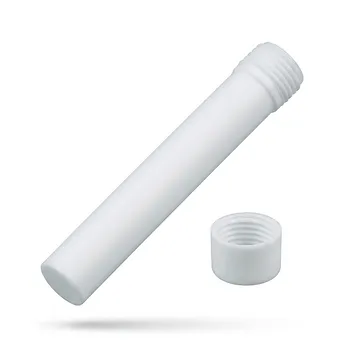
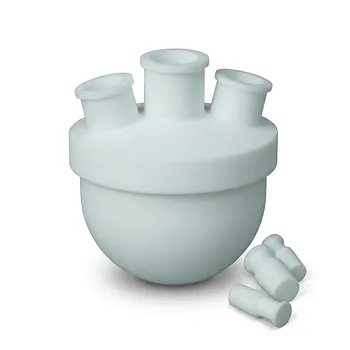
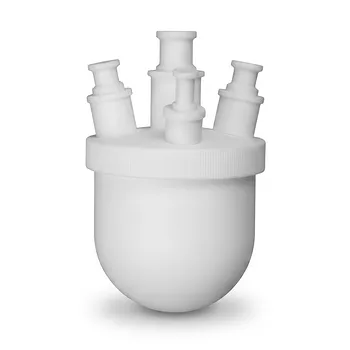
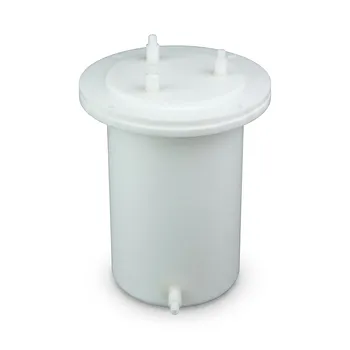
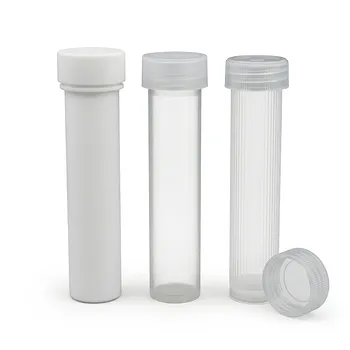
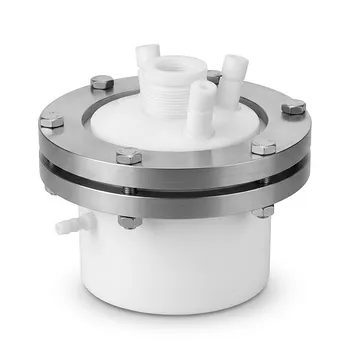
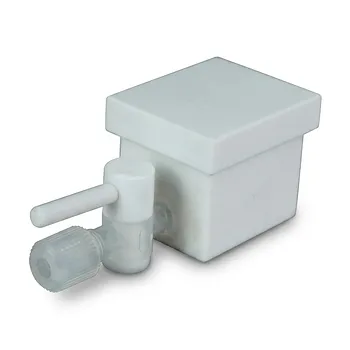
The necessity of PTFE-lined vessels stems from the extreme chemical and physical conditions required to synthesize high-quality Metal-Organic Frameworks. For NiCo-MOF specifically, these liners provide a chemically inert, sealed environment capable of maintaining temperatures (typically 140 °C) and pressures far exceeding atmospheric levels. This unique environment is essential to increase solvent solubility and reactant diffusion, ensuring the formation of the desired needle-like crystalline structures on substrates like nickel foam.
Core Takeaway: PTFE liners are indispensable because they transform standard reactors into high-pressure "pressure cookers" that remain stable against corrosive organic solvents and metal ions. This controlled environment is the only way to achieve the precise solubility and slow crystallization rates required for high-performance NiCo-MOF structures.
Creating the Ideal Physicochemical Environment
Surpassing Atmospheric Boiling Points
Standard glass or open-air vessels cannot reach the temperatures required for NiCo-MOF synthesis because the solvents would evaporate. The PTFE liner works with a stainless steel autoclave to create a sealed chamber where solvents are heated above their normal boiling points.
This process generates autogenous pressure, which significantly increases the kinetic energy of the reactants. This energy is vital for overcoming the activation barriers needed to form complex coordination bonds between nickel/cobalt ions and organic ligands.
Enhancing Solubility and Diffusion
Under the high-pressure conditions enabled by the liner, the solubility of solid precursors in solvents like DMF (Dimethylformamide) increases dramatically. This ensures that the nickel and cobalt ions are evenly distributed throughout the solution.
Increased diffusion rates allow these ions to move more freely, facilitating a more uniform growth of the MOF. This is what leads to the characteristic needle-like stacked structures that provide high surface area for electrochemical applications.
Safeguarding Chemical Purity and Structural Integrity
Preventing Metal Ion Contamination
At 140 °C, many metal surfaces would leach impurities into the reaction mixture, which would disrupt the delicate electronic structure of the NiCo-MOF. The chemical inertness of PTFE ensures that the vessel walls do not participate in the reaction.
By preventing the introduction of external ions, the liner guarantees that the final material maintains its precise crystal lattice. This purity is critical for ensuring the catalytic activity and stability of the MOF.
Resisting Corrosive Solvents and Ligands
The synthesis of NiCo-MOF often involves acidic ligands or strong polar organic solvents that can be highly corrosive at high temperatures. PTFE (Polytetrafluoroethylene) is uniquely resistant to these chemicals, including nitrate solutions and organic precursors.
Without this protection, the reaction vessel would degrade, leading to failed syntheses and potential safety hazards. The liner acts as a sacrificial but highly durable barrier that protects both the sample and the outer hardware.
Facilitating In-Situ Growth on Substrates
Promoting Adhesion to Nickel Foam
NiCo-MOFs are frequently grown directly onto nickel foam to create binder-free electrodes. The stable, high-pressure environment inside the PTFE liner facilitates strong chemical bonding between the active MOF material and the metallic substrate.
This "in-situ" crystallization ensures that the catalyst is physically robust. Without the pressure regulated by the liner, the MOF might simply precipitate as a loose powder rather than forming a cohesive layer on the foam.
Ensuring Crystalline Uniformity
The slow, controlled cooling and heating cycles possible within a lined autoclave promote slow crystal nucleation. This prevents the formation of amorphous "clumps" and instead encourages the growth of highly regular, porous structures.
The non-stick nature of PTFE also makes it easier to recover the synthesized material without damaging the delicate 3D architectures. This is essential for maintaining the active surface area of the catalyst.
Understanding the Trade-offs and Limits
Temperature Constraints
While PTFE is exceptionally stable, it has a rigid upper temperature limit, usually around 250 °C. Approaching or exceeding this limit can cause the liner to soften or release toxic fumes, potentially ruining the synthesis and the reactor.
Thermal Expansion and Sealing
PTFE has a high coefficient of thermal expansion, meaning it expands significantly when heated. If the liner is not properly sized for the stainless steel shell, it can become deformed or fail to create a perfect seal, leading to pressure leaks.
Cleaning and Cross-Contamination
Despite its non-stick properties, trace amounts of metal ions or organic residues can sometimes become trapped in the microscopic pores of the PTFE. Rigorous cleaning with dilute acid between uses is mandatory to prevent cross-contamination between different batches of NiCo-MOF.
How to Apply This to Your Project
Making the Right Choice for Your Goal
- If your primary focus is high-purity crystalline structures: Ensure you use high-purity (virgin) PTFE liners and perform a "blank" high-temperature acid wash before your first synthesis.
- If your primary focus is binder-free electrode fabrication: Prioritize a liner that allows for a perfectly vertical orientation of your nickel foam to ensure uniform diffusion on both sides.
- If your primary focus is scaling up production: Be mindful of the "filling degree" (usually 60-80%); overfilling the PTFE liner can lead to dangerous pressure spikes that exceed the safety rating of the autoclave.
By utilizing the unique properties of PTFE liners, you can reliably master the high-pressure environment necessary to unlock the full electrochemical potential of NiCo-MOFs.
Summary Table:
| Feature | Role in NiCo-MOF Synthesis | Impact on Result |
|---|---|---|
| Chemical Inertness | Prevents leaching of external metal ions | Maintains precise crystal lattice purity |
| Pressure Handling | Supports autogenous pressure above boiling points | Increases precursor solubility & diffusion |
| Corrosion Resistance | Withstands acidic ligands and organic solvents | Protects hardware and ensures safety |
| Non-stick Surface | Facilitates in-situ growth on nickel foam | Produces robust, binder-free electrodes |
| Thermal Stability | Maintains stable environment up to 250 °C | Promotes uniform crystalline structures |
Unlock Precision in Your Lab with KINTEK Fluoropolymer Solutions
Achieving the perfect NiCo-MOF structure requires more than just a recipe; it requires high-performance materials that never compromise your results. KINTEK specializes in manufacturing virtually all imaginable laboratory supplies crafted from premium PTFE and PFA, specifically designed for demanding hydrothermal and electrochemical applications.
From everyday basic labware (beakers, measuring cylinders, crucibles, reagent bottles) and fluid transfer components (tubing, fittings, valves) to advanced reaction apparatus like custom hydrothermal synthesis liners, microwave digestion vessels, and electrochemical cells, we provide the tools you need for success.
Why Choose KINTEK?
- End-to-End Customization: Our custom CNC fabrication delivers everything from complex non-standard machined parts to bespoke laboratory setups.
- Unmatched Purity: High-purity trace analysis instruments and cleaning tanks designed for zero-contamination workflows.
- Scalable Production: We maintain an exclusive focus on high-performance fluoropolymers, capable of handling both specialized bespoke orders and high-volume requirements.
Ready to enhance your research efficiency and material purity? Contact our expert team today to get a quote on standard supplies or custom-machined PTFE components tailored to your specific synthesis needs!
References
- Lang Yao, Xuechun Xiao. Electronic Structure Regulation Enhances the Urea Oxidation Reaction Performance of the NiCo-MOF Catalyst. DOI: 10.3390/nanoenergyadv5040017
This article is also based on technical information from Kintek Knowledge Base .
Related Products
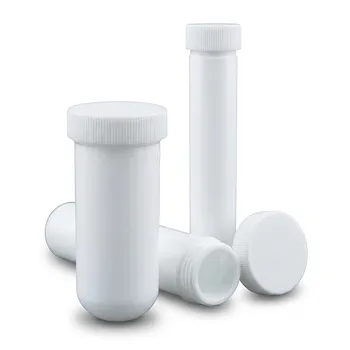
- PTFE Lined High Pressure Digestion Vessel 50ml High Temperature Hydrothermal Synthesis Tank
- High Pressure Custom TFM Reactor Stainless Steel Outer Vessel PTFE Inner Cup for Corrosive Synthesis
- Custom TFM Reaction Vessel with Stainless Steel Jacket and PTFE Inner Cup for High Corrosion Resistance
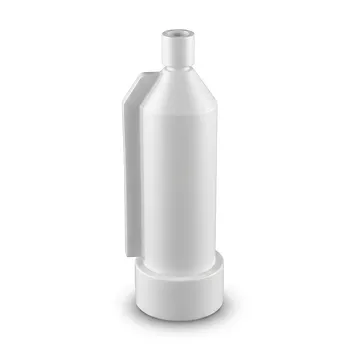
- Custom PTFE Continuous Reaction Bottles Virgin Fluoropolymer High Purity Low Background Synthesis Vessels
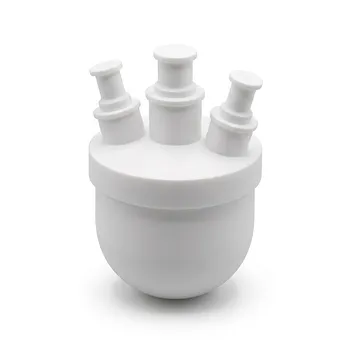
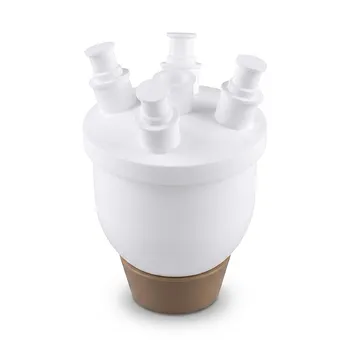
- Custom Multi Neck PTFE Flask 18L Laboratory Chemical Reactor Vessel for High Purity Synthesis and Stirring Applications
People Also Ask
- What are the benefits of using a PTFE-lined vessel for carbon-sulfur cathode treatment? Maximize Purity & Performance
- Why are PTFE-lined pressure digestion vessels required for the preparation of Ag/CeO2 catalysts? Purity & Performance
- What safety features are typically incorporated into high-pressure PTFE digestion vessel designs? Ensure Lab Safety
- What is the function of high-pressure PTFE digestion vessels in mineral analysis? Optimize Sample Mineralization
- What is the function of PTFE lined high-pressure vessels in g-C3N4 synthesis? Achieve High-Purity Material Growth