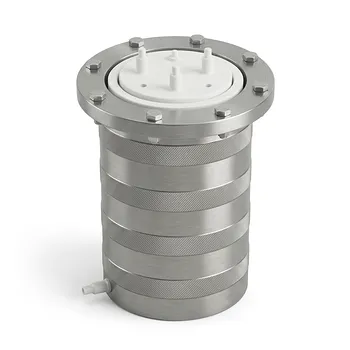
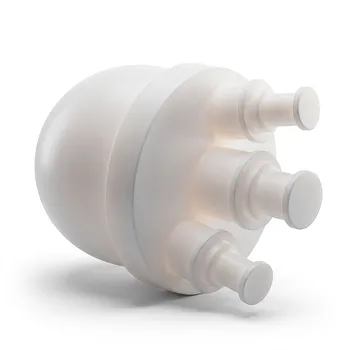
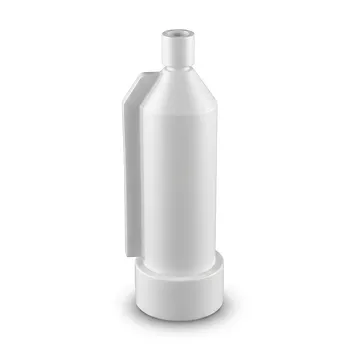
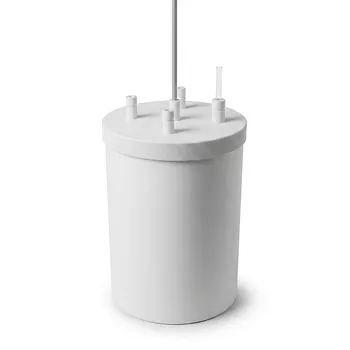
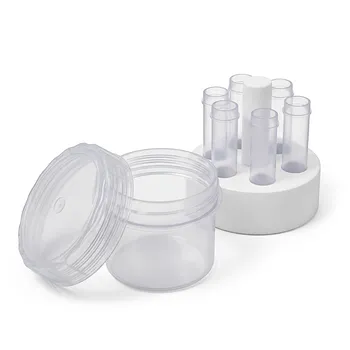
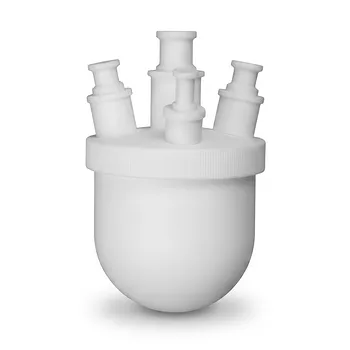
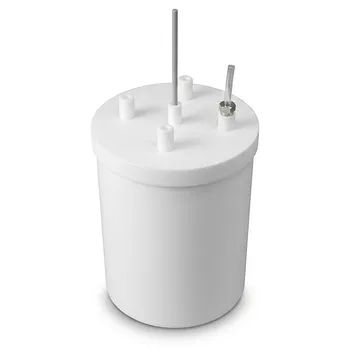
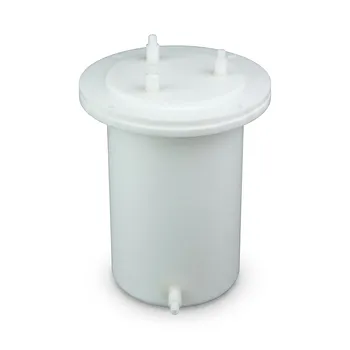
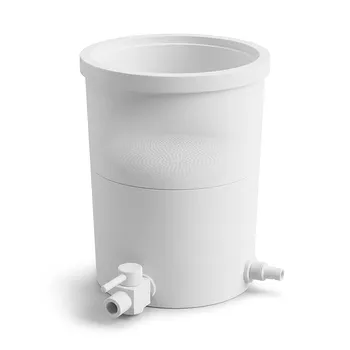
PTFE-lined high-pressure reaction vessels are essential because they overcome the extreme chemical resistance of insoluble oxides while ensuring sample purity. These vessels facilitate a high-temperature, high-pressure environment that forces strong acids to leach metal ions from the stable oxide lattice. By using a PTFE (Polytetrafluoroethylene) liner, researchers prevent the introduction of external metal contaminants, which is critical for accurate quantitative analysis like ICP-OES.
Core Takeaway: To dissolve resistant materials like nickel ferrite ($NiFe_2O_4$), you must elevate the reaction kinetics through high temperature and autogenous pressure. A PTFE-lined vessel provides the necessary chemical inertness to withstand these harsh conditions without contaminating the sample or losing volatile elements.
Overcoming Solubility Barriers with Elevated Kinetics
The Challenge of Insoluble Oxides
Certain spinel ferrites, such as $NiFe_2O_4$, are chemically stable and remain virtually unaffected by strong acids at standard temperatures and pressures. Their robust crystal structures require significantly higher energy levels to initiate the leaching process.
The Role of Autogenous Pressure
By heating the acid and sample within a sealed, closed system, the vessel generates autogenous pressure (typically between 7 and 12.5 MPa). This pressure significantly enhances the efficiency of the acid attack, allowing it to penetrate the mineral lattice and dissolve the nanoparticles.
Temperature-Driven Leaching
Raising the temperature to levels like 170°C to 200°C provides the thermal energy required to break chemical bonds in the oxide. Without a high-pressure vessel, the acids would simply boil off before reaching the temperature necessary for digestion.
Maintaining Analytical Purity and Integrity
Exceptional Chemical Inertness
PTFE and PFA materials are chosen for their radical resistance to corrosion from strong oxidizing acids like nitric and perchloric acid. Even under extreme heat, the liner remains stable and does not react with the precursors or the digestion media.
Preventing Metal Ion Contamination
In elemental analysis, even trace amounts of leached metal from a container can ruin the results. The PTFE liner acts as a barrier that prevents the acidic solution from contacting the stainless steel outer jacket, ensuring that no iron, nickel, or chromium from the vessel body enters the sample.
Retention of Volatile Elements
The sealed environment of a high-pressure vessel prevents the loss of volatile elements such as arsenic, antimony, and mercury. This is vital for comprehensive elemental quantitative analysis, as these elements would otherwise escape as gases during open-vessel digestion.
Understanding the Trade-offs and Limitations
Temperature Ceiling of PTFE
While highly stable, PTFE has a thermal limit and typically should not be used above 250°C. Exceeding these temperatures can lead to mechanical deformation of the liner or the release of toxic fluorinated vapors.
Thermal Lag and Cooling Times
The thick walls of the stainless steel jacket and the PTFE liner create a thermal lag, meaning the internal temperature may take time to stabilize. Additionally, these vessels must be allowed to cool completely before opening to avoid "boil-over" and ensure safety.
Mechanical Stress on Liners
Over time, repeated cycles of high pressure can cause the PTFE liner to deform or "creep." It is critical to inspect the liners regularly for signs of pitting or thinning to maintain a proper seal and prevent contamination.
How to Apply This to Your Project
Recommendations Based on Your Analysis Goals
- If your primary focus is trace metal analysis (ICP-OES/MS): Always use high-purity PTFE or PFA liners to eliminate background noise from metal ion leaching.
- If your primary focus is digesting resistant minerals like zircon or chromite: Ensure your vessel is rated for at least 10 MPa to provide the necessary pressure for effective acid attack.
- If your primary focus is the synthesis of photocatalytic or semiconductor materials: Utilize a clean PTFE micro-environment to prevent impurities from altering the electronic properties or doping concentrations of your final product.
- If your primary focus is analyzing volatile heavy metals: Always use a sealed, high-pressure system rather than an open-beaker method to ensure 100% recovery of the target elements.
By utilizing the unique combination of PTFE's chemical resistance and the mechanical strength of a pressure vessel, you can transform impossible digestion tasks into routine laboratory procedures.
Summary Table:
| Feature | Function in Digestion | Analytical Benefit |
|---|---|---|
| High-Pressure Rating | Generates autogenous pressure (7-12.5 MPa) | Forces acid into stable mineral lattices |
| PTFE/PFA Liner | Provides extreme chemical inertness | Eliminates metal contamination from vessel body |
| Sealed Environment | Prevents evaporation of reagents | Ensures 100% recovery of volatile elements |
| Thermal Stability | Facilitates heating up to 250°C | Increases reaction kinetics for faster dissolution |
Achieve Analytical Precision with KINTEK’s Fluoropolymer Expertise
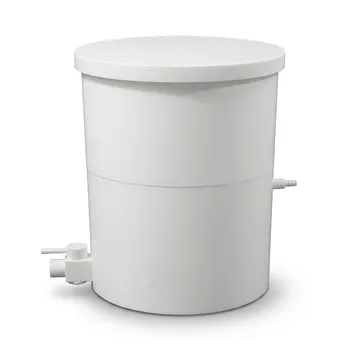
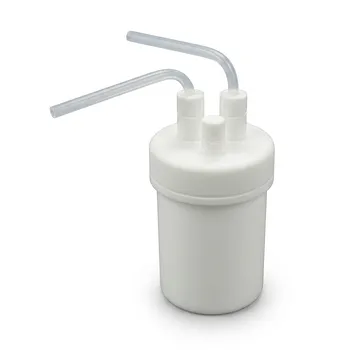
When your research demands absolute purity and resistance to the harshest chemical environments, KINTEK delivers. We specialize in high-performance fluoropolymer solutions tailored for advanced laboratory needs. From everyday essentials like PTFE beakers, crucibles, and digestion tubes to specialized PFA trace analysis instruments and high-purity cleaning tanks, our products are designed to eliminate contamination risks.
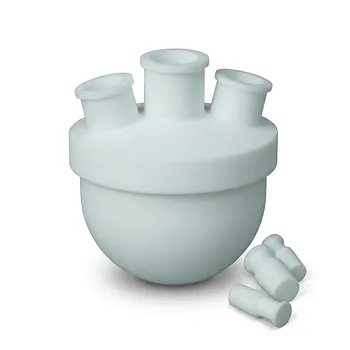
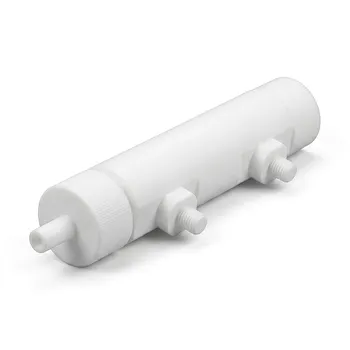
Looking for more than just consumables? KINTEK provides comprehensive fluid transfer components, sample prep tools, and advanced reaction apparatus, including hydrothermal synthesis liners, microwave digestion vessels, and custom electrochemical cells. Backed by end-to-end custom CNC fabrication, we can supply everything from bespoke non-standard parts to high-volume industrial orders.
Ready to upgrade your lab setup? Contact us today to discuss your custom PTFE/PFA requirements and experience the KINTEK difference in high-performance material science.
References
- Tiago Fernandes, Yury V. Kolen’ko. Anion exchange membrane water electrolysis over superparamagnetic ferrites. DOI: 10.1039/d4ya00170b
This article is also based on technical information from Kintek Knowledge Base .
Related Products
- PTFE Lined High Pressure Digestion Vessel 50ml High Temperature Hydrothermal Synthesis Tank
- Custom TFM Reaction Vessel with Stainless Steel Jacket and PTFE Inner Cup for High Corrosion Resistance
- High Pressure Custom TFM Reactor Stainless Steel Outer Vessel PTFE Inner Cup for Corrosive Synthesis
- High Purity Custom PTFE Large Volume 15L Flask Corrosion Resistant Low Trace Background Fluoropolymer Reaction Vessel
- High Purity PTFE Corrosion Resistant Reaction Vessel with Luer Fittings and Caps for Trace Analysis
People Also Ask
- What are the benefits of using a PTFE-lined vessel for carbon-sulfur cathode treatment? Maximize Purity & Performance
- Why are PTFE-lined pressure digestion vessels required for the preparation of Ag/CeO2 catalysts? Purity & Performance
- What is the function of high-pressure PTFE digestion vessels in mineral analysis? Optimize Sample Mineralization
- What safety features are typically incorporated into high-pressure PTFE digestion vessel designs? Ensure Lab Safety
- What is the function of PTFE lined high-pressure vessels in g-C3N4 synthesis? Achieve High-Purity Material Growth