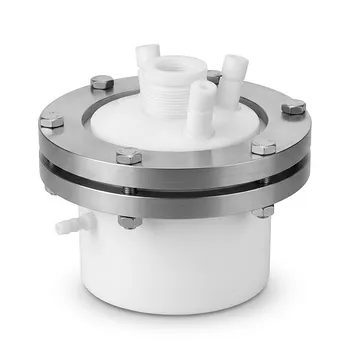
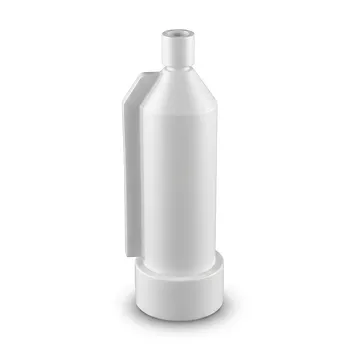
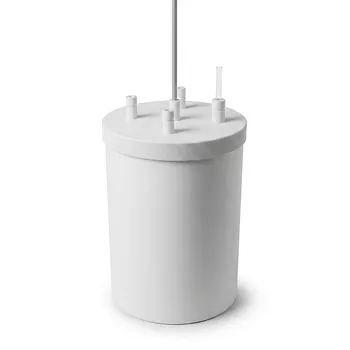
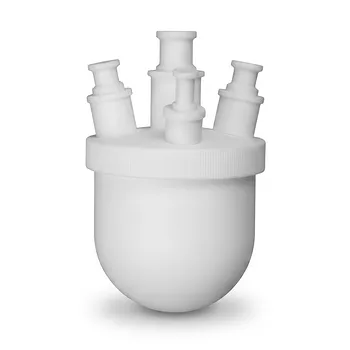
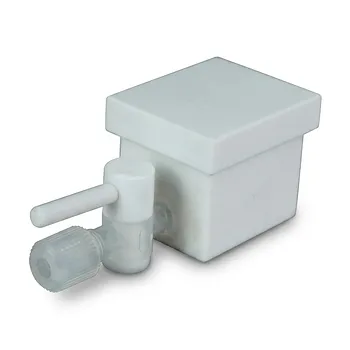
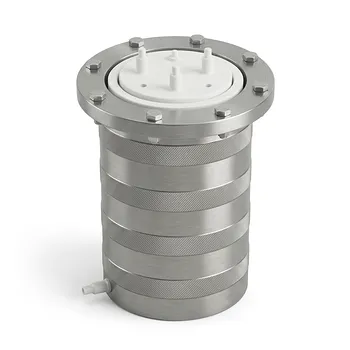
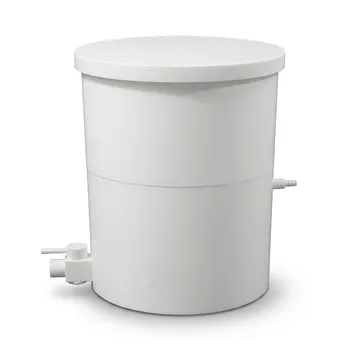
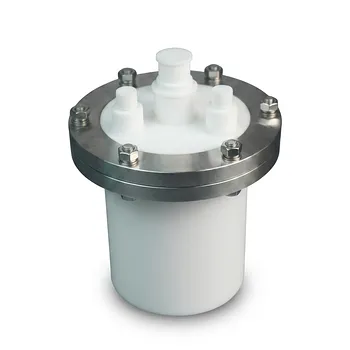
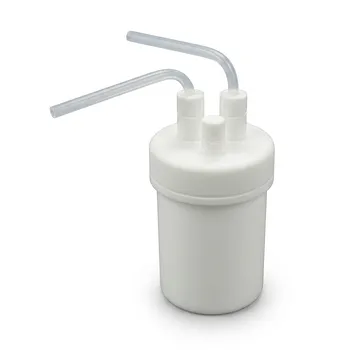
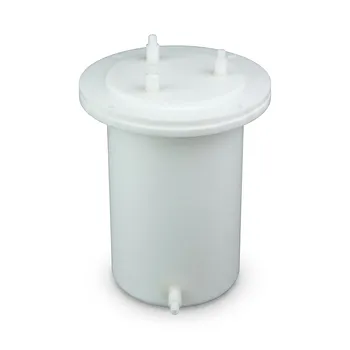
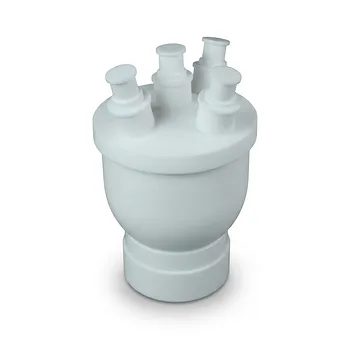
PTFE pressure-sealed reaction vessels are the industry standard for lignin acetylation because they provide a chemically inert environment capable of withstanding corrosive reagents like acetic anhydride at high temperatures. These vessels ensure the reaction remains isothermal—typically around 130°C—while preventing the leakage of volatile reactants and protecting the purity of the lignin macromolecules.
Core Takeaway: PTFE vessels are required because they combine extreme chemical resistance with superior sealing capabilities, ensuring that volatile, corrosive acetylation reagents are contained safely under pressure without contaminating the lignin product or adhering to the vessel walls.
Exceptional Chemical Inertness and Corrosion Resistance
Resisting Acetic Anhydride Degradation
Lignin acetylation typically utilizes acetic anhydride, a highly corrosive reagent that can degrade standard laboratory equipment. PTFE (Polytetrafluoroethylene) is uniquely resistant to this chemical attack, ensuring the vessel does not leach impurities into the reaction.
Microwave Transparency for Efficient Heating
Primary research indicates that PTFE is microwave transparent, which is critical for modern catalytic processes. This allows for rapid, uniform heating of the internal reaction mixture without the vessel itself interfering with the energy transfer.
Preventing Metal Contamination
Standard metal autoclaves can release trace ions when exposed to organic acids or solvents. Using a PTFE liner or vessel prevents these impurities from interfering with the stability of lignin colloidal spheres or the catalytic system.
Pressure Containment and Volatile Management
Maintaining Isothermal Conditions
Acetylation reactions often require constant temperatures, such as 130°C, to achieve efficient catalysis. The superior sealing performance of PTFE pressure vessels maintains these conditions by preventing heat loss through evaporation.
Absolute Containment of Volatiles
Acetylation involves volatile liquids that can easily escape at high temperatures. PTFE's sealing resilience ensures that the reaction proceeds under controlled pressure, preventing the loss of reactants and maintaining the stoichiometric balance.
Autogenous Pressure Promotion
In a sealed environment, the heat generates autogenous pressure, which accelerates reaction kinetics. PTFE-lined vessels safely manage this internal pressure, allowing the acetylation of lignin macromolecules to reach completion more rapidly.
Purity and Material Loss Prevention
Minimizing Surface Adsorption
Lignin macromolecules are prone to "sticking" to the surfaces of reaction containers. PTFE and PFA materials possess extremely low surface adsorption, which prevents lignin from adhering to the walls and minimizes material loss during collection.
Non-Stick Properties for Product Recovery
The non-stick nature of PTFE allows for the complete collection of the modified lignin and any generated precipitates. This is vital for maintaining high yields and ensuring experimental reproducibility in biomass modification.
Protecting the Outer Autoclave
In high-pressure setups, the PTFE liner acts as a barrier that protects the outer steel body of the autoclave. This prevents corrosive organic solvents and acid vapors from compromising the structural integrity of the high-pressure hardware.
Understanding the Trade-offs
Temperature Limitations
While PTFE is excellent for many reactions, it has a functional limit typically around 250°C to 260°C. Exceeding these temperatures can lead to material softening or "cold flow," where the PTFE deforms under pressure.
Thermal Conductivity Issues
PTFE is an insulator, meaning it does not conduct heat as efficiently as stainless steel or glass. This can lead to longer ramp-up times for the reaction mixture unless microwave heating or specialized heating jackets are used.
Cost and Mechanical Wear
High-purity fluoropolymers are significantly more expensive than standard glass or plastic. Additionally, while resistant to chemicals, they can be susceptible to mechanical wear from aggressive stirring over long durations, requiring periodic inspection of the vessel base.
Implementing PTFE Vessels in Your Workflow
Making the Right Choice for Your Goal
- If your primary focus is high-purity lignin modification: Utilize high-purity PFA or PTFE liners to eliminate ion leaching and prevent macromolecule adsorption.
- If your primary focus is rapid catalytic efficiency: Opt for PTFE vessels within a microwave-assisted reactor to leverage the material's microwave transparency.
- If your primary focus is volatile reactant recovery: Ensure your vessel features a reinforced PTFE sealing gasket to maintain absolute containment at temperatures exceeding 100°C.
By utilizing PTFE pressure-sealed vessels, researchers can safely navigate the harsh chemical requirements of lignin acetylation while ensuring the integrity and purity of the resulting biomass products.
Summary Table:
| Feature | Benefit for Lignin Acetylation | Technical Consideration |
|---|---|---|
| Chemical Inertness | Resists corrosive acetic anhydride; prevents leaching | Essential for high-purity biomass |
| Non-Stick Surface | Minimizes lignin adsorption and material loss | Ensures high yield and easy recovery |
| Pressure Sealing | Contains volatile reactants at high temperatures (130°C+) | Promotes autogenous kinetics |
| Microwave Transparency | Enables rapid, uniform catalytic heating | Ideal for microwave-assisted synthesis |
| Thermal Limits | Protects outer steel autoclaves from acid vapors | Operating limit: 250°C to 260°C |
Elevate Your Chemical Synthesis with KINTEK’s High-Performance Fluoropolymers
For demanding processes like lignin acetylation, precision and purity are non-negotiable. KINTEK specializes in the manufacture of high-performance laboratory supplies crafted exclusively from PTFE and PFA, ensuring your research remains free from contamination and material loss.
From everyday essentials like beakers, crucibles, and reagent bottles to advanced apparatus including custom PTFE reaction vessels, microwave digestion liners, and electrochemical cells, we provide the tools necessary for extreme chemical resistance. Whether you need standard labware (pipettes, filters, stirring bars) or complex, non-standard machined parts tailored via our end-to-end custom CNC fabrication, KINTEK is your dedicated partner for fluoropolymer solutions.
Ready to optimize your lab’s efficiency and purity? Contact KINTEK today to discuss your custom project or high-volume needs.
References
- Matilda Johansson, Hom Nath Dhakal. Advancing Lignin Valorization: Microwave‐Assisted Acetylation and Natural Fiber Reinforcement for Sustainable Biocomposites. DOI: 10.1002/app.57731
This article is also based on technical information from Kintek Knowledge Base .
Related Products
- Custom PTFE Reaction Apparatus Flange Sealed Corrosion Resistant Jacketed Vessel with Stirring Bar and Thermometer Ports
- PTFE Lined High Pressure Digestion Vessel 50ml High Temperature Hydrothermal Synthesis Tank
- Custom TFM Reaction Vessel with Stainless Steel Jacket and PTFE Inner Cup for High Corrosion Resistance
- High Purity PTFE Corrosion Resistant Reaction Vessel with Luer Fittings and Caps for Trace Analysis
- High Performance Customizable PTFE Reaction Vessel and Corrosion Resistant Polytetrafluoroethylene Flask for Chemical Laboratory Use
People Also Ask
- How do perfluorinated solvent environments influence the selection of reaction vessels and fluid handling components in nonaqueous emulsion polymerizations? Choose fluoropolymer materials.
- Why are high-purity PTFE or PFA reaction vessels recommended for the synthesis of PANI-TiC hybrid materials? - Guide
- Why are fluoroplastic (PTFE) reaction vessels recommended for Methylene Blue (MB) adsorption kinetic experiments?
- Why is a PTFE reaction vessel required for Ti3C2Tx MXene synthesis? Ensure Safe HF Etching & High Purity
- Why is a high-quality PTFE reaction vessel required for the etching preparation of Ti3C2Tx MXene? Ensure Pure Synthesis.