High-purity fluoropolymer-lined autoclaves are essential for Cu(II) coordination polymer synthesis because they provide an exceptionally inert environment that prevents metal ion leaching and withstands highly corrosive precursors. Under the extreme temperature and pressure of hydrothermal reactions, these liners—typically made of PTFE or PFA—ensure the resulting crystals or nanostructures maintain atomic-level purity without interference from the autoclave's metal shell.
Core Takeaway: To achieve high-quality Cu(II) coordination polymers, researchers must isolate the reaction from the stainless steel autoclave body. Fluoropolymer liners serve as a dual-purpose barrier: they protect the equipment from corrosive copper salts and prevent exogenous metal impurities from compromising the coordination structure of the final product.
Eliminating Ion Contamination and Side Reactions
Preventing Metal Ion Leaching
The primary risk in hydrothermal synthesis is the leaching of transition metals (like iron, chromium, or nickel) from the stainless steel autoclave body into the reaction solution. High-purity PTFE or PFA liners act as a physical and chemical barrier, ensuring that the copper coordination environment remains free from exogenous impurities. This is critical for the synthesis of single-crystal materials where even trace impurities can alter the electronic and structural properties of the Cu(II) centers.
Chemical Inertness Toward Corrosive Precursors
Synthesis often involves aggressive precursors such as nitrates, chlorides, or hexafluorophosphates. These chemicals become significantly more corrosive under high-pressure and high-temperature conditions. High-purity fluoropolymers are selected because they do not react with these acidic or polar solvents, maintaining a stable environment that prevents side reactions that could degrade the precursor or the growing polymer.
Maintaining Atomic-Level Purity
For applications involving single-atom catalysts or precise coordination frameworks, the "purity" of the active site is paramount. Fluoropolymer liners ensure that no trace elements interfere with the specific bonding between the Cu(II) ions and their organic ligands. This level of control is necessary to produce repeatable, high-performance materials with specific crystal planes or morphologies.
Optimizing the Physical Reaction Environment
Facilitating Sub-Critical Nucleation
Hydrothermal synthesis relies on keeping aqueous solutions in a liquid phase at temperatures far exceeding their natural boiling points. The sealed environment created by the fluoropolymer liner allows for spontaneous pressure generation, which is necessary for the nucleation and growth of copper-based nanostructures. This controlled pressure environment facilitates the formation of complex geometries, such as nanosheets or nanowires.
Maximizing Product Recovery
Fluoropolymers like PTFE possess extremely low surface energy, which creates a "non-stick" effect. This characteristic prevents the synthesized Cu(II) coordination polymers or nanoparticles from adhering to the walls of the reaction vessel. This ensures a higher yield of the product and significantly simplifies the cleaning process between experimental runs.
Ensuring Experimental Repeatability
Because high-purity liners do not degrade or contribute ions to the solution, they provide a consistent baseline for every experiment. This repeatability is vital for researchers who need to fine-tune reaction parameters like temperature and time to achieve specific structural outcomes in their copper frameworks.
Understanding the Trade-offs
While fluoropolymer liners are superior for purity and corrosion resistance, they have distinct mechanical limits. PTFE and PFA have a temperature ceiling, typically around 220°C to 250°C; exceeding these temperatures can lead to liner deformation (creeping) or the release of toxic vapors.
Furthermore, these liners are poor thermal conductors compared to the metal autoclave shell. This results in a thermal lag, meaning the temperature inside the reaction chamber may take longer to stabilize than the external heating element indicates. Researchers must account for this delay to ensure accurate kinetic control of the synthesis.
How to Apply This to Your Project
Recommendations for Material Selection
- If your primary focus is maximum chemical purity: Use high-purity PFA liners, as they often have lower trace-element extractables than standard PTFE and offer better transparency for visual inspection.
- If your primary focus is cost-effective scale-up: Standard PTFE liners are the industry workhorse for hydrothermal synthesis, providing excellent resistance to most copper precursors at a lower price point.
- If your primary focus is morphology control: Ensure your liner is meticulously cleaned with acid between runs to maintain the low surface energy required for consistent crystal growth and easy collection.
The choice of a high-purity fluoropolymer liner is not merely a preference but a technical requirement for achieving the structural precision and chemical integrity demanded by modern Cu(II) coordination chemistry.
Summary Table:
| Feature | Benefit for Cu(II) Synthesis |
|---|---|
| Chemical Inertness | Prevents reactions with corrosive nitrates, chlorides, and precursors. |
| Leaching Prevention | Blocks Fe/Cr/Ni ions from the steel body to maintain Cu(II) coordination. |
| Low Surface Energy | Non-stick surface ensures maximum product recovery and easier cleaning. |
| Physical Isolation | Facilitates sub-critical nucleation for high-quality crystal growth. |
Precision-Engineered Fluoropolymer Solutions for Advanced Synthesis
At KINTEK, we understand that atomic-level purity is the cornerstone of successful coordination chemistry. We specialize exclusively in high-performance fluoropolymer materials, providing the essential tools researchers need to eliminate contamination and ensure repeatable results.
Our extensive production capabilities cover virtually all imaginable laboratory supplies crafted from PTFE and PFA. Whether you need everyday basics—like beakers, crucibles, reagent bottles, and centrifuge tubes—or advanced reaction apparatus such as high-purity hydrothermal synthesis liners, microwave digestion vessels, and custom electrochemical cells, we have you covered.
Leveraging our end-to-end custom CNC fabrication, KINTEK is uniquely equipped to deliver everything from complex, non-standard machined parts to high-volume orders of fluid transfer components, filtration tools, and general consumables.
Don't let trace metal impurities compromise your Cu(II) coordination frameworks. Contact KINTEK today to discuss your custom requirements and see how our fluoropolymer expertise can elevate your laboratory’s performance.
References
- S.N. Herringer, Karl W. Krämer. Copper(II) Complexes with 4,4′-Bipyridine: From 1D to 3D Lattices. DOI: 10.3390/inorganics13120400
This article is also based on technical information from Kintek Knowledge Base .
Related Products
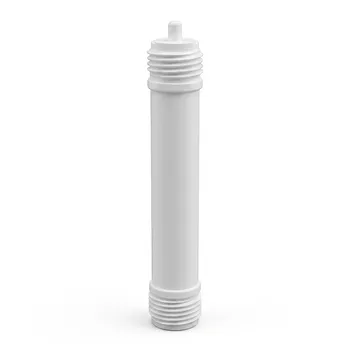
- High Purity PTFE Microwave Digestion Vessel for Soil and Food Analysis Acid Resistant Fluoropolymer Sample Preparation Liners
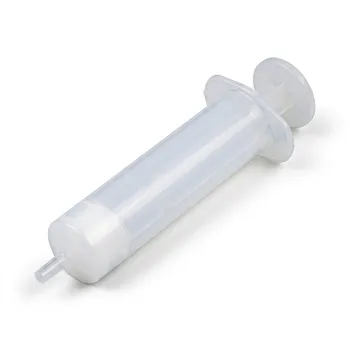
- High Purity PFA Syringe 10ml Corrosion Resistant Translucent Fluoropolymer Sampling Unit for Trace Analysis
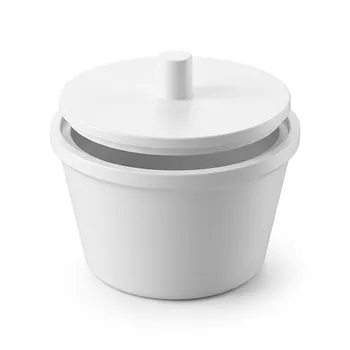
- High Purity PTFE PFA Plastic Crucible for Corrosion Resistant Acid Digestion and Trace Analysis
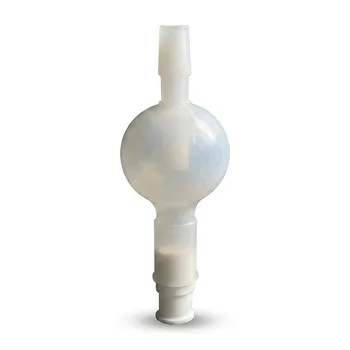
- High Purity PFA Chromatography Column with Collection Bottle Corrosion Resistant Fluoropolymer Filtration System for Trace Analysis
- High Purity Virgin PTFE Square Tank Corrosion Resistant Acid Soaking Bath Custom Fluoropolymer Cleaning Vessel
People Also Ask
- How does the dielectric property of PTFE benefit microwave-assisted digestion? Unlock Rapid and Uniform Sample Heating
- What are the advantages of using microwave digestion vessels? Optimize EG@MO synthesis with superior thermal control.
- What are the advantages of using microwave digestion vessels for environmental analysis? Boost speed and sample accuracy.
- What safety features are commonly integrated into microwave digestion vessels? Ensuring High-Pressure Laboratory Safety
- How do microwave digestion vessels support pharmaceutical elemental impurity testing? Achieve Precise USP Compliance