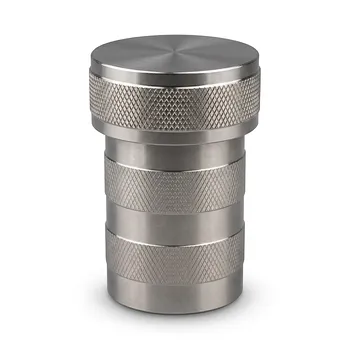
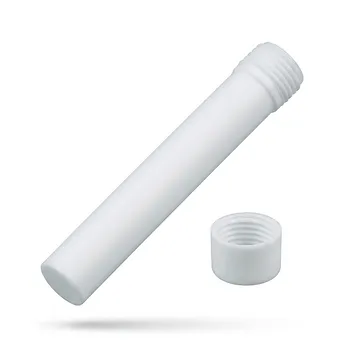
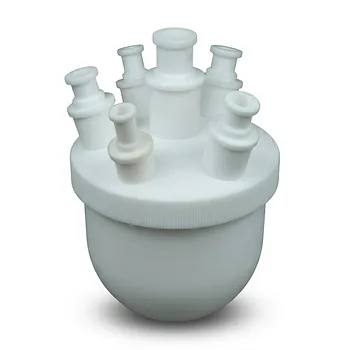
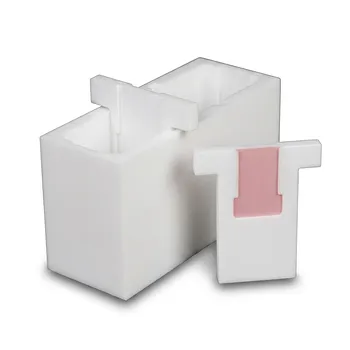
Precision environmental control is the deciding factor in hydrothermal synthesis. High-pressure reactors provide the sealed, high-temperature environment necessary to trigger urea hydrolysis and drive the directional growth of crystals on nickel foam. High-purity PTFE liners complement this by acting as a chemically inert barrier, preventing reactor wall contamination and ensuring the structural regularity of the resulting NiFe-LDH nanospheres.
Core Takeaway: The synergy between high-pressure vessels and PTFE liners creates a "chemical sanctuary" where autogenous pressure promotes uniform nucleation while chemical isolation prevents metallic leaching, ensuring the purity and morphological integrity of the NiFe-LDH structures.
The Role of the High-Pressure Reactor
Driving Essential Chemical Transformations
The reactor provides the sealed environment required to reach temperatures typically ranging from 120°C to 140°C. This specific thermal energy is critical for urea hydrolysis, the process that releases the precipitants necessary to form the LDH structure.
Facilitating Directional Crystal Growth
By maintaining autogenous pressure, the reactor forces the reaction precursors to interact with the substrate, such as nickel foam. This pressure is the engine behind oriented growth, allowing nanospheres to form in-situ with high density and saturated coverage.
Ensuring Process Safety and Stability
Hydrothermal synthesis involves volatile conditions that would be impossible to manage in open systems. The high-pressure autoclave is engineered to contain these aggressive internal forces, providing a stable platform for reactions that last up to 15 hours.
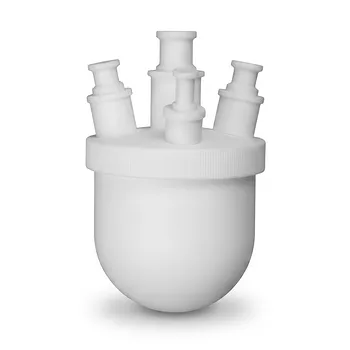
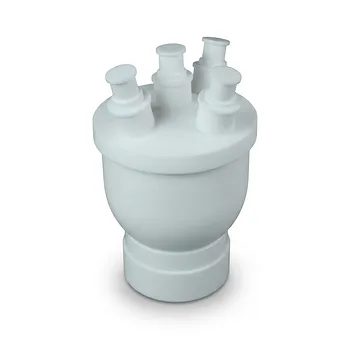
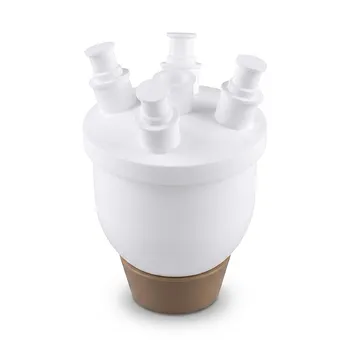
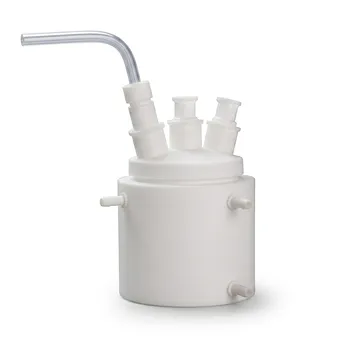
The Critical Function of High-Purity PTFE Liners
Eliminating Metallic Contamination
Standard stainless steel reactor walls are susceptible to corrosion from the strong alkaline or acidic media used in synthesis. High-purity PTFE liners prevent the leaching of unwanted metal ions from the reactor shell into the solution, preserving the chemical purity of the NiFe-LDH.
Preventing Side Reactions
The chemical inertness of PTFE ensures that the precursors react only with each other and the intended substrate. By preventing wall reactions, the liner ensures that the concentration of reactants remains consistent, leading to more predictable and reproducible experimental results.
Maintaining Morphological Integrity
PTFE possesses unique non-stick properties that prevent the reaction liquid from adhering to or reacting with the container boundaries. This isolation is vital for achieving the structural regularity of nanospheres, as it prevents external surface influences from disrupting the nucleation process.
Understanding the Trade-offs and Limits
Thermal Thresholds and Deformation
While PTFE is highly stable, it has a functional temperature ceiling, typically around 250°C. Exceeding these temperatures can cause the liner to soften or deform, potentially breaking the seal of the reactor and compromising the experiment.
Thermal Lag in Synthesis
PTFE is an excellent insulator, which creates a thermal lag between the oven temperature and the internal reaction temperature. Researchers must account for the time it takes for the internal solution to reach the target temperature to ensure consistent crystal growth.
Pressure Limitations of Fluoropolymers
Under extreme pressures, even high-purity liners can experience creep or cold flow. This means that while they are chemically resistant, the physical integrity of the seal depends on the precise fit between the liner, the lid, and the stainless steel jacket.
Strategic Implementation for Nanosphere Synthesis
The choice of equipment should be dictated by the specific requirements of your material’s electrochemical application.
- If your primary focus is Phase Purity: Use high-purity PTFE or PFA liners to eliminate any possibility of iron or chromium leaching from the autoclave's steel walls.
- If your primary focus is Morphological Control: Prioritize a high-pressure reactor with a precise heating mantle to maintain the constant autogenous pressure required for uniform nanosphere nucleation.
- If your primary focus is Scalability: Ensure the reactor volume-to-liquid ratio is strictly maintained (usually 60-80% fill) to provide enough headspace for safe pressure development.
By mastering the balance between high-pressure kinetics and chemical isolation, you can consistently produce high-performance NiFe-LDH catalysts with optimized active surface areas.
Summary Table:
| Component | Role in Synthesis | Key Performance Benefit |
|---|---|---|
| High-Pressure Reactor | Environmental Control | Facilitates urea hydrolysis and drives directional crystal growth via autogenous pressure. |
| High-Purity PTFE Liner | Chemical Isolation | Prevents metallic leaching from reactor walls and ensures precursor purity. |
| Autogenous Pressure | Kinetic Driver | Forces interaction between precursors and substrates for high-density nanosphere coverage. |
| Non-Stick Properties | Morphological Guide | Prevents wall reactions and adhesion, ensuring structural regularity of the LDH nanospheres. |
Elevate Your Synthesis Precision with KINTEK
Don't let metallic contamination or thermal instability compromise your NiFe-LDH research. At KINTEK, we specialize in high-performance fluoropolymer solutions designed for the most demanding hydrothermal environments. From high-purity PTFE and PFA liners and hydrothermal synthesis vessels to custom-machined reaction apparatus and microchannel reactors, we provide the "chemical sanctuary" your materials require.
Whether you need standard labware—like beakers, digestion tubes, and filtration tools—or complex, bespoke CNC-fabricated laboratory setups, KINTEK delivers end-to-end excellence. We support researchers and industrial labs with everything from everyday consumables (O-rings, seals, and stir bars) to advanced battery testing fixtures and electrochemical cells.
Ready to optimize your catalyst growth? Contact our fluoropolymer experts today to discuss your custom requirements or high-volume orders.
References
- Xin Li, Fufa Wu. NiFe-LDH as a bifunctional electrocatalyst for efficient water and seawater electrolysis: enhanced oxygen evolution and hydrogen evolution reactions. DOI: 10.1039/d5na00350d
This article is also based on technical information from Kintek Knowledge Base .
Related Products
- PTFE Lined High Pressure Digestion Vessel 50ml High Temperature Hydrothermal Synthesis Tank
- High Temperature Corrosion Resistant Hydrothermal Synthesis Reactor with TFM Inner Liner and Straight Cylinder Design
- High Pressure Custom TFM Reactor Stainless Steel Outer Vessel PTFE Inner Cup for Corrosive Synthesis
- Custom TFM Reaction Vessel with Stainless Steel Jacket and PTFE Inner Cup for High Corrosion Resistance
- High Purity TFM Microwave Digestion Vessels PTFE Acid Evaporation Liners Domestic GT-400 Equivalent Laboratory Reaction Containers
People Also Ask
- What are the benefits of using a PTFE-lined vessel for carbon-sulfur cathode treatment? Maximize Purity & Performance
- Why are PTFE-lined pressure digestion vessels required for the preparation of Ag/CeO2 catalysts? Purity & Performance
- What is the function of high-pressure PTFE digestion vessels in mineral analysis? Optimize Sample Mineralization
- What safety features are typically incorporated into high-pressure PTFE digestion vessel designs? Ensure Lab Safety
- What is the function of PTFE lined high-pressure vessels in g-C3N4 synthesis? Achieve High-Purity Material Growth