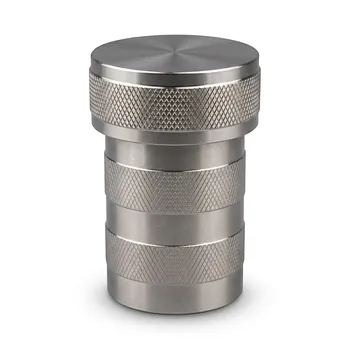
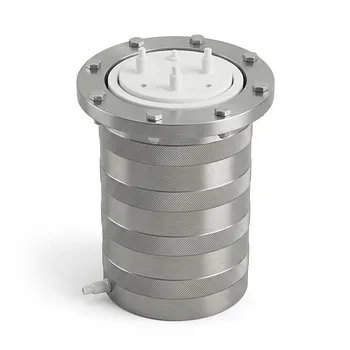
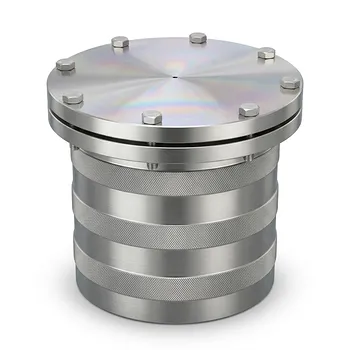
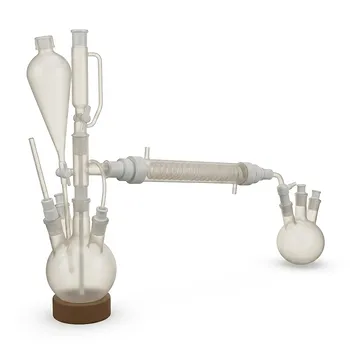
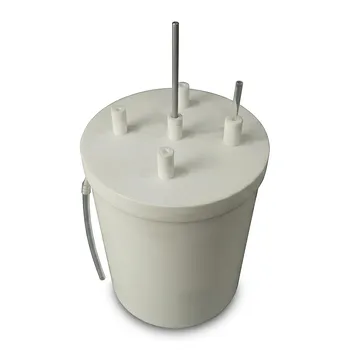
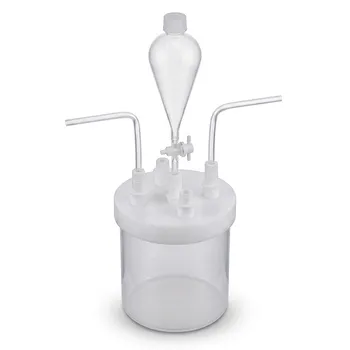
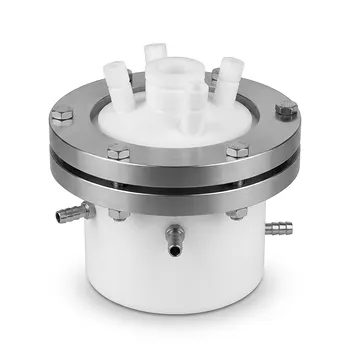
The precise synthesis of MoS2 nanoparticles hinges on the unique environment provided by high-pressure reactors. These reactors create a sealed, high-temperature setting where solvents exceed their normal boiling point, reaching subcritical or near-supercritical states. This energy-rich environment allows precursors—such as sodium molybdate and thiourea—to dissolve, react thoroughly, and achieve the full crystallization necessary for high-performance 2D layered structures.
Core Takeaway: High-pressure hydrothermal reactors act as a "chemical pressure cooker" that provides the necessary kinetic conditions to overcome energy barriers for crystallization. By maintaining autogenous pressure, these reactors allow for precise control over the nucleation, morphology, and phase purity of MoS2 nanostructures.
Overcoming Kinetic Barriers through Subcritical Environments
Exceeding Atmospheric Boiling Points
High-pressure reactors allow aqueous solutions to remain in a liquid state at temperatures significantly higher than 100°C. By operating at temperatures such as 150°C to 210°C, the reactor provides the thermal energy required for precursors to undergo complete hydrolysis and chemical transformation.
Enhancing Solubility and Diffusion
Under high pressure, the solubility and diffusion rates of reactants like ammonium molybdate increase dramatically. This facilitates a more efficient reaction between molybdenum and sulfur sources, ensuring that the precursors react fully within the precursor solution.
Facilitating Dissolution and Recrystallization
The internal pressure of the autoclave facilitates the continuous dissolution of precursors and their subsequent recrystallization into stable solid phases. This cycle is essential for achieving the high crystallinity and phase purity that define high-quality molybdenum disulfide.
Engineering Specific Nanomaterial Morphologies
Controlling Nucleation and Growth
The sealed hydrothermal environment allows researchers to dictate the direction in which crystals grow. This level of control is critical for producing specific geometric morphologies, such as nanocubes, flake structures, or vertical growth on substrates.
Inducing Layered Two-Dimensional Structures
MoS2 is valued for its layered atomic structure, which provides a large specific surface area. The hydrothermal process induces the formation of these 2D layers, which are often rich in beneficial sulfur defects and various molybdenum oxidation states.
Promoting In-Situ Growth on Substrates
High-pressure environments ensure that MoS2 can grow directly onto other materials, such as vertical graphene or porous nickel tubes. The pressure induces liquid penetration into deep pores, ensuring that active components are uniformly loaded across the entire support structure.
Understanding the Trade-offs and Technical Demands
Corrosion and Material Integrity
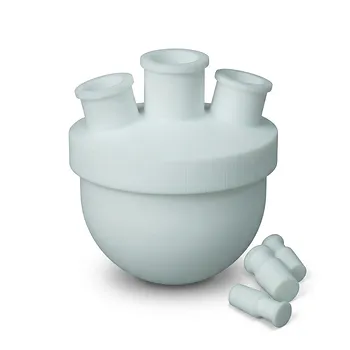
The combination of high temperature, high pressure, and reactive sulfur sources is extremely corrosive. To maintain chemical purity and equipment longevity, reactors must be equipped with specialized, corrosion-resistant liners, typically made of Polytetrafluoroethylene (PTFE).
Safety and Operational Complexity
Operating at autogenous pressures requires robust engineering to prevent vessel failure. Because the reaction occurs in a sealed "black box," real-time monitoring of the crystallization process is difficult, requiring precise pre-calculation of temperature and duration.
Scalability vs. Precision
While hydrothermal synthesis produces superior nanostructures, scaling the process for industrial volume can be challenging. Maintaining uniform temperature and pressure gradients throughout a large-scale reactor is significantly more complex than in laboratory-scale autoclaves.
How to Apply This to Your Project
Selecting the Right Approach for Your Goal
To achieve the best results with MoS2 synthesis, tailor your reactor parameters to your specific performance requirements.
- If your primary focus is high electrochemical activity: Prioritize higher temperatures (near 210°C) to maximize phase purity and the formation of active sulfur defects.
- If your primary focus is composite material loading: Utilize the autogenous pressure to force precursors into porous substrates, ensuring uniform coverage in deep structural pores.
- If your primary focus is morphological precision: Carefully control the heating ramp rate and duration (e.g., 20 hours) to allow for the slow, directed growth of 2D flakes or nanocubes.
By leveraging the unique physics of the hydrothermal environment, you can engineer MoS2 nanoparticles with the exact structural and chemical properties required for advanced technological applications.
Summary Table:
| Feature | Impact on MoS2 Synthesis | Key Benefit |
|---|---|---|
| Subcritical Environment | Exceeds boiling points (150°C-210°C) | Provides energy to overcome crystallization barriers |
| Enhanced Diffusion | Increases precursor solubility | Ensures thorough reaction and high phase purity |
| Autogenous Pressure | Forces liquid into porous substrates | Enables uniform in-situ growth on complex supports |
| Morphological Control | Dictates nucleation and growth direction | Produces precise 2D layers, flakes, or nanocubes |
| Corrosion Resistance | Protects vessel from reactive sulfur | Ensures sample purity and equipment longevity |
Elevate Your Nanomaterial Synthesis with KINTEK Expertise
Achieving the perfect MoS2 nanostructure requires equipment that can withstand extreme chemical environments without compromising purity. KINTEK specializes in high-performance fluoropolymer solutions specifically designed for the rigors of hydrothermal synthesis.
From PTFE and PFA liners for hydrothermal autoclaves and microwave digestion vessels to custom electrochemical cells and precision-machined reaction apparatus, we provide the critical tools needed for high-purity trace analysis and advanced material science. Our capabilities include:
- High-Purity Labware: Beakers, crucibles, and reagent bottles crafted for zero-contamination.
- Fluid Transfer: High-performance tubing, fittings, and valves for complex setups.
- Custom Engineering: End-to-end CNC fabrication for bespoke laboratory components and non-standard machined parts.
- Specialized Accessories: Battery testing fixtures, electrode accessories, and microchannel reactors.
Whether you are scaling up industrial production or refining laboratory-scale research, KINTEK delivers the absolute focus on high-performance materials your project demands.
Contact us today to discuss your custom laboratory requirements and optimize your synthesis workflow!
References
- Furkan Uzcan, Mustafa Soylak. Microwave Synthesis of Ag@MoS2 in NADES medium for the Dispersive Micro Solid Phase Extraction of Atrazine in environmental samples. DOI: 10.1007/s11270-025-07991-3
This article is also based on technical information from Kintek Knowledge Base .
Related Products
- High Temperature Corrosion Resistant Hydrothermal Synthesis Reactor with TFM Inner Liner and Straight Cylinder Design
- High Pressure Custom TFM Reactor Stainless Steel Outer Vessel PTFE Inner Cup for Corrosive Synthesis
- PTFE Lined High Pressure Digestion Vessel 50ml High Temperature Hydrothermal Synthesis Tank
- High Temperature PTFE Reaction Flask 1000ml Single Neck Round and Flat Bottom Laboratory Bottle
- Custom TFM Reaction Vessel with Stainless Steel Jacket and PTFE Inner Cup for High Corrosion Resistance
People Also Ask
- What is the role of a corrosion-resistant reactor in the synthesis of lignin-based carbon dots? Ensure Maximum Purity
- What are the technical advantages of using hydrothermal synthesis reactors for advanced electronic & optical nanomaterials?
- How does a hydrothermal synthesis reactor facilitate the production of crystalline materials with tailored morphologies? Precision Crystal Growth
- Why is the sealing reliability of a hydrothermal synthesis reactor critical for 24-hour cycles? Ensure Nano-Precision
- What role do hydrothermal synthesis reactors play in CQD preparation? Achieve High-Purity Nanomaterial Synthesis