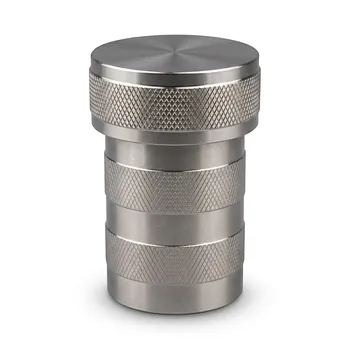
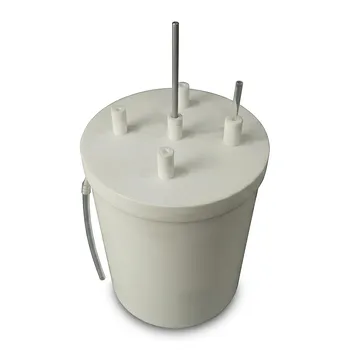
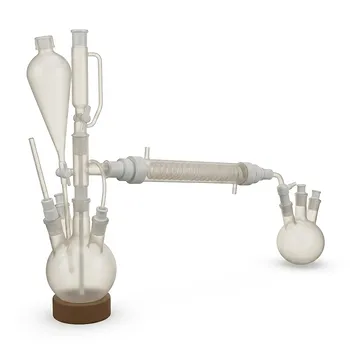
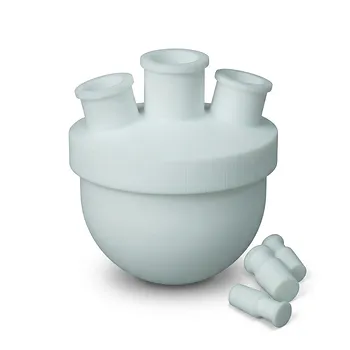
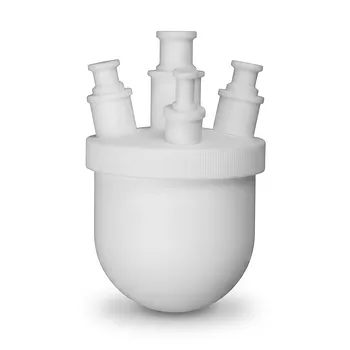
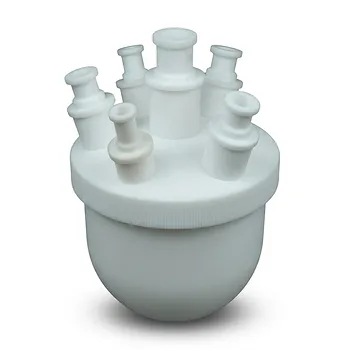
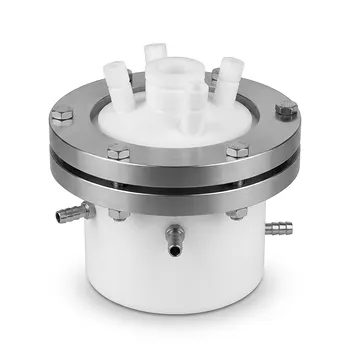
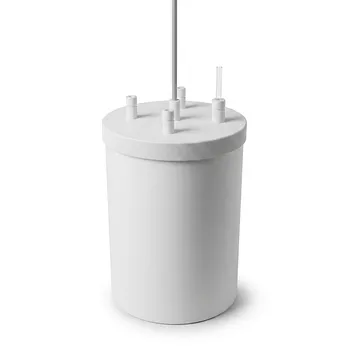
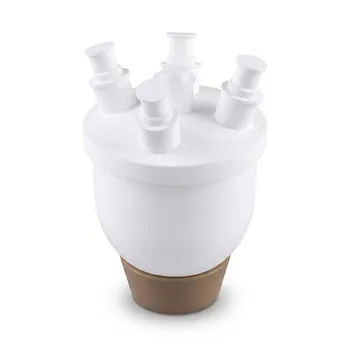
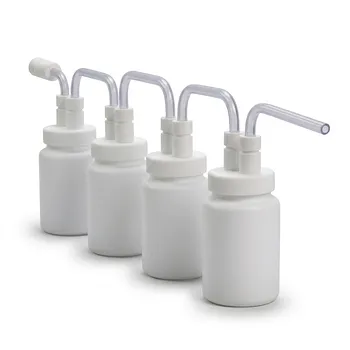
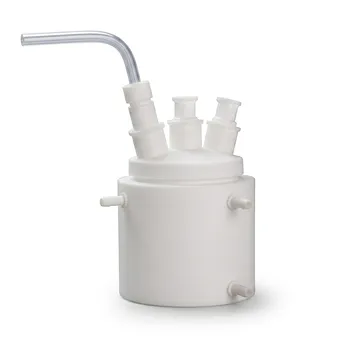
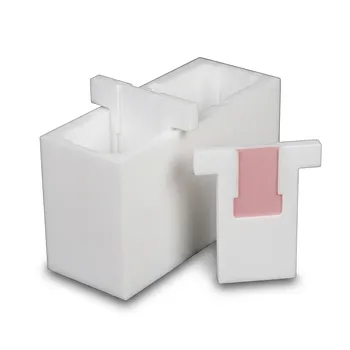
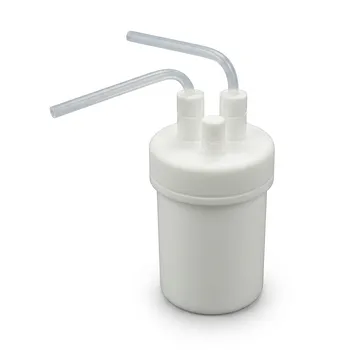
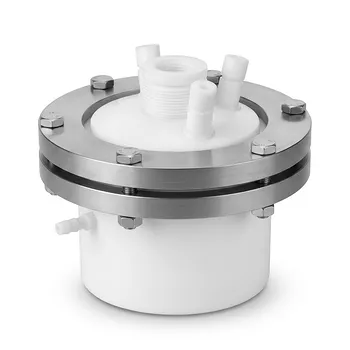
High-pressure hydrothermal synthesis and PTFE liners are the fundamental enablers for MoS2 loading because they create an artificial "deep-sea" environment required for chemical efficiency. At temperatures around 200°C, the reactor generates autogenous pressure that forces liquid precursors into the microscopic pores of complex substrates like nickel tubes or vertical graphene. The PTFE liner acts as a critical chemical shield, preventing the corrosive precursors from dissolving the reactor's steel walls while ensuring the synthesized MoS2 remains free of metallic impurities.
The combination of high-pressure containment and PTFE chemical resistance allows for the uniform, high-purity growth of MoS2 nanosheets by enabling deep-pore penetration and precise control over the nanocrystal nucleation process.
The Role of High Pressure in Morphology and Loading
Driving Deep-Pore Penetration
In-situ loading often involves complex, porous substrates like vertical graphene or nickel foam that possess microscopic "valleys" and deep pores. High-pressure environments induce liquid penetration into these structures, ensuring that the molybdenum and sulfur precursors reach every available surface area. Without this pressure, the liquid would remain on the surface, leading to uneven loading and poor mechanical adhesion of the MoS2.
Facilitating Supercritical Reaction Conditions
The reactor creates a sealed environment where temperatures exceed the standard boiling point of water, reaching subcritical or near-supercritical states. These conditions provide the thermal energy necessary for precursors like sodium molybdate and thiourea to react fully. This energy is essential for the formation of layered two-dimensional structures with the large specific surface areas required for high-performance applications.
Controlling Nucleation and Crystallinity
High-pressure environments allow for precise control over the nucleation and growth direction of MoS2 nanocrystals. This results in nanomaterials with high crystallinity and specific morphological structures, such as "nano-flowers." The sealed system maintains a constant concentration of reactants, which is vital for achieving a uniform 1T or 2H phase transition.
The Necessity of PTFE Liners for Material Integrity
Protection Against Aggressive Corrosives
The chemical precursors used to synthesize MoS2, such as thioacetamide or acidic solutions, become highly aggressive at 200°C. PTFE (polytetrafluoroethylene) liners offer exceptional chemical inertia, protecting the stainless steel walls of the autoclave from corrosion. Without this liner, the reactor vessel would degrade rapidly, posing a safety risk and destroying the equipment.
Ensuring Chemical Purity
A primary function of the PTFE liner is to prevent metallic ions from leaching out of the reactor walls and into the reaction solution. Even trace amounts of iron, nickel, or chromium from the steel can contaminate the MoS2 nanosheets, altering their electronic properties. By providing a non-reactive barrier, the PTFE liner ensures the high purity of the synthesized 2D materials.
Maximizing Material Recovery
PTFE is known for its extremely smooth, non-stick surface, which minimizes the adhesion of MoS2 nanosheets to the liner walls. This property is crucial for maximizing material recovery after the synthesis process is complete. Additionally, the thermal stability of PTFE (up to 230°C) allows it to withstand the rigorous heating cycles required for full crystallization.
Understanding the Trade-offs and Limitations
Thermal Operating Envelopes
While PTFE is highly resistant to chemicals, it has a strict upper temperature limit, typically around 230°C. Exceeding this temperature can cause the liner to soften or release toxic fumes, potentially leading to reactor failure. For reactions requiring higher temperatures, more expensive PPL (polyphenylene polymers) or quartz liners must be used.
Pressure Safety Hazards
The very pressure that ensures uniform loading also introduces significant safety risks if the reactor is overfilled. Autogenous pressure increases exponentially with temperature; therefore, reactors are typically only filled to 60-80% of their total volume. Failure to respect these filling limits can result in catastrophic vessel rupture.
Scalability and Batch Processing
Hydrothermal synthesis is inherently a batch process, which can limit the speed of large-scale production. Because the environment is sealed, real-time monitoring of the reaction is difficult without specialized (and expensive) in-situ spectroscopic equipment. This necessitates rigorous post-synthesis characterization to ensure batch-to-batch consistency.
How to Apply This to Your Project
Making the Right Choice for Your Goal
- If your primary focus is uniform coverage on porous substrates: Ensure your reactor is rated for at least 10MPa to provide the pressure necessary for deep-pore penetration.
- If your primary focus is high-purity electronic applications: Use high-purity PTFE liners and perform an acid-wash cycle before synthesis to remove any residual surface contaminants.
- If your primary focus is metallic 1T phase MoS2: Maintain a strictly sealed environment at 200°C for extended periods to facilitate the specific phase transition required.
- If your primary focus is maximizing material yield: Leverage the non-stick properties of a new or well-maintained PTFE liner to ensure all synthesized powder is easily recovered.
By mastering the balance between autogenous pressure and chemical containment, you can achieve the precise nanostructural control necessary for advanced MoS2 composite materials.
Summary Table:
| Feature | Role in MoS2 Synthesis | Material & Process Benefit |
|---|---|---|
| High Pressure | Drives precursors into substrate pores | Ensures uniform loading & strong adhesion |
| PTFE Liner | Prevents metallic leaching & corrosion | Guarantees high-purity, contaminant-free MoS2 |
| Thermal Control | Regulates subcritical reaction states | Enables precise nucleation & crystallinity |
| Non-Stick Surface | Minimizes material adhesion to walls | Facilitates maximum material recovery |
| Sealed System | Maintains constant reactant concentration | Supports phase transitions (e.g., 1T/2H) |
Elevate Your Research with KINTEK’s High-Performance Labware
Achieving the perfect 2D material synthesis requires equipment that can withstand the most aggressive environments. KINTEK specializes in manufacturing virtually all imaginable laboratory supplies crafted from high-performance PTFE and PFA.
From everyday essentials like beakers, crucibles, and digestion tubes to advanced custom-machined hydrothermal synthesis liners and reaction apparatus, we provide the chemical inertia and thermal stability your projects demand. Our comprehensive range includes:
- Sample Prep & Filtration: Separatory funnels, burettes, filters, and high-purity trace analysis tools.
- Fluid Transfer: Precision tubing, fittings, and valves.
- General Consumables: Stirring bars, O-rings, gaskets, and seal tapes.
- Advanced Apparatus: Custom electrochemical cells, battery testing fixtures, and microwave digestion vessels.
Backed by end-to-end custom CNC fabrication, KINTEK is equipped to deliver everything from complex non-standard parts to high-volume orders with absolute precision.
Ensure the purity and success of your next synthesis—Contact KINTEK today for a custom solution!
References
- Peng Du, Xilong Wang. MoS <sub>2</sub> Nanosheets/3D Graphene on a Porous Nickel Tube as an Efficient Electrocatalyst for Hydrogen Evolution. DOI: 10.1002/cbh2.70041
This article is also based on technical information from Kintek Knowledge Base .
Related Products
- High Pressure Custom TFM Reactor Stainless Steel Outer Vessel PTFE Inner Cup for Corrosive Synthesis
- PTFE Lined High Pressure Digestion Vessel 50ml High Temperature Hydrothermal Synthesis Tank
- High Temperature Corrosion Resistant Hydrothermal Synthesis Reactor with TFM Inner Liner and Straight Cylinder Design
- Custom TFM Reaction Vessel with Stainless Steel Jacket and PTFE Inner Cup for High Corrosion Resistance
- PTFE 10L Reaction Vessel with Stirring Paddle Customizable Corrosion Resistant High Temperature Reactor for Biopharmaceutical and Chemical Processing
People Also Ask
- Why is a PTFE-lined reactor required for Mn2O3 synthesis? Achieve High Purity & Corrosion Resistance
- What is the technical value of 180 bar pressure for MgO nanostructures? Unlock Superior Crystallinity and Morphology
- What are the technical advantages of using high-pressure PTFE reaction vessels during metal digestion? Expert Insights.
- How does the regulation of initial pressure within a high-pressure reaction system affect the production of MIL-100(Fe)?
- Why is a high-pressure reactor necessary for the esterification reaction between oleic acid and methanol at 150°C? Guide