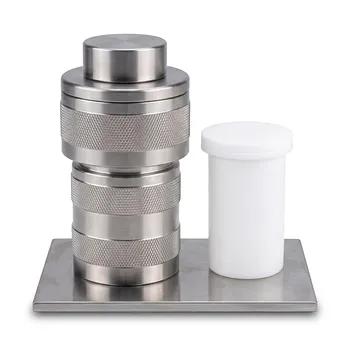
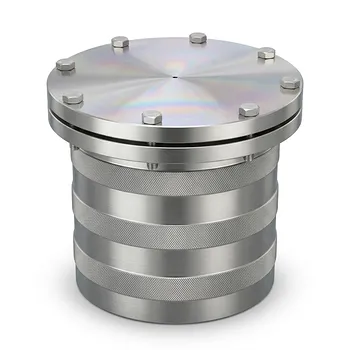
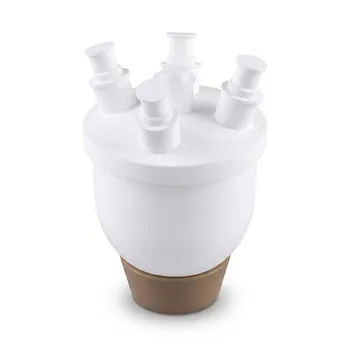
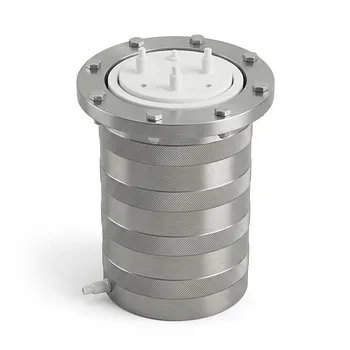
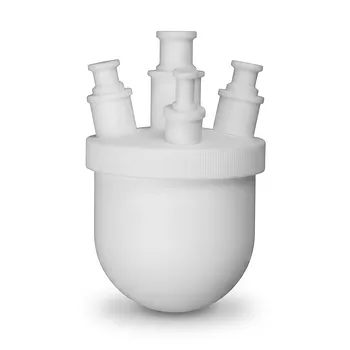
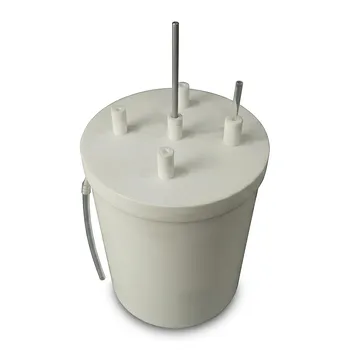
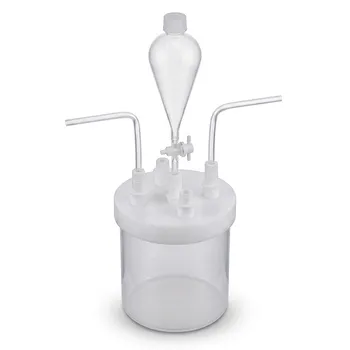
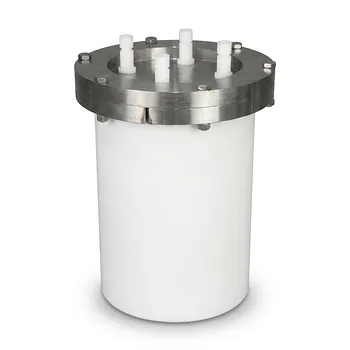
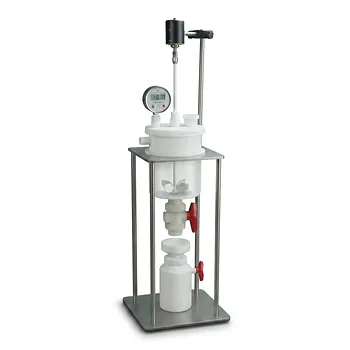
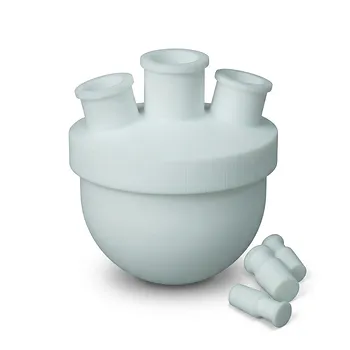
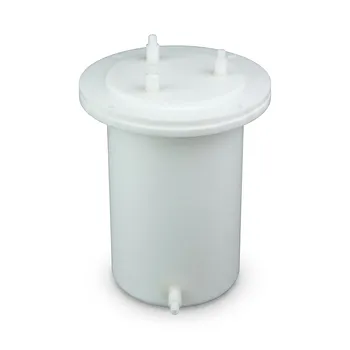
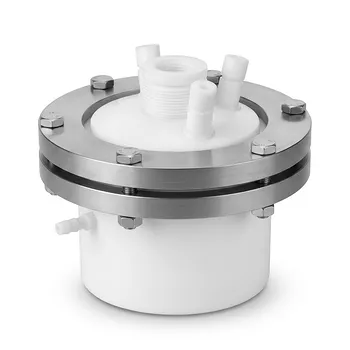
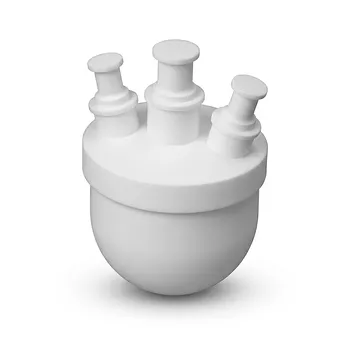
High-pressure hydrothermal reaction vessels with PTFE or PFA liners are indispensable for synthesizing high-purity rare earth hydroxycarbonates. These vessels create a sealed, high-pressure environment that facilitates the slow hydrolysis of urea at temperatures around 100°C. By providing a chemically inert barrier, the liners prevent corrosive reaction media from leaching metal ions from the stainless steel vessel walls into the solution. This isolation is the only way to ensure the synthesized materials achieve the high purity and specific fluorescence quenching activation energy required for advanced applications.
The core value of these vessels lies in their ability to decouple the mechanical strength of the reactor from the chemical requirements of the reaction. The outer steel shell provides the necessary pressure containment, while the fluoropolymer liner ensures a contaminant-free environment essential for precise crystal growth.
Creating a Controlled Physical Environment
Driving the Hydrolysis of Urea
The synthesis of rare earth hydroxycarbonates relies on the slow hydrolysis of urea, which typically requires a stable temperature of approximately 100°C. High-pressure vessels allow the reaction to occur in a sealed system, maintaining the pressure necessary to keep the solvent in a liquid state well above its standard boiling point.
Facilitating Directional Crystal Growth
The sealed, high-pressure environment promotes directional crystal growth and structural regularity in the synthesized nanostructures. By maintaining constant pressure and temperature, the vessel ensures that the precipitation process occurs uniformly throughout the reaction volume.
The Necessity of Chemical Isolation
Preventing Metal Ion Interference
Rare earth compounds are extremely sensitive to metal impurity ions such as iron, nickel, or chromium which can leach from stainless steel reactor walls. Even trace amounts of these impurities can significantly degrade the fluorescence quenching activation energy and overall optical performance of the hydroxycarbonates.
Chemical Inertness of PTFE and PFA
PTFE (polytetrafluoroethylene) and PFA (perfluoroalkoxy) are used because they are almost entirely chemically inert to the precursors and acidic/alkaline byproducts of the reaction. These liners act as a physical shield, ensuring that the reaction liquid never comes into direct contact with the metallic components of the reactor.
Maintaining High Purity Standards
The use of high-purity liners ensures that the synthesized materials are free from external contaminants. This is critical for achieving the chemical purity and structural precision necessary for rare earth catalysts and luminescent materials.
Understanding the Trade-offs and Limitations
Temperature Constraints
While PTFE is highly resistant to chemicals, it has a functional temperature limit, typically around 220°C. Exceeding these limits can cause the liner to soften or deform, potentially compromising the seal and leading to vessel failure or sample contamination.
Thermal Expansion Mismatch
Fluoropolymer liners and stainless steel shells expand at different rates when heated. If the reactor is not designed to accommodate this thermal expansion, the liner can become pinched or cracked, allowing corrosive media to reach the steel shell and causing "hidden" corrosion that weakens the vessel over time.
Recovery and Maintenance
While the non-stick properties of PTFE facilitate easier product recovery, the liners must be meticulously cleaned and inspected between uses. Any residual material or micro-cracks in the liner can harbor contaminants that will ruin subsequent high-purity batches.
How to Apply This to Your Project
Recommendations for Equipment Selection
- If your primary focus is maximum chemical purity: Prioritize high-purity PFA liners, as they often offer lower trace-metal leaching profiles than standard PTFE for sensitive rare earth applications.
- If your primary focus is high-temperature stability (above 200°C): Ensure your reaction vessel is rated for the specific thermal expansion of the liner to prevent mechanical failure of the fluoropolymer seal.
- If your primary focus is scalability and yield: Utilize liners with high-quality non-stick finishes to maximize the recovery of the synthesized precipitates and simplify the cleaning process between runs.
By strictly isolating the reaction chemistry from the vessel's structural materials, you ensure that the final rare earth hydroxycarbonate possesses the exact physical and optical properties required for your application.
Summary Table:
| Key Feature | Function in Rare Earth Synthesis | Technical Advantage |
|---|---|---|
| PTFE/PFA Liners | Prevents metal ion leaching (Fe, Ni, Cr) | High-purity environment & chemical inertness |
| Steel Pressure Vessel | Contains high pressure at 100°C+ | Mechanical strength for stable urea hydrolysis |
| Sealed System | Enables directional crystal growth | Uniform precipitation & structural regularity |
| Non-stick Surface | Facilitates easy product recovery | Simplified cleaning & zero cross-batch contamination |
Elevate Your Synthesis Purity with KINTEK Fluoropolymer Solutions
At KINTEK, we understand that high-performance materials like rare earth hydroxycarbonates demand an uncompromisingly clean environment. We manufacture a comprehensive range of laboratory supplies crafted exclusively from PTFE and PFA to eliminate contamination risks and ensure precise results.
Our expertise spans the entire laboratory workflow:
- Everyday Basic Labware: High-purity beakers, measuring cylinders, crucibles, reagent bottles, and centrifuge tubes.
- Advanced Reaction Apparatus: Hydrothermal synthesis liners, microwave digestion vessels, battery testing fixtures, and microchannel reactors.
- Fluid Transfer & Sample Prep: Fluoropolymer tubing, fittings, valves, filters, pipettes, and high-purity tweezers.
- General Consumables: Stirring bars, O-rings, gaskets, and specialized seal tapes.
Backed by end-to-end custom CNC fabrication, KINTEK is equipped to deliver everything from complex non-standard machined parts to high-volume orders with an absolute focus on high-performance fluoropolymers.
Ready to protect your research from metal interference? Contact us today to discuss your custom project or standard labware needs.
References
- Haoxuan Zeng, Xiaoli Wu. Facile hydrothermal synthesis of rare earth hydroxycarbonate phosphors for high-performance warm white LEDs. DOI: 10.1039/d5su00406c
This article is also based on technical information from Kintek Knowledge Base .
Related Products
- PTFE Lined High Pressure Digestion Vessel 50ml High Temperature Hydrothermal Synthesis Tank
- Custom TFM Reaction Vessel with Stainless Steel Jacket and PTFE Inner Cup for High Corrosion Resistance
- High Performance Customizable PTFE Reaction Vessel and Corrosion Resistant Polytetrafluoroethylene Flask for Chemical Laboratory Use
- High Pressure Custom TFM Reactor Stainless Steel Outer Vessel PTFE Inner Cup for Corrosive Synthesis
- High Temperature Corrosion Resistant PTFE Reaction Flask Custom Multi Neck Laboratory Vessel with Flat or U Bottom
People Also Ask
- What are the benefits of using a PTFE-lined vessel for carbon-sulfur cathode treatment? Maximize Purity & Performance
- Why are PTFE-lined pressure digestion vessels required for the preparation of Ag/CeO2 catalysts? Purity & Performance
- What safety features are typically incorporated into high-pressure PTFE digestion vessel designs? Ensure Lab Safety
- What is the function of PTFE lined high-pressure vessels in g-C3N4 synthesis? Achieve High-Purity Material Growth
- Role of High-Pressure Digestion Tanks in Perovskite Synthesis: Achieve Superior Stability and Latent Heat