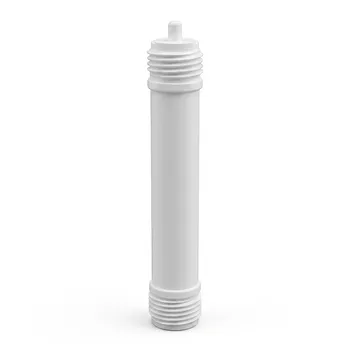
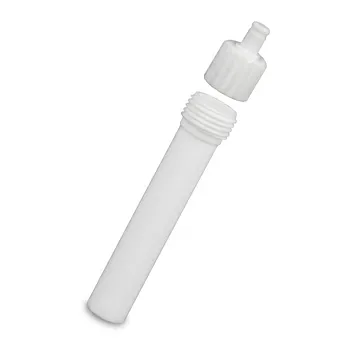
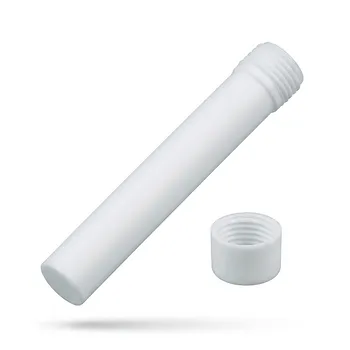
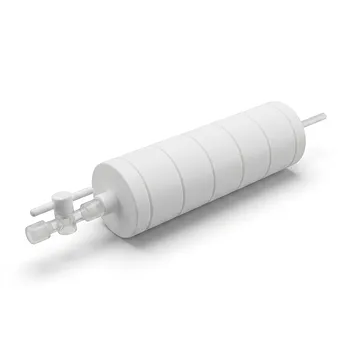
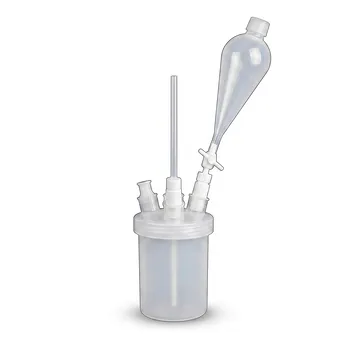
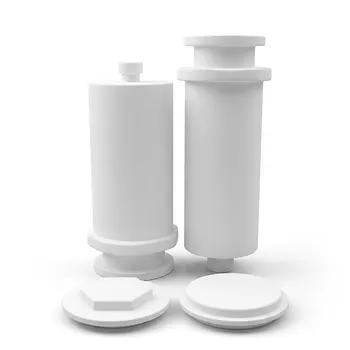
High-performance liners are the critical barrier that enables the precise morphological control required for self-assembled SrTiO3 microstructures. These specialized components, typically made from high-purity PTFE (Polytetrafluoroethylene) or PFA (Perfluoroalkoxy), provide the chemical inertness and thermal stability necessary to withstand harsh solvents and extreme pressures. By creating a controlled reaction environment, they ensure that $SrTiO_3$ can follow predefined self-assembly pathways to form high-surface-area microspheres.
Core Takeaway: High-performance liners serve as a non-reactive staging ground that protects the synthesis process from contamination and vessel corrosion. Their ability to maintain stability under high temperature and pressure is what allows for the precise engineering of $SrTiO_3$ crystal phases and complex morphologies.
Chemical Inertness and Purity Control
Resisting Harsh Solvent and Alkaline Attack
$SrTiO_3$ synthesis often involves highly alkaline media, such as sodium hydroxide, or aggressive organic solvents. PTFE and PFA liners are essential because they are virtually non-reactive, preventing the reaction mixture from corroding the outer stainless steel pressure vessel.
Preventing Metal Ion Contamination
If the reaction chemistry were to contact the metal walls of an autoclave, it would introduce metal ion impurities into the solution. High-performance liners act as a physical shield, ensuring the synthesized $SrTiO_3$ maintains the high level of purity required for electronic or catalytic applications.
Maintaining Environment Integrity for Organic Solvents
In solvothermal processes, organic solvents are often used to direct the growth of specific nanostructures. These liners withstand harsh solvent corrosion, ensuring that the solvent remains pure and capable of facilitating the intended chemical reactions.
Enabling Precise Morphological Control
Supporting Predefined Self-Assembly Pathways
The formation of complex microstructures, such as high-surface-area microspheres, depends on a delicate balance of reaction kinetics. High-performance liners provide a stable and consistent environment that allows $SrTiO_3$ to grow according to specific self-assembly pathways without interference.
Managing Solvents Above Boiling Points
A sealed liner within an autoclave allows solvents to reach temperatures far exceeding their atmospheric boiling points while remaining in a liquid state. This elevated energy state is necessary to increase the solubility of solid reactants and accelerate reaction kinetics.
Driving Crystal Phase Transformation
By maintaining high-pressure conditions, these liners allow for the precise control of crystal phases. This is vital for $SrTiO_3$, where the specific arrangement of atoms determines the material's ability to capture organic dyes or perform photocatalytic functions.
Understanding the Trade-offs and Limitations
Temperature Constraints of Fluoropolymers
While PTFE and PFA are highly resilient, they have clear thermal limits, typically around 200°C to 250°C. Exceeding these temperatures can lead to the softening or deformation of the liner, potentially compromising the seal of the autoclave.
Pressure Sensitivity and Deformation
Under extreme pressures, liners can undergo "cold flow" or permanent deformation if not properly supported by the vessel walls. This requires precise machining and fitment to ensure the liner does not fail during a high-pressure solvothermal cycle.
Heating and Cooling Rates
Rapid temperature changes can cause thermal stress in fluoropolymer liners. To maintain the long-term integrity of the liner and the consistency of the $SrTiO_3$ morphology, gradual heating and cooling cycles are generally recommended.
Making the Right Choice for Your Synthesis Goal
The selection of liner material and maintenance protocol should be dictated by the specific requirements of your $SrTiO_3$ architecture.
- If your primary focus is Maximum Chemical Purity: Utilize PFA liners, as they often have lower trace metal content and smoother surfaces that minimize solute adhesion.
- If your primary focus is High-Temperature Hydrothermal Synthesis: PTFE is the standard choice for reactions up to 200°C involving strong alkaline media like NaOH.
- If your primary focus is Complex Self-Assembled Morphologies: Ensure the liner is meticulously cleaned and free of surface scratches, as imperfections can act as unintended nucleation sites that disrupt self-assembly.
By effectively utilizing these high-performance liners, researchers can unlock the full potential of solvothermal synthesis to create highly optimized $SrTiO_3$ microstructures.
Summary Table:
| Feature | PTFE Liners | PFA Liners |
|---|---|---|
| Primary Benefit | High alkaline resistance for standard synthesis | Superior trace purity and ultra-smooth surfaces |
| Temperature Limit | Up to 200°C - 230°C | Up to 250°C - 260°C |
| Chemical Resistance | Excellent (Acids/Bases) | Exceptional (Aggressive Solvents/Acids) |
| SrTiO3 Synthesis Role | Prevents vessel corrosion & metal ion contamination | Supports precise self-assembly & crystal phase control |
Elevate Your Synthesis with KINTEK’s High-Performance Fluoropolymers
Achieving the perfect self-assembled SrTiO3 microstructure requires a reaction environment free from contamination and instability. At KINTEK, we specialize in the engineering and fabrication of premium laboratory solutions crafted exclusively from high-performance PTFE and PFA.
From essential labware—including beakers, crucibles, reagent bottles, and digestion tubes—to specialized solvothermal synthesis liners, microwave digestion vessels, and custom microchannel reactors, we provide the chemical inertness your research demands. Our expertise extends to comprehensive fluid transfer components (tubing, valves, fittings), sample prep tools (filters, pipettes, tweezers), and advanced reaction apparatus like electrochemical cells and battery testing fixtures.
Why choose KINTEK?
- End-to-End Customization: Our advanced CNC fabrication delivers everything from high-volume orders to complex, non-standard machined parts tailored to your specific autoclave dimensions.
- Material Excellence: We focus solely on high-purity fluoropolymers to ensure zero metal-ion leaching and maximum thermal stability.
- Complete Lab Support: We supply everything from simple O-rings and gaskets to bespoke laboratory setups.
Ready to optimize your material synthesis? Contact our technical team today to discuss your custom liner requirements and see how KINTEK can bring absolute precision to your laboratory.
References
- Madina Bissenova, Chingis Daulbayev. Hybrid adsorption–photocatalysis composites: a sustainable route for efficient water purification. DOI: 10.1007/s40243-025-00319-5
This article is also based on technical information from Kintek Knowledge Base .
Related Products
- High Purity PTFE Microwave Digestion Vessel for Soil and Food Analysis Acid Resistant Fluoropolymer Sample Preparation Liners
- PTFE Lined High Pressure Digestion Vessel 50ml High Temperature Hydrothermal Synthesis Tank
- High Purity PTFE Microwave Digestion Vessel Replacement Liner for Acid Sample Preparation and Trace Analysis
- High Purity TFM Microwave Digestion Vessels PTFE Acid Evaporation Liners Domestic GT-400 Equivalent Laboratory Reaction Containers
- PTFE Corrosion Resistant Filter with PFA Valve Connections and Integrated Sieve Plate
People Also Ask
- How does the dielectric property of PTFE benefit microwave-assisted digestion? Unlock Rapid and Uniform Sample Heating
- What are the advantages of using microwave digestion vessels? Optimize EG@MO synthesis with superior thermal control.
- What are the advantages of using microwave digestion vessels for environmental analysis? Boost speed and sample accuracy.
- What safety features are commonly integrated into microwave digestion vessels? Ensuring High-Pressure Laboratory Safety
- How do microwave digestion vessels support pharmaceutical elemental impurity testing? Achieve Precise USP Compliance