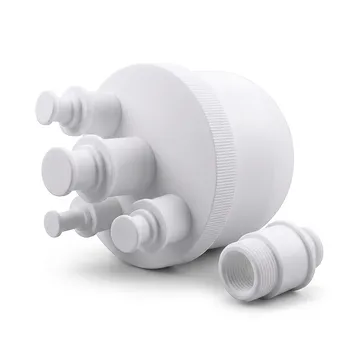
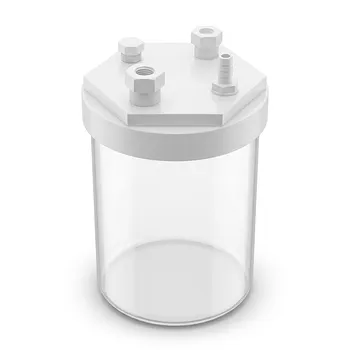
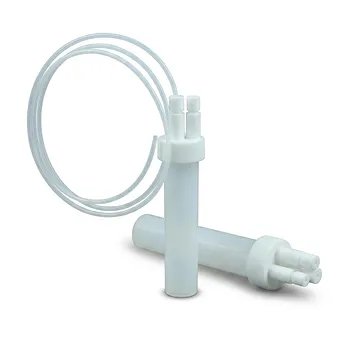
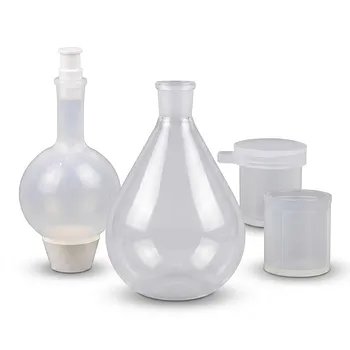
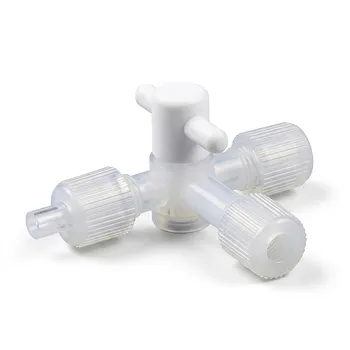
Custom-machined fluoropolymer components are preferred because they combine chemical inertness, electrical insulation, thermal stability, and precision fit in one material platform. In battery research, fuel cell development, and electrochemistry, PTFE, PFA, and related fluoropolymers can withstand aggressive electrolytes, oxidative environments, and repeated thermal exposure without easily contaminating samples or degrading the test setup. Custom machining further enables reliable seals, complex cell geometries, optical integrations, and precisely positioned fluid and electrode interfaces.
The value of custom-machined fluoropolymer components is not simply that they resist chemicals. Their controlled geometry, purity, insulation, and long-term stability help ensure that measured results reflect the active materials and electrochemical reactions being studied rather than unwanted effects from the hardware.
Why Demanding Electrochemical Systems Need Specialized Materials
Aggressive Chemistry Quickly Exposes Weak Materials
Battery and fuel cell experiments may involve corrosive electrolytes, strongly oxidizing species, acidic conditions, and repeated redox cycling. Conventional materials can corrode, swell, dissolve, or release trace contaminants into the experiment.
Fluoropolymers are selected for their broad resistance to aggressive chemical environments. This helps preserve the structural and chemical integrity of reaction vessels, tubing, fittings, seals, and electrode accessories over extended testing periods.
Temperature and Environmental Conditions Are Variable
Electrochemical systems often operate across changing temperatures, electrolyte compositions, and humidity levels. Components must retain their function while exposed to these variations.
High-performance fluoropolymers such as PTFE and PFA offer useful thermal stability and dimensional reliability across a wide operating range. This supports more consistent testing in battery fixtures, fuel cell assemblies, and laboratory reaction systems.
Electrical Isolation Protects Measurement Quality
Electrochemical measurements are sensitive to current leakage and stray electrical paths. Conductive or poorly insulated hardware can introduce interference that obscures the behavior of the electrode, electrolyte, or active material.
Fluoropolymers provide strong dielectric properties and electrical insulation. Used as cell bodies, housings, electrode supports, or insulating fixtures, they help isolate signals and reduce unwanted electrical contributions from the test hardware.
How Custom Machining Improves Experimental Control
Complex Cell Geometries Can Be Built to Specification
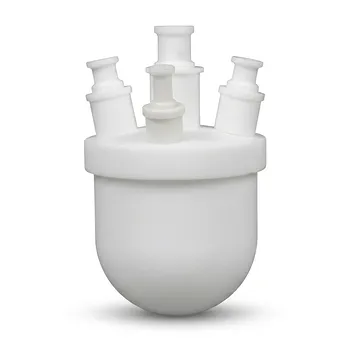
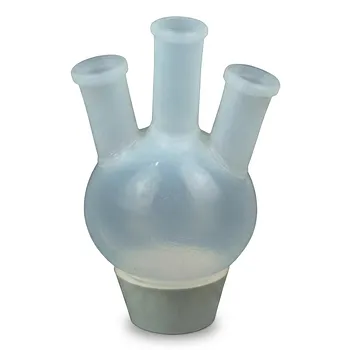
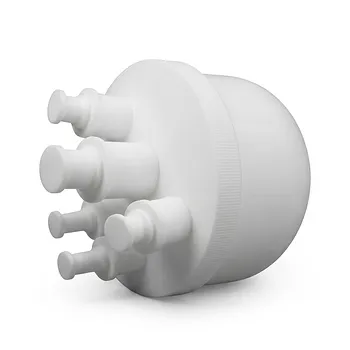
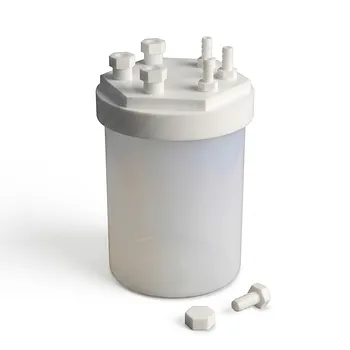
Standard laboratory components rarely accommodate every electrode shape, sample volume, flow path, or analytical requirement. Custom CNC machining allows engineers to create non-standard cell bodies, reaction fixtures, material containers, and fluid-handling parts.
The result is a component designed around the experiment rather than an experiment constrained by the component. This is especially important when researchers need repeatable dimensions across multiple test cells.
Precision Supports Reliable Sealing
Electrolyte leakage can damage equipment, alter concentrations, and compromise the stability of the experiment. Poorly fitted seals can also create an unstable interface between electrodes, membranes, optical windows, and reaction chambers.
Precision-machined fluoropolymer components support controlled fits and dependable sealing interfaces. Their low surface energy, flexibility, and self-lubricating characteristics can also make assembly easier around delicate seals and electrode accessories.
Fluid Flow Can Be Controlled More Consistently
Battery and fuel cell experiments may depend on stable electrolyte delivery or uniform distribution across an electrode or membrane. Irregular channels or poorly positioned fittings can create uneven flow fields and introduce test-to-test variation.
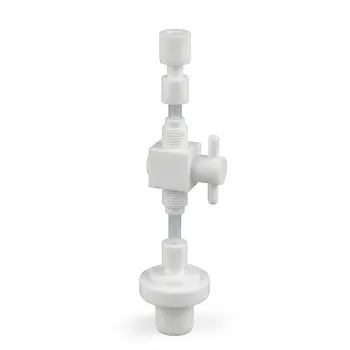
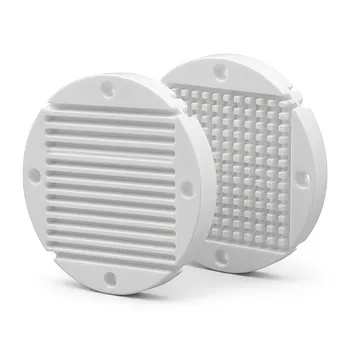
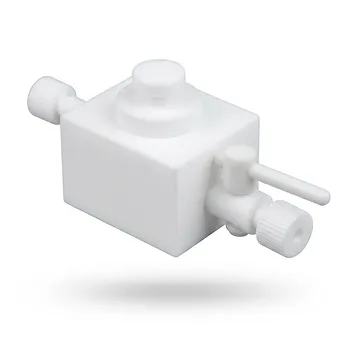
Custom-machined manifolds, channels, fittings, and cell bodies allow the fluid path to be integrated into the component design. This is valuable when uniform electrolyte distribution or repeatable flow conditions are essential.
Optical Access Can Be Integrated Into the Cell
In-situ Raman and infrared spectroscopy require reaction cells that accommodate optical windows while maintaining electrode alignment, electrolyte containment, and a stable optical path. These requirements are difficult to meet with generic vessels.
Custom fluoropolymer machining can integrate optical openings, window seats, electrode supports, and fluid channels into one coordinated design. This enables observation of transient chemical or structural changes without sacrificing containment or experimental repeatability.
Why Purity and Inertness Matter to the Results
The Hardware Should Not Become an Uncontrolled Reactant
A reaction vessel or fluid line is part of the experimental environment. If it reacts with the electrolyte or active species, the resulting data may include side reactions that do not belong to the material under investigation.
High-purity fluoropolymer components are designed to minimize these interactions. Their chemical inertness helps ensure that observed electrochemical behavior is primarily attributable to the intended electrodes, membranes, catalysts, or electrolytes.
Contamination Can Distort Long-Term Testing
Trace contamination may be especially damaging in sensitive energy-storage and electrochemical experiments. It can affect electrode surfaces, alter electrolyte chemistry, or produce misleading changes during cycling.
Fluoropolymer vessels, tubing, valves, and fittings help reduce contamination risks when the material grade, manufacturing process, cleaning procedure, and handling practices are properly controlled.
Stable Components Improve Repeatability
Research conclusions depend on comparing results across samples, cycles, and test conditions. A component that gradually erodes, leaks, or changes shape can become a hidden source of experimental variation.
Stable fluoropolymer hardware supports more consistent fixtures and test environments. This improves the reliability of repeated measurements and makes performance differences between samples easier to interpret.
Where These Components Are Used
Battery Research
Custom-machined fluoropolymer parts can serve as electrochemical cell bodies, separators, electrode holders, sample containers, seals, and fluid-handling elements. Their chemical resistance and insulation are useful when testing reactive electrolytes and materials across repeated charge-discharge cycles.
They can also be designed for specialized battery formats, small sample volumes, unusual electrode dimensions, or integration with analytical instruments.
Fuel Cell Development
Fuel cell testing exposes hardware to acidic, oxidative, reducing, and humid environments. Fluoropolymer components can be used in laboratory fixtures, reaction vessels, fluid lines, fittings, seals, and insulating structures where chemical and electrical stability are required.
In PEM-related systems, dimensional stability and reliable containment are particularly important because changes in temperature and humidity can affect interfaces and sealing performance.
Electrochemical Analysis
Electrochemical cells used for corrosion studies, redox testing, catalysis, and trace analysis benefit from non-contaminating, electrically isolated construction. Custom designs can accommodate reference electrodes, counter electrodes, working electrodes, sampling ports, and controlled flow paths.
The same approach applies to reaction cells used with Raman or infrared spectroscopy, where mechanical precision and optical access must work together.
Understanding the Trade-offs
Material Selection Still Requires Engineering Review
“Fluoropolymer” is a broad material category, and PTFE, PFA, and other grades do not have identical mechanical, thermal, or fabrication characteristics. The correct choice depends on the electrolyte, temperature, pressure, dimensional tolerances, sealing method, and exposure duration.
Chemical resistance alone is not sufficient. Engineers must also review creep, stiffness, wear, permeability, and dimensional stability for the intended service conditions.
PTFE and PFA Are Not Universal Structural Materials
Fluoropolymers provide excellent chemical and electrical performance, but some grades are softer and less rigid than metals or engineering plastics. Under sustained load, certain fluoropolymers may deform, which can affect seals, threads, alignment, or pressure containment.
Designs may therefore require appropriate wall thicknesses, mechanical support, inserts, or alternative fluoropolymer grades. The component should be evaluated as a complete assembly rather than by material name alone.
Machining Quality Affects Performance
A chemically resistant material cannot compensate for poor tolerances, rough sealing surfaces, misaligned interfaces, or embedded machining debris. These defects can cause leaks, uneven flow, electrode misalignment, or contamination.
Manufacturing controls should address dimensional inspection, surface finish, cleaning, material traceability, and packaging. These details are part of the experiment's reliability, not merely production preferences.
High Purity Does Not Eliminate All Contamination Risks
Fluoropolymer components can reduce contamination, but they must still be cleaned, stored, and assembled correctly. Contamination can enter through machining lubricants, handling, adjacent materials, or inadequate preparation.
The material specification and manufacturing workflow should therefore match the sensitivity of the application.
Making the Right Choice for Your Goal
Custom-machined fluoropolymer components are most valuable when the test environment, geometry, and measurement requirements cannot be handled reliably by standard hardware.
- If your primary focus is chemical compatibility: Select a fluoropolymer grade and component design that can withstand the specific electrolyte, oxidizing species, temperature, and exposure duration.
- If your primary focus is measurement accuracy: Use high-purity, electrically insulating components to reduce contamination, current leakage, stray interference, and hardware-driven side reactions.
- If your primary focus is repeatability: Specify precision-machined cell bodies, electrode supports, seals, and flow paths with controlled tolerances and documented inspection.
- If your primary focus is in-situ analysis: Design optical windows, electrode interfaces, fluid channels, and sealing features together so the cell maintains both optical access and electrochemical stability.
- If your primary focus is long-term durability: Evaluate chemical resistance alongside creep, dimensional stability, mechanical support, cleaning procedures, and exposure conditions.
When material selection and precision machining are treated as part of the experimental design, fluoropolymer components provide a stable foundation for trustworthy battery, fuel cell, and electrochemical research.
Summary Table:
| Key Benefit | How It Helps Demanding Applications |
|---|---|
| Chemical Inertness | Resists aggressive electrolytes and prevents sample contamination. |
| Electrical Insulation | Reduces current leakage, improving measurement accuracy. |
| Thermal Stability | Maintains integrity across variable temperatures. |
| Precision Machining | Enables complex geometries, reliable seals, and consistent flow paths. |
| Optical Integration | Supports in-situ spectroscopy with built-in windows. |
Enhance your electrochemical research with custom-machined fluoropolymer components from KINTEK. Our precision PTFE/PFA parts ensure chemical resistance, electrical insulation, and exact fit for your battery, fuel cell, or electrochemistry set-up. From specialized cell bodies to fluid-handling assemblies, we engineer solutions that protect data integrity and accelerate discovery. Contact us today to discuss your custom requirements and optimize your experimental results.
Related Products
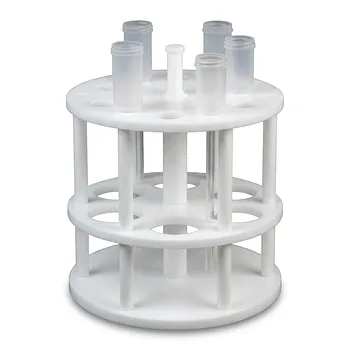
- Custom PFA Microcolumn Racks and PTFE Machined Low Background Corrosion Resistant Laboratory Fixtures
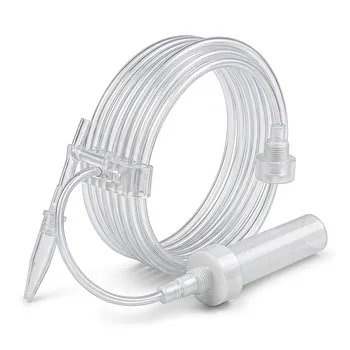
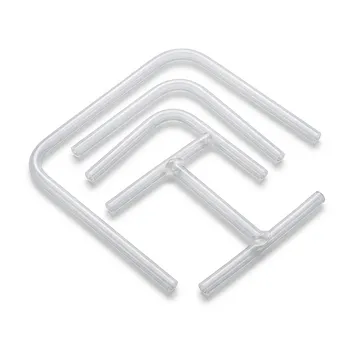
- Custom PFA Tubing 1/4 Inch High Purity Corrosion Resistant Fluoropolymer Tube with Welding and Machining Services
- High Purity PFA Coiled Tubing Custom PTFE Machining PFA Welding and Precision Bending Solutions
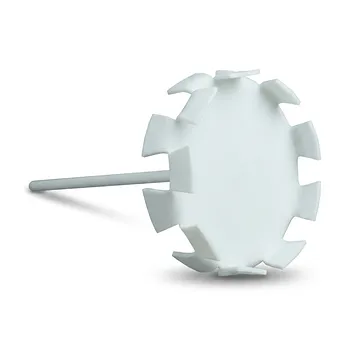
- High Purity PTFE Dispersion Disk for Food and Cosmetic Processing Non Stick Corrosion Resistant Large Stirring Paddle Customizable Fluoropolymer Impeller
- Custom PTFE Flask 250ml High Purity Fluoropolymer Laboratory Vessel for Chemical Research
People Also Ask
- What other PTFE lab accessories are commonly used? Essential Tools for Chemical Resistance & Purity
- How does high fluorination in perfluorinated polymers improve chemical resistance and thermal stability of lab apparatus? Discover the science behind PTFE and PFA's superior performance.
- What inherent material characteristics of non-melt-processable PTFE make it suitable for manufacturing high-purity laboratory containers and custom-machined apparatus?
- How do extreme temperatures and harsh chemical environments affect PTFE and PFA lab apparatus? Achieve Reliable Performance in Demanding Conditions
- What material considerations are critical for laboratory apparatus when performing cage-opening reactions on fluorinated silsesquioxanes using strong superacids? Choose PTFE/PFA for inertness and purity