CTFE-modified fluoropolymers are selected because they combine chemical inertness with unusually high dimensional stability and very low gas and moisture permeability. Chlorine atoms in the polymer backbone increase rigidity and resistance to cold flow, while the fluorinated structure provides low moisture absorption and broad chemical resistance. This combination helps precision laboratory components, seals, barriers, and fluid-handling parts retain their geometry and protect samples under demanding conditions.
The central advantage of CTFE-based materials such as PCTFE is balance: they resist chemical attack and moisture uptake while limiting creep, gas transmission, and dimensional change.
Why Dimensional Stability Matters in Laboratory Components
Resistance to cold flow
Cold flow is the gradual deformation of a polymer under sustained mechanical load. CTFE modification increases chain rigidity, helping components resist creep when used as seals, valve seats, spacers, or precision-machined parts.
This is important where a small change in geometry could reduce sealing force, alter fluid volume, or compromise alignment.
Retention of precise tolerances
Laboratory components often operate with narrow clearances and carefully controlled dimensions. Low moisture absorption reduces swelling and shrinkage caused by environmental humidity or contact with aqueous fluids.
The result is more predictable dimensional behavior than with materials that absorb significant moisture.
Stability at low temperatures
CTFE-based fluoropolymers are particularly useful in low-temperature and cryogenic equipment. Their resistance to deformation helps seals and structural components maintain contact and alignment when temperatures change substantially.
This supports reliable operation in specialized laboratory apparatus, sample systems, and fluid-handling assemblies.
How CTFE Reduces Gas and Moisture Permeability
A dense polymer structure
The fluorinated and chlorinated backbone produces a tightly packed structure with relatively low free volume. Fewer pathways are available for gases, water vapor, and volatile fluids to diffuse through the material.
PCTFE is therefore regarded as having exceptionally low permeability among fluorinated polymers, particularly for moisture and vapor barrier applications.
Protection against moisture ingress
Moisture entering a reagent container, transfer line, or enclosure can alter hygroscopic chemicals and degrade sensitive samples. CTFE-based barriers help prevent ambient water vapor from reaching the contents.
This is valuable in high-purity fluid systems and controlled analytical environments.
Reduced solvent and vapor loss
Low permeability also limits the outward movement of volatile fluids. Components made from CTFE-based materials can help reduce evaporation, solvent loss, and contamination pathways in sealed laboratory systems.
Their low outgassing behavior is additionally useful where volatile release must be minimized, including controlled or vacuum environments.
Why CTFE Preserves Fluoropolymer Chemical Performance
Fluorine provides chemical inertness
The fluorinated backbone remains highly resistant to many aggressive chemicals and solvents. This makes CTFE-based materials suitable for contact with demanding laboratory fluids where conventional plastics may swell, dissolve, or leach contaminants.
Chemical resistance is especially important for seals, linings, reagent storage, and fluid-transfer components.
Chlorine adds mechanical rigidity
The chlorine-containing units modify the polymer structure and increase stiffness. Compared with softer or more creep-prone fluoropolymers, CTFE-based grades can provide better support for precision geometries and loaded sealing surfaces.
Some CTFE-based materials also offer useful transparency, allowing visual inspection of certain components or contents.
Compatibility with precision manufacturing
CTFE polymers can be used in machined, molded, and barrier-component applications. Their combination of rigidity, low moisture uptake, and processability supports the production of parts with repeatable dimensions.
The appropriate manufacturing method still depends on the specific grade, geometry, and required tolerance.
Where These Properties Are Most Valuable
Precision seals and valves
Seals must maintain compression and geometry over time. CTFE-based materials limit creep and permeability, helping preserve sealing performance while reducing the risk of gas or vapor migration.
Cryogenic and low-temperature apparatus
At low temperatures, dimensional changes and loss of flexibility can affect interfaces and seals. PCTFE is often considered where low-temperature performance, barrier behavior, and chemical resistance must be combined.
Reagent storage and sample protection
Containers, closures, films, and barrier components benefit from low water-vapor transmission. This helps protect moisture-sensitive materials and reduce volatile loss.
High-purity fluid systems
Low absorption, low outgassing, and chemical inertness help reduce contamination risks. CTFE-based components can therefore support demanding analytical, fluidic, and containment applications.
Understanding the Trade-offs
It is not automatically the best fluoropolymer
CTFE-based materials offer strong barrier performance and dimensional stability, but another fluoropolymer may be preferable for maximum continuous-use temperature, flexibility, weldability, or ease of fabrication.
Material selection should be based on the complete operating environment rather than on permeability alone.
Rigidity can limit flexibility
The same rigidity that improves creep resistance may make CTFE-based components less suitable for highly flexible tubing or repeatedly flexed parts. Geometry, wall thickness, sealing force, and movement must be evaluated together.
Temperature and chemical limits remain grade-specific
“Fluoropolymer” does not mean unlimited resistance. Actual performance depends on the specific CTFE homopolymer or copolymer, temperature, pressure, chemical exposure, and duration of service.
Designers should confirm data for the selected grade rather than relying only on general PCTFE properties.
Permeability depends on the application
Gas transmission varies with gas species, temperature, thickness, pressure differential, crystallinity, and processing history. A material described as low-permeability should still be tested against the particular gas or vapor barrier requirement.
How to Apply This to Your Project
The correct choice depends on which failure mode—creep, moisture ingress, chemical attack, or dimensional change—poses the greatest risk.
- If your primary focus is dimensional precision: Select a CTFE-based grade when resistance to creep, moisture-related swelling, and low-temperature dimensional change is critical.
- If your primary focus is gas or moisture containment: Use CTFE-based components or barriers when minimizing vapor ingress, volatile loss, or gas permeation is a primary design requirement.
- If your primary focus is chemical purity: Verify the selected grade’s chemical compatibility, absorption, and outgassing behavior for the actual reagents and process conditions.
- If your primary focus is cryogenic service: Evaluate the complete seal or component design at operating temperature, including contraction, compression, flexibility, and pressure cycling.
CTFE-modified fluoropolymers are most valuable when a laboratory component must remain chemically inert, dimensionally reliable, and highly resistant to gas and moisture transmission at the same time.
Summary Table:
| Property | CTFE-Modified Fluoropolymers | Benefit in Lab Components |
|---|---|---|
| Dimensional Stability | High rigidity, low creep, low moisture absorption | Maintains tight tolerances and seal integrity over time |
| Gas & Moisture Permeability | Very low due to dense structure | Protects samples from moisture and volatile loss |
| Chemical Resistance | Fluorine backbone, chlorine adds toughness | Withstands aggressive chemicals without swelling or leaching |
| Low-Temperature Performance | Retains mechanical properties at cryogenic temperatures | Reliable seals and components in cold environments |
Partner with KINTEK for High-Performance Fluoropolymer Components
At KINTEK, we specialize in crafting precision laboratory supplies exclusively from PTFE and PFA, ensuring superior chemical resistance and purity. Our advanced CNC machining capabilities allow us to deliver custom CTFE-modified components with exacting tolerances, low permeability, and exceptional dimensional stability—ideal for your most demanding applications.
Whether you need seals, valve seats, cryogenic apparatus, or high-purity fluid systems, our team is ready to support your project with expert material selection and manufacturing. Contact us today to discuss your requirements and discover how our solutions can enhance your laboratory's performance. Get in touch now!
Related Products
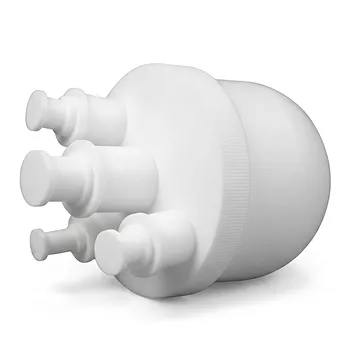
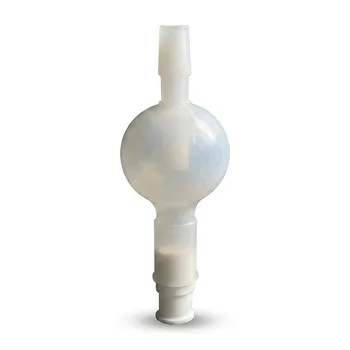
- High Purity PTFE Single Neck Reaction Flask Acid Resistant Customizable Fluoropolymer Laboratory Reactor
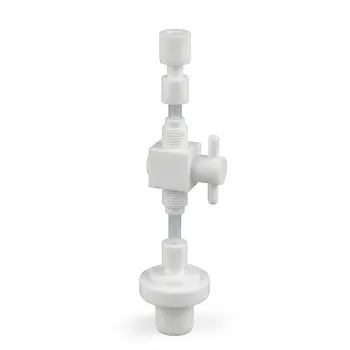
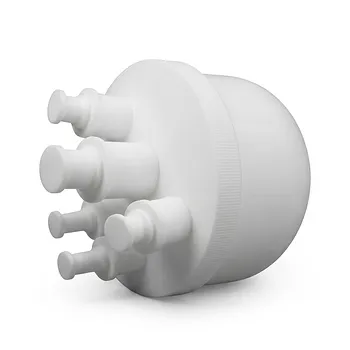
- High Purity PFA PTFE Flare Stop Valves Customizable 2-Way 3-Way Reducing Fluoropolymer Fluid Control Solutions
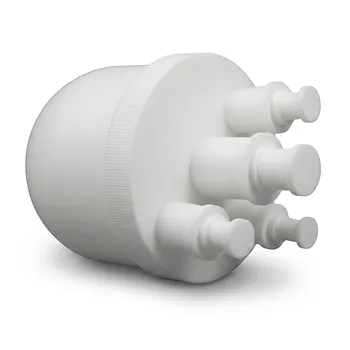
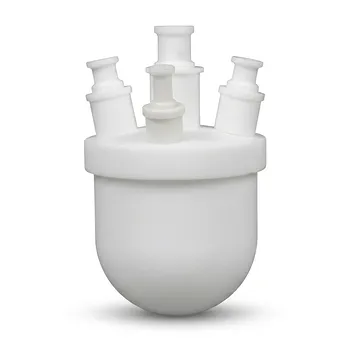
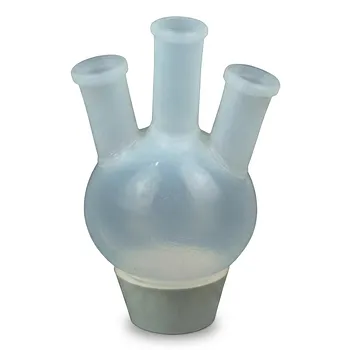
- Laboratory PTFE Three Neck Reaction Flask Corrosion Resistant 2000ml Low Background Fluoropolymer Vessel
- Custom PTFE Flask 250ml High Purity Fluoropolymer Laboratory Vessel for Chemical Research
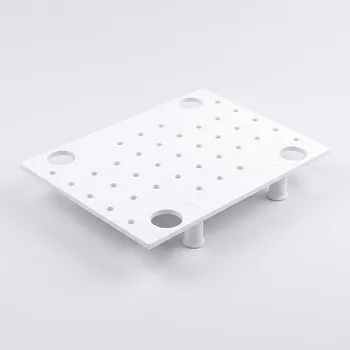
- Custom PTFE Filtration System Acid Resistant Chemical Semiconductor Fluoropolymer Filter Assembly
People Also Ask
- How does thermal cross-linking in multifunctional fluoropolymer monomers affect chemical resistance and thermal stability, and why is high-purity fluoropolymer labware essential during their processing? Discover key insights for robust lab practices.
- How do pyrolysis temperature and steam diluent ratios influence tetrafluoroethylene (TFE) conversion and yield in fluoropolymer monomer reaction apparatus? Optimize TFE yield with temperature and steam control
- What technical challenges exist in synthesizing main-chain fluorinated polymers? Discover why PTFE/PFA apparatus is ideal for these processes.
- How can autopolymerization of TFE gas be prevented during storage and handling? Master TFE safety with oxygen control, inhibitors, and robust system design.
- How is Teflon classified in terms of plastic types? A Guide to Thermoplastic Fluoropolymers