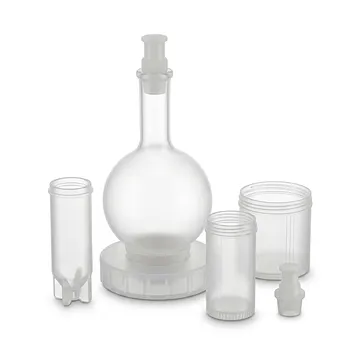
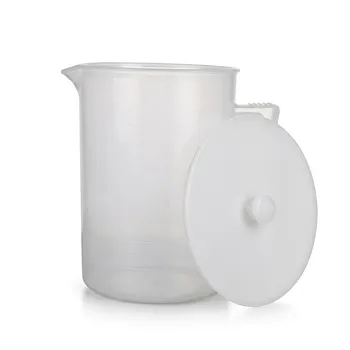
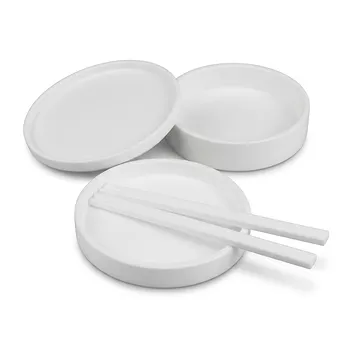
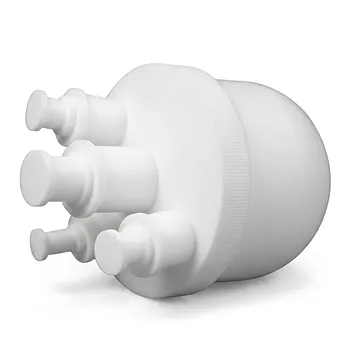
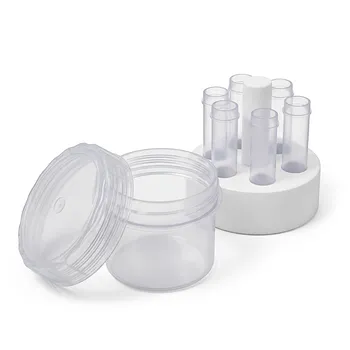
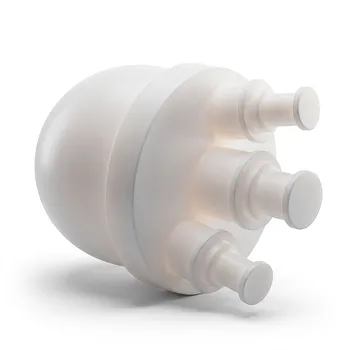
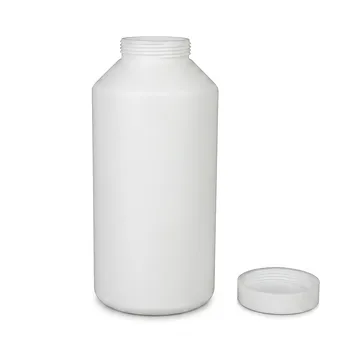
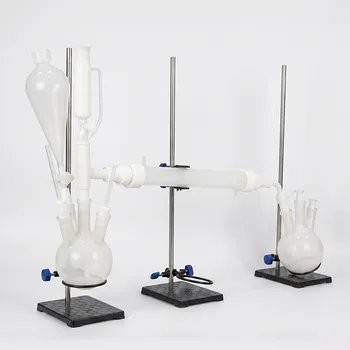
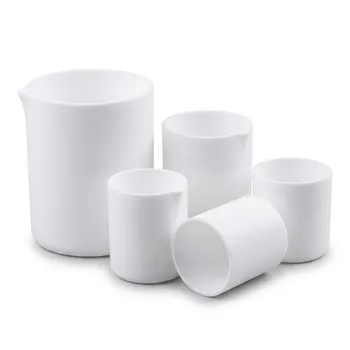
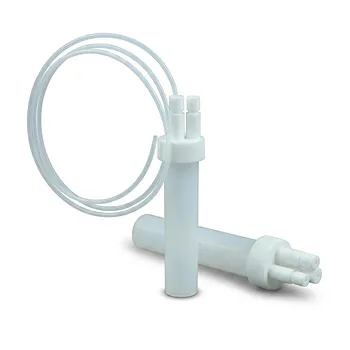
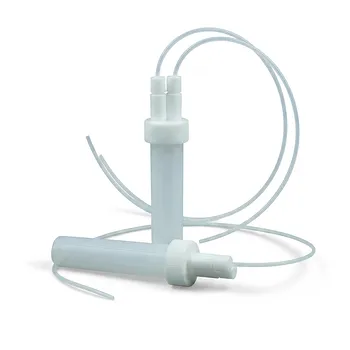
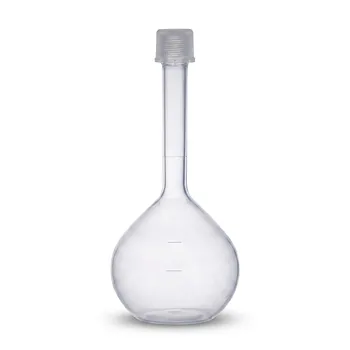
High-purity PTFE or PFA labware is recommended because it minimizes contamination and metal-ion loss during both sensor preparation and measurement. These fluoropolymers have very low levels of extractable metals, resist strong acids, bases, organic solvents, and elevated temperatures, and exhibit minimal adsorption of trace ions onto their surfaces. That combination protects the fluorescence baseline and helps ensure that a response attributed to Zn²⁺, Cd²⁺, or Hg²⁺ comes from the sensor rather than from the container.
For fluorinated polymer sensors operating at trace metal concentrations, the labware must be treated as part of the analytical system: PTFE and PFA reduce both contamination from the vessel and loss of analyte to the vessel wall.
Why Labware Material Affects Sensor Results
Trace contamination can create false fluorescence responses
Fluorinated polymer sensors containing chromophoric or chelating units may respond selectively to metal ions through changes in fluorescence. If a glass vessel, plastic tube, or reagent container releases trace Zn²⁺, Cd²⁺, Hg²⁺, or other metals, the contaminant can partially activate the sensor before the intended test begins.
This produces an elevated or unstable baseline and can make a sensor appear more sensitive, less selective, or already exposed to analyte.
Wall adsorption can remove the target ion
The opposite problem also occurs: target ions can adsorb onto the walls of ordinary containers. At low concentrations, even a small amount of Zn²⁺, Cd²⁺, or Hg²⁺ retained by the vessel can materially reduce the concentration that actually reaches the sensor.
The measured fluorescence response may then be weaker than expected, making the sensor appear insensitive or causing the reported concentration to be inaccurate.
Container interactions can obscure selectivity
A sensor designed to distinguish among metal ions depends on controlled exposure to known analyte concentrations. Leaching and adsorption introduce uncontrolled variables that can alter the apparent selectivity for Zn²⁺, Cd²⁺, Hg²⁺, or competing ions.
Using low-background, minimally adsorptive labware helps preserve the relationship between the prepared solution and the observed fluorescence signal.
Why PTFE and PFA Are Suitable
Very low elemental background
High-purity PTFE and PFA are manufactured for applications where extractables and leachables must be tightly controlled. Their low metal impurity contribution reduces background contamination during trace analysis, including work at parts-per-million or parts-per-billion levels.
This is particularly important for Hg²⁺ and Cd²⁺ measurements, where contamination from reagents, vessels, or handling can be comparable to the concentration being measured.
Strong chemical resistance
Sensor synthesis and sample preparation may involve strong acids, bases, organic solvents, or digestion conditions. PTFE and PFA are highly chemically inert toward a broad range of these environments, reducing the likelihood that the vessel will react with the sample or release unwanted material.
The labware therefore remains a chemically stable boundary around the reaction or assay.
Minimal surface adsorption
The smooth, non-adsorptive surfaces of high-purity fluoropolymers reduce nonspecific retention of trace metal ions. This helps maintain the intended analyte concentration during dissolution, digestion, dilution, storage, and fluorescence measurement.
Reduced adsorption also improves recovery and makes repeated measurements more reproducible.
Compatibility with fluorinated materials
Fluorinated polymer sensors may be synthesized or tested in chemically demanding media. PTFE and PFA provide a similarly inert environment, reducing the risk that the vessel material will introduce reactive species, interfere with the polymer, or alter the assay chemistry.
This does not make the experiment automatically contamination-free, but it removes a major and avoidable source of variability.
How Labware Influences the Workflow
During sensor synthesis
Reaction vessels and transfer containers should not contribute metal ions that could coordinate with chelating groups in the sensor polymer. Unintended exposure to transition or heavy metals can change polymer properties or leave residual binding sites occupied before characterization.
High-purity fluoropolymer vessels help preserve the intended chemical composition of the synthesis.
During sample preparation
Acid digestion, dilution, filtration, and storage can all introduce or remove trace ions. PFA or PTFE digestion tubes, reagent bottles, and sample vessels reduce leaching and limit analyte loss during these steps.
The concentration delivered to the fluorescence assay is therefore more likely to match the concentration calculated during preparation.
During fluorescence assays
A reliable turn-on response requires a clean blank, accurate standards, and consistent analyte delivery. Low-background labware helps ensure that changes in fluorescence arise from the interaction between the sensor and the deliberately added metal ion.
This supports more defensible calibration curves, detection limits, and selectivity comparisons.
Understanding the Trade-offs
High-purity labware does not replace contamination control
PTFE or PFA can reduce vessel-related contamination, but they cannot correct contaminated reagents, pipette tips, filters, laboratory surfaces, or handling practices. Blanks, method controls, and appropriate cleaning procedures remain necessary.
The material is a risk-reduction measure, not a substitute for a complete trace-analysis protocol.
Material grade matters
“PTFE” or “PFA” alone does not guarantee low elemental background. Fillers, pigments, manufacturing residues, previous use, and inadequate cleaning can compromise purity.
For trace metal work, select labware specified for high-purity or trace-element applications and verify its suitability for the concentration range and chemicals used.
Surface condition still matters
Fluoropolymer surfaces are resistant to adsorption, but residue, scratches, precipitates, or previous samples can still cause carryover. Dedicated vessels or validated cleaning procedures are important when switching among Zn²⁺, Cd²⁺, Hg²⁺, and other analytes.
Fluorescence compatibility must still be checked
The vessel should not only be chemically clean; it must also be suitable for the measurement format. Optical path, vessel geometry, turbidity, and background fluorescence can affect the assay independently of metal contamination.
The selected labware should therefore be evaluated with blanks and sensor-only controls before quantitative testing.
Making the Right Choice for Your Goal
Choose the labware based on the failure mode that would most compromise your experiment.
- If your primary focus is sensor synthesis: Use high-purity PTFE or PFA reaction vessels to limit metal contamination and unwanted interactions with chelating or chromophoric polymer units.
- If your primary focus is trace fluorescence detection: Use low-background, minimally adsorptive fluoropolymer containers for standards, blanks, samples, and storage to preserve accurate Zn²⁺, Cd²⁺, or Hg²⁺ concentrations.
- If your primary focus is acid digestion or aggressive sample preparation: Select PTFE or PFA vessels with documented chemical compatibility and low extractables.
- If your primary focus is reproducibility: Combine high-purity labware with reagent blanks, vessel blanks, recovery checks, and consistent cleaning or dedicated vessels.
Reliable fluorinated polymer sensor data begins by ensuring that the container neither adds the metal ion nor removes it.
Summary Table:
| Reason | Explanation |
|---|---|
| Very low elemental background | Minimizes metal contamination that can affect sensor baseline. |
| Strong chemical resistance | Withstands acids, bases, and solvents without leaching. |
| Minimal surface adsorption | Prevents loss of target ions to vessel walls. |
| Compatibility with fluorinated materials | Provides inert environment for sensor synthesis and testing. |
| Variability reduction | Improves reproducibility and accuracy of fluorescence measurements. |
Ensure accurate heavy metal ion detection with high-purity PTFE/PFA labware from KINTEK. Our specialized fluoropolymer products minimize contamination and adsorption, ensuring reliable results for your sensor development. Whether you need digestion vessels, sample storage, or custom components, we provide tailored solutions to enhance your trace analysis. Contact us today to find the perfect labware for your application!
Related Products
- Custom PFA Pear Shaped Flask High Purity Corrosion Resistant Labware Custom Molded Fluoropolymer Flask Glass Replacement Solution
- High Purity PFA Beaker with Handle and Large Capacity Washable Soak Basket Multi Spec Teflon Laboratory Labware
- Custom PTFE Flask 250ml High Purity Fluoropolymer Laboratory Vessel for Chemical Research
- Custom PTFE Petri Dish 200mm High Purity Corrosion Resistant Low Background Laboratory Ware
- High Purity PTFE Single Neck Reaction Flask Acid Resistant Customizable Fluoropolymer Laboratory Reactor
People Also Ask
- What are the chemical compatibility boundaries of PFA fluoropolymer labware, and how can PFA surfaces be treated for adhesive bonding? Learn safe usage and bonding methods.
- How does end-group stabilization during PFA polymer synthesis influence purity? Achieve Ultra-High Purity & Reliability in Lab Components.
- Why Use PFA Labware for MnFe2O4/rGO Precursors? Ensure Stoichiometric Precision and Purity
- How does PFA labware enhance the accuracy of ultra-trace element analysis? Achieving PPT Precision with Zero Leaching
- What are the primary properties of PFA for high-performance labware? Achieve ultra-trace purity & thermal stability.