THV fluoroplastic stands apart because it combines fluoropolymer chemical resistance with properties that are difficult to achieve in PTFE or ETFE. Its low melting and processing temperatures, typically within a range of about 120°C to 225°C depending on grade, enable heat bonding to itself and to other plastics, elastomers, and—under suitable conditions—glass. THV also offers exceptional flexibility, high transparency from ultraviolet through infrared wavelengths, and an unusually low refractive index.
THV’s central advantage is its combination of bondability, optical clarity, and low-temperature processability. Where PTFE and ETFE may require aggressive surface preparation or specialized fabrication, THV can support simpler production of flexible, transparent, chemically resistant multilayer structures.
Why THV Bonds More Easily
Direct heat bonding without aggressive etching
Conventional fluoroplastics are often difficult to bond because their chemically inert, low-surface-energy surfaces resist adhesion. PTFE commonly requires chemical etching, plasma treatment, mechanical preparation, or specialized adhesive systems before reliable bonding is possible.
THV can be heat-bonded to itself and compatible plastics or elastomers without the same level of aggressive pretreatment. The process relies on controlled heating to soften the THV interface and create a bond as the materials cool.
Better compatibility with multilayer construction
This bondability makes THV useful in structures that combine different polymer layers. Manufacturers can create flexible tubing, barrier films, protective coatings, and containment vessels without adding a separate adhesive layer in every application.
The result can be a simpler construction with fewer processing steps and fewer interfaces that could fail, delaminate, or introduce chemical incompatibility.
Bonding to other substrates
Lower-melting THV grades can also be bonded to other polymer substrates and, under appropriate process conditions, to glass. This expands its usefulness beyond all-fluoropolymer assemblies to hybrid components that require a fluorochemical barrier together with a transparent or mechanically supportive substrate.
How THV Improves Optical Performance
High transparency across a broad spectrum
THV provides high optical transparency from the ultraviolet through the infrared range. This allows the material to function as more than a protective coating or chemical barrier; it can also serve as a viewing or sensing surface.
Potential applications include clear fluid lines, optical observation windows, instrument covers, and transparent barrier layers where the contents or process must remain visible.
Extremely low refractive index
THV has an unusually low refractive index compared with many engineering plastics. A low refractive index can reduce optical reflection at interfaces and support more efficient light transmission when THV is paired with compatible optical materials.
This characteristic is especially valuable when the component must preserve visibility while also providing fluoropolymer-level chemical resistance.
Transparency combined with flexibility
Many transparent materials are rigid, while many flexible fluoroplastics are opaque or less optically useful. THV brings these properties together: it can remain mechanically compliant while retaining optical clarity.
That combination is important for flexible viewing windows, bendable tubing, and multilayer structures that must move without sacrificing visual inspection.
Why THV Processes at Lower Temperatures
Lower thermal requirements
THV grades process at substantially lower temperatures than many traditional fluoroplastics, with melting or processing ranges commonly cited from approximately 120°C to 225°C. The exact temperature depends on the grade and the required forming or bonding operation.
Lower processing temperatures can reduce the thermal burden on adjacent layers, embedded components, coatings, and temperature-sensitive substrates.
Simpler fabrication of flexible components
THV’s lower processing temperatures and flexibility support manufacturing methods such as heat forming, thermal bonding, coating, and multilayer extrusion. These methods are well suited to flexible fluid-management and containment products.
The material’s flexibility also reduces the need to force a rigid fluoroplastic into applications involving bending, repeated movement, or tight routing.
Potential for cross-linking
Lower-melting THV grades can be cross-linked using electron-beam treatment when the application requires additional structural stability. This can provide another way to tailor performance after forming, although the suitability of cross-linking depends on the specific THV formulation and service conditions.
What THV Retains From Conventional Fluoroplastics
Chemical resistance
THV retains the core fluoropolymer benefit of strong resistance to many aggressive chemicals. This supports its use in laboratory fluid lines, process tubing, protective barriers, and flexible containment systems.
The appropriate grade must still be selected for the actual chemicals, concentrations, temperatures, and exposure times involved.
Low flammability
THV offers low flammability, which can be important in applications where tubing, films, or coatings must operate near ignition sources or meet demanding fire-performance requirements.
Flammability behavior remains application-specific, so the finished construction should be evaluated rather than relying only on the base polymer’s general classification.
Weatherability and durability
Like other fluoropolymers, THV provides good weatherability and resistance to environmental exposure. This makes it suitable for protective coatings and components that must maintain performance over time.
Its advantage is that these durability characteristics are available alongside flexibility, transparency, and practical bonding.
Understanding the Trade-offs
THV is not automatically the best choice for every fluoropolymer application
PTFE remains valuable where maximum chemical inertness, very low friction, or high-temperature performance is the primary requirement. ETFE may be preferred where a tougher, more mechanically robust fluoroplastic is needed.
THV is most compelling when the design requires several properties at once: chemical resistance, flexibility, transparency, low-temperature processing, and bonding.
Temperature capability varies by grade
The broad 120°C to 225°C range describes different THV grades rather than one universal operating or processing temperature. A lower-melting grade may simplify bonding but have different mechanical or thermal limits than a higher-performing grade.
Design decisions should therefore use the selected grade’s datasheet values, not a generic THV specification.
Bonding still requires process control
THV is easier to bond than many conventional fluoroplastics, but successful bonding still depends on surface cleanliness, temperature, pressure, dwell time, cooling, and substrate compatibility. “No aggressive pretreatment” does not mean that process qualification is unnecessary.
Chemical exposure, flexing, pressure cycling, and thermal cycling should be tested on the finished assembly.
Optical clarity depends on the finished design
THV’s transparency and low refractive index are strong material advantages, but haze, additives, crystallinity, wall thickness, surface condition, and bonding interfaces can affect final optical performance.
For precision optical components, the complete construction must be characterized rather than judging performance from resin properties alone.
Making the Right Choice for Your Goal
THV is most valuable when the application requires fluoropolymer protection without accepting the usual fabrication and optical limitations.
- If your primary focus is simplified bonding: Use THV to evaluate heat-bonded assemblies with itself, compatible plastics, elastomers, or selected glass substrates, while qualifying the process under real service conditions.
- If your primary focus is optical visibility: Consider THV for transparent tubing, viewing windows, and barrier layers that need UV-to-infrared transmission and a low refractive index.
- If your primary focus is flexible fluid handling: Evaluate THV for multilayer tubing and containment systems where bending, chemical resistance, transparency, and reliable layer integration are all required.
- If your primary focus is low-temperature manufacturing: Select a THV grade whose processing range protects adjacent materials and reduces the thermal demands of forming or bonding.
- If your primary focus is maximum temperature or friction performance: Compare THV directly with PTFE or ETFE, because their established strengths may outweigh THV’s bonding and optical benefits in those conditions.
THV is the fluoroplastic to consider when chemical durability must coexist with practical bonding, optical clarity, flexibility, and lower-temperature processing.
Summary Table:
| Property | THV | PTFE | ETFE |
|---|---|---|---|
| Bondability | Heat-bondable without aggressive pretreatment | Requires etching/plasma | Requires surface treatment |
| Optical Transparency | High (UV to IR) | Opaque | Translucent |
| Processing Temperature | 120°C–225°C | High (-> 260°C) | Moderate (250°C–280°C) |
| Flexibility | Excellent | Fair | Moderate |
| Chemical Resistance | Good | Excellent | Good |
| Refractive Index | Low | ~1.35 | ~1.40 |
| Typical Applications | Multilayer tubing, transparent barriers | Seals, linings | Wire insulation, films |
Unlock the full potential of THV for your next project. At KINTEK, we specialize in high-performance fluoropolymers and offer a complete range of PTFE and PFA labware, custom CNC machined parts, and bespoke assemblies. Our experts can help you select the right THV grade and design for bonding, optical clarity, and low-temperature processing. Contact us today to discuss your requirements and benefit from our end-to-end manufacturing capabilities—from prototype to high-volume production. Contact us now to start your partnership with KINTEK.
Related Products
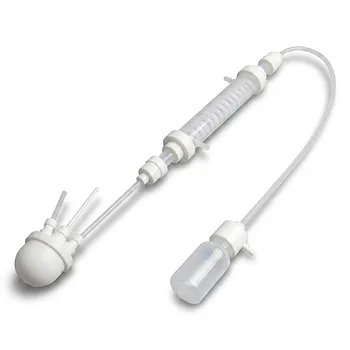
- Corrosion Resistant Hydrogen Fluoride Reflux Apparatus PTFE Flask Condenser Separatory Funnel Collection Bottle High Temperature Laboratory System
- Laboratory PTFE Three Neck Reaction Flask Corrosion Resistant 2000ml Low Background Fluoropolymer Vessel
- Custom PTFE Wide Mouth Reagent Reaction Bottle Corrosion Resistant High Temperature Large Capacity Straight Body Laboratory Vessel
- Custom PTFE Flask 250ml High Purity Fluoropolymer Laboratory Vessel for Chemical Research
- Custom PTFE Flask Large Volume 18L Corrosion Resistant Low Background High Purity Chemical Vessel
People Also Ask
- What structural characteristics provide PTFE fluoropolymer laboratory apparatus with high thermal stability? Strong C-F bonds, dense fluorine shielding, and rigid helical conformation ensure stability during high-temperature analysis.
- How does resin stratification occur during the curing of fluoropolymer coatings, and why might solid fluoropolymer laboratory apparatus be preferred over surface coatings for aggressive chemical applications?
- What chemical resistance considerations are important when selecting fluoropolymer laboratory apparatus for post-modification reactions of FAVE polymers?
- How do operating temperatures and pressures influence the formation of thermal degradation products during the high-temperature processing of PTFE fluoropolymer laboratory equipment? Key factors and safety limits
- What impact does thermal annealing and crystallization temperature have on the material properties of custom-machined fluoropolymer apparatus? Optimize Performance with Controlled Thermal Processing