Fluorinated polymers generally exhibit excellent thermal stability and high char yields under elevated temperatures. Thermal decomposition often begins around 550 °C under inert nitrogen, with some fluorinated aromatic structures reaching approximately 558–600 °C. Increasing fluorine content can raise char yield substantially—from about 55% in non-fluorinated analogues to as high as 75% at 700 °C—which helps preserve structural integrity and improve flame resistance.
Fluorination strengthens resistance to thermal degradation, while higher fluorine content promotes carbonaceous char formation. However, thermal decomposition temperature, continuous service temperature, atmosphere, and polymer structure must be considered separately.
Why Fluorinated Polymers Resist Thermal Degradation
Strong carbon–fluorine bonds
The C–F bond has a higher dissociation energy than the C–H bond, making the polymer backbone less vulnerable to free-radical attack at high temperatures.
This strong bonding contributes to delayed mass loss, improved chemical durability, and greater resistance to backbone scission during thermal exposure.
Reduced oxidative degradation
Fluorinated polymer segments generally show greater oxidative stability than comparable non-fluorinated materials. Under harsh oxidative conditions, they can take nearly twice as long to undergo significant oxidative degradation.
This distinction matters because thermal stability in air is often lower than stability measured under inert nitrogen.
Influence of backbone chemistry
Thermal performance depends strongly on whether hydrogen remains in the polymer backbone. Fully fluorinated polymers, or perfluoropolymers, contain no backbone hydrogen and generally provide the highest resistance to high-temperature degradation.
Hydrogen-containing fluoropolymers can undergo dehydrofluorination, particularly at elevated temperatures and in the presence of metal oxides.
How Fluorine Content Affects Char Yield
Higher fluorination promotes residue formation
Thermogravimetric analysis under nitrogen shows that increasing fluorine content can significantly increase the residual char fraction.
Reported values rise from approximately 55% for non-fluorinated polymers to about 75% at 700 °C for fluorinated copolymers.
Char improves thermal and flame resistance
A higher char yield means that more of the original polymer remains as a thermally stable residue rather than volatilizing or decomposing completely.
This residue can act as a protective barrier, slowing heat transfer and reducing the release of combustible decomposition products. As a result, high-char fluorinated materials are useful where flame retardancy and structural retention are important.
Advanced structures can produce especially high residues
Fully cyclized, ladder-like polymer structures can show very low mass loss—less than 1% up to 500 °C in some reported systems—and remain stable to approximately 550 °C.
Such structures have also demonstrated char yields near 72.7% at 800 °C under nitrogen, although these values apply to specific formulations and should not be generalized to every fluoropolymer.
Thermal Stability Depends on the Temperature Definition
Decomposition temperature is not service temperature
A decomposition onset near 550 °C does not mean that a component can operate continuously at 550 °C.
Continuous-use limits are normally much lower. PTFE and PFA, for example, are commonly associated with continuous upper service temperatures around 260 °C, while fully fluorinated materials more broadly may exceed approximately 300–315 °C depending on design and operating conditions.
Hydrogenated fluoropolymers have lower operating limits
Fluoropolymers containing hydrogen in their main chains typically have lower long-term operating limits, often around 200–215 °C.
They may also be more susceptible to dehydrofluorination and related degradation mechanisms, especially when exposed to catalytic metal oxides or prolonged thermal cycling.
Thermal expansion remains predictable
Molecular-dynamics assessments indicate that fluoropolymer bulk density decreases approximately linearly as temperature rises from 300 to 600 K.
Fully fluorinated segments maintain higher density than hydrogenated counterparts, while changes in internal segment length or chain topology have a smaller effect on overall bulk-density behavior. This supports relatively predictable dimensional response during heating.
What These Properties Mean in Applications
High-temperature laboratory equipment
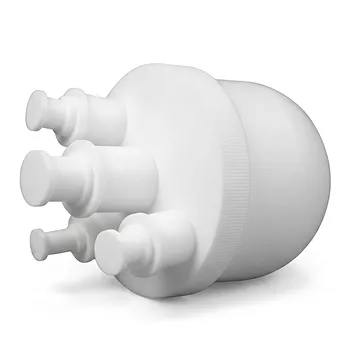
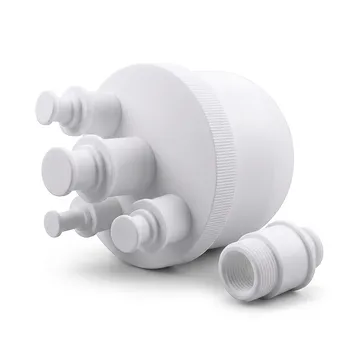
High fluorine content helps reaction vessels, digestion equipment, and custom laboratory components resist decomposition during severe heat cycles.
The material can retain structural integrity while also resisting hot acidic media, strong organic solvents, and contamination from volatile degradation products.
Flame-retardant components
High char yield reduces the amount of polymer converted into flammable gases during heating.
This makes fluorinated materials attractive for flame-retardant components, provided the specific grade has been tested under the relevant fire, atmosphere, and mechanical conditions.
Mechanical durability
Some fluorinated aromatic formulations combine decomposition temperatures up to approximately 558 °C with tensile strengths near 107 MPa and elongation at break around 15%.
These values illustrate that thermal resistance can coexist with useful mechanical performance, although mechanical strength generally declines as the material approaches its service-temperature limit.
Understanding the Trade-offs
High decomposition resistance does not prevent all heat-related failure
Even when the polymer has not chemically decomposed, it may soften, creep, deform, or lose mechanical strength at lower temperatures.
Design decisions must therefore use continuous-use temperature, pressure, load, and exposure time, not decomposition temperature alone.
Inert and oxidative environments behave differently
The reported char yields of approximately 55–75% are associated with elevated-temperature testing under inert nitrogen.
In air or other oxidative environments, the residue may oxidize more readily, and the usable temperature range may be lower.
Fluorine content is not the only design variable
Backbone architecture, hydrogen content, aromatic or ladder-like structures, additives, crystallinity, and processing history also influence thermal performance.
A highly fluorinated material is not automatically the best choice if it has unsuitable mechanical, sealing, dimensional, or processing characteristics.
Long-term exposure requires qualification
Short-term TGA results do not fully predict performance during repeated heating, pressure loading, chemical exposure, or contact with metal oxides.
For critical equipment, qualification should include the actual temperature profile, atmosphere, chemical environment, mechanical load, and number of thermal cycles.
Making the Right Choice for Your Goal
Select the material based on the complete operating environment rather than on char yield or decomposition temperature alone.
- If your primary focus is maximum thermal resistance: Prefer fully fluorinated or highly fluorinated structures, while verifying the manufacturer’s continuous-use temperature and mechanical limits.
- If your primary focus is flame retardancy: Prioritize formulations with demonstrated high char yield and test performance under the intended oxidative or inert fire conditions.
- If your primary focus is high-temperature laboratory equipment: Evaluate chemical compatibility, dimensional stability, contamination risk, pressure resistance, and repeated thermal cycling together.
- If your primary focus is long-term operation above 200 °C: Avoid assuming that all fluoropolymers perform alike; distinguish fully fluorinated materials from hydrogen-containing grades.
- If your primary focus is predictable dimensional behavior: Use data on thermal expansion, density change, creep, and component geometry in addition to TGA results.
In practice, highly fluorinated polymers offer an unusually strong combination of delayed decomposition, high char retention, chemical resistance, and structural stability—but the correct grade must be matched to the atmosphere, temperature, load, and exposure duration.
Summary Table:
| Property | Typical Value / Range | Notes |
|---|---|---|
| Decomposition onset (N2) | ~550 °C; some up to 558–600 °C | Depends on structure; inert atmosphere |
| Char yield at 700 °C (N2) | ~55% (non-fluorinated) to ~75% (fluorinated) | Higher fluorine content increases residue |
| Continuous service temperature | PTFE/PFA ~260 °C; some fully fluorinated up to 300 °C; hydrogenated ~200 °C | Actual limit depends on environment and load |
| Flame resistance | High char yield reduces flammable gas release | Useful for flame-retardant components |
| Mechanical strength (example) | Tensile ~107 MPa, elongation ~15% | Some fluorinated aromatic formulations |
| Thermal expansion | Density decreases linearly from 300 to 600 K | Predictable dimensional behavior |
Ready to elevate your high-temperature lab or industrial applications with fluoropolymers that deliver superior thermal stability and char yield? At KINTEK, we specialize in high-performance PTFE and PFA products—from custom CNC-machined parts to complete labware and fluid handling systems. Whether you need components for extreme heat, aggressive chemicals, or flame-retardant setups, our materials are engineered to meet your demanding specifications. Contact us today to discuss your project and get a custom solution—get in touch with our experts now!
Related Products
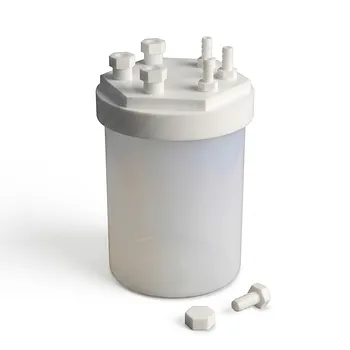
- PFA Chemical Reaction Tank with Customizable Fittings for Corrosive Solvent Synthesis and High Purity Lab Applications
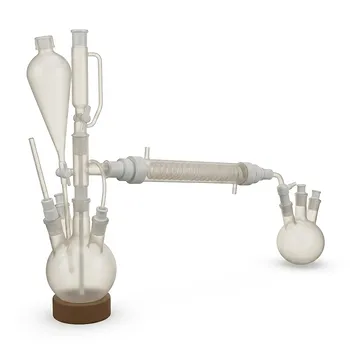
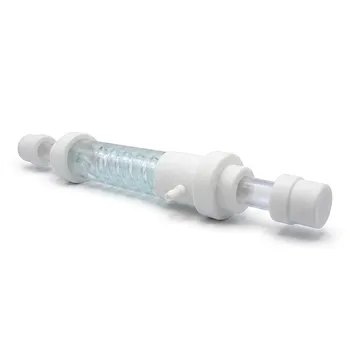
- PTFE Distillation Condensation Apparatus High Temperature Hydrofluoric Acid Resistant Fluorination Reaction Flask
- High Purity PFA Chromatography Column with Collection Bottle Corrosion Resistant Fluoropolymer Filtration System for Trace Analysis
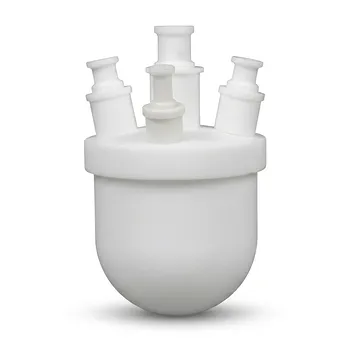
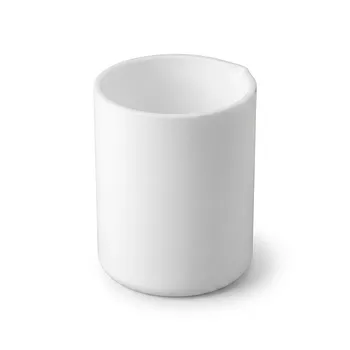
- Custom PTFE Flask 250ml High Purity Fluoropolymer Laboratory Vessel for Chemical Research
- Custom PTFE Condenser Tube 100ml Serpentine and Straight Fluoropolymer Laboratory Heat Exchanger with Flask Adapters
People Also Ask
- How does the molecular structure of fluorinated polymers contribute to the extreme thermal stability and chemical resistance required for high-performance laboratory reaction vessels and digestion containers? Discover the science behind PTFE and PFA for your lab.
- How do choice of solvent and chain transfer activity affect molecular weight during vinylidene fluoride (VDF) radical polymerization? Learn Key Factors for High-MW PVDF
- What role do low-surface-energy fluoropolymer reaction vessels play in preventing fouling during particle synthesis and emulsion polymerization?
- Why are fluoropolymer reaction vessels essential for SnO2/rGO synthesis? The Key to High-Performance Composites
- When synthesizing TFVE monomers involving reactive organometallic reagents and aggressive polar solvents, what material performance characteristics are required? Ensure purity with PTFE/PFA.