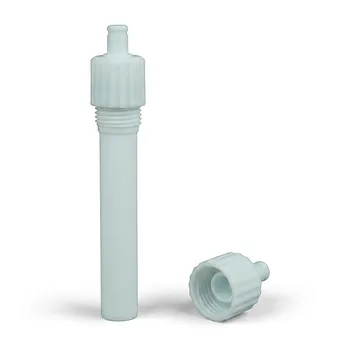
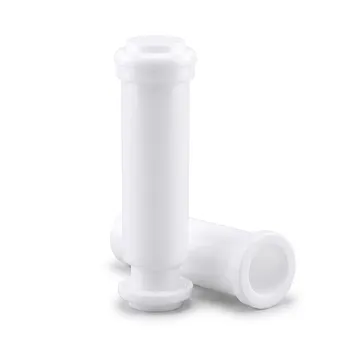
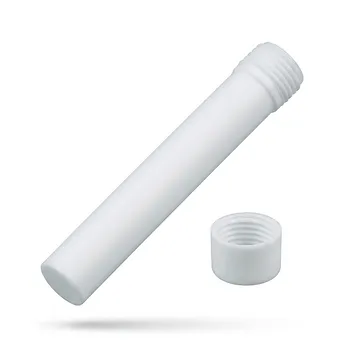
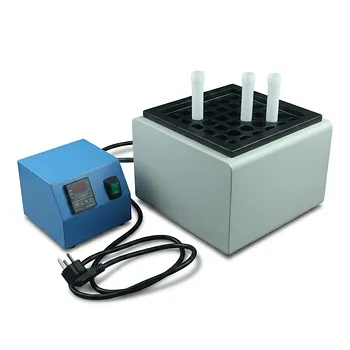
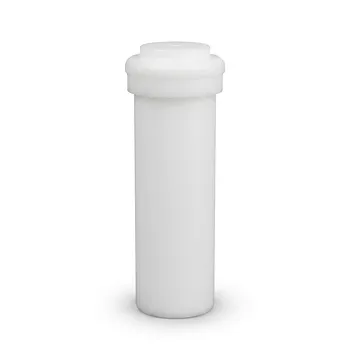
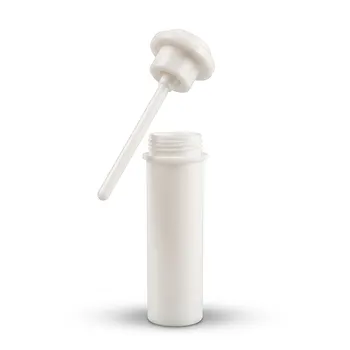
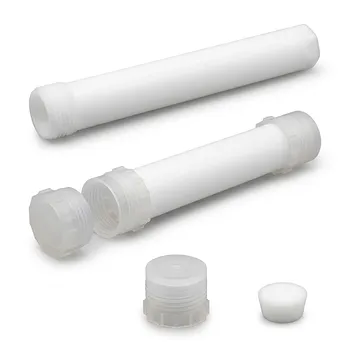
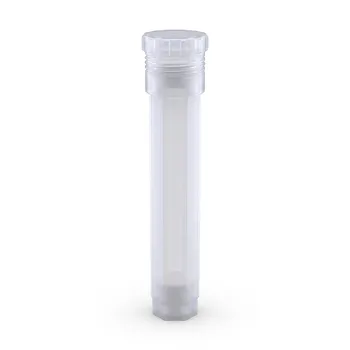
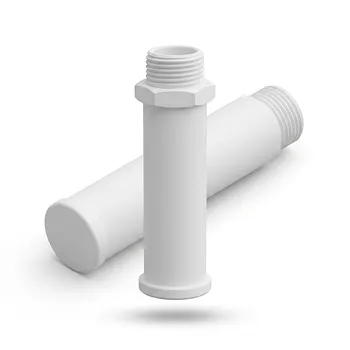
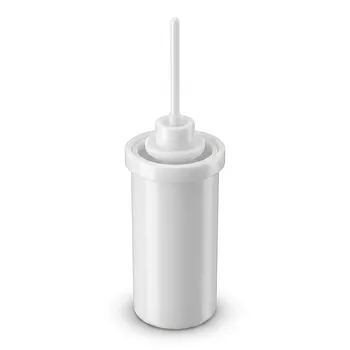
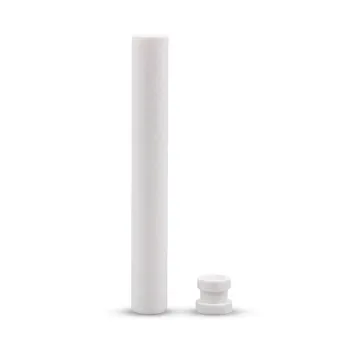
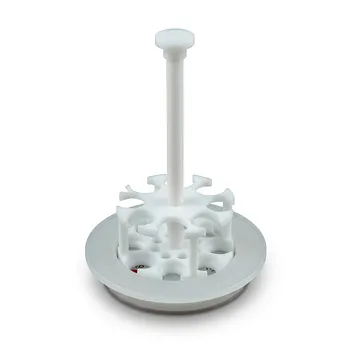
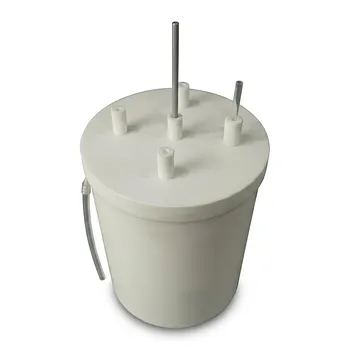
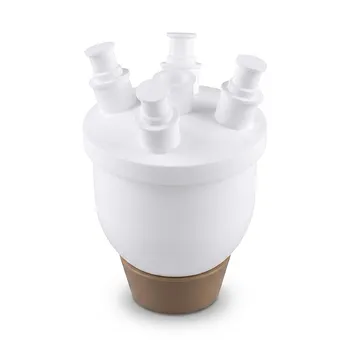
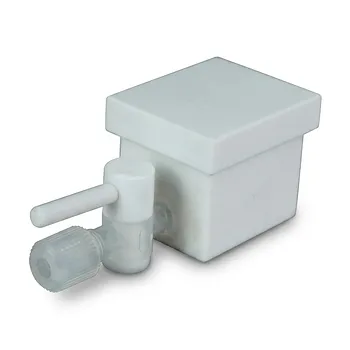
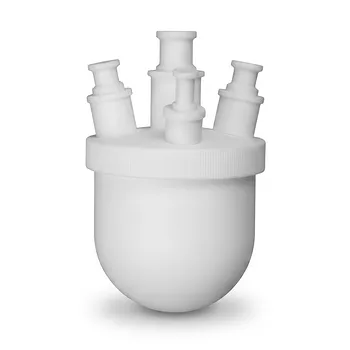
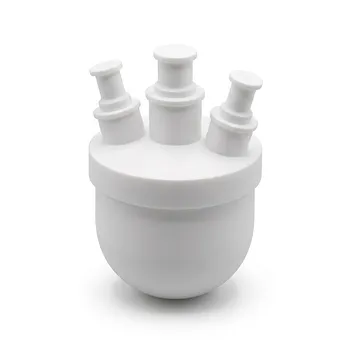
To achieve efficient microwave-assisted xylose-to-furfural conversion, reaction vessels must be rated for temperatures of at least 205°C and the resulting high internal pressures. These vessels require construction from high-purity, microwave-transparent materials like borosilicate glass or high-performance fluoropolymers (PTFE/PFA) to ensure chemical inertness against acidic catalysts and prevent localized overheating.
Core Takeaway: The success of furfural synthesis depends on vessels that combine high microwave permeability with the mechanical strength to withstand extreme thermal and pressure loads. Precision sealing and integrated stirring are non-negotiable to prevent furfural carbonization and ensure operational safety.
Material Specifications for Thermal and Chemical Stability
High Microwave Transparency
The vessel must be constructed from materials with low dielectric loss, such as high borosilicate glass or specialized polymers. This ensures that microwave energy passes through the vessel wall and is absorbed directly by the reaction mixture rather than the container itself.
Resistance to Corrosive Acidic Media
Furfural conversion typically occurs under strongly acidic catalytic conditions, requiring materials with high chemical stability. High-performance fluoropolymer liners, such as PTFE or PFA, are essential to prevent vessel degradation and sample contamination.
Thermal Thresholds and Heat Distribution
Vessels must be rated for continuous operation at 205°C, though some specialized high-strength materials can withstand peaks up to 280°C. Maintaining uniform heat distribution is critical; vessels must accommodate magnetic stirring bars to eliminate hot spots that lead to furfural carbonization.
Mechanical Requirements for High-Pressure Environments
Structural Integrity and Wall Thickness
Due to the rapid heating of organic solvents and water vapor, vessels must be high-pressure, thick-walled designs. These structures are engineered to contain the significant internal forces generated when operating well above the atmospheric boiling point of the solvent.
Precision Sealing Mechanisms
Reliable containment requires precision-machined sealing components that maintain a closed environment under stress. Effective seals prevent the escape of volatile reactants and ensure the pressure remains high enough to facilitate the specific kinetics of the xylose-to-furfural reaction.
Manufacturing Uniformity
The use of CNC-machined components and high material uniformity is vital for consistency across multiple reaction cycles. Any structural flaws or material impurities can lead to catastrophic vessel failure under the combined stress of high pressure and microwave radiation.
Understanding the Trade-offs and Risks
The Risk of Localized Overheating
While microwave heating is efficient, the lack of adequate stirring in a high-pressure vessel can lead to localized hot spots. These thermal gradients can cause the furfural to carbonize, effectively ruining the yield and potentially damaging the vessel liner.
Pressure vs. Material Longevity
Operating at the upper limits of a material's pressure rating (often required for 205°C reactions) accelerates material fatigue. Over time, fluoropolymer liners may deform or lose their seal integrity, requiring a strict protocol for vessel inspection and replacement.
Transparency vs. Durability
While borosilicate glass offers excellent visibility and microwave transparency, it is more susceptible to thermal shock and brittle failure compared to fluoropolymers. Conversely, opaque polymers prevent visual monitoring of the reaction, making real-time sensor integration (like IR or fiber-optic probes) necessary.
Implementing the Right Specifications for Your Goal
Selecting the appropriate vessel depends on the specific scale and conditions of your furfural conversion project.
- If your primary focus is maximum chemical purity: Use high-purity fluoropolymer liners (PFA) to eliminate any risk of leaching or contamination during the acid-catalyzed reaction.
- If your primary focus is high-temperature kinetics (205°C+): Invest in thick-walled, high-strength sealed vessels specifically rated for high-pressure microwave synthesis to ensure safety.
- If your primary focus is preventing product degradation: Ensure the vessel geometry is optimized for high-speed magnetic stirring to maintain a homogenous thermal environment and prevent carbonization.
By prioritizing material inertness and mechanical pressure ratings, you ensure both the safety of the laboratory and the quality of the furfural yield.
Summary Table:
| Specification | Requirement | Recommended Material / Feature |
|---|---|---|
| Temperature Rating | 205°C (continuous) to 280°C (peak) | High-performance PTFE/PFA or Borosilicate |
| Chemical Resistance | Stable against strong acidic catalysts | High-purity PFA/PTFE Fluoropolymers |
| Microwave Property | High transparency (Low dielectric loss) | Borosilicate glass or specialized polymers |
| Pressure Rating | High-pressure, thick-walled design | CNC-machined structural integrity |
| Homogeneity | Prevention of localized hot spots | Integrated magnetic stirring capability |
Precision Labware for High-Performance Synthesis
Ensure the safety and efficiency of your microwave-assisted conversions with KINTEK’s specialized fluoropolymer solutions. From high-purity PFA/PTFE reaction vessels and liners designed for 205°C+ environments to a full range of lab essentials—including beakers, digestion tubes, and custom fluid transfer components—we provide the chemical inertness your research demands.
Why choose KINTEK?
- Comprehensive Range: We manufacture everything from basic labware (crucibles, reagent bottles, spatulas) to advanced reaction apparatus like hydrothermal liners and microwave digestion vessels.
- Bespoke Engineering: Backed by end-to-end custom CNC fabrication, we deliver non-standard machined parts and complex laboratory setups tailored to your specific pressure and thermal requirements.
- Material Focus: Our exclusive focus on high-performance fluoropolymers ensures maximum durability against corrosive acidic media.
Don't let material fatigue or carbonization compromise your yields. Contact KINTEK today to discuss your custom laboratory setup!
References
- Ting Huang, Wan‐Ming Xiong. Preparation of Furfural From Xylose Catalyzed by Diimidazole Hexafluorophosphate in Microwave. DOI: 10.3389/fchem.2021.727382
This article is also based on technical information from Kintek Knowledge Base .
Related Products
- High Performance PTFE Microwave Digestion Vessel Replacement Bespoke Fluoropolymer Acid Digestion Tank Intelligent Sample Preparation Labware
- Custom High Purity TFM Microwave Digestion Vessel 100ml for Analytical Laboratory Sample Preparation
- High Purity TFM Microwave Digestion Vessels PTFE Acid Evaporation Liners Domestic GT-400 Equivalent Laboratory Reaction Containers
- High Purity PTFE Microwave Digestion Vessel Replacement for GT-400 Systems Acid Reflux and Sample Preparation
- High Purity TFM Microwave Digestion Vessels for Trace Analysis and Custom Sample Preparation Systems
People Also Ask
- What are the advantages of using microwave digestion vessels for environmental analysis? Boost speed and sample accuracy.
- What safety features are commonly integrated into microwave digestion vessels? Ensuring High-Pressure Laboratory Safety
- How does the dielectric property of PTFE benefit microwave-assisted digestion? Unlock Rapid and Uniform Sample Heating
- Why is PTFE preferred for microwave-assisted Ln-MOF synthesis? Key Benefits for Purity & Speed
- What are the advantages of using microwave digestion vessels? Optimize EG@MO synthesis with superior thermal control.