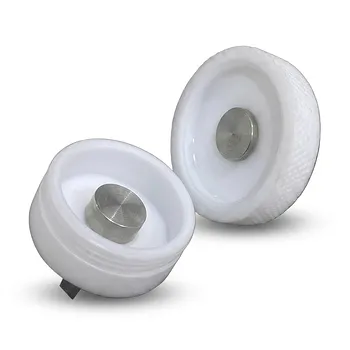
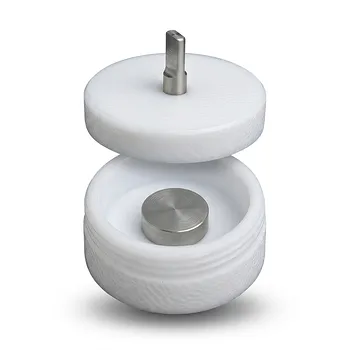
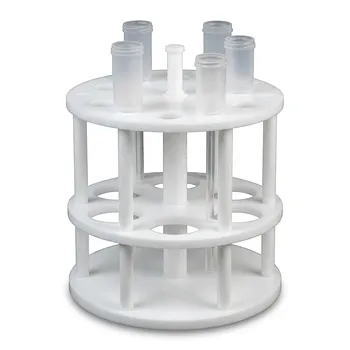
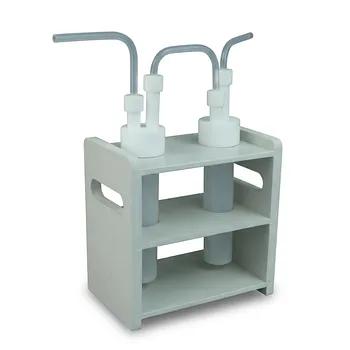
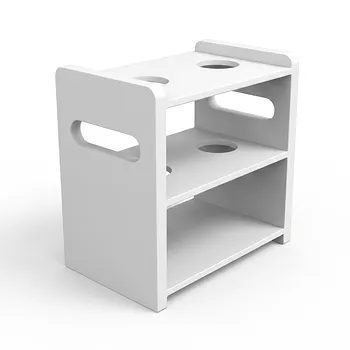
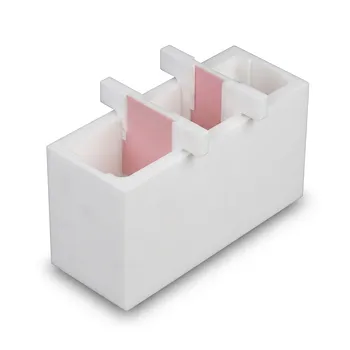
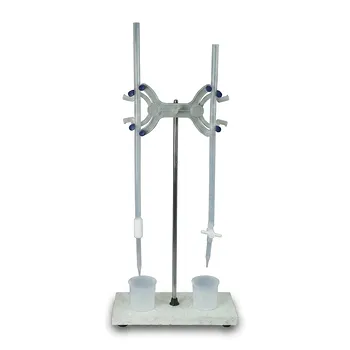
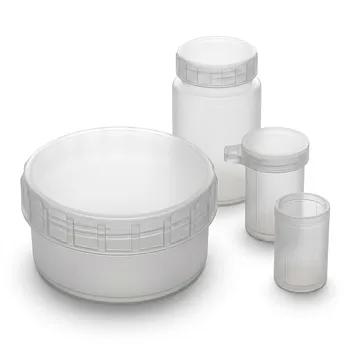
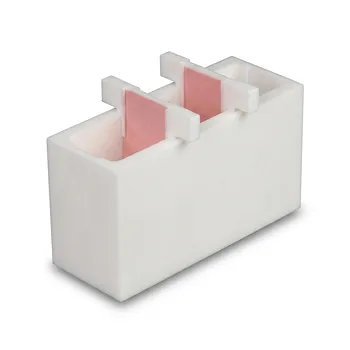
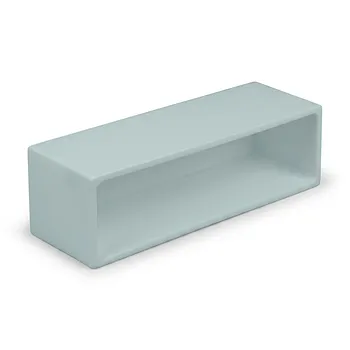
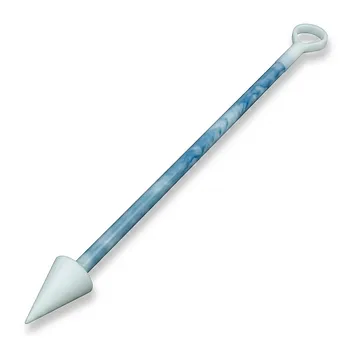
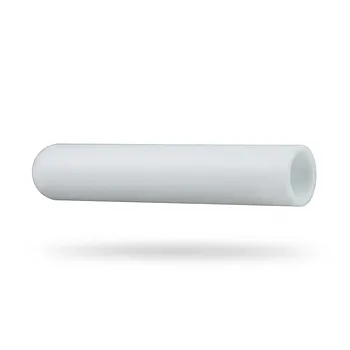
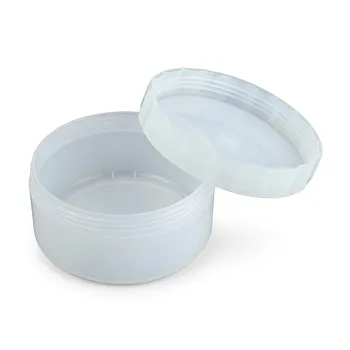
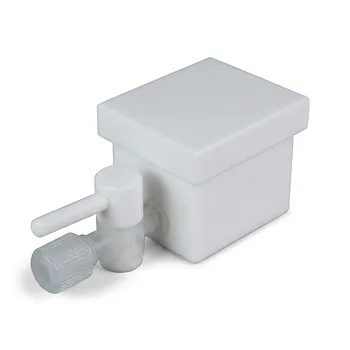
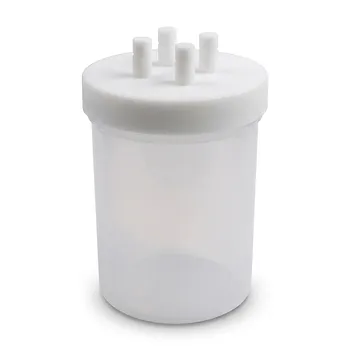
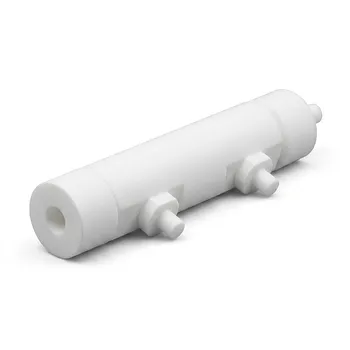
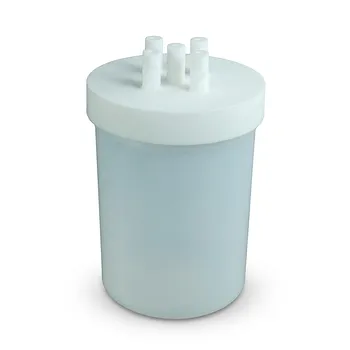
Custom CNC-machined PFA and PTFE testing fixtures provide a unique combination of extreme chemical inertness, high dielectric strength, and geometric precision. These materials allow for the fabrication of complex electrochemical cells that remain stable in highly corrosive electrolytes while ensuring that measured signals are free from background interference. By tailoring the fixture to specific electrode dimensions through CNC machining, researchers achieve the repeatable electrode spacing and tight sealing necessary for high-fidelity battery and kinetic studies.
Custom fluoropolymer fixtures transform testing from a generic process to a high-precision operation by neutralizing environmental variables and ensuring that every millivolt measured originates from the electrochemical reaction itself, rather than the testing apparatus.
Superior Material Stability in Aggressive Environments
Absolute Resistance to Electrolyte Corrosion
PFA and PTFE are chemically inert fluoropolymers that withstand the highly corrosive electrolytes common in advanced battery research. Unlike metallic or lower-grade plastic housings, these materials do not degrade or leach contaminants when exposed to aggressive oxidizing or reducing environments.
Maintaining Reaction Purity
Because these materials are chemically neutral, they do not participate in the electrochemical reactions being studied. This ensures that the data collected reflects the pure behavior of the electrodes and electrolytes without interference from the fixture's structural components.
Stability Under High Temperature and Pressure
CNC-machined components, such as reactor liners and cell bodies, maintain their structural integrity even under elevated temperature and pressure conditions. This stability is critical for studying reaction kinetics in environments that mimic real-world battery stresses.
Signal Integrity and Data Precision
Elimination of Stray Interference
The exceptionally low electrical conductivity of PTFE and PFA provides superior insulation, which prevents short circuits and leakage currents. This isolation is essential for measuring the subtle electrical signals required to understand advanced reaction kinetics.
High Signal-to-Noise Ratio
By eliminating background current interference, these fixtures allow for pure signal transmission. This enables researchers to obtain stable data with a high signal-to-noise ratio, even when working with sensitive, low-current electrochemical systems.
Constant Electrode Spacing
Precision CNC machining allows for the creation of fixtures that maintain exact, unvarying distances between electrodes. This consistency is vital for calculating accurate impedance and ensuring that experimental results are reproducible across multiple tests.
Precision Engineering Through Customization
Optimization for Specific Electrode Geometries
Custom CNC machining allows for the fabrication of cell bodies and fixtures tailored to the exact dimensions of experimental electrodes. This ensures a perfect fit, which is often impossible to achieve with "one-size-fits-all" commercial testing equipment.
Advanced Flow Channel Design
For flow-through electrolytic cells, CNC machining can create complex internal geometries and flow channels. These designs optimize electrolyte distribution and residence time, providing better control over the electrochemical environment.
Precise Pressure Sealing
Customized fixtures can be engineered to provide specific pressure sealing based on unique battery structures. This prevents electrolyte leakage and maintains internal pressure, which is critical for the reliability of long-term cycle testing.
Understanding the Trade-offs
Mechanical Creep and Cold Flow
While PTFE is highly stable, it is susceptible to "cold flow" or deformation under heavy, sustained mechanical loads. Designers must account for this by using reinforced designs or PFA when dimensional stability under high torque is required.
Thermal Conductivity Limitations
Fluoropolymers are excellent insulators but poor thermal conductors. In experiments where rapid heat dissipation is required, the fixture may act as a thermal barrier, potentially requiring integrated cooling channels or specialized thin-walled designs.
Cost and Manufacturing Lead Times
Custom CNC-machining is more expensive and time-consuming than purchasing standardized, injection-molded components. However, the investment is typically justified by the significant reduction in data noise and the ability to conduct experiments that standard fixtures cannot accommodate.
Applying Custom Fixtures to Your Research
How to Apply This to Your Project
Selecting the right material and design for your fixture depends on your specific experimental constraints and data requirements.
- If your primary focus is long-term cycle stability: Prioritize custom PTFE fixtures with integrated pressure sealing to ensure structural integrity and leak prevention over hundreds of hours.
- If your primary focus is high-precision kinetic measurement: Utilize PFA components with tight CNC tolerances to ensure absolute signal purity and the elimination of background current interference.
- If your primary focus is flow-cell optimization: Design complex internal CNC-machined flow channels to achieve uniform electrolyte distribution across the electrode surface.
By leveraging the unique properties of precision-machined fluoropolymers, researchers can eliminate hardware-induced variables and focus entirely on the core electrochemical phenomena.
Summary Table:
| Feature | Technical Advantage | Research Impact |
|---|---|---|
| Chemical Inertness | Resistance to aggressive electrolytes & zero leaching | Ensures high-purity reaction data |
| Dielectric Strength | Superior electrical insulation and low conductivity | Eliminates stray signals & interference |
| CNC Precision | Tight tolerances for electrode spacing & sealing | Guarantees repeatable, high-fidelity results |
| Custom Geometry | Tailored flow channels & cell body dimensions | Optimizes electrolyte distribution & kinetics |
Unlock High-Performance Precision with KINTEK Fluoropolymer Solutions
Take your electrochemical and battery research to the next level by eliminating hardware-induced variables. KINTEK specializes in high-performance fluoropolymer materials, offering an unparalleled range of laboratory supplies.
From everyday basic labware (beakers, crucibles, and reagent bottles) to advanced reaction apparatus like custom electrochemical cells, battery testing fixtures, and microwave digestion vessels, we manufacture virtually every lab essential from PTFE and PFA.
Our expert end-to-end custom CNC fabrication allows us to deliver everything from complex, non-standard machined parts to high-volume orders with absolute precision. Whether you need fluid transfer components, sample prep tools, or bespoke laboratory setups, we ensure your equipment is as advanced as your research.
Ready to optimize your experimental setup? Contact us today to discuss your custom requirements and experience the KINTEK advantage!
References
- Yao Zhao, Junhua You. Cu‐Content Engineering in FeCoNiCuAl High‐Entropy Alloy Precursors: A Pathway to Advanced HEA‐Derived Sulfide Electrocatalysts for Efficient Oxygen Evolution Reaction. DOI: 10.1002/cctc.202500147
This article is also based on technical information from Kintek Knowledge Base .
Related Products
- Corrosion Resistant PTFE Coin Cell Battery Testing Clamps and Acid Proof Custom Fluoropolymer Battery Fixtures
- Acid Resistant PTFE Button Cell Battery Test Fixture Customizable Machining High Purity Electrochemical Testing Clamp
- Custom PFA Microcolumn Racks and PTFE Machined Low Background Corrosion Resistant Laboratory Fixtures
- Custom PTFE Acid Resistant Support Rack Multi Hole PFA Hydrogen Absorption System Bracket
- Custom PTFE Acid Resistant Support Rack for PFA Hydrogen Absorption Systems Multi Hole Configurations
People Also Ask
- What is the thermal operating range for PTFE battery clamps in electrochemical research? Stability from -200°C to +260°C
- What are the primary functions and material compositions of PTFE battery clamps? Ensure Precision & Chemical Resistance
- How do coin cell testing fixtures evaluate ZIF-derived LCO cycling stability? Ensure Battery Research Precision
- What are the electrical insulation and signal integrity advantages of using PTFE battery clamps? Ensure Data Accuracy
- How does the chemical inertness of PTFE benefit laboratory-scale battery testing? Ensure high-purity research results.