Fluoropolymers such as vinylidene fluoride (VDF) copolymers are made primarily through controlled radical, emulsion, supercritical-fluid, electrochemical, and specialized photochemical routes. The process selected depends on monomer volatility, desired molecular weight, copolymer architecture, morphology, and thermal requirements. High-purity PTFE and PFA vessels, tubing, fittings, and labware support these reactions by resisting aggressive fluorinated chemicals, reducing contamination, and maintaining reliable containment—but they do not replace pressure-rated reactor bodies when gaseous monomers or supercritical fluids are involved.
The central requirement is chemical and process control. Fluoropolymer-compatible hardware minimizes corrosion, trace-metal contamination, adsorption, and solvent attack, while the reactor design must still match the reaction’s pressure, temperature, mixing, and atmosphere requirements.
Which Synthesis Methods Are Used?
Radical Polymerization
Radical polymerization is a major route for producing VDF-based polymers and copolymers. Fluorinated peroxide initiators, photochemical systems, or other radical sources generate active species that add across fluorinated alkene monomers.
For VDF copolymers, the reaction may be conducted with other radically polymerizable monomers, including vinyl acetate, styrene, butadiene, or acrylates. Control of initiator concentration, temperature, monomer feed, and atmosphere influences molecular weight and copolymer composition.
Emulsion Polymerization
Emulsion polymerization is widely used for high-molecular-weight fluoropolymers. Monomers are dispersed in an aqueous or otherwise structured reaction medium, where surfactants or micelles help control monomer transport and particle formation.
The hydrophobic character of fluorinated monomers can support rapid diffusion through micelle membranes. This can produce high-fluorine-content polymers and, with suitable formulation, controlled particle or porous morphologies.
Supercritical Carbon Dioxide Polymerization
Supercritical carbon dioxide, or scCO₂, can function as a reaction medium or as part of an emulsion-template process. It offers a nontraditional solvent environment for fluorinated monomers and can assist monomer transport while reducing reliance on conventional organic solvents.
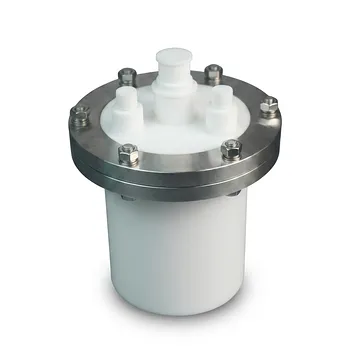
scCO₂ processes require precise control of pressure, temperature, phase behavior, and depressurization. The vessel must therefore be designed as a certified high-pressure system; PTFE or PFA components are generally used as chemically resistant wetted parts, liners, seals, tubing, or sample-contact components rather than as the sole pressure boundary.
Anionic and Organometallic Polymerization
Anionic polymerization is used when the target architecture requires a highly controlled chain-growth mechanism. Such systems are particularly sensitive to moisture, oxygen, impurities, and trace metals.
Related organometallic strategies can activate otherwise less-reactive chain ends in VDF-derived materials. For example, photochemical cleavage of chain-end species can generate PVDF-based radicals that subsequently react with other vinyl monomers to form defined AB or ABA block copolymers.
Electrochemical Polymerization
Electrochemical polymerization uses an applied potential to generate reactive intermediates from suitable monomers or precursors. It can be useful for producing fluorinated polymer films or coatings directly on conductive substrates.
This method places additional demands on electrode compatibility, electrolyte purity, current control, and cell design. Fluoropolymer components can provide chemically inert insulation, tubing, gaskets, and sample-contact surfaces, although electrode materials must be selected separately for the electrochemical environment.
Microwave-Assisted Polycondensation
Microwave-assisted polycondensation is relevant to high-temperature polymer syntheses involving strong polar solvents, reactive salts, or ionic liquids. Rapid volumetric heating can shorten reaction times from hours to minutes and can support high molecular weight formation when the chemistry is suitable.
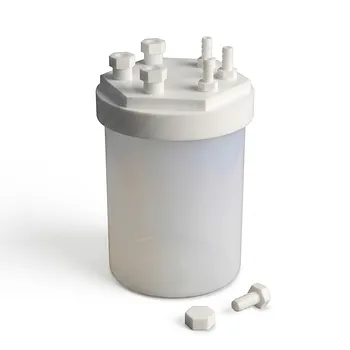
PTFE and PFA microwave vessels or digestion containers provide chemical resistance and low contamination risk. The vessel must still be rated for the intended temperature, pressure, microwave power, and reaction chemistry; “fluoropolymer” alone does not guarantee safe operation under every microwave condition.
How Copolymer Composition Is Controlled
Managing Monomer Feed Rates
When fluorinated and non-fluorinated monomers are combined, feed strategy becomes a central process variable. Metering the fluorinated monomer incrementally can help control composition along the growing polymer chain.
This approach can balance fluorine content, backbone planarity, electronic properties, thermal resistance, and phase behavior. Poorly controlled feed rates may produce compositional drift or excessive fluorination, potentially contributing to phase separation or degraded material performance.
Handling Volatile VDF
VDF is a gaseous monomer with a very low boiling point and relatively low radical reactivity compared with common liquid monomers. Its synthesis therefore requires controlled gas transfer, pressure management, leak-tight connections, and accurate metering.
High-purity PFA or PTFE tubing and fittings can provide chemically inert transfer paths. The main reactor, however, must be a properly engineered pressure vessel capable of safely containing the monomer and reaction mixture.
Suppressing Side Reactions
Vinyl ether-containing systems can undergo acid-catalyzed homopolymerization or acetal formation during heating. An inorganic base such as potassium carbonate may be used to suppress these pathways before vacuum conditioning and radical copolymerization.
Fluoropolymer labware is useful during reagent preparation, reaction charging, precipitation, and drying because it resists strong bases, fluorinated solvents, and reactive intermediates. It also reduces the likelihood of ions or metals leaching into sensitive formulations.
How PTFE and PFA Hardware Supports the Process
Chemical Compatibility
PTFE and PFA are selected for their broad resistance to many aggressive fluorinated reagents, solvents, initiators, acids, bases, and polar reaction media. This makes them useful for vessels, bottles, beakers, valves, fittings, liners, and transfer lines.
The practical benefit is not merely avoiding visible corrosion. Chemically compatible surfaces also reduce changes in reagent composition caused by corrosion products, extractables, or surface degradation.
Contamination Control
High-purity fluoropolymer hardware helps limit trace-metal and ionic contamination, which is important in polymerization, photochemistry, electrochemistry, and analytical sample preparation.
This is especially valuable when metal impurities can quench radicals, alter catalyst activity, affect optical properties, or interfere with molecular-weight and composition measurements.
Inert Fluid Transfer
PFA tubing and PTFE-lined fittings provide inert routes for transferring fluorinated monomers, solvents, initiators, and polymer dispersions. They can help preserve reagent purity and reduce exposure to reactive metal surfaces.
For gaseous or pressurized monomers, tubing assemblies must also be selected for pressure rating, permeation behavior, temperature, connection integrity, and compatibility with the specific gas and solvent.
Thermal and Mechanical Stability
PTFE and PFA tolerate demanding chemical environments and provide useful thermal stability for laboratory-scale synthesis, digestion, precipitation, and sample handling. PFA is often preferred where greater transparency, lower permeability, or more fabricable vessel designs are needed.
Neither material should be treated as universally suitable for every temperature or pressure. The manufacturer’s pressure-temperature rating, wall thickness, geometry, and chemical compatibility data remain decisive.
Microwave and Digestion Applications
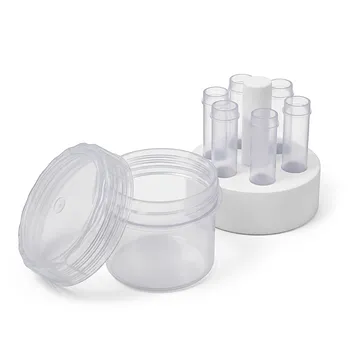
PTFE and PFA digestion containers can support microwave-assisted polymer synthesis or analytical preparation involving aggressive solvents and rapid heating. Their inert surfaces help prevent sample contamination and reduce solvent attack.
Microwave use requires particular attention to pressure generation, vessel venting, fill volume, heating profile, and compatibility with the microwave system. A chemically resistant container can still fail if it is operated outside its pressure or temperature limits.
What the Reactor System Must Provide
Pressure-Rated Containment
Reactions involving VDF gas or scCO₂ require certified pressure-rated equipment. In many systems, the pressure boundary is constructed from appropriate stainless steel, while PTFE or PFA provides the chemically resistant wetted interface.
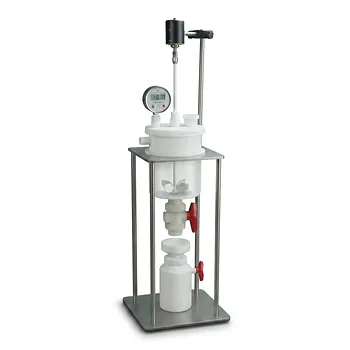
A pressure reactor should include suitable heating and cooling control, reliable agitation, compatible valves and seals, and an engineered overpressure protection system. These requirements cannot be satisfied by substituting ordinary PTFE labware for a pressure vessel.
Atmosphere and Moisture Control
Anionic, organometallic, photochemical, and peroxide-initiated reactions may be sensitive to oxygen or moisture. Inert gas management, leak-tight lids, compatible valves, and clean transfer lines help maintain a controlled atmosphere.
Custom-machined fluoropolymer lids and fittings can reduce contamination at interfaces, but the complete assembly must be validated for leak rate, pressure, temperature, and mechanical integrity.
Cleaning and Inspection
Fluoropolymer surfaces are generally nonwetting and can reduce polymer adhesion during collection or drying. However, they still require validated cleaning procedures, particularly when residual polymer, initiator, catalyst, or fluorinated solvent could affect the next batch.
Pressure-relief devices also require regular inspection. Polymer deposits or incompatible residues on a rupture disc or relief path can obstruct venting and create a serious safety hazard.
Understanding the Trade-offs
Chemical Resistance Does Not Equal Universal Compatibility
PTFE and PFA resist many harsh chemicals, but compatibility depends on temperature, concentration, exposure time, mechanical stress, and the specific reagent. Some highly reactive species, molten alkali metals, or unusual fluorinating conditions may require separate evaluation.
Always consult compatibility data for the actual formulation rather than relying on the material name alone.
Purity Can Conflict With Pressure and Strength
High-purity fluoropolymers are excellent wetted materials but are not always appropriate as the sole structural material for high-pressure synthesis. They may creep under sustained load, have limited stiffness at elevated temperature, or be unsuitable for large pressure differentials.
The robust design is often a pressure-rated metal reactor with a chemically inert fluoropolymer liner or internal components.
Inert Surfaces Can Affect Heat Transfer
PTFE and PFA generally transfer heat less efficiently than metals. This can influence heating and cooling rates, temperature uniformity, and reaction scale-up.
For microwave or high-temperature processes, the vessel geometry and thermal profile should be validated experimentally rather than inferred solely from the nominal setpoint.
Low Adhesion Does Not Eliminate Process Losses
Nonstick fluoropolymer surfaces can simplify polymer recovery, but fine particles, dispersions, or viscous polymers may still remain in tubing, valves, dead legs, or filters. System design should minimize stagnant zones and allow effective rinsing or solvent recovery.
Making the Right Choice for Your Goal
Select the synthesis route and hardware as an integrated system rather than treating the vessel as an interchangeable accessory.
- If your primary focus is high molecular weight: Evaluate emulsion or scCO₂-based processes, with tight control of monomer dispersion, initiator concentration, temperature, and residence time.
- If your primary focus is defined block copolymers: Use a controlled radical or organometallic strategy and specify low-contamination PTFE/PFA fluid paths, fittings, lids, and atmosphere-control components.
- If your primary focus is VDF or other gaseous monomers: Use a certified pressure reactor with fluoropolymer-compatible wetted parts, accurate gas metering, leak-tight connections, and engineered pressure relief.
- If your primary focus is rapid high-temperature synthesis: Consider microwave-assisted processing with properly rated PTFE or PFA vessels and validated temperature and pressure limits.
- If your primary focus is analytical purity: Use high-purity fluoropolymer containers, tubing, and digestion vessels to reduce trace-metal leaching, ionic contamination, and sample adsorption.
The most reliable fluoropolymer synthesis platform combines the correct polymerization chemistry with pressure-rated reactor engineering and high-purity, chemically inert wetted components.
Summary Table:
| Synthesis Method | Key Features | Role of PTFE/PFA Labware |
|---|---|---|
| Radical Polymerization | Initiator-driven, versatile for copolymers | Inert reaction vessels, tubing, and fittings prevent contamination |
| Emulsion Polymerization | High molecular weight, particle control | Surfactant-compatible, contaminant-free containers |
| Supercritical CO2 Polymerization | Green solvent, high pressure | Chemically resistant liners and seals for high-pressure systems |
| Anionic/Organometallic | Controlled architecture, moisture-sensitive | Inert transfer lines and closures to maintain dry conditions |
| Electrochemical Polymerization | Film/coating formation | Insulating components and electrode holders |
| Microwave-Assisted | Rapid heating, high temperature | Microwave-safe vessels with low extractables |
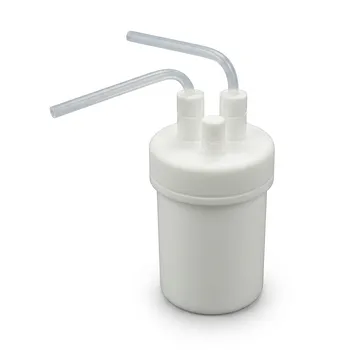
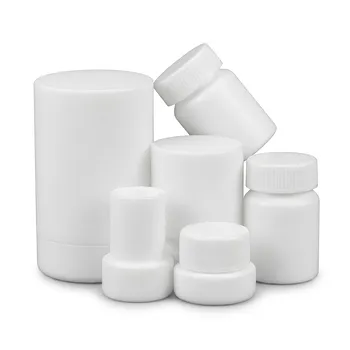
Ensure your fluoropolymer synthesis achieves the highest purity and performance with KINTEK's high-purity PTFE/PFA labware. From reaction vessels and tubing to custom CNC-machined components, we provide the inert, contamination-free solutions essential for advanced polymerization. Whether you're developing new copolymers in research or scaling up production, our products are designed to meet the rigorous demands of your processes. Contact us today to find the perfect fluoropolymer solution for your lab!
Related Products
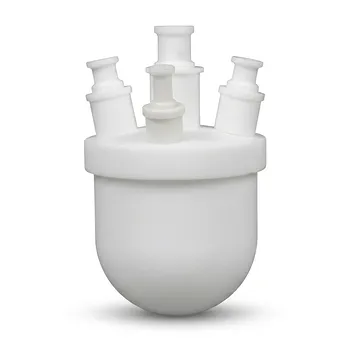
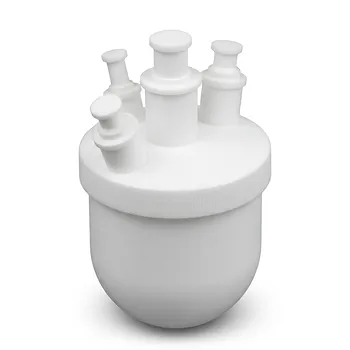
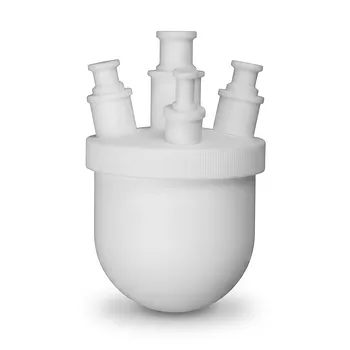
- Custom PTFE Flask 250ml High Purity Fluoropolymer Laboratory Vessel for Chemical Research
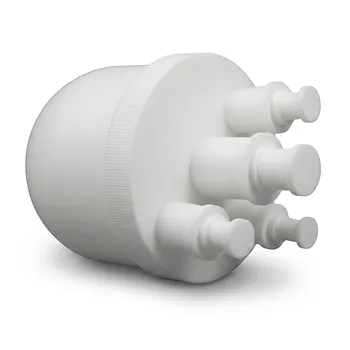
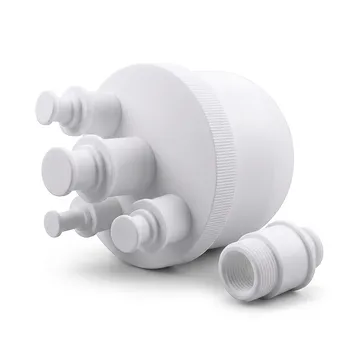
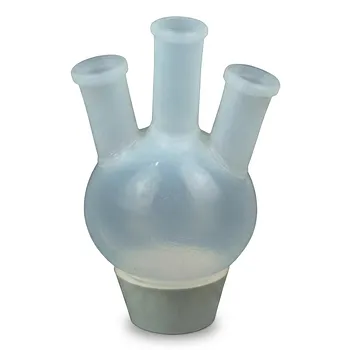
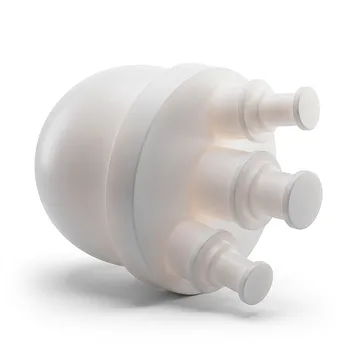
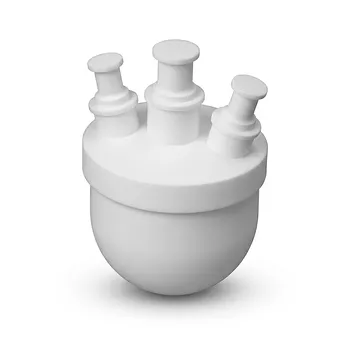
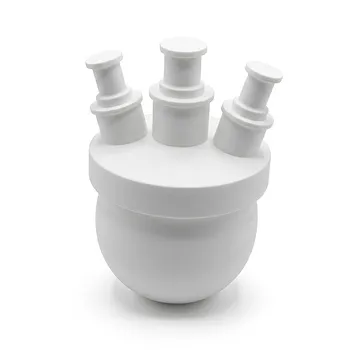
- Laboratory PTFE Three Neck Reaction Flask Corrosion Resistant 2000ml Low Background Fluoropolymer Vessel
- Custom 12L PTFE Multi Neck Reaction Flask Laboratory Fluoropolymer Chemical Vessel with Stirrer Compatibility
- Large Capacity PTFE Reaction Flask 20L Custom Multi Neck Laboratory Boiling Flask Fluoropolymer Chemical Processing Vessel
- High Temperature Corrosion Resistant PTFE Reaction Flask Custom Multi Neck Laboratory Vessel with Flat or U Bottom
People Also Ask
- What are the key steps for structural integrity in molded PTFE lab reaction vessels? Master fine powder processing.
- When synthesizing TFVE monomers involving reactive organometallic reagents and aggressive polar solvents, what material performance characteristics are required? Ensure purity with PTFE/PFA.
- Why Are High-Purity Fluoropolymer Vessels and Tubing Critical for Trace Analysis? Prevent Contamination Reliably
- Why do PTFE fluoropolymer laboratory vessels and containers exhibit superior chemical resistance against harsh solvents and corrosive acids compared to standard plastic labware? Discover the molecular secrets
- How do choice of solvent and chain transfer activity affect molecular weight during vinylidene fluoride (VDF) radical polymerization? Learn Key Factors for High-MW PVDF