Fluoropolymers achieve low dielectric constants and low moisture absorption through a combination of molecular structure and surface chemistry. Strong, tightly bound C–F bonds have low electronic polarizability, while symmetrical fluorinated groups can reduce the polymer’s net dipole response. Bulky groups such as trifluoromethyl (-CF₃) also increase free volume and make the polymer highly hydrophobic, limiting water uptake. For high-precision components, these characteristics preserve electrical signal integrity, chemical cleanliness, and dimensional accuracy.
The central advantage is stability: fluoropolymer structures are difficult to polarize electrically and difficult for water to penetrate. That combination reduces signal distortion, contamination, and humidity-driven dimensional changes in precision equipment.
Why Fluoropolymer Structure Produces a Low Dielectric Constant
Low-polarizability C–F bonds reduce electrical response
A material’s dielectric constant reflects how readily its molecular charges and electrons respond to an applied electric field. The electrons in a C–F bond are held tightly, so the bond undergoes relatively little distortion compared with more easily polarizable chemical groups.
This limited molecular response reduces the material’s ability to store electrical energy and generally produces a low dielectric constant and low dielectric loss. Specialty fluorinated polymers commonly show dielectric constants in the approximate range of 2.3 to 3.5 at 1 MHz, depending on composition, frequency, density, and processing.
Molecular symmetry limits permanent dipole effects
The C–F bond is electrically polar because fluorine is highly electronegative. However, the overall dielectric response depends on the arrangement of those bonds, not simply on bond polarity in isolation.
When fluorinated groups are arranged symmetrically, their individual dipoles can partially cancel. This reduces the polymer’s net permanent dipole moment and limits orientation polarization under an electric field.
Bulky fluorinated groups increase free volume
Groups such as -CF₃ and hexafluoroisopropylidene units occupy substantial molecular space. Their size and shape can prevent polymer chains from packing as tightly, increasing the polymer’s fractional free volume.
A larger free volume means fewer highly polarizable groups per unit volume. This lower effective polarizability contributes to a reduced dielectric constant, particularly in specialty fluorinated polymers designed for high-frequency or low-loss applications.
Why Fluoropolymers Absorb Little Moisture
Fluorinated surfaces are strongly hydrophobic
Fluorine lowers the surface free energy of the polymer and makes the surface resistant to wetting by water and many other liquids. Water therefore has little thermodynamic incentive to spread across or interact strongly with the fluorinated surface.
This behavior is especially pronounced in highly fluorinated materials such as PTFE and PFA. It helps prevent liquid films, droplets, and residues from adhering to component surfaces.
The polymer contains few water-attracting sites
Moisture absorption is promoted by polar or hydrogen-bonding groups within a polymer, including hydroxyl, amine, and certain carbonyl-containing structures. Perfluorinated polymers contain comparatively few sites that can strongly bind water.
As a result, water molecules are less likely to dissolve into the polymer matrix. Fluorinated groups also reduce the hydrophilicity of the backbone, further limiting moisture uptake.
Free volume does not automatically mean high water absorption
The increased free volume caused by bulky fluorinated groups can help lower the dielectric constant, but it does not necessarily create a water-accessible network. The chemical environment lining that free volume remains highly nonpolar and water-repellent.
This distinction matters: physical free volume influences electrical polarization, while chemical affinity controls moisture uptake. Both effects can therefore work together in a fluoropolymer.
Why These Properties Matter in High-Precision Components
Electrical insulation remains reliable
A low dielectric constant reduces capacitive coupling between conductors, sensor elements, and surrounding structures. Low dielectric loss also reduces energy dissipation and signal attenuation, which is important in high-frequency instrumentation and sensitive measurement circuits.
Fluoropolymer insulators can therefore help maintain signal isolation in electrochemical cells, sensor housings, insulating fittings, and analytical instrument components.
Moisture-related measurement errors are reduced
Water can alter electrical conductivity, dielectric behavior, electrochemical reactions, and sample composition. Even small amounts of absorbed or retained moisture can create background signals or shift the conditions being measured.
Fluoropolymer components reduce this risk by limiting water uptake and resisting liquid retention. This is valuable in trace analysis, high-purity fluid handling, and laboratory equipment where contamination at very low levels can affect results.
Dimensions remain more stable with humidity changes
Many polymers expand, swell, or change mechanical properties as they absorb moisture. A low-moisture fluoropolymer is less likely to experience humidity-driven dimensional changes.
That stability supports tighter fits, consistent clearances, and repeatable positioning in precision-machined parts, seals, fluid channels, and instrument housings.
Non-adhesive surfaces improve cleanliness
Low surface energy makes fluoropolymers resistant to sample adhesion. This helps reduce carryover between measurements and makes components easier to clean.
For laboratory vessels, fluid-transfer lines, and analytical fixtures, the result is a lower risk of sample retention and background contamination.
Understanding the Trade-offs
Low permittivity does not eliminate all dielectric effects
The dielectric constant varies with frequency, temperature, crystallinity, density, and polymer formulation. A value reported for one fluoropolymer or test frequency should not be treated as universal.
Material datasheets and application-specific testing remain necessary for high-frequency designs.
Bulky groups can introduce local molecular relaxations
Fluorinated side groups may undergo localized motion below the glass-transition temperature. These secondary relaxation processes can contribute to dielectric loss at particular temperatures or frequencies, even when the overall dielectric constant is low.
The polymer should therefore be evaluated across the actual operating frequency and temperature range.
Chemical modifications can change the balance
Adding polar groups to the polymer backbone can increase chain stiffness and raise the glass-transition temperature, but those same groups may increase dielectric permittivity and moisture affinity.
A formulation optimized for thermal performance is not automatically optimal for low dielectric loss or minimal water absorption.
Processing and geometry still matter
Voids, porosity, fillers, surface damage, and machining residues can affect dielectric behavior and moisture performance. Precision components require appropriate material grades, controlled processing, and cleaning procedures rather than relying on polymer chemistry alone.
Making the Right Choice for Your Goal
The appropriate fluoropolymer structure depends on which form of stability is most important in the component.
- If your primary focus is high-frequency signal integrity: Select a fluoropolymer with verified low dielectric constant and low dielectric loss at the operating frequency and temperature.
- If your primary focus is dimensional precision under changing humidity: Prioritize a low-moisture-absorption grade and validate swelling and dimensional change under the expected environmental conditions.
- If your primary focus is trace analysis and sample cleanliness: Use a highly fluorinated, low-surface-energy material with controlled cleaning and handling practices.
- If your primary focus is precision electrochemical or fluidic equipment: Evaluate dielectric behavior, moisture uptake, chemical compatibility, and manufacturing quality together rather than selecting on dielectric constant alone.
By matching fluoropolymer structure and material grade to the operating environment, designers can protect electrical accuracy, chemical purity, and dimensional repeatability in one component.
Summary Table:
| Factor | Structural Basis | Effect on Dielectric Constant | Effect on Moisture Absorption |
|---|---|---|---|
| C-F bonds | Tightly held electrons | Low polarizability → lower dielectric constant | Strongly hydrophobic → resists water |
| Molecular symmetry | Symmetrical arrangement of dipoles | Net dipole cancellation → lower polarization | Not directly relevant |
| Bulky groups (e.g., -CF3) | Increased free volume | Reduced polarizable groups per unit volume | Chemical environment remains nonpolar → does not increase absorption |
| Surface chemistry | Low surface energy | Not directly relevant | Prevents wetting and adhesion of water |
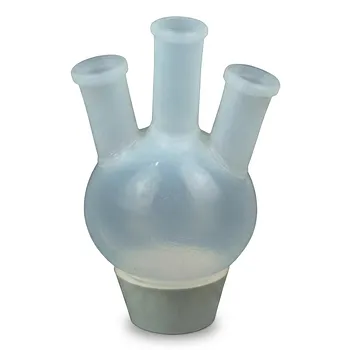
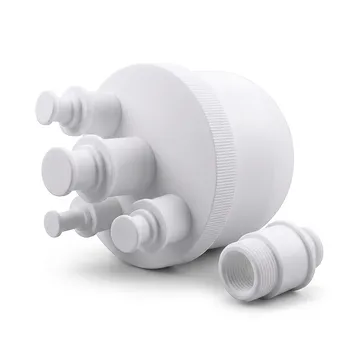
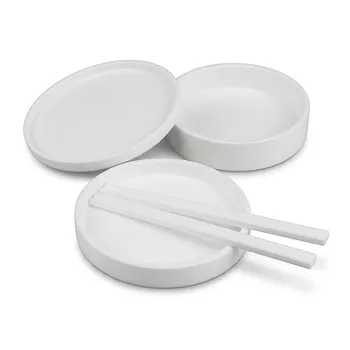
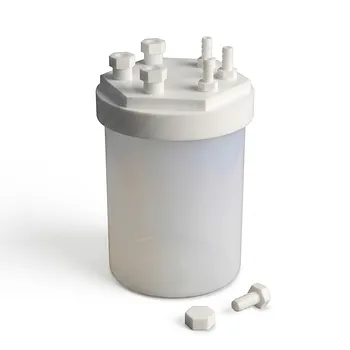
Looking for high-performance fluoropolymer components that maintain precision under demanding conditions? At KINTEK, we specialize in PTFE and PFA labware, fluid handling systems, and custom CNC-machined parts. Our materials ensure low dielectric constant, minimal moisture absorption, and superior dimensional stability. Whether you need standard beakers, high-purity trace analysis instruments, or bespoke electrochemical cells, our team is ready to support your project. Contact us today to discuss your requirements and benefit from our expertise in precision fluoropolymer solutions. Get in touch with our specialists.
Related Products
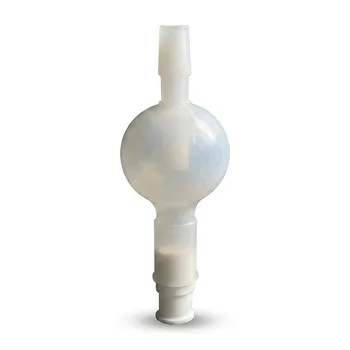
- High Purity PFA Chromatography Column with Collection Bottle Corrosion Resistant Fluoropolymer Filtration System for Trace Analysis
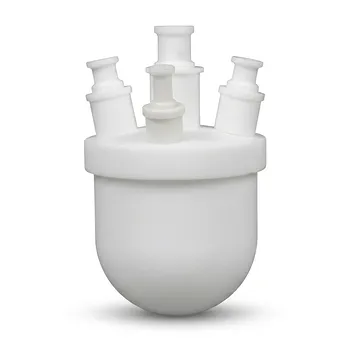
- Custom PTFE Flask 250ml High Purity Fluoropolymer Laboratory Vessel for Chemical Research
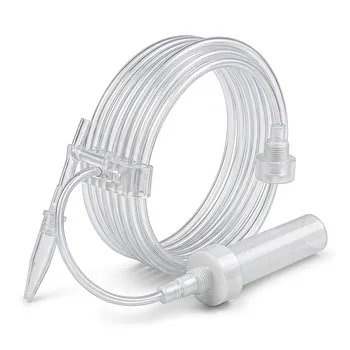
- Custom PFA Tubing 1/4 Inch High Purity Corrosion Resistant Fluoropolymer Tube with Welding and Machining Services
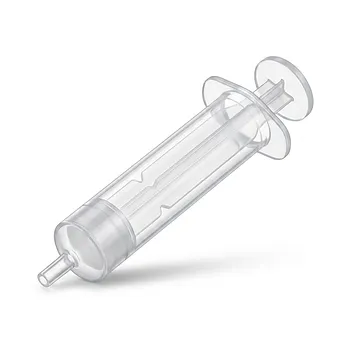
- Corrosion Resistant PFA Syringe Translucent Visual Fluoropolymer Labware 10ml Chemical Handling Tool
- Custom PTFE Reaction Tank Corrosion Resistant Fluoropolymer Chemical Processing Barrel 10L 20L 30L
People Also Ask
- Why is the chemical stability of polymer endgroups critical when selecting melt-processible fluoropolymers like PFA for high-purity laboratory apparatus? Choose Stable Endgroups for Reliable Performance
- What are the characteristics of PFA material? A Guide to Its High-Performance Balance
- Why is Perfluoroalkoxy alkane (PFA) preferred over glass or stainless steel in pharmaceutical process development? Pure Yield
- Why is PFA superior for cleaning and preventing cross-contamination? The Gold Standard for Ultra-Trace Lab Hygiene
- What are the key properties of PFA (PerFluoroAlkoxy)? A Guide to Extreme Chemical and Thermal Resistance