Fluoropolymers absorb little moisture and exhibit low dielectric constants because their molecular structures combine water-repellent fluorinated surfaces, few accessible polar sites, low-polarizability bonds, and relatively high free volume. Fluorine-rich groups such as –CF₂–, –CF₃, and hexafluoroisopropylidene units disrupt close chain packing while reducing the number and effectiveness of dipoles that can respond to an electric field. These features help fluoropolymer components maintain electrical insulation, signal integrity, and dimensional stability in precision electronic and electrochemical equipment.
The same structural design explains both properties: fluorinated chains provide little chemical affinity for water, while low-polarizability C–F-rich structures and increased free volume reduce dielectric response.
Why Fluoropolymer Chains Resist Moisture
Fluorinated surfaces are strongly hydrophobic
Fluorine-rich polymer surfaces have low surface free energy, so water does not readily spread across or adhere to them. This is why materials such as PTFE and PFA show strong liquid repellency and low sample retention.
Hydrophobicity alone does not explain bulk moisture absorption, but it reduces the initial tendency of water to wet and enter the material.
The polymer contains few accessible polar sites
Moisture uptake is promoted when a polymer contains polar or hydrogen-bonding groups that attract water molecules. Fluoropolymers generally replace many such sites with C–F-rich backbones and fluoroalkyl substituents, leaving water with fewer favorable interaction points.
This limits the amount of water that can dissolve into the polymer matrix under ordinary humidity conditions.
Strong C–F bonding limits chemical interaction
The C–F bond is highly polarized, but its electrons are tightly bound and the bond has relatively low polarizability. The resulting structure is chemically resistant and does not readily form the kinds of interactions that allow water to be retained within more polar polymers.
This distinction is important: bond polarity is not the same as strong bulk water affinity. The overall polymer architecture determines whether those local bond dipoles produce meaningful moisture uptake.
Bulky groups disrupt efficient chain packing
Groups such as –CF₃ and hexafluoroisopropylidene units are physically large. They interfere with tight, regular packing of neighboring polymer chains and increase the material's fractional free volume.
Free volume can provide more internal space, but in fluoropolymers it is paired with low surface energy and a shortage of water-attracting sites. As a result, the added space does not necessarily translate into high moisture absorption.
Low uptake supports dimensional stability
When a polymer absorbs water, swelling and changes in mechanical or electrical properties can follow. Fluoropolymers' low moisture uptake helps preserve the dimensions of insulating fittings, sensor housings, electrochemical cells, and fluid-handling components as humidity changes.
That stability matters when measurements depend on fixed electrode spacing, controlled fluid paths, or consistent insulation geometry.
Why Their Dielectric Constants Are Low
C–F-rich structures are weakly polarizable
A dielectric constant reflects how readily a material becomes polarized in an electric field. Because fluorine holds its electrons tightly, the electronic cloud associated with a C–F bond is relatively difficult to distort.
Lower electronic polarizability reduces the material's dielectric response, particularly at frequencies where electronic polarization is a major contribution.
Molecular symmetry can cancel dipole moments
Fluorinated groups can contain strongly polarized individual bonds without producing a large net permanent dipole for the entire repeating unit. When fluorinated substituents are arranged symmetrically, their bond dipoles may partially cancel.
This reduces the orientational polarization that would otherwise increase the dielectric constant.
Fluoroalkyl groups lower polarizable-group density
Bulky groups such as –CF₃ occupy substantial molecular volume while contributing relatively little easily deformable electron density. They therefore reduce the density of highly polarizable groups per unit volume.
The resulting material has more low-response molecular volume and less efficient coupling to an applied electric field.
Increased free volume lowers material density
Disrupted chain packing increases the volume occupied by the polymer without adding a proportional amount of polarizable matter. This generally lowers the effective dielectric constant.
Rigid backbone structures can preserve mechanical and thermal performance while bulky fluorinated substituents create the spacing needed for low dielectric response.
Low dielectric loss protects signal integrity
A low dielectric constant reduces parasitic capacitance around conductors, electrodes, and sensor elements. Low dielectric loss also limits energy dissipation and phase distortion in alternating or high-frequency electrical fields.
In precision instrumentation, these effects help reduce signal attenuation, electrical interference, and measurement drift.
How the Two Properties Work Together
Moisture does not significantly raise the dielectric response
Water has a much higher dielectric response than fluoropolymer. If a polymer absorbs appreciable moisture, its effective dielectric behavior can change, especially at lower frequencies where water-related polarization and conductivity become important.
The fluoropolymer's low moisture uptake helps preserve its intended dielectric properties during humidity changes.
Insulation remains more predictable
Components in electrochemical and electronic equipment must isolate conductors while maintaining stable geometry and capacitance. A low-polarity, moisture-resistant polymer provides a more predictable insulating environment than a material whose water content changes substantially with ambient conditions.
This is valuable in sensor housings, insulating fixtures, electrode supports, and high-frequency analytical instrumentation.
Clean fluid handling complements electrical performance
Fluoropolymers are also used in fluid transfer lines, cells, and labware because their low surface energy reduces wetting, adsorption, and sample retention. Keeping fluid paths clean and minimizing moisture retention supports the electrical stability of the surrounding measurement system.
The benefit is therefore both electrical and analytical: less parasitic electrical response and less uncontrolled interaction with samples.
Understanding the Trade-offs
Free volume must be balanced against mechanical performance
More free volume can lower the dielectric constant, but excessive disruption of chain packing may reduce strength, creep resistance, or dimensional stability. Material selection must balance dielectric performance with the pressure, load, and machining requirements of the component.
A low dielectric value alone does not guarantee suitability for a precision assembly.
Dielectric values depend on frequency and formulation
Reported dielectric constants vary with polymer chemistry, crystallinity, processing history, temperature, moisture condition, and test frequency. Values in the approximate 2 to 3 range at 1 MHz are representative of many fluorinated high-performance materials, but they should not be treated as a universal value for every fluoropolymer.
Design calculations should use measured data for the specific grade and operating conditions.
Hydrophobicity does not eliminate all moisture effects
Fluoropolymer surfaces repel water and the bulk materials generally absorb very little moisture, but seals, fillers, interfaces, surface damage, and contamination can still introduce moisture into an assembly.
The complete component design must therefore control joints, exposed surfaces, cleaning procedures, and material interfaces.
Low dielectric constant is not the same as zero electrical loss
A low dielectric constant reduces capacitive loading, but dielectric loss, leakage current, geometry, surface contamination, and frequency still affect signal quality. Precision systems should evaluate the full electrical specification, including the loss tangent and insulation resistance.
Making the Right Choice for Your Goal
The structural explanation should guide material selection and component design:
- If your primary focus is moisture control: Choose a fluoropolymer with a fluorine-rich, nonpolar surface and verify moisture absorption and dimensional stability for the actual humidity and temperature range.
- If your primary focus is high-frequency signal integrity: Select a grade with low dielectric constant and low dielectric loss at the operating frequency, rather than relying on a generic fluoropolymer label.
- If your primary focus is electrochemical measurement accuracy: Use fluoropolymer components to reduce water retention, sample interaction, leakage, and parasitic capacitance around the cell or sensor.
- If your primary focus is long-term dimensional precision: Balance increased free volume and low dielectric response against creep, thermal expansion, crystallinity, and machining requirements.
Fluoropolymer structure provides stable precision performance by limiting both water uptake and electric-field polarization at the molecular level.
Summary Table:
| Characteristic | Structural Feature | Impact on Moisture Absorption | Impact on Dielectric Constant |
|---|---|---|---|
| Hydrophobic surfaces | Fluorinated groups (-CF2-, -CF3) lower surface energy | Repels water, reduces wetting | Not direct |
| Few polar sites | Nonpolar backbone, limited hydrogen bonding | Limits water dissolution | Reduces dipole alignment |
| Strong C-F bonds | Tightly bound electrons, low polarizability | Minimal chemical interaction with water | Low electronic polarization |
| Bulky groups | Hexafluoroisopropylidene, -CF3 increase free volume | Creates space but no water affinity | Reduces polarizable group density |
| Molecular symmetry | Symmetric arrangement of fluorinated groups | Not direct | Cancels bond dipoles, lowers orientation polarization |
| Low material density | Disrupted chain packing | Not direct | Lower dielectric constant due to more free volume |
Enhance Your Lab's Precision with KINTEK Fluoropolymer Components
KINTEK specializes in high-performance PTFE and PFA lab supplies, designed to deliver exceptional moisture resistance and low dielectric constants for high-precision electronic and electrochemical applications. Our product range includes custom-machined parts, electrochemical cells, microwave digestion vessels, and complete fluid handling systems—all manufactured with tight tolerances. Whether you need off-the-shelf labware or bespoke solutions, our end-to-end CNC machining capabilities ensure optimal performance. Contact us today to discuss your requirements and benefit from our expertise—contact our team for a quote or consultation!
Our solutions are trusted by research labs, manufacturers, and distributors seeking reliability and precision. Partner with KINTEK to maintain control over moisture absorption and dielectric stability in your most demanding applications.
Related Products
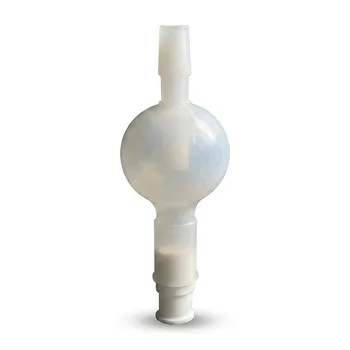
- High Purity PFA Chromatography Column with Collection Bottle Corrosion Resistant Fluoropolymer Filtration System for Trace Analysis
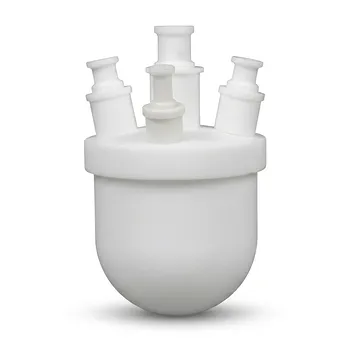
- Custom PTFE Flask 250ml High Purity Fluoropolymer Laboratory Vessel for Chemical Research
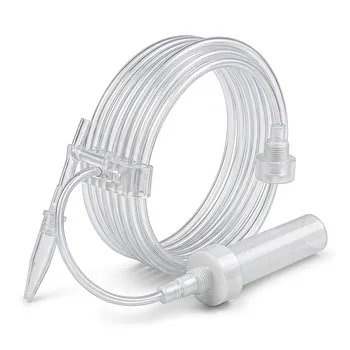
- Custom PFA Tubing 1/4 Inch High Purity Corrosion Resistant Fluoropolymer Tube with Welding and Machining Services
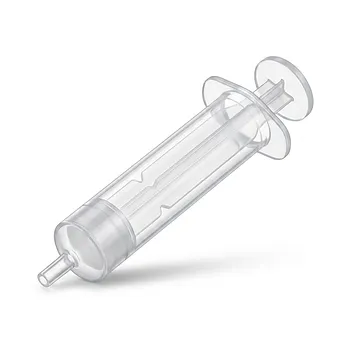
- Corrosion Resistant PFA Syringe Translucent Visual Fluoropolymer Labware 10ml Chemical Handling Tool
- Custom PTFE Reaction Tank Corrosion Resistant Fluoropolymer Chemical Processing Barrel 10L 20L 30L
People Also Ask
- Why is the chemical stability of polymer endgroups critical when selecting melt-processible fluoropolymers like PFA for high-purity laboratory apparatus? Choose Stable Endgroups for Reliable Performance
- What are the characteristics of PFA material? A Guide to Its High-Performance Balance
- Why is Perfluoroalkoxy alkane (PFA) preferred over glass or stainless steel in pharmaceutical process development? Pure Yield
- Why is PFA superior for cleaning and preventing cross-contamination? The Gold Standard for Ultra-Trace Lab Hygiene
- What are the key properties of PFA (PerFluoroAlkoxy)? A Guide to Extreme Chemical and Thermal Resistance