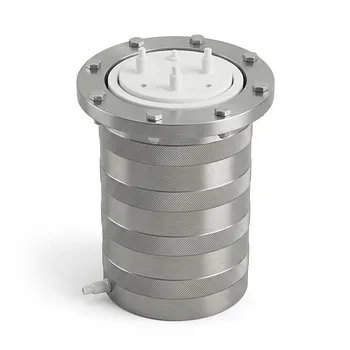
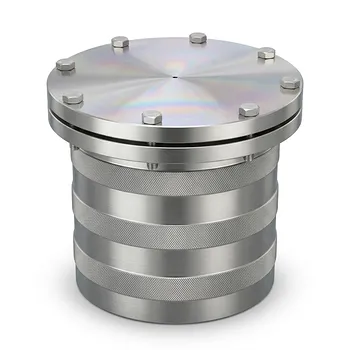
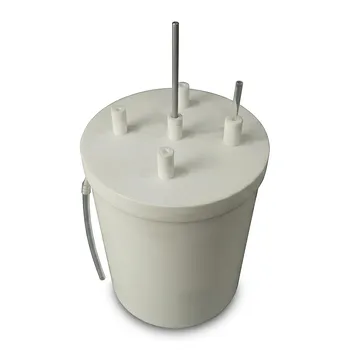
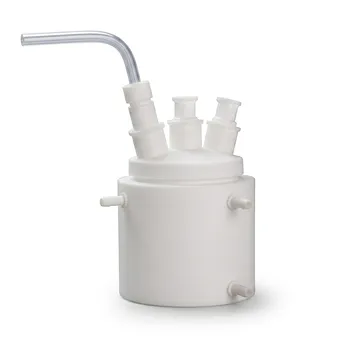
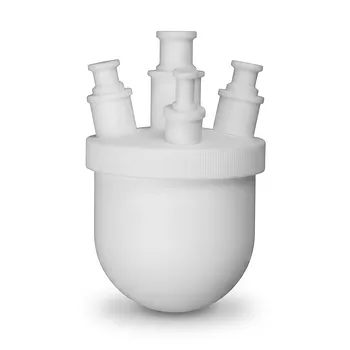
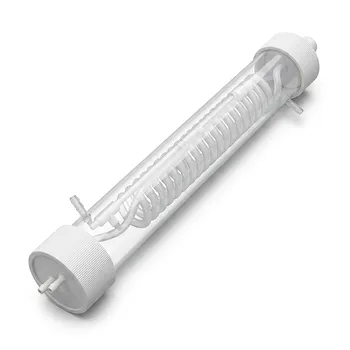
High-pressure hydrothermal reactors provide a sealed, high-temperature environment—typically around 180°C—that subjects precursors to pressures far exceeding atmospheric levels. This specific combination of heat and pressure increases the solubility of reactants and enhances component diffusion, enabling the atomic-level transformation of precursors into stable, crystalline TiO2 heterojunctions.
Core Takeaway: The high-pressure hydrothermal reactor creates a supercritical or subcritical environment that overcomes the kinetic barriers of standard chemical synthesis. This allows for precise control over phase transitions, atomic dispersion, and the structural morphology of titanium dioxide.
The Physical Architecture of the Synthesis Environment
Sealed High-Pressure Containment
The reactor functions as a closed system where solvents are heated beyond their boiling points. This sealed environment creates internal pressure that forces solvents into subcritical or supercritical states, drastically altering their chemical behavior.
Controlled Thermal Gradients
Temperatures are typically maintained at 180°C to 200°C, though some applications for specific growth (like ZnO) may operate lower. This consistent heat provides the activation energy necessary for the dehydration and chelation reactions required to build a molecular framework.
Corrosion-Resistant Internal Surfaces
Because the synthesis often involves acidic media (like trifluoromethanesulfonic acid) or strong bases, reactors utilize PTFE (polytetrafluoroethylene) or PFA liners. These liners protect the metal reactor walls and ensure that the final TiO2 product remains free from metallic contamination.
Chemical Dynamics and Phase Transformation
Enhanced Solubility and Diffusion
High pressure significantly increases the solubility of precursor powders, such as tetrabutyl titanate. This environment allows components to diffuse more freely at the atomic level, which is essential for creating the uniform interfaces found in heterojunctions.
Regulated Hydrolysis and Polycondensation
The reactor environment facilitates regulated hydrolysis, where titanium sources react with the solvent under pressure to form solid structures. This controlled reaction is critical for directing growth along templates (like nanocellulose) to create stable mesoporous frameworks.
Phase Transition to Anatase
One of the primary functions of this environment is to drive the phase transition from amorphous titanium dioxide to the anatase phase. The high-energy environment ensures the formation of a pure crystal phase, which is generally more photocatalytically active than other forms.
Understanding the Trade-offs
Kinetic Stability vs. System Stress
While high pressure promotes rapid crystal growth, it places extreme mechanical stress on the reactor seals. Maintaining kinetic stability for long durations requires precise temperature control, as even minor fluctuations can lead to non-uniform particle sizes or "component segregation."
Material Limitations
The use of PTFE liners limits the maximum operating temperature to approximately 250°C. If a synthesis requires higher temperatures, the risk of liner deformation or chemical leaching increases, potentially compromising the structural integrity of the TiO2 heterojunction.
Scalability Challenges
Hydrothermal synthesis is inherently a batch process. The specific conditions required—constant high pressure and sealed containment—make it difficult to transition from laboratory-scale synthesis to continuous industrial production without significant capital investment.
How to Apply This to Your Synthesis Goals
The specific parameters you choose within the reactor will determine the final characteristics of your TiO2 heterojunction.
- If your primary focus is atomic-level dispersion: Maintain a steady temperature of 180°C to ensure copper species or other dopants achieve a uniform matrix without segregation.
- If your primary focus is morphological control (nanotubes/sheets): Utilize high-concentration solvents (like NaOH) to reach subcritical states, which induces the self-assembly of particles into nanosheet structures.
- If your primary focus is phase purity (Anatase): Ensure the reactor remains sealed for the duration of the crystallization process to facilitate the complete transition from amorphous precursors.
By precisely tuning the pressurized environment of the hydrothermal reactor, you can engineer TiO2 heterojunctions with the exact electronic and structural properties required for advanced photocatalytic applications.
Summary Table:
| Parameter | Typical Condition | Role in TiO2 Synthesis |
|---|---|---|
| Temperature | 180°C to 200°C | Provides activation energy for dehydration and chelation |
| Pressure | Subcritical/Supercritical | Increases precursor solubility and atomic-level diffusion |
| Internal Liner | PTFE / PFA | Prevents metallic contamination and resists acidic media |
| Environment | Sealed Containment | Enables phase transition from amorphous TiO2 to Anatase |
Precision Fluoropolymer Solutions for Your Lab
Unlock the full potential of your photocatalytic research with KINTEK’s specialized laboratory supplies. From everyday basic labware like PFA beakers, crucibles, and reagent bottles to advanced hydrothermal synthesis liners, microwave digestion vessels, and custom reaction apparatus, we manufacture virtually all laboratory essentials from high-performance PTFE and PFA.
Our end-to-end custom CNC fabrication allows us to deliver everything from complex non-standard machined parts to high-volume orders, ensuring your TiO2 heterojunction synthesis is backed by the best in fluoropolymer technology. Contact us today to discuss your bespoke laboratory requirements and discover how our absolute focus on high-performance materials can enhance your research outcomes.
References
- Minghua Xu, Xiaoqiang Cui. Alkali Induction Strategy for Artificial Photosynthesis of Hydrogen by TiO<sub>2</sub> Heterophase Homojunctions. DOI: 10.1002/advs.202413069
This article is also based on technical information from Kintek Knowledge Base .
Related Products
- High Temperature Corrosion Resistant Hydrothermal Synthesis Reactor with TFM Inner Liner and Straight Cylinder Design
- High Pressure Custom TFM Reactor Stainless Steel Outer Vessel PTFE Inner Cup for Corrosive Synthesis
- PTFE Lined High Pressure Digestion Vessel 50ml High Temperature Hydrothermal Synthesis Tank
- Custom TFM Reaction Vessel with Stainless Steel Jacket and PTFE Inner Cup for High Corrosion Resistance
- High Purity PFA Constant Pressure Condensation Reaction System Acid Resistant High Temperature Customizable Teflon Labware
People Also Ask
- What is the role of a corrosion-resistant reactor in the synthesis of lignin-based carbon dots? Ensure Maximum Purity
- What are the technical advantages of using hydrothermal synthesis reactors for advanced electronic & optical nanomaterials?
- How does a hydrothermal synthesis reactor facilitate the production of crystalline materials with tailored morphologies? Precision Crystal Growth
- Why is the sealing reliability of a hydrothermal synthesis reactor critical for 24-hour cycles? Ensure Nano-Precision
- What role do hydrothermal synthesis reactors play in CQD preparation? Achieve High-Purity Nanomaterial Synthesis