Hydrothermal synthesis relies on a precise three-stage dissolution-precipitation mechanism to transform raw materials into crystalline solids. This process involves dissolving precursors under high temperature and pressure, reaching a state of supersaturation, and finally precipitating the material into a controlled solid phase. By manipulating these stages, researchers can synthesize high-purity crystals and nanoparticles that are difficult to produce through other chemical methods.
The dissolution-precipitation mechanism utilizes the enhanced solvent power of high-temperature fluids to break down precursors and then reorganize them into specific crystalline structures via controlled nucleation.
The Mechanics of Precursor Dissolution
Solvent Power and Material Breakdown
Under hydrothermal conditions, the solvent’s physical properties—such as its dielectric constant and density—change significantly. These changes increase the solvent power, allowing the liquid to dissolve or hydrolyze precursors that are otherwise insoluble at room temperature.
Achieving Chemical Mobility
The first stage focuses on moving the solid precursor into the liquid phase. This high-temperature environment provides the energy necessary to break chemical bonds, creating a concentrated solution of reactive species ready for the next phase.
The Transition to Supersaturation and Nucleation
Reaching the Critical Threshold
As the precursor continues to dissolve, the solution concentration eventually exceeds its equilibrium solubility limit. This results in a supersaturated state, which is the essential thermodynamic "engine" that drives the formation of new solid material.
Modes of Nucleation
Once supersaturation is reached, the system seeks stability through nucleation. In homogeneous nucleation, new nanoparticles form spontaneously within the liquid, whereas heterogeneous nucleation occurs when the material deposits onto existing surfaces or added seeds.
Crystallization and Final Growth
The Build-up of Solid Phases
Following nucleation, the dissolved species begin to organize into formal crystal lattices. This growth phase is sustained by concentration gradients, where material moves from the bulk solution to the surface of the developing crystals.
Influence of Thermal Dynamics
The final structure and size of the crystals are often determined by the rate of cooling or sustained heating. Controlled cooling can slow the deposition rate, leading to fewer, larger crystals, while rapid changes may stop growth prematurely.
Understanding the Trade-offs
Precision vs. Complexity
The primary advantage of this mechanism is the ability to create high-purity materials with low defect densities. However, because the reaction occurs inside a sealed, high-pressure vessel, real-time observation is nearly impossible, making the process a "black box" that requires extensive trial and error to perfect.
Kinetic Sensitivities
The balance between dissolution and precipitation is extremely sensitive to temperature fluctuations. Even minor deviations in the thermal gradient can lead to "polydispersity," where the resulting particles vary widely in size and shape, potentially ruining the batch for high-precision applications.
How to Optimize Your Synthesis Results
To achieve specific material characteristics, you must align your reactor parameters with the kinetic requirements of the dissolution-precipitation cycle.
- If your primary focus is uniform nanoparticle size: Focus on achieving a high degree of supersaturation quickly to trigger a single, massive burst of homogeneous nucleation.
- If your primary focus is large, high-quality single crystals: Maintain a low, steady level of supersaturation over an extended period to favor the growth of existing nuclei over the formation of new ones.
Mastering the transition from a dissolved precursor to a precipitated solid is the fundamental requirement for successful hydrothermal engineering.
Summary Table:
| Stage | Key Process | Objective |
|---|---|---|
| 1. Dissolution | Precursor breakdown via high solvent power | Transitioning solids into a reactive liquid phase |
| 2. Nucleation | Reaching supersaturation threshold | Spontaneous or seeded formation of initial growth nuclei |
| 3. Precipitation | Sustained lattice building | Controlled growth of particles into high-purity solid phases |
Elevate Your Synthesis Precision with KINTEK
Successful hydrothermal synthesis demands more than just chemistry; it requires high-performance equipment that survives extreme conditions. KINTEK specializes in the engineering and manufacture of premium fluoropolymer laboratory supplies designed specifically for high-purity trace analysis and complex chemical reactions.
From PTFE and PFA hydrothermal synthesis liners, microwave digestion vessels, and custom microchannel reactors to everyday essentials like beakers, crucibles, and high-purity fluid transfer components (tubing, valves, and fittings), we provide the tools necessary for absolute contamination control. Whether you need standard labware or bespoke, custom CNC-fabricated components for non-standard setups, KINTEK delivers end-to-end solutions with an exclusive focus on high-performance materials.
Ready to optimize your lab’s efficiency and material purity? Contact our experts today to discuss your specific requirements and see how KINTEK can support your research from benchtop to high-volume production.
Related Products
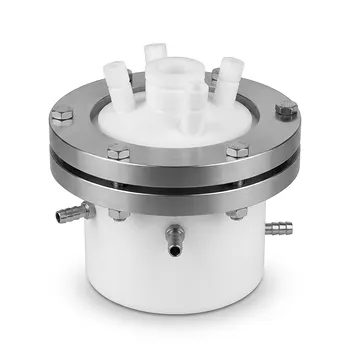
- High Temperature Corrosion Resistant Hydrothermal Synthesis Reactor with TFM Inner Liner and Straight Cylinder Design
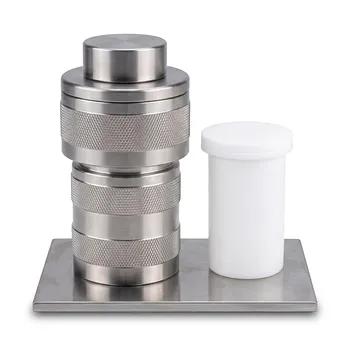
- PTFE Lined High Pressure Digestion Vessel 50ml High Temperature Hydrothermal Synthesis Tank
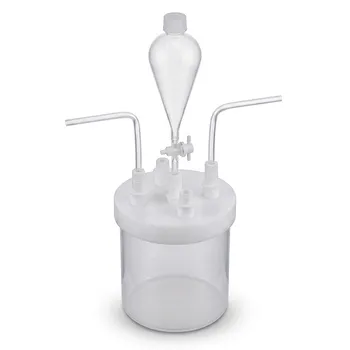
- Custom PTFE Reaction System with Hose Barb Fittings Corrosion Resistant High Sealing 2L 4L Lab Reactor with Separatory Funnel
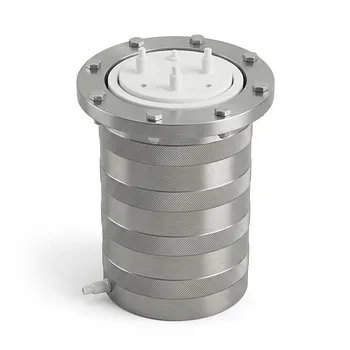
- High Pressure Custom TFM Reactor Stainless Steel Outer Vessel PTFE Inner Cup for Corrosive Synthesis
- High Purity PFA Reaction Vessel for Biopharmaceutical Synthesis and Corrosive Chemical Fluid Handling with Customizable Tube Fittings
People Also Ask
- What is the role of a corrosion-resistant reactor in the synthesis of lignin-based carbon dots? Ensure Maximum Purity
- What are the technical advantages of using hydrothermal synthesis reactors for advanced electronic & optical nanomaterials?
- How does a hydrothermal synthesis reactor facilitate the production of crystalline materials with tailored morphologies? Precision Crystal Growth
- Why is the sealing reliability of a hydrothermal synthesis reactor critical for 24-hour cycles? Ensure Nano-Precision
- What role do hydrothermal synthesis reactors play in CQD preparation? Achieve High-Purity Nanomaterial Synthesis