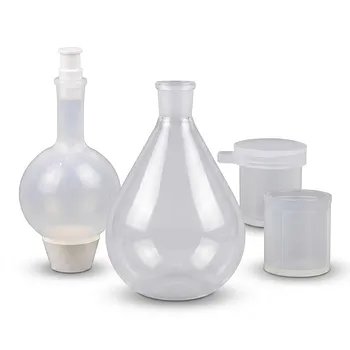
Thermal decomposition of fluoropolymers is primarily a temperature-control and ventilation problem. In high-temperature applications, operate each fluoropolymer component below its specific maximum recommended service temperature, account for exposure duration and chemical environment, and prevent accidental overheating. Decomposition can produce hazardous gases, including hydrogen fluoride (HF), carbonyl fluoride, carbon monoxide, and fluorocarbon fragments, while heat can also reduce mechanical strength and contaminate samples.
Fluoropolymers are highly heat-resistant, but their safe operating range is not unlimited. Reliable operation depends on keeping temperatures controlled, using effective local exhaust ventilation, selecting high-purity materials, and evaluating chemical and contamination hazards alongside the nominal temperature rating.
Establish the Real Operating Temperature Limit
Distinguish service temperature from decomposition temperature
A fluoropolymer may tolerate a continuous service temperature well below the point at which visible decomposition begins. For example, PTFE and PFA products may support service temperatures approaching 260°C in appropriate designs, while routine operation around 204°C and brief exposure in the approximate 232°C to 249°C range may be acceptable under controlled industrial ventilation.
These figures are not universal permissions. The applicable limit depends on the exact resin, product geometry, pressure, load, heating duration, atmosphere, and manufacturer specification.
Treat duration and heat history as safety factors
Short-term exposure and prolonged heating are not equivalent. Repeated or sustained operation near a limit can accelerate discoloration, embrittlement, creep, dimensional change, and loss of sealing performance even when the nominal temperature is not exceeded.
The lowest temperature that reliably completes the procedure should be used. Temperature limit switches, independent over-temperature protection, and alarms should be fitted where unexpected heating could damage equipment or release decomposition products.
Avoid accidental overheating
Heating units and ovens should have functioning temperature controls and limit switches. Operators should also consider hot spots, poor temperature uniformity, blocked cooling paths, exothermic reactions, and control-system failures rather than relying only on the displayed setpoint.
For microwave digestion vessels and similar apparatus, confirm that the vessel, liner, seals, pressure conditions, and reaction method are all rated for the complete operating cycle.
Understand What Decomposition Can Release
Identify potential gaseous byproducts
Thermal degradation or high-temperature processing can generate HF, carbon monoxide, carbonyl fluoride, and traces of fluorocarbon monomers or other volatile fragments. These products may be toxic, corrosive, or hazardous even when the original fluoropolymer is chemically inert during normal use.
The exact decomposition products depend on the polymer, additives, temperature, atmosphere, and heating history. A material safety review should therefore consider the specific product rather than treating all fluoropolymers as interchangeable.
Recognize early warning signs
Discoloration, visible smoke, unusual odor, surface damage, loss of flexibility, and unexpected changes in dimensions can indicate overheating or material degradation. These signs should be treated as evidence that the component may no longer be suitable for service.
Do not continue operating a visibly degraded component simply because it remains mechanically intact. It may have lost strength, released contaminants, or compromised a pressure or chemical seal.
Control off-gassing and contamination
Decomposition fragments and fluorosurfactants can create sample contamination concerns in high-purity laboratory systems. This is particularly important for digestion vessels, reagent containers, tubing, fittings, and reaction apparatus used for trace analysis.
High-purity fluoropolymer resins with no harmful or unsuitable additives should be selected where contamination control is critical. Components exposed to overheating should be inspected, cleaned or replaced according to the application’s quality requirements.
Design Ventilation and Exposure Controls
Use local exhaust at the source
General room ventilation may not adequately control a release from a hot press, extruder, oven, digestion system, or heated reaction vessel. Dedicated local exhaust ventilation should capture emissions close to the point where they are generated.
The supplementary guidance identifies capture velocities of at least 0.5 m/s for suitable forced ventilation or local exhaust systems. The actual design should be validated for the equipment geometry, heat plume, enclosure, and expected release scenario.
Plan for abnormal releases
Ventilation should not be the only safeguard. Procedures should address controller failure, vessel rupture, visible decomposition, power loss, and loss of exhaust flow.
Where HF or other corrosive gases may be released, the facility should have appropriate detection, emergency response, personal protective equipment, and decontamination arrangements based on a qualified industrial-hygiene and safety assessment.
Keep emissions away from operators
Hot equipment discharges, extruder vents, curing ovens, and hot presses should be enclosed or positioned so that decomposition products cannot pass through the breathing zone. Exhaust systems must discharge safely and remain operational during the full heating and cooling cycle when emissions may continue.
Evaluate Chemical and Mechanical Interactions
Assess Lewis acid catalysts
Lewis acids, including BF3 complexes, can catalyze fluoropolymer decomposition at temperatures lower than expected from the polymer’s ordinary thermal limits. Compatibility must therefore be assessed for the complete chemical mixture, not only for the solvent or reagent in isolation.
A temperature that is acceptable for an inert process may be unsafe when the fluoropolymer contacts a reactive catalyst, acidic species, or decomposition-promoting environment.
Account for structural property changes
Elevated temperature can cause creep, softening, deformation, loss of burst strength, and seal failure before obvious chemical decomposition occurs. Pressure-containing components require a temperature-dependent pressure rating, not merely a polymer name and maximum temperature.
This matters for digestion vessels, fittings, gaskets, packings, and fluid-transfer tubing. Mechanical design should include the effects of pressure, thermal cycling, clamping force, and chemical exposure.
Prevent metal-powder contamination
Fine PTFE particles or dust can react dangerously with finely divided metals such as aluminum or magnesium. At temperatures above approximately 420°C, contact with these metal fines can cause violent combustion or explosions.
Systems involving grinding, high-speed friction, metallic dispersions, or metal powders require strict temperature control and contamination prevention. Housekeeping and material segregation are safety controls, not merely cleanliness measures.
Understanding the Trade-offs
Heat resistance does not mean unlimited stability
Strong carbon-fluorine bonds give materials such as PTFE and PFA exceptional chemical and thermal resistance. That resistance supports broad service ranges, including cryogenic use and elevated-temperature operation, but it does not eliminate the risk of degradation above the product-specific limit.
The most important distinction is between normal service, short-term exposure, melting or softening, and thermal decomposition. These are different engineering conditions and should not be represented by one generic temperature number.
A higher-rated polymer may not solve the whole problem
Changing from one fluoropolymer to another may improve temperature performance, but the complete assembly can still fail through seals, fittings, additives, pressure effects, or chemical catalysis. PFA, for example, can begin significant thermal degradation around 400°C, particularly in air, with carbonyl fluoride among the potential byproducts.
Material selection must therefore cover the actual operating envelope and all component materials. A nominally higher-temperature resin is not a substitute for process controls.
Ventilation cannot compensate for overheating
Exhaust systems reduce exposure but do not restore the structural integrity of a degraded vessel or prevent contamination of a sample. If a component exceeds its limit, the system should be stopped, made safe, and inspected before reuse.
Similarly, relying on operator awareness alone is insufficient. Interlocks, independent temperature limits, preventive maintenance, and documented operating procedures provide more reliable protection.
How to Apply This to Your Project
Use the following priorities when reviewing a high-temperature fluoropolymer application:
- If your primary focus is operator safety: Keep the process below the component-specific temperature limit, install independent over-temperature protection, and provide validated local exhaust capable of controlling an abnormal release.
- If your primary focus is sample purity: Use high-purity, additive-controlled fluoropolymer materials, prevent overheating and discoloration, and replace components that may have experienced thermal degradation.
- If your primary focus is pressure or mechanical reliability: Evaluate temperature-dependent strength, creep, sealing performance, thermal cycling, and the complete assembly rating rather than relying on the resin’s maximum temperature alone.
- If your primary focus is chemical compatibility: Review the full reagent mixture, especially Lewis acids such as BF3 complexes, and confirm that the chemical environment will not accelerate decomposition.
- If your primary focus is industrial processing: Provide dedicated exhaust at mixers, extruders, hot presses, and curing ovens, and control ignition, oxygen, and contamination hazards associated with reactive precursors and fine metal powders.
Safe fluoropolymer operation comes from managing temperature, chemistry, ventilation, mechanical loads, and contamination as one integrated system.
Summary Table:
| Factor | Key Consideration |
|---|---|
| Temperature Limits | Operate below maximum service temperature; consider duration and heat history. |
| Decomposition Products | HF, CO, carbonyl fluoride, and fluorocarbon fragments may be released. |
| Early Warning Signs | Discoloration, smoke, odor, or dimensional changes indicate degradation. |
| Ventilation | Use local exhaust at source with capture velocity ≥0.5 m/s. |
| Chemical Interactions | Lewis acids like BF3 can lower decomposition temperature. |
| Mechanical Reliability | High temperature reduces strength and sealing performance. |
| Contamination Control | High-purity resins prevent sample contamination. |
Ensure the safety and performance of your high-temperature fluoropolymer applications with KINTEK's high-purity PTFE and PFA products. Our experts can help you select the right materials and design solutions for your lab. Contact us today to discuss your requirements and benefit from our custom machining capabilities and reliable supply.
Related Products
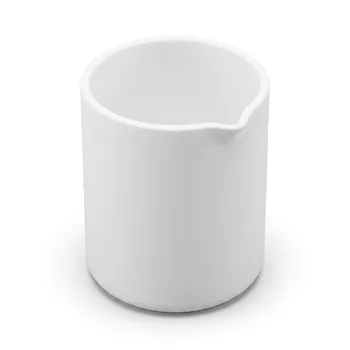
- Custom Thickened PTFE Beaker 3000ml Hotplate Heating High Temperature Deformation Resistant Fluoropolymer Labware
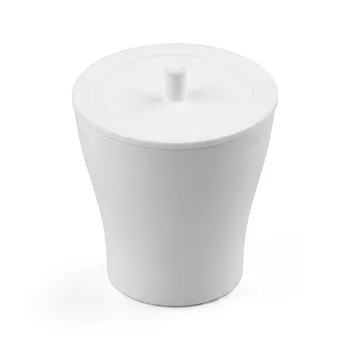
- High Purity 30ml PTFE Corrosion Resistant Fluoropolymer Crucible with Graphite Heating Block Compatibility
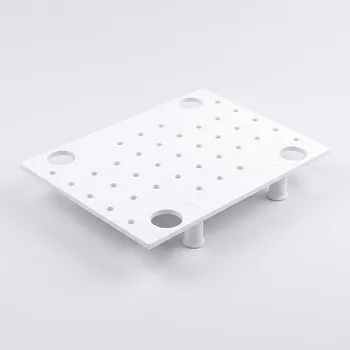
- High Temperature Resistant PTFE Thermal Insulation Board Corrosion Resistant Metal Free Fluoropolymer Stand for Ultra Clean Laboratories
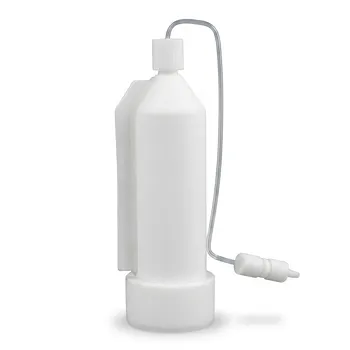
- Custom PTFE Dissolution Bottle 50ml with PFA Ultra Fine Tubing Corrosion Resistant No Leaching
- High Purity PTFE Beaker Heat Resistant Laboratory Chemical Vessel Hot Plate Compatible Non Deforming Fluoropolymer Labware
People Also Ask
- Why is the material of the reaction vessel critical for tribocatalytic degradation? Boost Your Catalytic Yield!
- What are the limitations of pure PTFE in high temperature applications? Understanding the 200°C Ceiling
- How do the thermal and processing properties of FEP compare to PTFE, and how does this affect material selection for specialized fluoropolymer labware? Choose the right material for your lab's demands.
- What are the maximum operating temperatures and processing differences between PTFE and PFA, and how do they guide material selection for high-temperature laboratory apparatus?
- Are Teflon parts capable of withstanding high temperatures? Understanding the 260°C Limit for Performance